 ProMapRanker
8 Best HRMS Software Platforms for 2026

Key takeaways
- BambooHR and Gusto suit smaller teams that want simple HR and payroll, while Rippling suits growing teams that also manage devices and access.
- Workday, Oracle HCM, and SAP SuccessFactors fit large enterprises, but they need longer setup and quoted pricing.
- ADP Workforce Now and Paylocity offer a middle path for mid market firms that need payroll depth and compliance help.
- Deel stands out for global hiring, since it covers contractors and employer of record services in many countries.
Quick comparison
| Pick | Great for | Pricing starts at | Free tier | |
|---|---|---|---|---|
 BambooHR | Small and mid size HR simplicity | $10 per month | Free trial | Visit |
 Rippling | HR, payroll, and IT in one place | $8 per month | Free trial | Visit |
 Workday HCM | Large enterprises | See website | No | Visit |
 Gusto | Small US payroll-first teams | $40 per month | Free trial | Visit |
 ADP Workforce Now | Mid market compliance | See website | No | Visit |
 Paylocity | Mid market payroll and HR | See website | No | Visit |
 Deel | Global hiring and payroll | See website | Yes | Visit |
 HiBob | Culture focused mid market HR | See website | Free trial | Visit |
The best hrms software
We looked at platforms that cover employee records, time off, onboarding, payroll, benefits, and performance in one system. The right choice depends less on feature count and more on headcount, payroll complexity, and how much global hiring you plan to do.
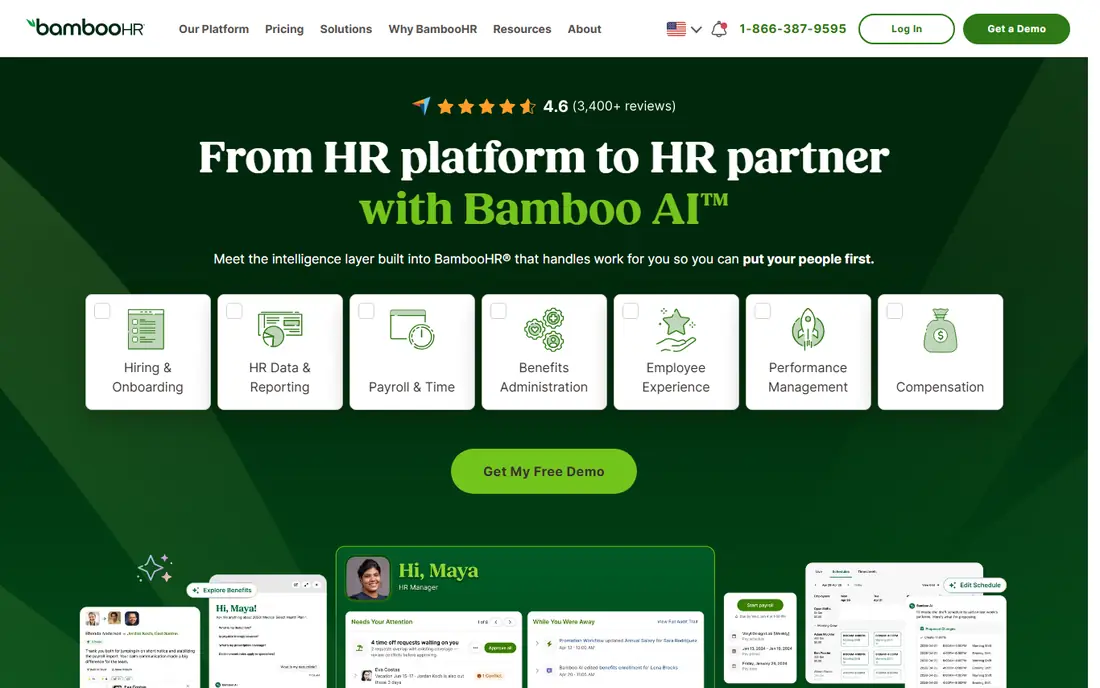
BambooHR is often the first HR system a growing company adopts after spreadsheets stop working. Employee profiles, time off requests, onboarding checklists, and basic reports sit in a clean interface that managers can learn without long training. That simplicity helps small HR teams stay organized as headcount moves from dozens to hundreds. The trade off appears when payroll, benefits, and global hiring become central. Payroll is available as an add on, and companies with workers in many countries may need extra tools. For US based teams that want HR first, with payroll as a secondary need, BambooHR remains a calm and practical choice. A trial helps you test onboarding and reporting before committing.
- Easy to learn
- Clear employee records
- Strong onboarding and time off tools
- Payroll is an add on in many cases
- Global payroll depth is limited
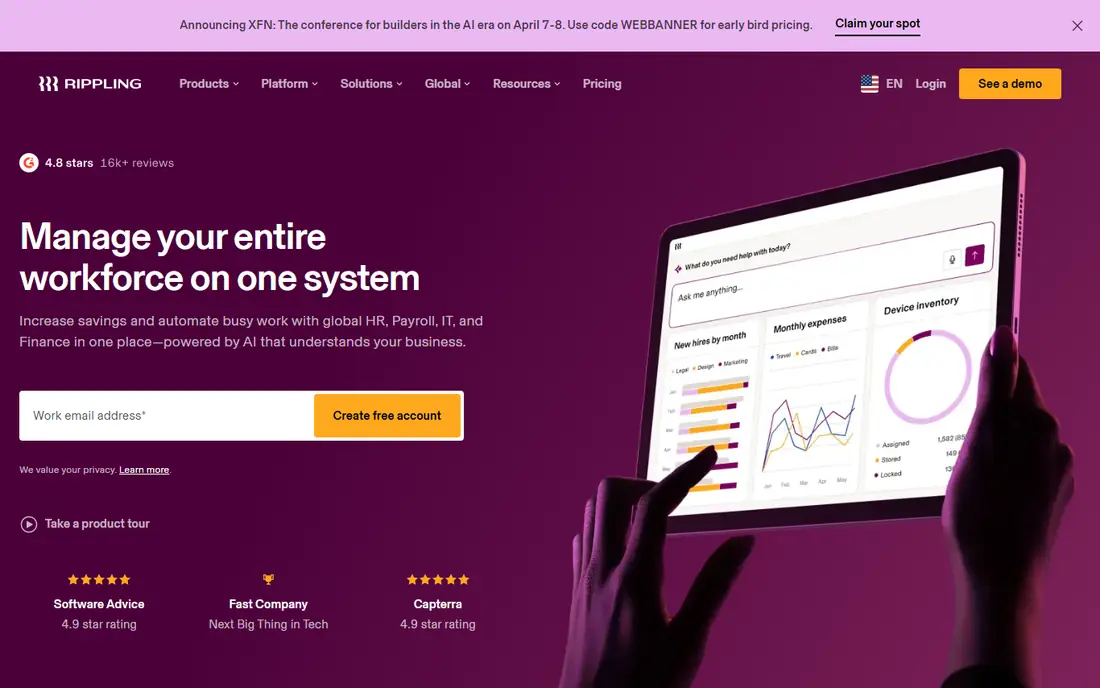
Rippling stands out because it treats HR, payroll, and IT as one workflow rather than three separate systems. When a new hire starts, the same record can trigger payroll, benefits, app access, and device shipping, and offboarding can revoke access in the same way. That joined up approach saves time for operations teams that otherwise chase tasks across tools. Pricing needs attention, since the base figure covers only part of the full stack and each module adds cost. Teams should map the modules they truly need before comparing totals. For scaling tech and service firms that want fewer systems and stronger automation, Rippling offers a compelling mix of HR depth and IT control in one platform.
- Combines HR, payroll, and device management
- Strong automation
- Global hiring options
- Costs rise as modules are added
- Setup needs care for larger teams
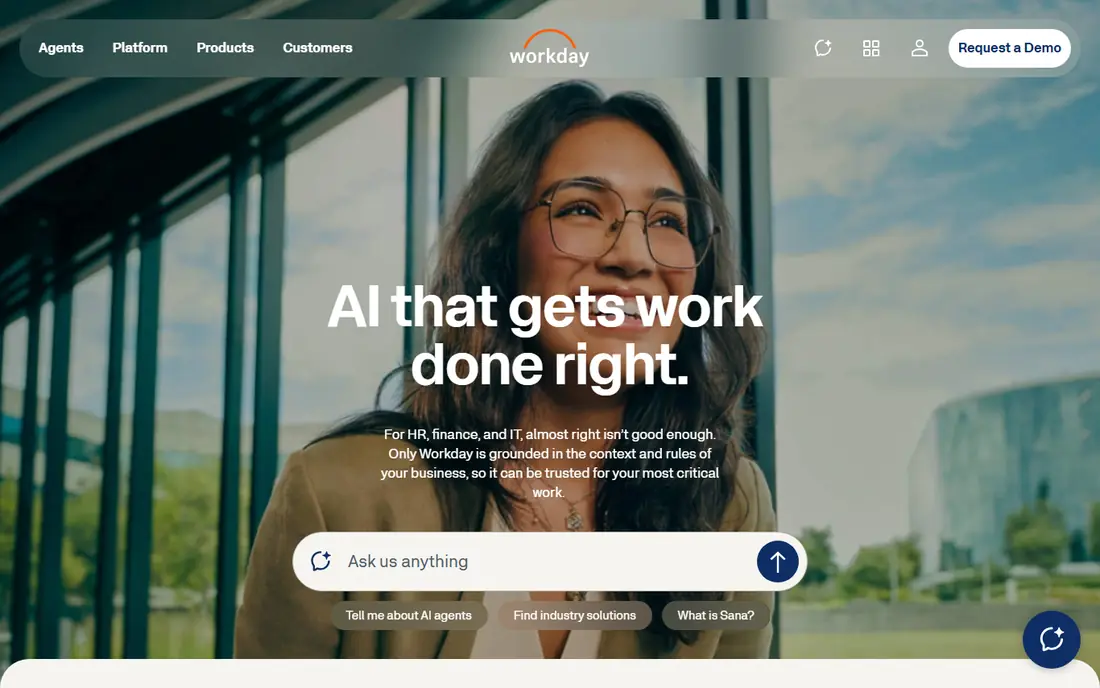
Workday HCM is built for large organizations that need governed HR and finance data in one system. It covers core HR, talent, payroll partners, workforce planning, and analytics, with controls suited to listed companies and multinational employers. That depth makes it a common choice when audit trails, approvals, and multi country rules matter more than speed of setup. Smaller firms will find Workday heavy and costly, and implementation is a project rather than a quick signup. Enterprises should plan for change management, data cleanup, and training alongside the software cost. If your company is large, regulated, or planning major growth across countries, Workday gives structure that simpler tools cannot match.
- Deep HR and finance integration
- Strong global and compliance controls
- Mature reporting
- Quoted pricing
- Implementation can take months
Gusto works best for small US businesses that need payroll done correctly without hiring an HR specialist. The platform handles pay runs, tax filings, direct deposit, benefits, and onboarding in a guided flow, with alerts for common compliance tasks. Owners can run payroll in a few steps and let employees update their own details and view pay stubs. The limit is geography and scale. Gusto is US focused, so companies hiring abroad will need a separate global provider. Larger firms with complex time tracking or multi entity payroll may also outgrow it. For startups, clinics, shops, and service firms with under a couple of hundred US staff, Gusto offers clarity and low friction at a predictable base price plus a per person fee.
- Simple payroll and benefits
- Clear compliance alerts
- Easy onboarding
- US focused
- Limited global hiring support
ADP Workforce Now suits mid market companies that put compliance and payroll reliability first. It covers HR records, payroll, time, benefits, and talent tools, backed by a large provider with experience across US states and industries. That scale helps firms with shift workers, multiple locations, and changing tax rules, where errors carry real cost. The system can feel heavier than BambooHR or Gusto, and pricing is quoted rather than published, so comparison takes a sales conversation. Teams should ask for the full module list and implementation cost in writing. For companies that need a proven payroll engine and broad compliance support, ADP remains a safe and widely used choice.
- Broad payroll and compliance coverage
- Large support network
- Many integrations
- Quoted pricing
- Interface can feel complex for small teams
Paylocity aims at mid market firms that want payroll depth without the enterprise weight of Workday. Core HR, payroll, time and labour, benefits, and talent tools sit in one system, with dashboards and mobile access for employees. The interface feels more modern than many legacy payroll systems, which helps adoption among managers and staff. Pricing is quoted, so buyers should compare the same modules across vendors and check what is included at each tier. Companies with complex scheduling or global payroll may still need add ons. For US mid market teams that want a single payroll and HR platform with a cleaner user experience, Paylocity is a strong contender worth a demo with real payroll scenarios.
- Modern interface
- Strong payroll depth
- Useful employee engagement tools
- Quoted pricing
- Some advanced features need higher tiers
Deel is designed for companies that hire across borders and need contracts, payroll, and compliance handled in each country. It supports contractors and full time hires through employer of record services, with local tax and benefits guidance built into the workflow. That focus makes it valuable for remote first firms that would otherwise juggle local providers. For a purely domestic team, Deel may offer more global machinery than needed, and its core HR tools are not as deep as a dedicated HRMS for performance and culture work. Pricing also varies by worker type, so totals depend on your mix of contractors and employees. If global hiring is your main challenge, Deel solves the hardest part first.
- Hiring in many countries
- Contractor and employer of record options
- Clear compliance help
- Pricing varies by hiring type
- HR depth is thinner for domestic only teams
HiBob, often called Bob, focuses on the people side of HR for mid market companies. It covers core HR, onboarding, time off, performance, and compensation, with surveys and analytics that help HR teams spot engagement and retention patterns. The interface is designed to feel welcoming for employees, which can improve self service use and data quality. Payroll is handled through integrations rather than as a native strength in every region, so firms that want payroll and HR from one vendor should check the setup carefully. Pricing is quoted, and costs depend on headcount and modules. For culture focused teams that value analytics, feedback, and a modern employee hub, HiBob offers a distinct and well regarded alternative to payroll first systems.
- Strong people analytics
- Engaging employee experience
- Flexible workflows
- Payroll needs integrations
- Quoted pricing
How we picked these
We compared official feature pages, pricing pages, app store listings, privacy policies, and public reviews for HRMS platforms active in October 2026. We favoured systems that cover the full employee lifecycle, publish clear pricing or a clear trial path where possible, and fit a distinct team size or hiring model. We did not claim hands on testing, and we noted where pricing is quoted so readers can request a full written quote.
Choosing HRMS software without regret
Start with headcount, payroll locations, and the tasks that consume most HR time today. A small US team may only need records, time off, onboarding, and payroll, while a global team needs contractor compliance and multi country payroll first. List those must haves before demos, and score each vendor against them rather than against a long feature sheet.
Test payroll and onboarding with real cases
Ask vendors to run a payroll scenario that matches your mix of salaried staff, hourly staff, and contractors, including a new hire, a time off change, and a leaver. Check how employees request leave, view pay, and update bank details, since poor self service creates work for HR. Confirm data export, reporting, and integration with accounting and scheduling tools before signing.
Plan for growth and total cost
Confirm the per person fee, base fee, implementation fee, and cost of each module you need, and ask how prices change as headcount grows. Check contract length, support hours, and who owns the data if you leave. A system that fits today but blocks global hiring or payroll growth will cost more to replace than a slightly higher priced platform chosen with the next two years in mind.
Frequently asked questions
What is the best hrms software for small businesses?
BambooHR and Gusto are common picks for small businesses, with BambooHR leaning to HR simplicity and Gusto leaning to payroll. The better choice depends on whether payroll accuracy or HR records and onboarding matter more to you. Try both with your real headcount and payroll mix before deciding.
Which is the best hr management software for mid sized companies?
Rippling, Paylocity, and ADP Workforce Now all suit mid sized firms, but for different reasons. Rippling adds IT automation, Paylocity offers a modern payroll and HR mix, and ADP leans to compliance depth. Compare quoted totals for the same modules, since headline prices can hide add on costs.
What is the best cloud hr software for remote teams?
Deel is a strong option for remote teams hiring across countries, while Rippling and HiBob suit remote teams that need automation and engagement tools. Cloud access alone is not enough, so check time zone support, mobile self service, and local compliance for each country where you employ people.
How much does HRMS software cost?
Small business plans often start with a monthly base fee plus a per employee fee, while enterprise platforms use quoted pricing based on headcount and modules. Always ask for implementation fees, payroll add ons, and price changes at higher headcounts. A written quote for your exact modules is the only reliable comparison.
What is the difference between HRMS and HCM software?
HRMS usually covers core HR tasks such as records, payroll, time off, and benefits, while HCM is a broader term that can include talent, workforce planning, and analytics. Vendors use the terms loosely, so compare the actual modules on offer rather than the label. Focus on the workflows your team must run every month.
Sources
See where you really rank - block by block
ProMapRanker scans Google Maps across a grid of your service area. Simple monthly plans from $19, white-label on every plan.
Start freeKeep reading
 zendesk alternatives
Best Zendesk Alternatives in 2026
Compare the best Zendesk alternatives in 2026, from budget help desks to AI-first support tools, with current pricing, free plans, and honest trade-offs.
Read → wordpress alternatives
Best WordPress Alternatives in 2026
Looking for the best WordPress alternatives? We compare 8 free and paid options for blogs, business sites, stores, and developer-led projects in 2026.
Read → which real estate company has the best training
Best Real Estate Company Training in 2026
Compare which real estate company has the best training, from Keller Williams and eXp to Compass and Coldwell Banker, by program, mentor, and fit in 2026.
Read →