 ProMapRanker
Best HR Software for Startups in 2026


US payroll plus light HR · Pricing starts at: $49 per month plus $6 per person
Key takeaways
- Startups usually need payroll plus core HR first, and performance, learning, or advanced analytics can wait until headcount and budget grow.
- Per-person pricing looks cheap at five people and grows fast, so run your 12-month headcount plan against each quote before you sign.
- US-only startups get the best value from Gusto and OnPay, while Deel and Remote suit teams hiring across borders from day one.
- A free HR core can be enough for records and time off, but payroll, benefits, and tax filing are usually paid add-ons or separate products.
- A PEO is not the same as HR software, since a PEO shares employment duties and can offer group benefits, while software leaves you as the employer of record.
Quick comparison
| Pick | Great for | Pricing starts at | Free tier | |
|---|---|---|---|---|
| Gusto | US payroll plus light HR | $49 per month plus $6 per person | No | Visit |
 Rippling | HR, IT, and payroll in one system | $8 per user per month | No | Visit |
 BambooHR | Clean people data and employee experience | See website | No | Visit |
 Deel | Hiring across borders | Free | Yes | Visit |
 Remote | Remote-first global hiring | Free | Yes | Visit |
 Zoho People | Low-cost core HR | Free | Yes | Visit |
 OnPay | Simple multi-state payroll | $49 per month plus $6 per person | No | Visit |
 Homebase | Hourly and shift-based teams | Free | Yes | Visit |
The best hr software for startups
The tools below cover different startup shapes, from a US team of ten to a distributed team across many countries. Pick by geography, worker type, and growth plan, not by brand alone.
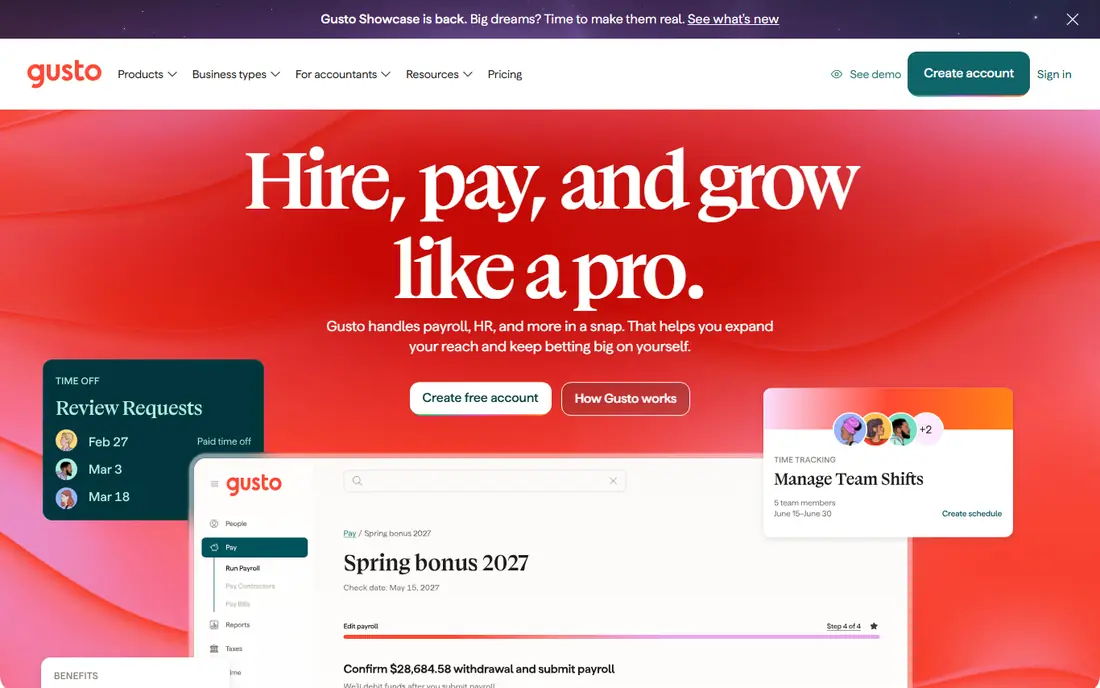
Gusto is the default pick for many US startups because payroll, tax filing, and basic HR live in one place with pricing you can read before a sales call. The Simple plan starts at $49 per month plus $6 per person, and it covers payroll in one state, contractor payments, and core employee records. Onboarding, time off, and benefits administration grow with the higher tiers, which keeps the early bill low.
The limits are geography and depth. Gusto is built for US employment, so international hiring needs a separate solution, and teams that need deep performance management or complex approvals may outgrow the lower tiers. Still, for a US startup under 50 people that wants payroll done correctly without a large HR team, Gusto is a practical and transparent starting point.
- Clear published pricing
- Payroll and tax filing included
- Contractor payments
- US-focused
- Advanced HR features need higher tiers
- Benefits vary by state
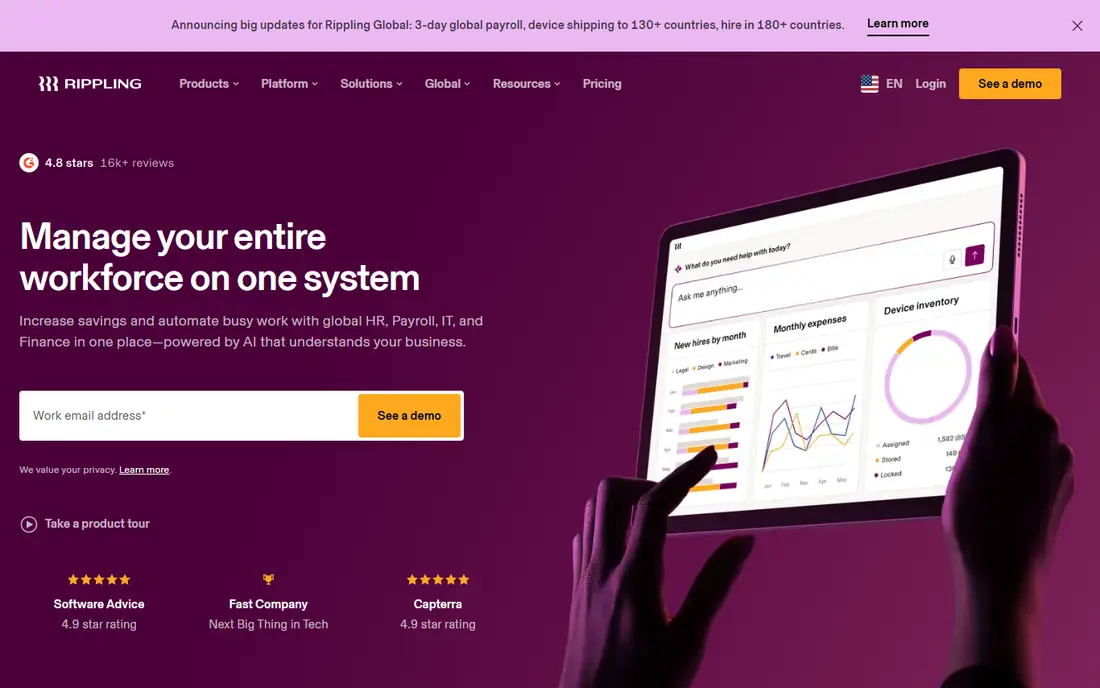
Rippling stands out because it ties HR records to IT provisioning and spend controls, so a new hire can get accounts, devices, and payroll set up from one workflow. The core HRIS starts at $8 per user per month plus a base fee in published summaries, with payroll, benefits, and IT as modular add-ons. That modular design lets a startup buy only what it needs now and add modules as it grows.
The catch is total cost and complexity. Each module adds to the bill, and a full HR plus payroll plus IT stack can cost far more than the headline core price. Implementation also needs clean data and clear approval rules to pay off. Rippling fits fast-growing startups that want one system of record and are ready to invest in setup, not teams that want the cheapest payroll tool.
- Unified HR, IT, and spend data
- Strong automation
- Scales to mid-market
- Quote-based modules
- Total cost rises with add-ons
- Setup takes planning
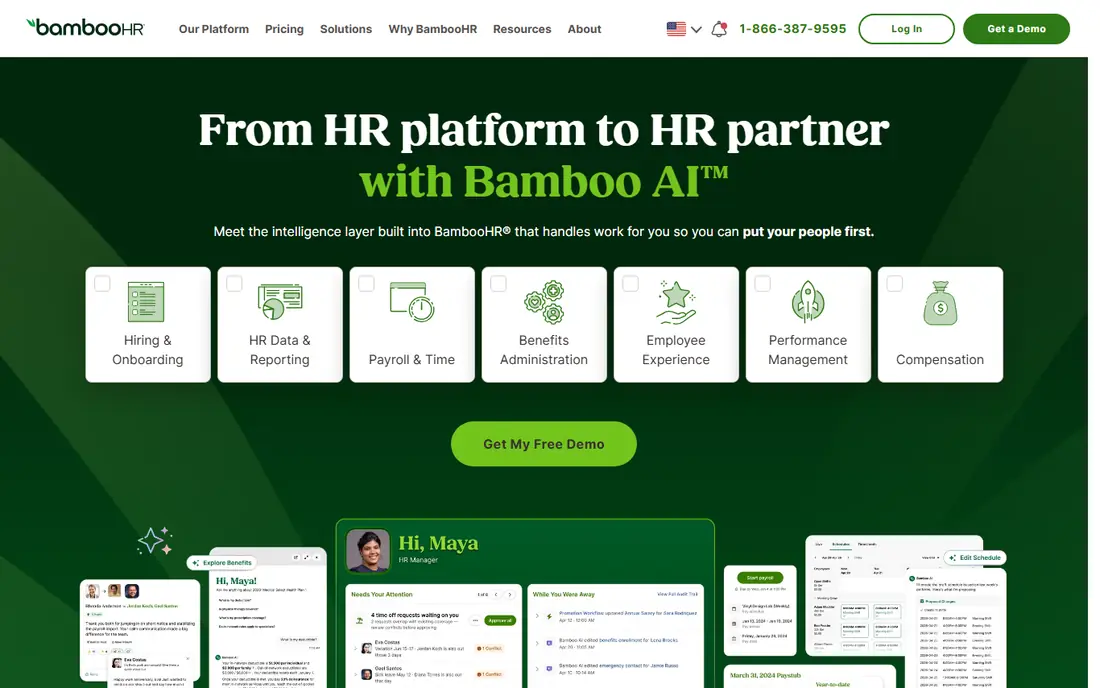
BambooHR focuses on the people side: employee records, onboarding, time off, performance notes, and reporting in a clean interface that employees actually use. That focus helps startups move off spreadsheets before bad data causes payroll or compliance errors. Mobile self-service for time off and document signing also cuts back-and-forth for a small HR lead.
Payroll is separate, so US startups often pair BambooHR with a payroll provider or buy the payroll add-on where available. Pricing is quote-based in many cases, with published summaries pointing to a Core plan around $10 per employee per month, so get a written quote for your headcount and modules. Choose BambooHR when people data and employee experience matter more than having payroll in the same bill.
- Clear employee records
- Self-service time off
- Strong onboarding tools
- Payroll is an add-on
- Pricing is quote-based for many teams
- Advanced analytics cost more
Deel solves the problem domestic HR tools do not: hiring a contractor in one country and an employee in another without setting up local entities. Deel HR, the core HRIS, is free in published terms for up to 200 employees, covering records, time off, and org charts. Contractor management and employer-of-record services are paid, with contractor plans often starting around $49 per contractor per month and employer-of-record pricing varying by country.
The trade-off is per-person cost at scale for international employees, since employer-of-record fees add up quickly. Still, for a startup with a distributed team, Deel removes legal and payroll friction that would otherwise require local counsel and entities. Start with the free HR core, then price contractor and employee hiring separately for each country you plan to enter.
- Free HR core for up to 200 employees in published terms
- Global contractor and employee hiring
- Compliance help
- Employer-of-record fees are high per person
- Payroll depth varies by country
Remote is built for remote-first startups that hire anywhere, with a free HR product for records, time off, and expenses, plus paid employer-of-record services for full-time hires abroad. Published summaries list employer-of-record pricing from around $599 per employee per month on annual terms, varying by country. That predictability helps founders budget a first international hire without a long sales process.
The limit is focus. Remote is strongest for global hiring, not for a purely US team that needs deep domestic payroll and benefits at a low price. If most of your team is in one country, a domestic tool plus a global add-on may cost less. If your team is spread across many countries, Remote gives you one system for contracts, compliance, and payroll in each location.
- Free HR core
- Global employment coverage
- Clear employer-of-record pricing in many countries
- Employer-of-record cost is high per hire
- US payroll is not its main strength
Zoho People is the budget pick for startups that need records, attendance, leave, and approvals without a large monthly bill. The free tier covers up to five employees in published terms, and paid plans start at a low per-employee rate, which keeps costs down while a team is small. If you already use Zoho CRM, Books, or Mail, the shared login and data links are a real plus.
The interface is functional rather than polished, and payroll is not built into Zoho People itself, so US startups will need a separate payroll step. Time tracking and shift tools exist, but advanced performance and learning features sit in higher tiers or other Zoho apps. Choose Zoho People when cost control and core HR matter more than a premium employee experience.
- Free tier for small teams
- Low per-employee pricing
- Broad Zoho integrations
- Interface feels dense
- Payroll needs another Zoho product or partner
- Support varies
OnPay keeps pricing simple: one core plan at $49 per month plus $6 per person, with multi-state payroll and tax filing included. That simplicity appeals to startups that do not want to compare five tiers or guess which module includes tax filing. Setup is straightforward, and the product covers payroll, benefits administration, and basic HR records without a sales-heavy process.
The trade-off is depth. OnPay does not try to match Rippling on IT automation or BambooHR on employee experience, and performance tools are limited. For a US startup that mainly needs payroll done correctly across states, with enough HR to stay organized, OnPay is a strong value pick. For a team that needs deep HR workflows, pair it with a dedicated HRIS or pick a broader platform.
- One clear plan
- Multi-state payroll included
- Simple setup
- HR features are lighter than BambooHR or Rippling
- No free tier
Homebase fits startups with hourly staff, such as cafes, shops, clinics, and service teams, where scheduling, time clocks, and shift swaps matter more than performance reviews. The free tier covers up to ten employees at one location in published terms, with scheduling, messaging, and time tracking included. Hiring and onboarding tools help small teams fill roles without a separate applicant system.
Payroll is a paid add-on, and the product is not designed for salaried teams with complex equity, benefits, or global hiring needs. If your startup is mostly hourly and shift-based, Homebase matches daily work better than a general HRIS. If your team is mostly salaried and remote, a payroll-led or global tool from this list will fit better.
- Free tier for small teams
- Scheduling and time clocks
- Hiring tools
- Built for hourly work, not salaried knowledge teams
- Payroll is a paid add-on
How we picked these
We compared official pricing pages, product pages, and recent startup HR guides, and we kept only tools that are live in October 2026 and suit teams under about 100 people. We favored published pricing where available, and we marked quote-based tools as such rather than guessing a total. We also mixed US payroll tools, global hiring tools, and low-cost HR cores, since startups differ in geography and worker type.
How to choose for your startup stage
At five to fifteen people, keep it simple: payroll plus records plus time off, with a free HR core if your team is global. At fifteen to fifty people, add structured onboarding, approvals, and reporting, since spreadsheets and chat messages start to fail at that size. At fifty to one hundred people, look for permissions, audit trails, and integrations with your accounting and applicant systems, because manual workarounds become a compliance risk.
Before you sign, run three checks. First, price the tool at your headcount in twelve months, not today, including payroll and any required add-ons. Second, test onboarding for one hire from offer to first paycheck, since that flow reveals setup gaps fast. Third, confirm who owns tax filing, benefits enrollment, and data export if you leave, since those duties matter more than a pretty dashboard when something goes wrong.
Frequently asked questions
What is the best HR software for startups?
For most US startups, Gusto is the best starting point because payroll and basic HR are clear and affordable. For global teams, Deel or Remote lead because they handle cross-border hiring. For teams that prioritize people data over payroll, BambooHR is a strong pick. Match geography and worker type first, then price.
What is the best HR management software for startups?
A good HR management system covers records, onboarding, time off, approvals, and reporting in one place, with payroll either built in or linked cleanly. Gusto, Rippling, and BambooHR all meet that bar for US teams, while Deel and Remote meet it for global teams. Zoho People covers the core at a lower price if you can handle payroll separately.
What are the best HR tools for startups on a tight budget?
Zoho People and Homebase offer free tiers for small teams, and Deel and Remote offer free HR cores. OnPay and Gusto keep US payroll pricing transparent at $49 per month plus $6 per person. A free core plus a separate payroll tool can cost less than a full platform, but it adds manual work at month-end.
What is the best HR platform for startups hiring internationally?
Deel and Remote are the clearest choices, since both offer employer-of-record services, local contracts, and compliance help across many countries. Deel covers a very wide country list, while Remote offers predictable pricing in many locations. Price each country separately, since employer-of-record fees vary and can exceed the cost of a domestic hire.
Do startups need HR software before they have an HR team?
Yes, once headcount passes about ten to fifteen people, or once you hire in more than one state or country. At that point, spreadsheets cause errors in time off, onboarding, and payroll data. A small HR tool gives you one record per employee, clear approvals, and an audit trail, even if the founder still runs HR day to day.
Is a PEO better than HR software for a startup?
A PEO can be better if you want group health benefits and outsourced compliance through co-employment, and you accept higher per-person fees. HR software is better if you want to stay the employer of record, keep full control, and keep costs lower. The PEO choice affects benefits and legal duties, so decide that model before you compare software features.
Sources
See where you really rank - block by block
ProMapRanker scans Google Maps across a grid of your service area. Simple monthly plans from $19, white-label on every plan.
Start freeKeep reading
 outreach alternatives
Outreach Alternatives in 2026
Compare outreach alternatives for 2026, from Salesloft and Apollo to HubSpot and Lemlist, with pricing, channels, features, limits, and honest trade-offs.
Read → best web conference tools
Best Web Conference Tools in 2026
Compare the best web conference tools for meetings, webinars and team calls, with current pricing, free plans and honest limits for each option here today.
Read → best voice cloning tools
Best Voice Cloning Tools in 2026
Compare the best voice cloning tools in 2026, from ElevenLabs and Descript to Resemble and Cartesia, with consent rules, pricing, licenses, and limits.
Read →