 ProMapRanker
Best HR Software for Recruitment in 2026


Small and mid-size teams hiring across roles · Pricing starts at: See website
Key takeaways
- The strongest all-around pick for small and mid-size teams is Workable, because it covers posting, sourcing, interviews, and onboarding in one place.
- Greenhouse and Lever suit teams that want a strict, repeatable hiring process and a long-term candidate pipeline.
- Zoho Recruit is the clear budget option, with a free plan and a low paid entry point for small teams.
- Enterprise buyers should shortlist SmartRecruiters and iCIMS first, since both are built for high volume and complex approval chains.
- Price models differ a lot, so ask each vendor for the total cost at your headcount and hiring volume before you sign.
Quick comparison
| Pick | Great for | Pricing starts at | Free tier | |
|---|---|---|---|---|
| Workable | Small and mid-size teams hiring across roles | See website | Free trial | Visit |
 Greenhouse | Structured, consistent hiring | See website | No | Visit |
 Lever | Pipeline building and candidate relationships | See website | No | Visit |
 Zoho Recruit | Budget teams and Zoho users | $25 per user per month | Yes | Visit |
 Ashby | Data-driven hiring and reporting | See website | No | Visit |
 JazzHR | Small teams on a tight budget | See website | No | Visit |
 Breezy HR | Visual, easy pipelines | See website | Free trial | Visit |
 SmartRecruiters | Global enterprise hiring | See website | No | Visit |
 iCIMS | Large, compliance-heavy hiring | See website | No | Visit |
The best hr software for recruitment
We compared official feature pages, pricing pages, and public documentation for tools that cover the full recruitment job, from posting a role to making an offer. The tools below all handle applicant tracking, and most add sourcing, scheduling, or onboarding.
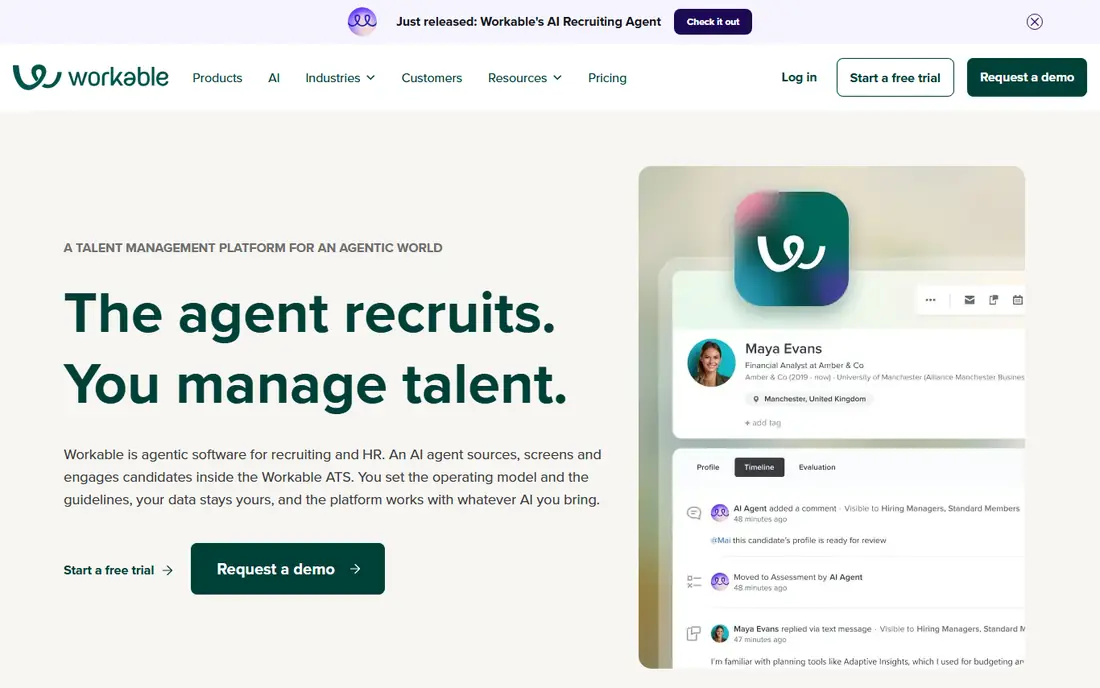
Workable works well when one small team hires for many different roles. You can post to multiple job boards, build a branded careers page, and move candidates through a clear pipeline without stitching together separate tools. Its sourcing tools help recruiters find passive candidates, and interview scheduling cuts down on back-and-forth email.
The catch is pricing structure. Workable prices by company size in many plans, so a growing company can pay more even in a quiet hiring month. Texting, video interviews, and assessments may also sit on higher tiers or add-ons. Still, for teams that want one system rather than five, it is a practical first choice.
- Wide job board distribution
- Sourcing and AI screening tools
- Hiring plus basic HR features in one account
- Price rises with company headcount
- Some advanced features are paid add-ons
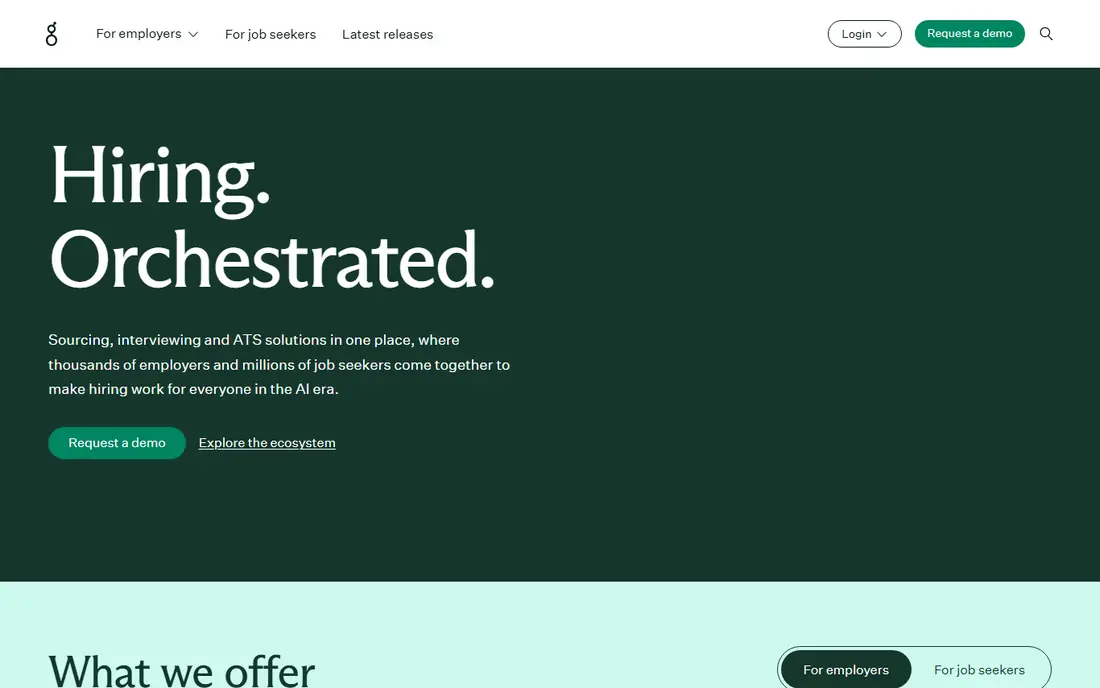
Greenhouse is built around a simple idea: every candidate for the same role should go through the same fair process. Interview kits, scorecards, and approval steps make that easier to enforce, and managers get a clear view of where each hire stands. That structure also helps with consistency when several interviewers are involved.
The trade-off is cost and setup time. Greenhouse does not publish prices, so you need a sales quote, and smaller teams may find the full setup more than they need. For mid-size and larger teams that care about hiring quality and defensible decisions, that discipline is often worth it.
- Strong structured interview kits and scorecards
- Deep reporting
- Large integration list
- No public pricing
- Can feel heavy for very small teams
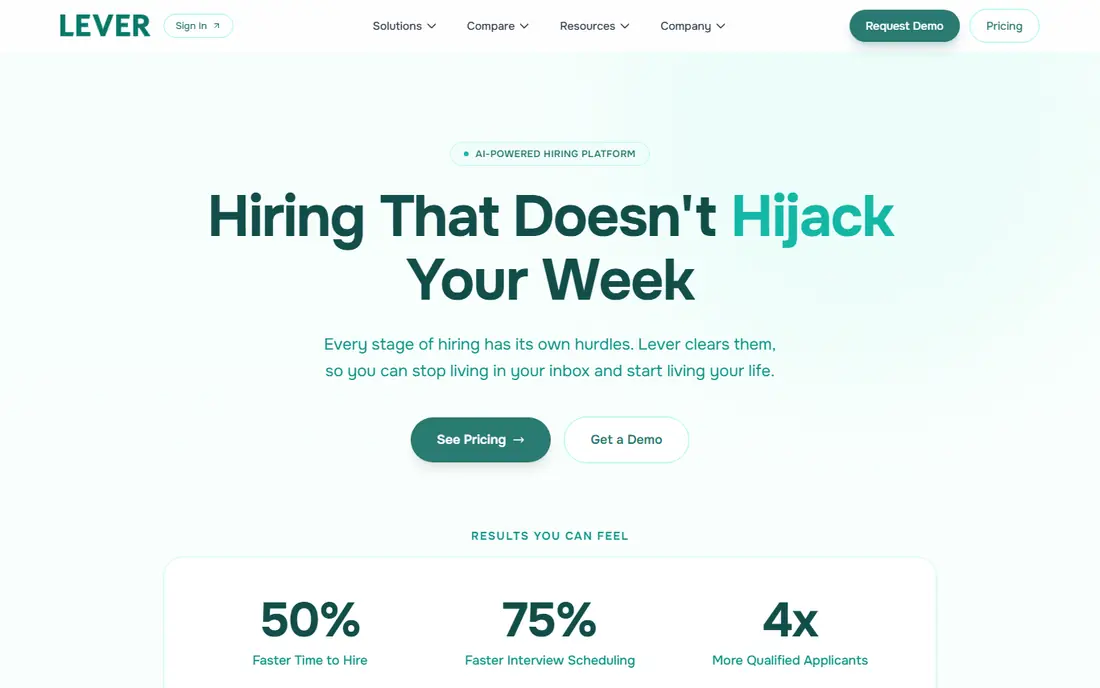
Lever treats recruitment as relationship work, not just application processing. Its CRM side lets teams keep in touch with strong candidates who are not right for a current role, then bring them back when a fit opens up. That approach suits companies that hire repeatedly for similar roles and want to shorten time to hire over time.
Lever is less appealing if you only hire a few people a year and do not want to maintain a talent pool. Pricing is custom, so budget planning takes a sales conversation. Teams that commit to pipeline building, though, get a system designed for that job from the start.
- Combined applicant tracking and candidate CRM
- Strong nurture tools
- Interview intelligence add-ons
- Quote-only pricing
- Best value requires active pipeline work
Zoho Recruit is the most affordable serious option on this list. The free plan covers basic hiring, and the paid tiers stay low compared with most rivals. Staffing agencies also get useful features, such as client and candidate management in the same system, which many low-cost tools lack.
The interface is functional rather than polished, and some users will need time to set up workflows the way they want them. If your company already uses Zoho apps, the value rises further, since data and logins connect across the suite. For cost-conscious teams, it is hard to beat.
- Low entry price and a free plan
- Applicant tracking plus CRM features
- Deep Zoho app integration
- Interface feels dated in places
- Advanced automation sits on higher tiers
Ashby appeals to teams that live in their hiring data. Reports on pipeline speed, source quality, and interviewer activity are built in, rather than bolted on through a separate reporting tool. Scheduling, sourcing, and candidate CRM features sit in the same product, which keeps the workflow tidy.
Smaller companies benefit most from its published pricing bands, which make early budgeting easier. Larger companies will need a custom quote, and Ashby lacks the decades-long track record of the biggest enterprise vendors. For startups and scaleups that want answers from their hiring data, it is a strong pick.
- Strong built-in analytics
- Applicant tracking, CRM, and scheduling in one product
- Published size-based pricing bands
- Price moves to custom quotes above certain company sizes
- Newer brand than some rivals
JazzHR keeps the hiring process simple. Small teams can post jobs, review candidates, collaborate on feedback, and send offers without a long implementation project. That simplicity matters when the person running hiring also runs other parts of the business.
It is not the tool for complex enterprise workflows or deep AI sourcing. Some features, such as extra job postings, cost more. If your main need is a clean, affordable applicant tracker that your whole team will actually use, JazzHR fits well.
- Simple setup
- Flat, predictable plan structure
- Useful compliance and reporting basics
- Fewer advanced sourcing and analytics features
- Add-ons can raise the total bill
Breezy HR suits teams that want to see hiring at a glance. Candidates move across a visual board, and hiring managers can leave feedback without learning a complex system. Built-in messaging, scheduling, and scorecards cover the daily work of most small hiring teams.
Larger teams may outgrow its reporting and permission controls. Pricing also needs a careful read, since monthly and annual rates differ. For growing companies that value speed and clarity over deep customization, Breezy HR is an easy tool to adopt.
- Drag-and-drop pipelines
- Good candidate messaging
- Mobile-friendly review
- Reporting is lighter than enterprise tools
- Pricing varies by plan and billing term
SmartRecruiters is designed for companies hiring across countries, languages, and business units. It handles large candidate volumes, varied approval chains, and branded career sites without forcing every team into the same narrow workflow. Its integration marketplace also helps larger HR stacks connect hiring to HR systems.
That scale comes with a sales-led buying process and an implementation effort that small teams do not need. If you hire in volume or across borders, those costs buy real control. If you hire a handful of people a year, a simpler tool will serve you better.
- Built for high-volume and multi-country hiring
- Strong marketplace of integrations
- Career site tools
- Quote-only pricing
- Implementation can take time at enterprise scale
iCIMS has long served large employers in regulated industries, and that focus shows in its compliance, reporting, and audit trail features. Teams that must document every hiring step, manage equal opportunity data carefully, and connect hiring to many other HR systems will find a mature platform here.
Smaller companies will likely find iCIMS more system than they need, and the price reflects its enterprise position. For large employers where a hiring mistake or a missing record carries real risk, that depth is the point, and iCIMS remains a safe shortlist choice.
- Deep compliance and audit features
- Very large integration set
- Proven at enterprise volume
- Quote-only pricing
- Setup and administration need dedicated time
How we picked these
We started from the main keyword and the related terms for top recruitment software for HR, then checked each vendor's own pricing and feature pages, plus app listings and public documentation. We kept only tools that are live in October 2026 and that cover applicant tracking as a core job, not as a side feature. We favored a mix of small-team, mid-market, and enterprise options, and we noted where pricing is unpublished so readers can plan for a sales quote.
What to check before you choose
Start with your hiring volume and who will use the tool every day. A team hiring two people a quarter needs a simple pipeline and good candidate messaging, while a team hiring fifty people a quarter needs bulk actions, strong reporting, and scheduling that scales. Ask each vendor how candidates apply on mobile, since many applicants will never open a desktop site.
Next, check the parts that create hidden costs. Ask what counts toward your plan limit: active jobs, users, company headcount, or candidates. Confirm whether texting, video interviews, assessments, and background checks are included or sold separately. Finally, run a real trial with one live role, including a hiring manager who is not in HR, and judge the tool by how fast that manager gives useful feedback.
Frequently asked questions
What is the best hr software for recruitment for a small business?
Workable, JazzHR, and Zoho Recruit are good starting points. Workable covers the most ground in one product, JazzHR keeps setup simple, and Zoho Recruit offers the lowest entry price. Pick the one your hiring managers find easiest during a trial, since adoption matters more than a long feature list.
What is the best recruitment software for HR teams that hire at scale?
Greenhouse, SmartRecruiters, and iCIMS suit high-volume hiring. They offer stronger reporting, approvals, and integrations than small-team tools. Expect a longer setup and a sales quote, and budget time for training hiring managers.
What is top-rated hr software for recruitment if we want strong reporting?
Ashby stands out for built-in analytics, with pipeline, source, and interviewer reports included rather than added later. Greenhouse also offers deep reporting on higher tiers. Compare the exact reports each vendor includes on your plan, not just on its top tier.
Do these tools replace a full HR system?
Not always. Most tools here focus on hiring, and some add light onboarding or HR features. If you need payroll, benefits, and performance management, pair an applicant tracker with a full HR platform, or choose a vendor that bundles both and confirm what the bundle actually includes.
How much should a small team expect to pay?
Costs range from free on Zoho Recruit's basic plan to a few hundred dollars a month for small-team plans elsewhere. Enterprise tools are quote-only and cost far more. Always confirm billing terms, user limits, and add-on prices before you compare headline rates.
Can candidates apply easily on a phone?
Yes, in most cases, but the experience varies. Test the application flow on a phone during your trial, including resume upload and screening questions. A long or broken mobile flow will lose candidates before your team ever sees them.
Sources
See where you really rank - block by block
ProMapRanker scans Google Maps across a grid of your service area. Simple monthly plans from $19, white-label on every plan.
Start freeKeep reading
 zoro.to alternatives
Best Zoro.to Alternatives in 2026
We compare the best zoro.to alternatives in 2026, listing only legal licensed anime streaming services, from Crunchyroll to free options for fans today.
Read → zip alternatives
Best Zip Alternatives in 2026
We compare the best zip alternatives for buy now, pay later in 2026, covering pay-in-4 plans, fees, spending limits, and credit reporting options today.
Read → yesware alternatives
Best Yesware Alternatives in 2026
Compare the best yesware alternatives for sales email tracking, templates, and sequences, with current pricing and honest tradeoffs for small sales teams.
Read →