 ProMapRanker
6 HR Software for Employee Management Options Ranked for 2026


Budget-friendly HR for small and expanding teams · Pricing starts at: See website
Direct answer
Zoho People leads the list, best for low-cost HR for small and expanding teams. Rippling is better for businesses wanting HR, IT, and payroll unified, and Workday HCM is better for large enterprises with complicated HR requirements. Prices, free plans and limits for all 6 tools follow.
Key takeaways
- Zoho People sits first on this list: low-cost HR for small and expanding teams.
- Zoho People is the only tool of the 6 with a free plan.
- Check the limits for Rippling before you commit: pricing brings up with modules.
- For mid-market firms wanting HR essentials done well, BambooHR is worth a look.
Quick comparison
| Pick | Great for | Pricing starts at | Free tier | |
|---|---|---|---|---|
| Zoho People | Budget-friendly HR for small and expanding teams | See website | Yes | Visit |
 Rippling | Businesses wanting HR, IT, and payroll unified | See website | Free trial | Visit |
 Workday HCM | Large enterprises with complicated HR requirements | See website | No | Visit |
 Deel | Hiring and managing international employees and contractors | See website | Free trial | Visit |
 HiBob | Modern mid-market firms with culture focus | See website | No | Visit |
 BambooHR | Mid-market businesses wanting HR essentials done well | See website | Free trial | Visit |
6 options for HR software for employee management in detail
ProMapRanker compared 6 tools for HR software for employee management. The goal is a practical shortlist: published prices, free plan facts, best-fit use cases and honest limits for every entry.
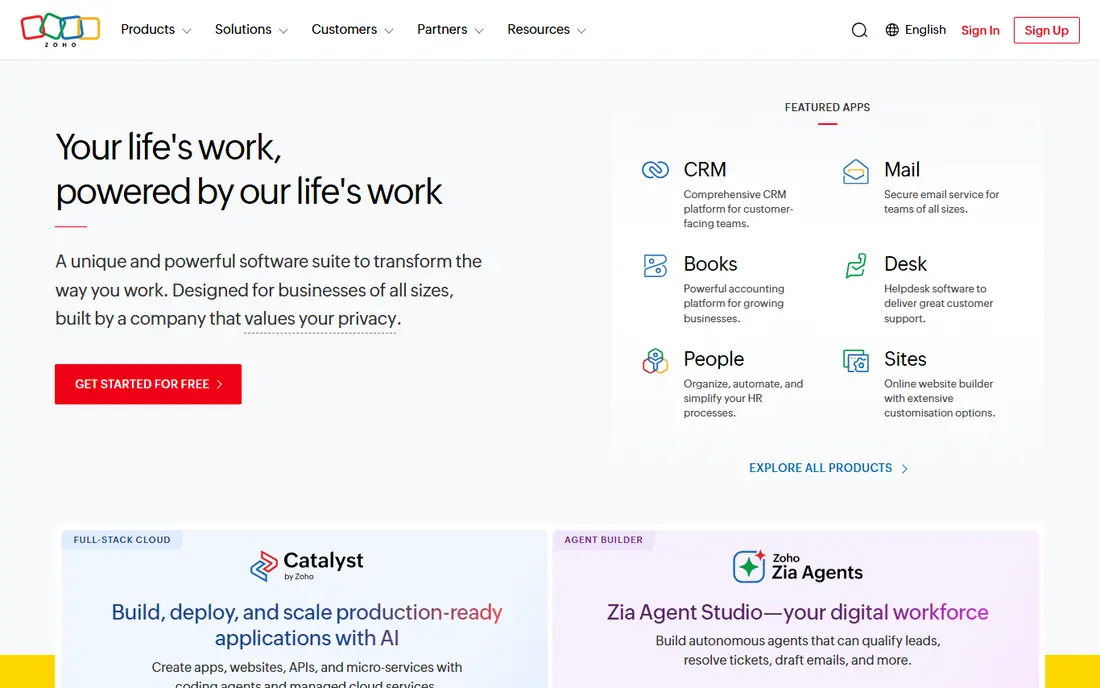
In short, Zoho People is for low-cost HR for small and expanding teams. Zoho People gives core HR, time off, attendance, onboarding, and performance tools at prices far below Western rivals, with a free plan for small teams. For budget-conscious teams that require real HR software instead of spreadsheets, the value is excellent.
Limits to weigh: Support can be slow.
As for the details, expect less polish and slower support than premium vendors. But on features per dollar, Zoho People is hard to beat. Zoho People does not show a starting price in this comparison, so check the vendor site for current pricing. Zoho People offers a free plan.
- Spans HR basics well
- Connects with Zoho suite
- Interface less refined
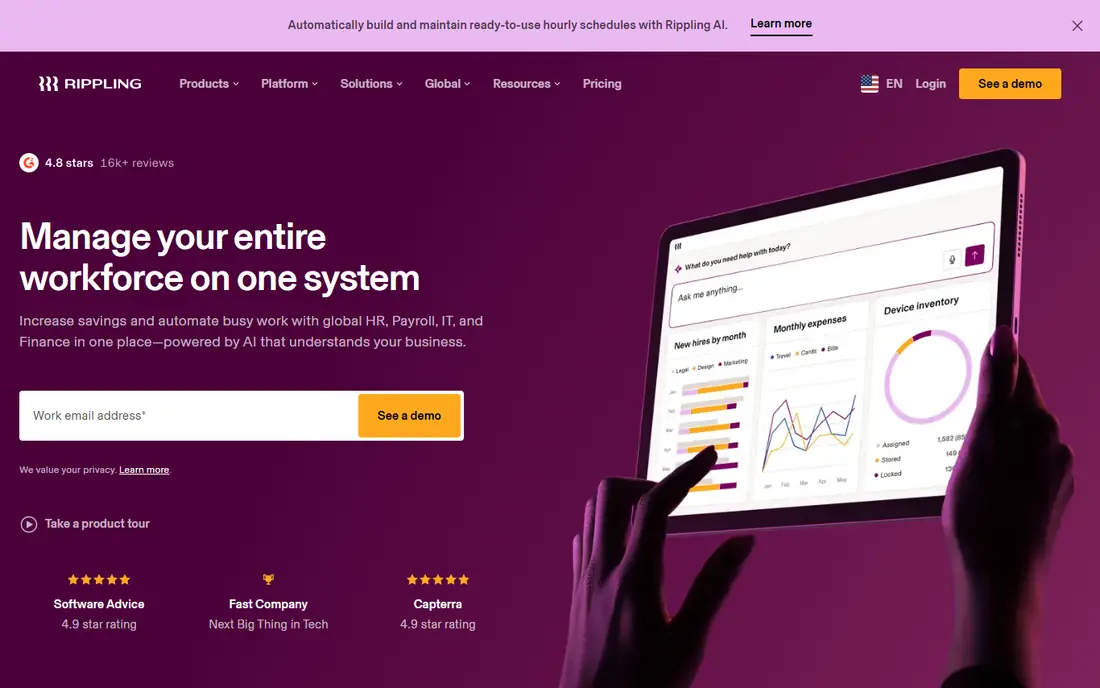
Choose Rippling for businesses wanting HR, IT, and payroll unified. Rippling's pitch is that employee management touches everything: when someone joins, HR, payroll, IT accounts, and app access should all provision from one action.
Honest limits: Pricing brings up with modules.
Beyond that, the workflow builder automates the repetitive admin that consumes HR weeks. No starting price is listed for Rippling here; confirm pricing on the vendor site. Free options: Free trial.
- Modern interface
- Capable automation
- Can be more than small teams need
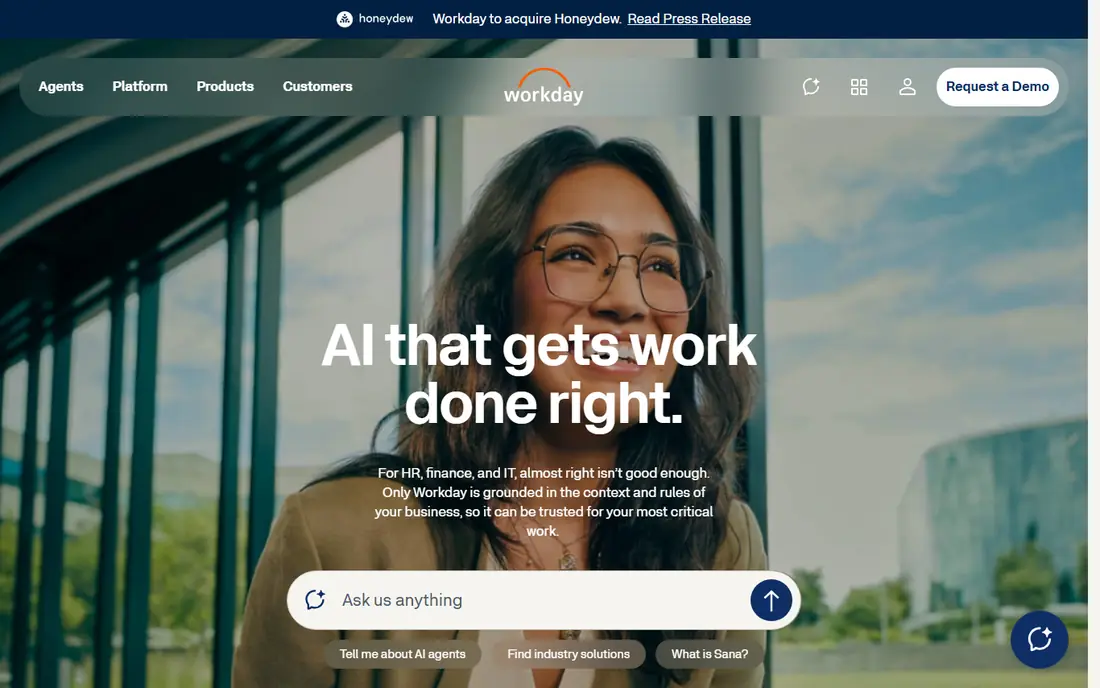
Where Workday HCM fits: large enterprises with complicated HR requirements. Its analytics help large organizations understand workforce trends across tens of thousands of employees.
Where it is weaker: Enterprise pricing.
Also, the ecosystem of partners and integrations is unmatched. Workday HCM does not show a starting price in this comparison, so check the vendor site for current pricing. Workday HCM has no free tier.
Where it shines: Solid analytics.
- Trusted by the largest employers
- Deepest enterprise HR functionality
- Needs dedicated administrators
Deel was built for hiring and managing international employees and contractors. The HRIS layer handles the employee management basics, though domestic-focused teams will find it thinner than BambooHR or HiBob. If your workforce spans borders, Deel is essential infrastructure.
Where it falls short: Support quality varies by region.
Strengths: Capable global compliance.
In practice, Deel solves the hardest HR problem for distributed businesses: employing people legally in countries where you have no entity. Its employer-of-record service takes care of contracts, payroll, taxes, and compliance across 100-plus countries. Contractor management is equally capable, with localized contracts and compliant payments. As for the details, if everyone sits in one country, compare it against domestic-first products. This comparison lists no price for Deel; ask the vendor. On free options: Free trial.
- Employer-of-record services
- Quick international onboarding
- Pricing varies by country
Pick HiBob if this describes you: modern mid-market firms with culture focus. Beyond core HR records, it emphasizes engagement surveys, recognition, and culture tools that help distributed teams feel connected.
Watch-outs: Pricing is quote-based.
Payroll runs through partners instead of natively, which is worth noting. On top of that, for culture-conscious businesses outgrowing small-business tools, HiBob is a leading choice. Check the vendor site for HiBob pricing; none is listed in this comparison. HiBob has no free tier. Reasons to shortlist it: Well-regarded support.
- Well suited to distributed teams
- Engaging interface
- Payroll via partners
Pick BambooHR if this describes you: mid-market companies wanting HR essentials done well. HR teams consistently rate it among the easiest systems to administer. Worth adding: payroll is a separate add-on instead of native, and pricing is quoted.
The main drawbacks: Pricing is quote-based.
The onboarding workflows and e-signatures get new hires productive rapidly, and the reporting handles the workforce questions executives ask. For businesses from 50 to a handful of thousand employees, it remains the safest all-round pick. More specifically, an open API and marketplace extend it into payroll, benefits, and recruiting. BambooHR does not show a starting price in this comparison, so check the vendor site for current pricing. On free options: Free trial.
- Well-liked by HR teams
- Good reporting
- Advanced features need higher levels
More on HR software for employee management
At minimum it handles employee profiles, time off, onboarding, and document storage. In practice, better products add performance reviews, goals, engagement surveys, and org charts. For everyday use, the comparisons below note free plans and trials where they exist.
Selection criteria
Each tool was reviewed on what its vendor publishes: price, plan limits, core features and stated drawbacks. We did not run hands-on tests. Where a vendor does not publish a price, the entry says quote. Where a price depends on seats or billing term, the entry says so. Tools are placed by general fit for HR software for employee management, with price clarity and free access as tie-breakers. A different team can reasonably rank them differently.
Things to verify first
- Confirm the entry price with every vendor: no tool from Zoho People to BambooHR shows a fixed starting price.
- Test the free plan from Zoho People against your real workload before relying on it.
- Run a trial of Rippling, Deel and BambooHR with real work before paying for a year; your own workflow is the best test.
- Before choosing Zoho People, weigh its main limit: interface less refined.
- Before you load data into Zoho People, check what an export looks like and who can run it.
- Look at the renewal terms for Rippling: auto-renewal, notice periods and price changes can matter more than the first-year price.
Frequently asked questions
Can I try these tools before paying?
Often, yes. Zoho People has a free plan and Rippling, Deel and BambooHR offer a free trial. Use your own data and a real task during the test, and check what the free tier or trial limits before you rely on it.
Which options for HR software for employee management have a free plan?
Zoho People is the only tool in this list with a free plan. Free plans usually cap users, projects or features, so check the limits on the vendor page. Several others offer a trial instead.
How are the tools for HR software for employee management ordered?
The order follows typical fit for HR software for employee management, with Zoho People first and BambooHR last, then price clarity and free access. It is editorial judgement, not a score, so another team could rank the tools differently.
What is the difference between HRIS, HCM, and HRMS?
HRIS emphasizes the system of record, HCM emphasizes talent strategy, and HRMS is the older umbrella term. Vendors use them interchangeably; focus on features, not labels.
How much does HR software cost?
Small-business tools run roughly $6 to $15 per employee a month. Mid-market products are frequently quote-based but land higher. Enterprise HCM is a six-figure annual commitment.
How long does implementation take?
Small-business tools go live in days. Mid-market products generally take four to twelve weeks including data migration. Enterprise HCM takes six to eighteen months.
Sources
See where you really rank - block by block
ProMapRanker scans Google Maps across a grid of your service area. Simple monthly plans from $19, white-label on every plan.
Start freeKeep reading
 zscaler alternatives
Best Zscaler Alternatives in 2026
Looking for zscaler alternatives? We compare 9 SASE and zero trust platforms on architecture, data protection, pricing, and fit for your network and team.
Read → zapier alternatives free
Best Zapier Alternatives Free in 2026
Nine automation tools for zapier alternatives free in 2026, all with genuinely free tiers, plus free plan limits, starting prices and upgrade paths explained.
Read → which platform is best for online reputation
Which Platform Is Best for Online Reputation in 2026
Wondering which platform is best for online reputation? We compare 8 review, listing, and response tools for small and multi-location businesses and agencies.
Read →