 ProMapRanker
Best Hotel Revenue Management Software in 2026

Key takeaways
- RoomPriceGenie and happyhotel are the best starting points for independents and small hotels that want automated pricing without a revenue team.
- Duetto and IDeaS lead for larger hotels and groups that need deep forecasting, group pricing, and multi-property control.
- BEONx suits hotels that want to manage total profit per guest, not just room revenue, while Lighthouse suits teams that also need live rate intelligence.
- Enterprise RMS pricing is mostly quote-based, so request an all-in quote for your room count and property management system before comparing.
Quick comparison
| Pick | Great for | Pricing starts at | Free tier | |
|---|---|---|---|---|
 Duetto | Boutique, city, and casino hotels | See website | No | Visit |
 IDeaS | Branded and luxury hotels | $1,200 per month | No | Visit |
 RoomPriceGenie | Independent hotels | See website | Free trial | Visit |
 Atomize | Independent hotels on Mews | See website | Free trial | Visit |
 BEONx | Profit-focused hotels and groups | $800 per month | No | Visit |
 Lighthouse | Rate intelligence plus pricing | See website | Free trial | Visit |
 happyhotel | Small independent hotels | $5 per room per month | Free trial | Visit |
 Pricepoint | Boutique hotels and hostels | $500 per month | Free trial | Visit |
 FLYR Hospitality | Cross-functional hotel teams | $700 per month | No | Visit |
The best hotel revenue management software
A revenue management system, or RMS, decides what your rooms should cost. It reads demand, booking pace, competitor rates, and events, then recommends or sets prices across channels. That job differs from a channel manager, which only distributes rates you have already set. We compared vendor pages and recent hotel technology comparisons, and we picked tools that cover independents, boutiques, and enterprise groups.
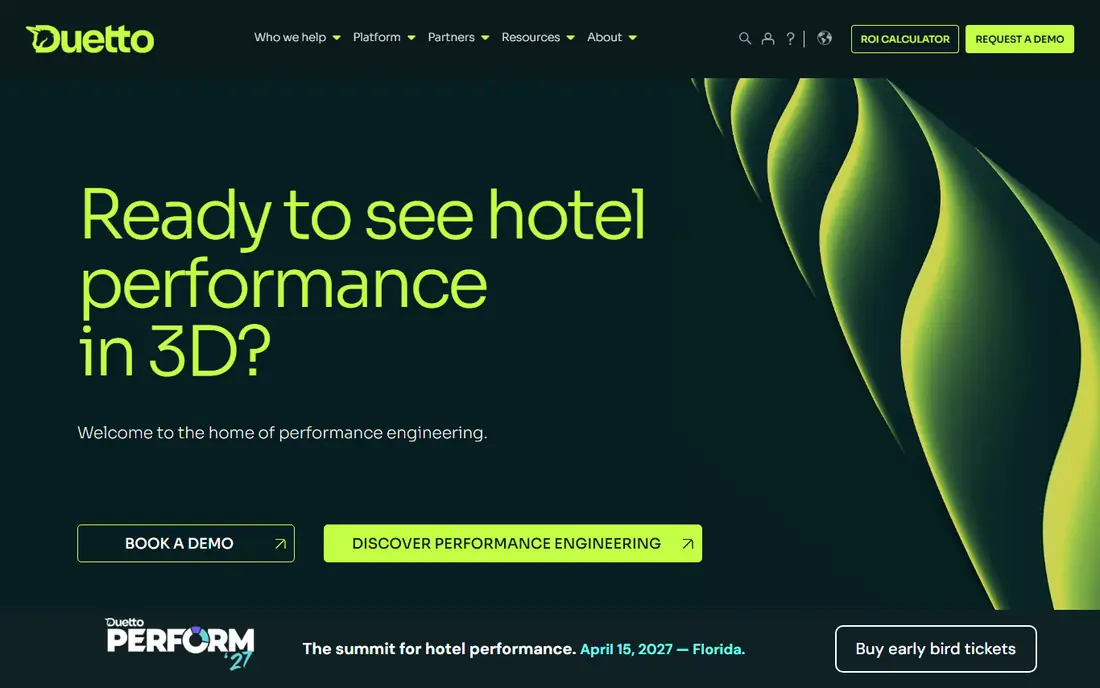
Duetto, through its GameChanger product, is built for hotels that want control over pricing rather than a single recommended rate. Its open pricing approach lets revenue managers set different prices by segment, channel, and room type, then test how those choices affect demand. Analytics, forecasting, and reporting give experienced teams the detail they need to defend rate decisions to owners and general managers.
The trade-off is complexity and cost. Pricing is by quote and typically runs to five figures a year for larger properties, and implementation takes weeks rather than hours. Smaller hotels without a revenue manager may find the depth overwhelming. For a boutique, city, or casino hotel with a dedicated revenue lead, the control is the reason to shortlist it first.
- Open pricing model
- Deep analytics and forecasting
- Strong multi-property tools
- Quote-only pricing
- Needs expertise and setup time
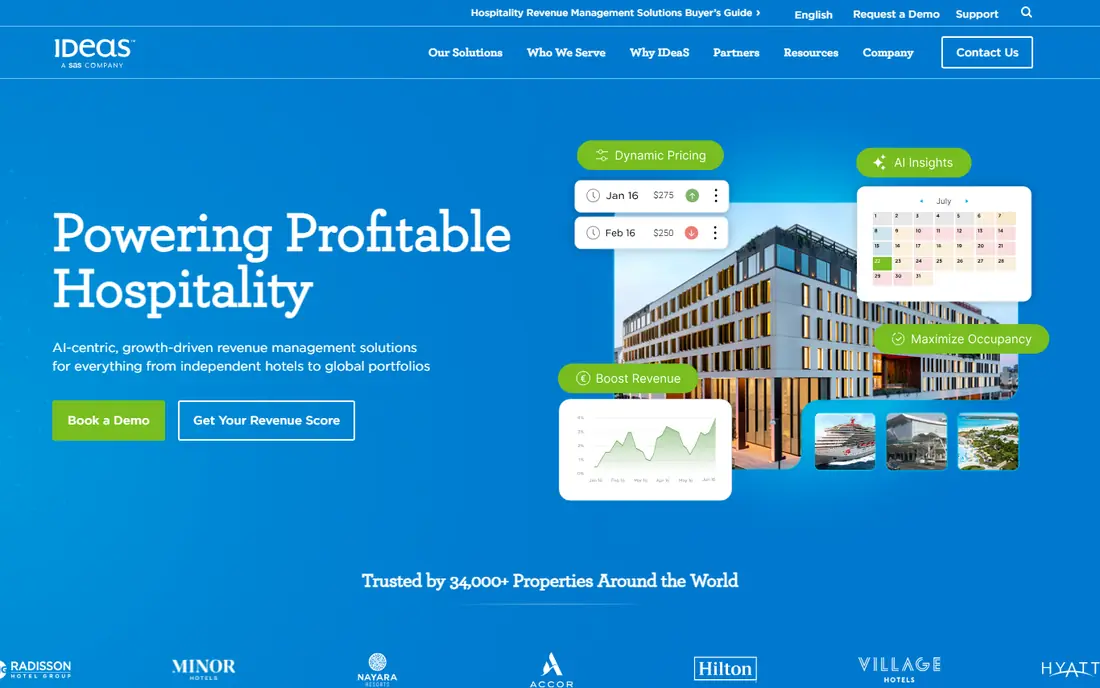
IDeaS is the enterprise standard for branded and luxury hotels, and its strength is forecasting at scale. The system combines demand data, booking patterns, and market signals to set prices across room types, lengths of stay, and segments, with tools for group pricing and multi-property management. Its integration network covers major property management systems and channel partners, which matters when a hotel runs many connected systems.
Pricing starts around $1,200 a month on published comparisons, with higher costs for larger portfolios and added modules. Implementation takes weeks and suits teams with revenue experience. Independent hotels with under 80 rooms will usually get better value from an automated tool, but for chains and large hotels, IDeaS remains the benchmark other systems are measured against.
- Deep forecasting and optimisation
- Huge integration network
- Proven at chain scale
- Expensive entry point
- Smaller hotels may find it overwhelming
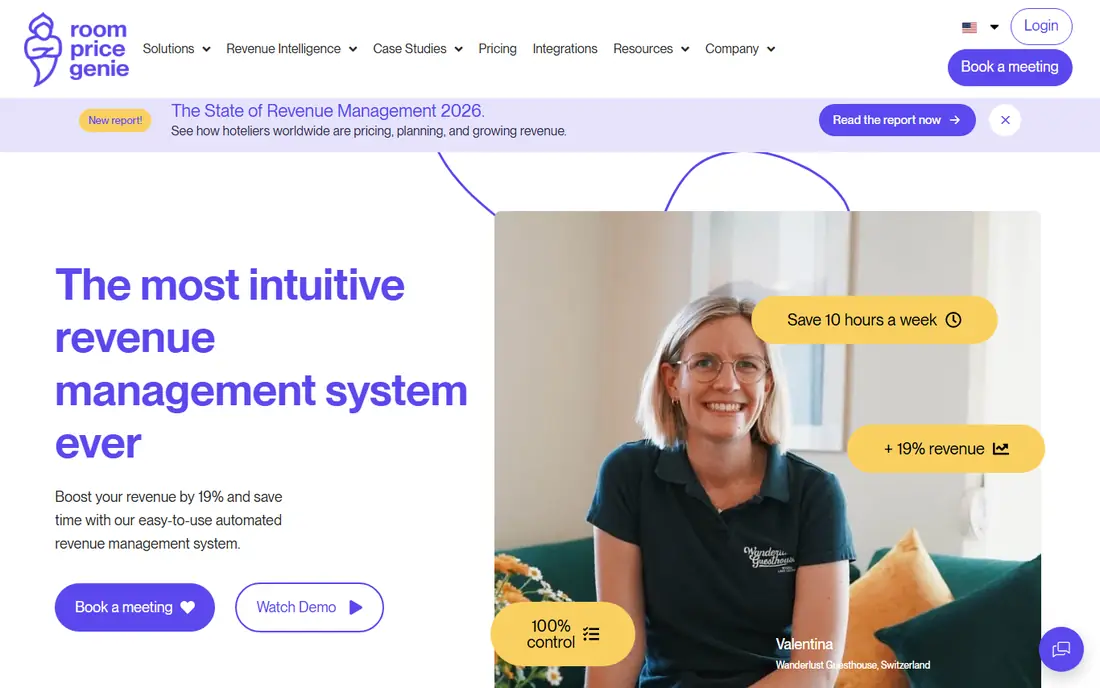
RoomPriceGenie is built for independent hotels, boutiques, and small groups that want automated pricing without hiring a revenue manager. The system analyses demand and competitor data, recommends rates, and can update them automatically through an autopilot mode. Setup is measured in hours rather than weeks, and the interface is designed for general managers who also run the front desk.
Published pricing varies by source and by property size, so we list See website and recommend a direct quote for your room count. The honest limit is customisation. Hotels that need deep group pricing, complex forecasting, or multi-property analytics will outgrow it. For a small hotel that still changes rates manually or seasonally, the time saved and the pricing lift usually justify the subscription quickly.
- Fast setup
- Automated pricing with autopilot option
- Built for small teams
- Less customisation than enterprise tools
- Published prices vary by source
Atomize, now part of Mews, offers machine-learning pricing that updates in real time as demand and market conditions change. For hotels already running Mews as their property management system, the native connection removes integration work and keeps rates, availability, and reservations in sync. Independent hotels report strong revenue gains from the automation, because prices react to demand shifts that manual updates miss.
The catch is ecosystem fit. Hotels on other property management systems can still use Atomize, but the smoothest setup sits inside Mews, so buyers should confirm integration depth for their own system. Pricing is by quote and varies with property size. For a Mews hotel that wants hands-off pricing, it is one of the strongest options on this list.
- Real-time price updates
- Native fit with Mews
- Strong results for independents
- Best value inside the Mews ecosystem
- Pricing by quote
BEONx, formerly Beonprice, pushes hotels past room revenue alone and toward total profit per available guest, a measure it calls RevPAG. The platform combines demand forecasting, competitor data, and automated rate updates with analytics on ancillary spend, so a hotel can judge whether a lower room rate that fills the restaurant actually earns more overall. Group pricing, market intelligence, and scenario analysis support larger portfolios.
Pricing starts at $800 a month with no implementation fee on published comparisons, which makes budgeting predictable. There is no free trial, so buyers should request a demo on their own data before signing. Smaller hotels that want simple automation may find the depth more than they need, but for groups and profit-focused independents, the broader view is a genuine advantage.
- Focus on total profit per guest
- Strong forecasting and scenario tools
- High user ratings
- No free trial
- Needs a team that can use its depth
Lighthouse, formerly OTA Insight, combines live rate intelligence with revenue tools, which makes it useful even for hotels that are not ready for full automation. Teams can shop competitor rates, track parity across channels, and watch market demand in real time, then use those signals to set prices manually or through its pricing tools. Business intelligence dashboards pull performance data into one view for owners and managers.
Pricing is by quote and varies with property size and modules chosen, so a direct conversation is needed to compare it fairly. The risk is underuse: a hotel that only checks competitor rates pays for pricing depth it never touches. Buyers should decide during the trial which job Lighthouse will own, intelligence, pricing, or both, and staff that job accordingly.
- Live rate shopping and market intelligence
- Pricing plus business intelligence in one place
- Wide adoption
- Quote-only pricing
- Some hotels buy it for intelligence alone and underuse pricing
happyhotel suits small independent hotels in Europe and beyond that want automated pricing at a price a 20-room property can justify. At $5 per room per month on published comparisons, a small hotel pays roughly $100 a month, and setup takes a day or two rather than weeks. The system recommends rates from demand and market data and updates them automatically, which beats manual seasonal pricing for most small teams.
The limits are depth and scale. Forecasting, group tools, and multi-property analytics are thinner than in enterprise systems, and the integration network is smaller. Hotels that grow into chains or need complex group business will need to move up. For a small hotel taking its first step into revenue management, the low cost and fast start make it an easy trial.
- Very low entry cost
- Fast setup
- Simple automated pricing
- Thinner forecasting than enterprise tools
- Smaller integration network
Pricepoint offers demand-driven pricing automation for boutique hotels, hostels, and small groups that want quick results without a revenue team. The system reads real demand signals, sets rates automatically, and updates them as bookings change, with support that hotel technology reviewers rate highly. Implementation takes one to two weeks, which sits between the fastest small tools and the slowest enterprise platforms.
Pricing starts at $500 a month on published comparisons, which is higher than happyhotel for a very small property but lower than enterprise systems for a boutique hotel. Large chains with complex group and multi-property needs will want Duetto or IDeaS instead. For a boutique hotel that wants automation plus a responsive support team, Pricepoint is a practical middle option.
- Demand-driven automation
- Quick implementation
- Good support ratings
- Higher entry price than happyhotel
- Less suited to large chains
FLYR Hospitality combines revenue management with forecasting and business intelligence, aimed at teams where revenue, sales, and operations share decisions. The platform automates rate recommendations, forecasts demand across segments, and presents performance data in dashboards that non-revenue managers can read. That shared view helps hotels where pricing decisions affect housekeeping, front desk, and sales at once.
Pricing starts at $700 a month on published comparisons, with final quotes varying by property size and scope. There is no free trial, so a demo on real property data matters. Hotels that want a single deep RMS with enterprise forecasting may still prefer Duetto or IDeaS, but teams that value a modern interface and cross-functional reporting should give FLYR a serious trial.
- Strong forecasting and business intelligence
- Automation with team workflows
- Modern interface
- Quote varies by property
- Newer brand in a crowded market
How we picked these
We compared vendor pages and recent hotel technology rankings and comparisons, and we kept tools that still operate in 2026 and serve hotels rather than vacation rentals alone. Where published prices conflicted across sources, we used See website or the most recent comparison figure, and we flagged quote-only tools clearly. The list spans low-cost automation for independents through enterprise forecasting, so readers can match the tool to property size and team skill.
How to trial an RMS without regret
Run the trial on your own data and your own property management system, not on a vendor demo property. Connect the PMS, let the system price a real fortnight, and compare its recommendations with the rates you would have set by hand. Check how often it updates, how it handles group blocks and events, and what happens when a channel connection fails.
Also confirm the full cost before signing. Ask for the monthly fee at your room count, implementation charges, integration fees, and renewal terms in writing. A tool that lifts revenue by a few percent still fails if its fee, contract length, and staff time outweigh the gain, so measure the lift in the trial and set a clear threshold for continuing.
Frequently asked questions
What is the best revenue management software for hotels?
IDeaS and Duetto lead for enterprise hotels and chains, while RoomPriceGenie and happyhotel lead for independents and boutiques. The best choice depends on property size, team skill, and whether you need deep forecasting or simple automation. Small hotels should trial an automated tool first and move up only when its limits bite.
How much does hotel revenue management software cost?
Entry-level tools start at $5 per room per month for happyhotel, while mid-tier tools start around $500 to $800 a month for Pricepoint, BEONx, and FLYR. Enterprise platforms such as Duetto and IDeaS are quote-based and typically cost five figures a year for larger properties. Always request an all-in quote for your room count.
What is the best revenue management software for small hotels?
RoomPriceGenie and happyhotel are the strongest picks for small hotels, because both offer automated pricing with fast setup and no need for a dedicated revenue manager. happyhotel suits the smallest properties on price, while RoomPriceGenie suits independents up to around 80 rooms that want an autopilot option.
How is an RMS different from a channel manager?
A channel manager distributes your rates and availability to booking sites and prevents double bookings, while an RMS decides what those rates should be. Most hotels run both together, with the RMS setting prices and the channel manager pushing them out. Lighthouse bundles rate intelligence with pricing, but most properties still use a separate channel tool.
Do I need revenue management software for a small hotel?
If you change rates manually or only by season, yes, because automated tools often pay for themselves through a handful of better-priced nights each month. A free trial lets you measure the lift before committing, and low-cost tools such as happyhotel keep the risk small. Hotels with stable, contracted demand may gain less and should trial before buying.
What is RevPAR and why does it matter?
Revenue per available room is your average daily rate multiplied by occupancy, and it is the standard measure of hotel revenue performance. Revenue management software aims to raise it by pricing rooms to balance rate and occupancy, rather than chasing either one alone. BEONx goes further by tracking total profit per guest, which adds restaurant and other spend to the picture.
Sources
See where you really rank - block by block
ProMapRanker scans Google Maps across a grid of your service area. Simple monthly plans from $19, white-label on every plan.
Start freeKeep reading
 zscaler alternatives
Best Zscaler Alternatives in 2026
Looking for zscaler alternatives? We compare 9 SASE and zero trust platforms on architecture, data protection, pricing, and fit for your network and team.
Read → zapier alternatives free
Best Zapier Alternatives Free in 2026
Nine automation tools for zapier alternatives free in 2026, all with genuinely free tiers, plus free plan limits, starting prices and upgrade paths explained.
Read → which platform is best for online reputation
Which Platform Is Best for Online Reputation in 2026
Wondering which platform is best for online reputation? We compare 8 review, listing, and response tools for small and multi-location businesses and agencies.
Read →