 ProMapRanker
Best Hospitality Software in 2026

Key takeaways
- Cloudbeds and Mews suit hotels that want reservations, payments, and daily operations in one place rather than several separate tools.
- SiteMinder and Oracle OPERA Cloud fit larger or multi-property operations where distribution and control matter more than a low entry price.
- RoomRaccoon, Hotelogix, and Little Hotelier are easier starting points for smaller properties, though some advanced tools cost extra.
- Apaleo and Stayntouch stand out for teams that value open connections or a mobile-first front desk, and both need a careful demo before signing.
- Pricing is often quoted by property size, so confirm the full monthly total, including payments and add-ons, before you commit.
Quick comparison
| Pick | Great for | Pricing starts at | Free tier | |
|---|---|---|---|---|
 Cloudbeds | All-in-one hotel operations | See website | No | Visit |
 Mews | Modern cloud hotels and groups | See website | No | Visit |
 SiteMinder | Wide channel distribution | See website | No | Visit |
 Oracle OPERA Cloud | Large hotels and chains | See website | No | Visit |
 RoomRaccoon | Small and mid-size independents | See website | No | Visit |
 Hotelogix | Budget-conscious small hotels | See website | No | Visit |
 Apaleo | API-first hotel tech stacks | See website | No | Visit |
 Stayntouch | Mobile front desk teams | See website | No | Visit |
 Little Hotelier | Small properties and bed and breakfasts | See website | No | Visit |
The best hospitality software
Here are nine platforms that cover hotels of different sizes, from small inns to large chains.
We compared hotel platforms on reservations, channel connections, payments, housekeeping, guest messaging, and how clear the pricing was. The list below covers large chains, boutique hotels, and small inns, so match the pick to your size and your current booking mix.
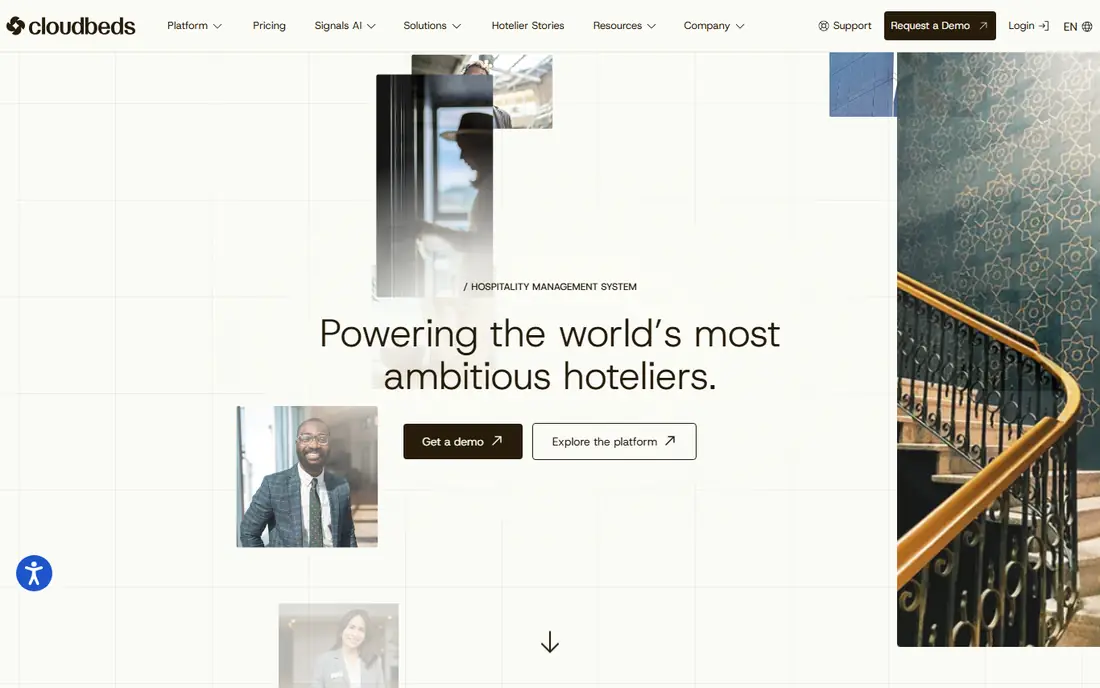
Cloudbeds brings a property management system, channel manager, booking engine, and payments together, which helps independent hotels avoid stitching four vendors together. Front desk staff can work from one calendar, while housekeeping and rate updates sit in the same system. That single view matters most when a small team handles reservations, check-in, and guest messages in the same shift.
The trade-off is cost clarity. Published pricing varies by property type and size, so a quote is needed for a firm monthly figure. Hotels that already use a separate revenue tool should also check what is included and what is sold as an add-on, since the core plan and the full marketing set are not the same purchase.
- Wide channel connections
- Built-in booking engine
- Payments and guest tools in one system
- Pricing is quote-based
- Larger properties may need add-ons for advanced revenue tools
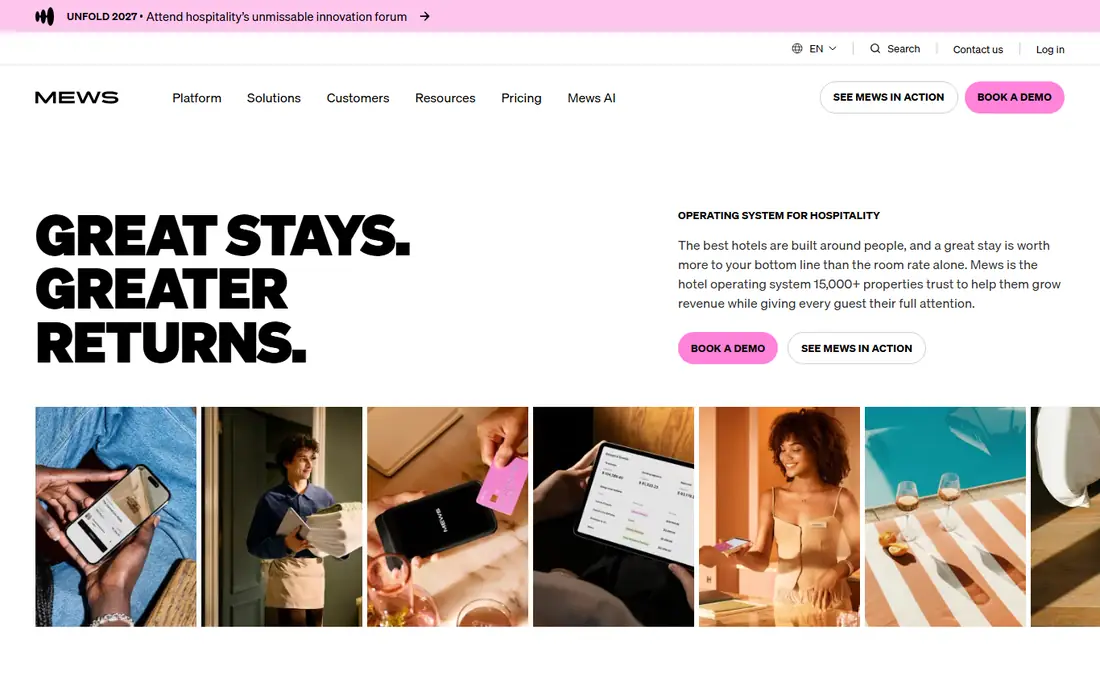
Mews is built around automation, with online check-in, payments, and guest messaging designed to reduce front desk queues. Its marketplace and open interface make it a practical choice when a hotel already uses a specific revenue, review, or messaging tool and wants those systems to share data. Multi-property groups also gain central control without forcing every site onto a rigid template.
The main drawback is that the platform rewards planning. Teams that rush setup may end up with workflows that do not match how their staff actually work. Ask for a demo using your room types, rate plans, and payment setup, and confirm onboarding help before you sign.
- Strong automation
- Open connections to other hotel tools
- Multi-property support
- Quote-based pricing
- Setup can take more planning for complex properties

SiteMinder is best known for distribution. Hotels that sell through many online travel agencies can update rates and availability from one place, which cuts the risk of double bookings and stale inventory. That control is valuable for properties with changing weekend rates, seasonal demand, or a large share of third-party bookings.
SiteMinder is not always the cheapest route for a hotel that mainly takes direct bookings. If most guests book on your own site, compare the distribution value against a simpler PMS with a booking engine. The right test is your current channel mix, not the size of the channel list alone.
- Broad booking channel reach
- Central rate and inventory control
- Useful for multi-channel hotels
- Can cost more than a simple PMS
- Some features sit in separate products
Oracle OPERA Cloud is the enterprise end of this list. It handles complex rate structures, group blocks, multi-property reporting, and chain standards in a way that smaller tools cannot match. For a large hotel or a brand with central rules, that depth is the point, and the system is designed to fit a formal operating model.
Smaller hotels should be cautious. Implementation, training, and ongoing administration take real staff time, and the total cost goes beyond the subscription. This is a strong pick when scale and control justify that effort, and a poor fit when a team wants to be live in a few weeks with minimal setup.
- Deep chain and group features
- Broad integration options
- Proven at large scale
- Implementation can be long
- Pricing is complex and usually high
RoomRaccoon aims at independent hotels that want one system for reservations, channels, direct bookings, and payments. The daily workflow is direct, with a calendar view that staff can learn without long training. For a boutique hotel or inn, that simplicity can matter more than a long feature list that the team never uses.
The limit appears at scale. Hotels with complex group business, many room types, or custom workflows may find the structure too fixed. Check the payment options and channel list for your market, since those details affect revenue more than a general feature claim.
- Clear all-in-one setup
- Built-in channel manager and booking engine
- Simple daily workflow
- Less suited to very large or highly custom operations
- Some markets have stronger local support than others
Hotelogix gives smaller hotels a practical route into cloud property management without an enterprise budget. It covers reservations, front desk work, housekeeping, and basic distribution, and hotels can add modules as needs grow. That modular path suits properties that want to start small and expand step by step.
Buyers should map the modules carefully. A low starting figure can rise once channel management, a booking engine, or payment tools are added. Ask for a written list of what is included at the quoted price, and test the housekeeping and reporting views during the trial or demo.
- Lower-cost entry point
- Modular tools
- Covers front desk, housekeeping, and bookings
- Some tools are add-ons
- Interface feels less modern than newer rivals
Apaleo takes a different approach from an all-in-one suite. Its core PMS is open by design, so hotels can connect best-fit tools for booking, payments, messaging, and revenue from its marketplace. That flexibility suits hotel groups with in-house tech skill or a trusted integrator who can build a stack around the core.
The risk is the opposite of a closed suite. If no one on your team owns integrations, the project can stall or depend heavily on partners. Apaleo is a strong choice when you want control over the stack, and a weaker choice when you want one vendor to handle almost everything.
- Open API and marketplace approach
- Flexible for custom guest journeys
- Cloud-based core
- Needs technical skill to get full value
- Booking and channel tools often come through partners
Stayntouch focuses on the front desk experience, with mobile tools that let staff work away from a fixed desk and guests complete steps before arrival. That mobility helps during busy check-in periods and for properties where staff cover several areas. It also supports multi-property work, which suits small chains and management companies.
The platform is less about building a custom tech stack from scratch. Hotels that want deep custom development may prefer Apaleo, while hotels that want a clear, staff-friendly PMS will find Stayntouch easier to adopt. Confirm guest messaging, payments, and channel connections in the demo, since those vary by setup.
- Mobile-friendly front desk
- Contactless check-in options
- Multi-property tools
- Quote-based pricing
- Fewer custom options than API-first rivals
Little Hotelier is made for small accommodation providers, including bed and breakfasts, guesthouses, and small inns. It combines a front desk calendar, a booking engine, and channel connections in a format that a small team can run without a dedicated revenue manager. The focus is on filling rooms and keeping daily work simple.
Larger hotels will outgrow it. Group bookings, complex rate rules, and deep reporting are not its strengths. For a small property, though, that narrow focus is an advantage, since staff spend less time learning tools they do not need.
- Simple setup for small teams
- Booking engine and channel links included
- Easy daily calendar
- Limited depth for large hotels
- Advanced revenue tools are basic
How we picked these
We compared official product pages, pricing pages, channel and integration lists, and public user reviews for hotel PMS and distribution tools. We kept only platforms that are live in October 2026 and that cover core hotel work, such as reservations, availability control, and guest handling. Where a vendor quotes by property size, we wrote See website rather than guessing a monthly figure.
What to check before you sign
Start with your booking mix. A hotel that gets most bookings direct needs a strong booking engine and payment flow, while a hotel that relies on online travel agencies needs channel control and rate sync first. List your top five channels, your payment provider, and your housekeeping routine, then test each shortlisted system against that list.
Next, check the total cost. Ask for the monthly subscription, payment processing fees, onboarding charges, and the price of each add-on you plan to use. Also ask about contract length, data export, and what happens to guest data if you leave. A system that is hard to leave can cost more over time than a slightly higher monthly fee.
Finally, involve the people who will use it daily. Front desk staff, housekeeping leads, and revenue staff notice problems that a sales demo hides, such as slow check-in steps or awkward rate changes. Give them a trial task list, such as moving a booking, changing a rate, checking a guest in, and finding a past stay, and score each system on those tasks.
Frequently asked questions
What is the best hospitality software for a hotel chain?
For chains, Oracle OPERA Cloud and Mews are strong starting points, since both support multi-property control and chain-level reporting. The best choice depends on how centralised your rate rules are and how much custom integration your team can support.
What is the best software for a small hotel?
Cloudbeds, RoomRaccoon, Hotelogix, and Little Hotelier all suit smaller properties, with Little Hotelier fitting the smallest teams best. Compare the booking engine, channel list, and payment options for your market before choosing on price alone.
Are these hospitality apps free?
Most full hotel platforms in this list are paid and quote-based, with no free plan for a live property. A demo or trial may be available, but confirm the length and what is included, since trials often exclude payments or live channel connections.
Do I still need a channel manager if I use a PMS?
Many modern PMS platforms include a channel manager or connect to one, so you may not need a separate tool. Check that your key channels are covered and that rate and inventory updates sync quickly, since a slow sync can cause overbookings.
How long does it take to switch hospitality software?
A small property can often move in a few weeks, while a large hotel or chain may need several months for setup, training, and data migration. Allow extra time for payment setup, channel testing, and staff training, and avoid switching during your peak season if you can.
Sources
See where you really rank - block by block
ProMapRanker scans Google Maps across a grid of your service area. Simple monthly plans from $19, white-label on every plan.
Start freeKeep reading
 zscaler alternatives
Best Zscaler Alternatives in 2026
Looking for zscaler alternatives? We compare 9 SASE and zero trust platforms on architecture, data protection, pricing, and fit for your network and team.
Read → zapier alternatives free
Best Zapier Alternatives Free in 2026
Nine automation tools for zapier alternatives free in 2026, all with genuinely free tiers, plus free plan limits, starting prices and upgrade paths explained.
Read → which platform is best for online reputation
Which Platform Is Best for Online Reputation in 2026
Wondering which platform is best for online reputation? We compare 8 review, listing, and response tools for small and multi-location businesses and agencies.
Read →