 ProMapRanker
Best Hospital Management Software in 2026

Key takeaways
- Epic is our pick for large US health systems because it covers clinical, operational, and revenue work in one platform with a widely used patient portal.
- Oracle Health and MEDITECH suit large hospitals and academic centres that need deep inpatient, pharmacy, and laboratory coverage.
- athenahealth and eClinicalWorks suit ambulatory practices and smaller hospitals that want cloud-based records, scheduling, and billing together.
- NextGen and Veradigm suit specialty and multi-site practices that need configurable workflows and payer connections.
- MocDoc HMS suits smaller hospitals and clinics that want a broad, cloud-based system at a more accessible price point.
Quick comparison
| Pick | Great for | Pricing starts at | Free tier | |
|---|---|---|---|---|
 Epic | Large health systems | See website | No | Visit |
 Oracle Health | Large hospitals and academic centres | See website | No | Visit |
 MEDITECH Expanse | Community and mid-size hospitals | See website | No | Visit |
 athenahealth | Ambulatory practices and billing | See website | No | Visit |
 eClinicalWorks | Small to mid-size practices | See website | No | Visit |
 NextGen Healthcare | Specialty and multi-site practices | See website | No | Visit |
 Veradigm | Practices needing payer and EHR links | See website | No | Visit |
 MocDoc HMS | Small hospitals and clinics | See website | No | Visit |
 Carepatron | Clinics and allied health teams | See website | Yes | Visit |
The best hospital management software
Hospital management software covers patient registration, scheduling, inpatient and outpatient care, laboratory and pharmacy work, bed management, billing, and reporting. The systems below range from enterprise platforms for large health systems to cloud tools for clinics, and the right choice depends on size, setting, and local payer and regulatory needs.
Please note this plain point before you shortlist: software alone does not make an organisation compliant, and this article is general information only, not medical advice. Compliance depends on your policies, staff training, data protection practices, and local health regulations, as well as the software you choose. Check clinical safety, privacy, and interoperability requirements with your clinical and compliance teams before you buy.

Epic is the most widely deployed hospital and health system platform in the United States, used by large health systems, academic medical centres, and integrated delivery networks. It covers electronic health records, inpatient management, scheduling, billing and revenue cycle, pharmacy, laboratory, and patient engagement through the MyChart portal. That breadth means a patient journey from referral to discharge to billing can stay in one record, which helps care coordination across departments.
The honest limit is scale. Epic implementations are enterprise projects with enterprise contracts, long timelines, and dedicated IT and clinical informatics staff. A small clinic will find it far more than it needs, and the cost and effort only make sense at health system scale. For a large hospital or health system that needs one integrated platform, Epic is the default shortlist starting point.
- Full clinical and operational coverage in one platform
- Widely used MyChart patient portal
- Strong interoperability and revenue cycle tools
- Enterprise pricing and implementation effort
- Best suited to large organisations with dedicated IT teams
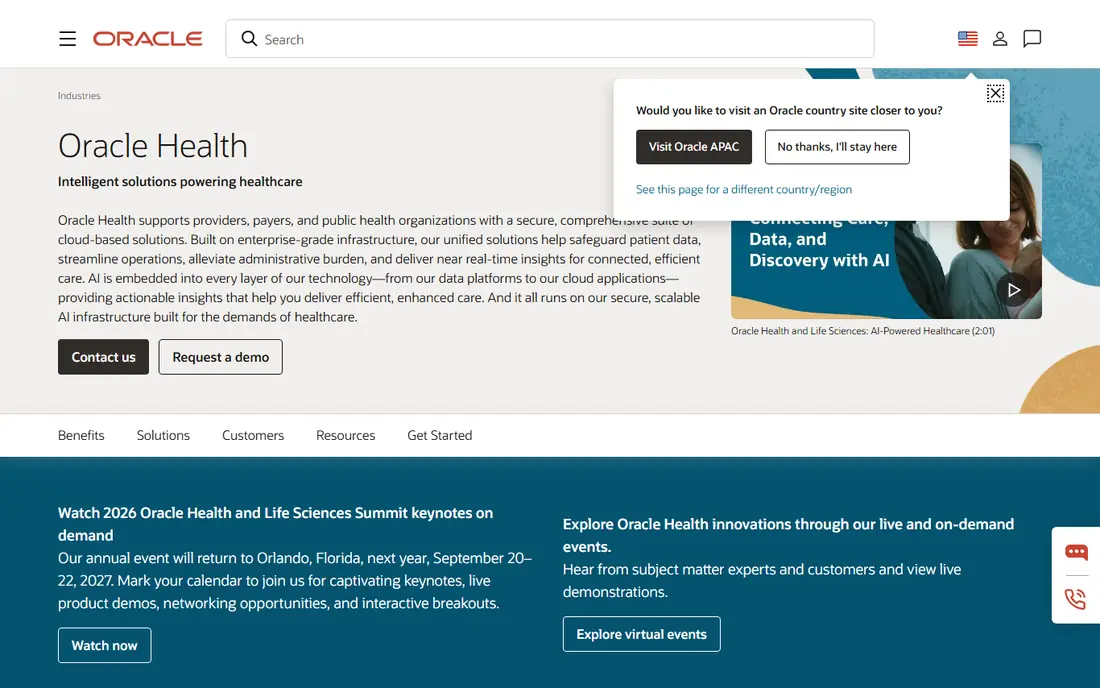
Oracle Health, built on the former Cerner platform, serves large hospitals, academic centres, and health systems with electronic health records, inpatient care, pharmacy, laboratory, scheduling, and revenue cycle tools. Its long history in hospital IT means deep workflows for inpatient units, operating theatres, and complex clinical departments. Oracle ownership also links it to cloud infrastructure and data tools used by large health organisations.
Implementation is the main challenge. Like Epic, Oracle Health is an enterprise system with enterprise pricing, and a move to it involves migration, interface work, and extensive staff training. It suits organisations that already run Oracle Health or that need a large-scale inpatient platform with proven hospital workflows. Smaller hospitals should compare MEDITECH and cloud ambulatory tools first.
- Deep clinical and operational coverage from the former Cerner platform
- Strong inpatient, pharmacy, and laboratory tools
- Large health system experience
- Enterprise pricing and complex implementation
- Migration and training effort can be large
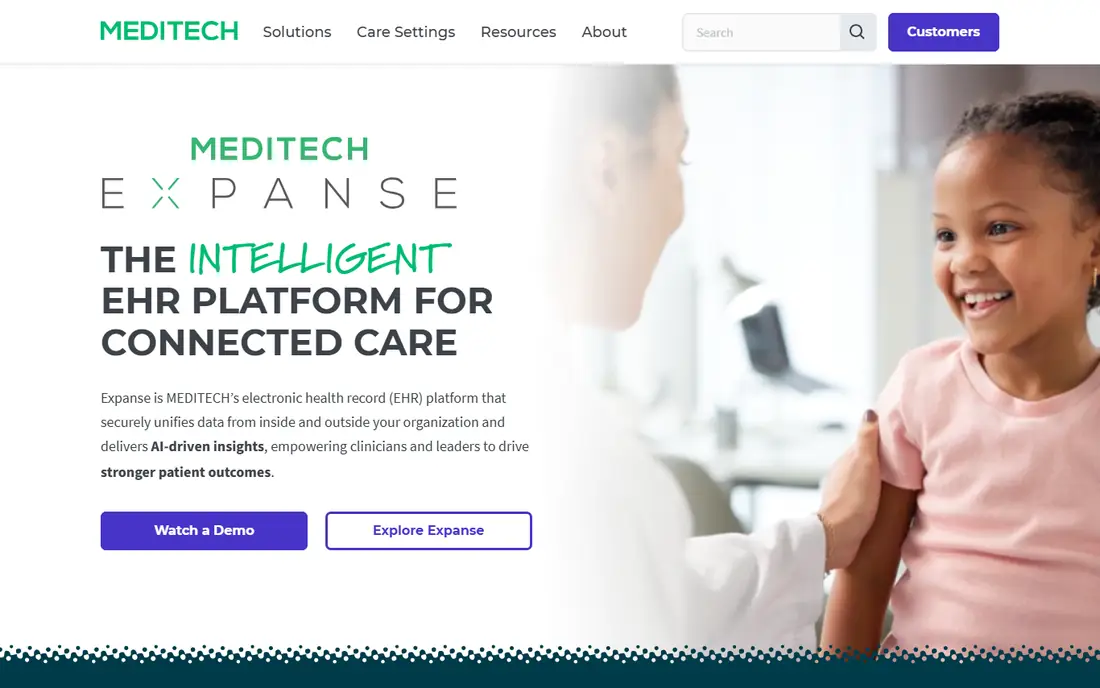
MEDITECH Expanse is a hospital platform used by community, mid-size, and larger hospitals, covering electronic health records, inpatient care, emergency, ambulatory, laboratory, pharmacy, and revenue cycle work. Its design aims to give clinicians one record across hospital and clinic settings, with a patient portal for engagement. Community hospitals often choose MEDITECH because it offers hospital-grade depth without the scale of the largest enterprise platforms.
Pricing is quote-based and implementation still requires planning, interfaces, and training, so it is not a quick clinic purchase. For a community or mid-size hospital that needs full inpatient coverage, MEDITECH Expanse is a strong shortlist option. Very large academic systems with highly specialised research needs may still prefer Epic or Oracle Health.
- Integrated EHR and hospital management for community hospitals
- Inpatient, emergency, and ambulatory tools
- Patient portal and interoperability
- Enterprise pricing
- Feature depth for very large academic systems may be less than Epic or Oracle Health
athenahealth provides cloud-based electronic health records, practice management, and revenue cycle services for ambulatory practices, medical groups, and smaller hospitals. Its strength is the combination of clinical records with claims, payer rules, and patient billing, which helps practices reduce denied claims and follow up on unpaid balances. The athenaOne service model also includes support for payer and regulatory updates, which smaller teams value.
The limit is setting. athenahealth is strongest in ambulatory and outpatient care, and it does not match the inpatient depth of the large hospital platforms. Pricing varies by the services and practice size, so a quote is needed for a fair comparison. It suits medical groups and outpatient-focused organisations that want records, scheduling, and billing in one cloud service.
- Cloud-based EHR, scheduling, and revenue cycle in one service
- Strong payer and claims workflows
- Patient portal and telehealth links
- Pricing varies by services used
- Hospital inpatient depth is less than Epic, Oracle Health, or MEDITECH
eClinicalWorks is a widely used electronic health record and practice management system for small to mid-size practices, with tools for scheduling, clinical documentation, e-prescribing, billing, patient portal access, and telehealth. Its cloud model suits practices that want to avoid running their own servers, and its broad user base means many billing and payer workflows are already established. For a clinic or medical group, it covers the daily operational chain from appointment to claim.
Large inpatient hospitals will need a different class of system, because eClinicalWorks is centred on ambulatory and practice care. Pricing is quote-based by provider count and modules, so compare the full package, including billing services, before deciding. It fits practices that need a proven, cloud-based EHR and practice system without enterprise hospital complexity.
- Cloud EHR with scheduling, billing, and patient engagement
- Telehealth and patient portal tools
- Wide use among small and mid-size practices
- Pricing is quote-based
- Large hospital inpatient workflows are outside its main focus
NextGen Healthcare serves ambulatory practices, specialty groups, and multi-site organisations with electronic health records, practice management, and revenue cycle tools. Specialty templates and configurable workflows help practices such as orthopaedics, behavioural health, and primary care document care in a way that fits their work, rather than forcing a generic note. Multi-site reporting also helps groups that share providers, locations, and billing staff.
Pricing is quote-based, and the value of configuration depends on how much time a practice invests in setup and training. A practice that uses only generic templates will not get the full benefit. NextGen suits specialty and multi-site practices that want a configurable ambulatory system with strong billing and reporting, and that have staff to own the configuration.
- Configurable EHR and practice management for specialties
- Scheduling, billing, and patient portal
- Multi-site reporting
- Quote-based pricing
- Configuration and training effort varies by specialty
Veradigm, formerly Allscripts, provides electronic health records, practice management, and revenue cycle tools for ambulatory practices and medical groups, with connections to payers, pharmacies, and health data networks. Its payer and interoperability links help practices handle claims, prior authorisations, and prescription workflows without manual re-entry. Patient engagement tools, including portals and messaging, support follow-up and appointment management.
As with other ambulatory systems, Veradigm is not a replacement for a full inpatient hospital platform. Pricing is quote-based by practice size and modules. It suits practices that value payer connectivity and data exchange alongside core EHR and billing, and that want a vendor with long ambulatory experience.
- EHR and practice management with payer and data connections
- Scheduling, billing, and patient engagement
- Experience with ambulatory practices
- Quote-based pricing
- Hospital inpatient depth is less than enterprise hospital platforms
MocDoc HMS is a cloud-based hospital management system covering patient registration, outpatient and inpatient management, pharmacy, laboratory, billing, bed management, and reporting. It suits small hospitals, nursing homes, and clinics that want one system for daily operations without an enterprise hospital platform. Multi-location support and role-based access help small hospital groups run consistent processes across sites.
Pricing is quote-based and varies by modules, users, and hospital size, so US buyers should confirm payer, billing, and regulatory fit for their setting, as MocDoc is widely used outside the United States. For small hospitals and clinics, especially those seeking a broad, cloud-based system at an accessible price point, MocDoc HMS is worth a demo alongside athenahealth and eClinicalWorks.
- Broad cloud-based hospital modules including OPD, IPD, pharmacy, and lab
- Multi-location support
- Suitable for small hospitals and clinics
- Pricing varies by modules and hospital size
- US payer and regulatory fit should be checked for US buyers
Carepatron is a practice management platform for clinics, allied health teams, and small healthcare practices, covering scheduling, client records, notes, billing, telehealth, and a client portal. Its free tier lets a small team test scheduling and billing before paying, and the interface is simpler than a hospital system, which helps small teams adopt it quickly. Online payments and automated billing also reduce administrative work for small practices.
Carepatron is not a hospital management system for inpatient care. It lacks the bed management, pharmacy, laboratory, and inpatient workflow depth of Epic, Oracle Health, or MEDITECH, so hospitals should not shortlist it as a replacement. It fits clinics, therapy practices, and small outpatient teams that need clean practice operations without hospital complexity.
- Simple practice management with scheduling, notes, billing, and telehealth
- A free tier for small teams
- Client portal and online payments
- Not a full hospital inpatient system
- Advanced hospital modules such as bed and pharmacy management are limited
How we picked these
We reviewed vendor homepages, product descriptions, and current hospital software guides in October 2026, and favoured systems that are actively maintained, cover core hospital or practice workflows, and serve a clear setting, from large health systems to small clinics. We included enterprise hospital platforms, ambulatory systems, and a small-hospital cloud option, and we used See website for pricing where vendors use quote-based enterprise pricing, rather than publishing a number we could not verify.
How to choose hospital software for your setting
Start with setting and size. A large health system should shortlist Epic, Oracle Health, and MEDITECH. An ambulatory group should shortlist athenahealth, eClinicalWorks, NextGen, and Veradigm. A small hospital or clinic should compare MocDoc HMS and Carepatron, with athenahealth and eClinicalWorks as ambulatory alternatives. Choosing a system built for a different setting is the most expensive mistake in hospital software, because workarounds follow you for years.
Next, test clinical and billing workflows with real cases. Run a patient from registration to appointment to note to claim, and check how pharmacy, laboratory, and bed processes connect. Confirm interoperability, including FHIR and HL7 links to labs, imaging, and payer systems, and confirm data protection, access controls, and audit trails with your compliance team. Pilot on one department or site, train staff before go-live, and keep a rollback plan, because a hospital cannot pause care for a software rollout.
Frequently asked questions
What is the best software for hospital management for a large health system?
Epic is a strong default for large US health systems because it covers clinical, operational, and revenue work in one platform with the MyChart patient portal. Oracle Health and MEDITECH Expanse are the main alternatives, depending on inpatient depth, existing systems, and implementation preferences.
What is the best hospital management system software for a small clinic?
Carepatron, eClinicalWorks, and athenahealth suit small clinics and outpatient practices, because they combine scheduling, records, and billing in a cloud service without enterprise hospital complexity. MocDoc HMS is another option for small hospitals that need inpatient, pharmacy, and laboratory modules.
How much does hospital management software cost?
Most hospital systems use quote-based pricing, based on beds, providers, modules, and implementation scope, so enterprise costs vary widely and require a vendor quote. Smaller practice systems such as Carepatron offer a free tier, with paid plans priced by users and features, so check the current vendor pricing page.
Does hospital software alone make a hospital compliant?
No, software alone does not make an organisation compliant. Compliance also depends on policies, staff training, data protection practices, clinical governance, and local health regulations. Use software to support those processes, and confirm regulatory requirements with your clinical and compliance teams.
What is the difference between HMS and EHR software?
An electronic health record focuses on clinical documentation and patient care records, while a hospital management system covers wider operations, including registration, scheduling, beds, pharmacy, laboratory, billing, and reporting. Many modern platforms combine both, so check which modules are included in the quote.
Can hospital software integrate with laboratory and imaging systems?
Leading hospital systems support HL7 and FHIR interfaces to laboratory, radiology, pharmacy, and payer systems, but interface scope varies by vendor and module. Confirm each required interface in writing during procurement, including who builds it, what it costs, and how it is tested before go-live.
Sources
See where you really rank - block by block
ProMapRanker scans Google Maps across a grid of your service area. Simple monthly plans from $19, white-label on every plan.
Start freeKeep reading
 zscaler alternatives
Best Zscaler Alternatives in 2026
Looking for zscaler alternatives? We compare 9 SASE and zero trust platforms on architecture, data protection, pricing, and fit for your network and team.
Read → zapier alternatives free
Best Zapier Alternatives Free in 2026
Nine automation tools for zapier alternatives free in 2026, all with genuinely free tiers, plus free plan limits, starting prices and upgrade paths explained.
Read → which platform is best for online reputation
Which Platform Is Best for Online Reputation in 2026
Wondering which platform is best for online reputation? We compare 8 review, listing, and response tools for small and multi-location businesses and agencies.
Read →