 ProMapRanker
Best Home Internet Service Providers in 2026

Key takeaways
- Fiber providers generally offer the most consistent upload speeds, but fiber is not available at every address.
- Cable providers cover far more homes, and they are often the practical choice where fiber has not arrived yet.
- Prices and availability vary by location, so confirm the exact plan, fees, and speed at your address before you sign up.
- Fixed wireless and satellite plans are useful where wired service is weak or absent, but speeds can vary more during busy hours.
Quick comparison
| Pick | Great for | Pricing starts at | Free tier | |
|---|---|---|---|---|
 Google Fiber | Fastest simple fiber plans | See website | No | Visit |
 AT&T Fiber | Fiber with wide coverage | See website | No | Visit |
 Verizon Fios | Fiber for heavy households | See website | No | Visit |
 Xfinity | Cable with broad availability | See website | No | Visit |
 Spectrum | Cable without a contract focus | See website | No | Visit |
 Frontier Fiber | Fiber value in its footprint | See website | No | Visit |
 T-Mobile Home Internet | Simple wireless setup | See website | No | Visit |
 Starlink | Rural homes beyond wired networks | See website | No | Visit |
The best home internet service providers
Your address decides much of this choice. The providers below cover the main ways Americans get online at home, from fiber and cable to fixed wireless and satellite.
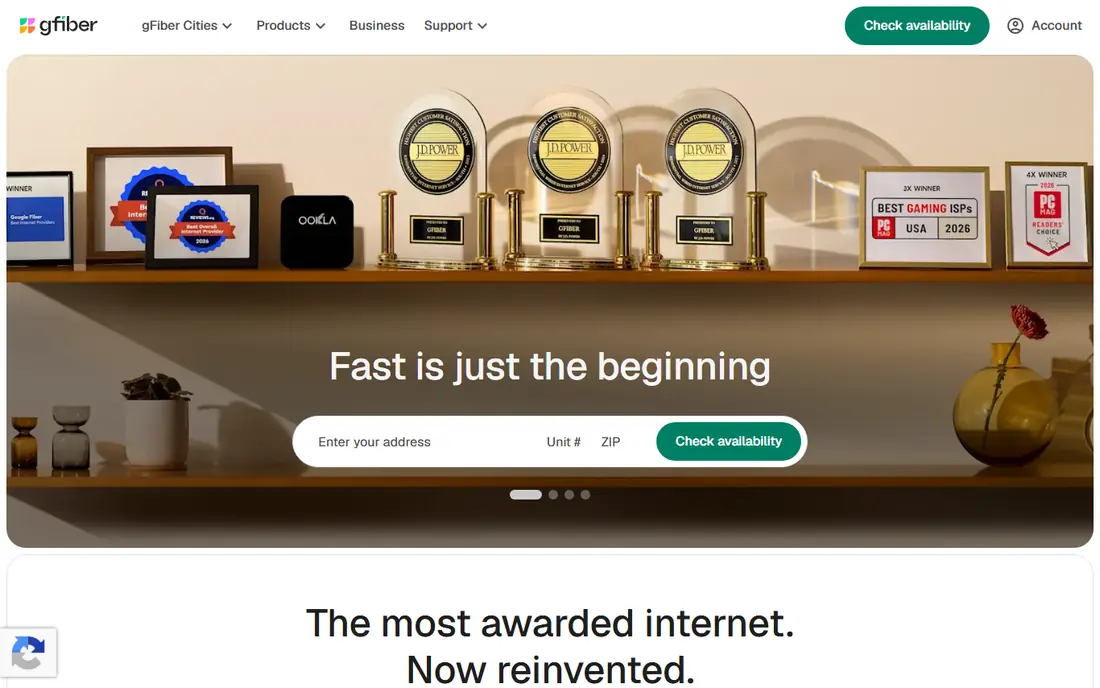
Google Fiber earns the top spot for households that can get it because its plans are easy to understand. You pick a speed tier, and the service is built on fiber, which tends to handle uploads as well as downloads. That matters for video calls, cloud backups, and homes where several people work or study at once.
The catch is availability. Google Fiber serves a limited set of cities and neighborhoods, so many readers will not see it as an option at their address. If it is available, check whether installation is included and what equipment is provided, since those details can change by market. For homes inside its footprint, it is a strong first check before comparing cable plans.
- Symmetrical fiber speeds on many plans
- Simple plan structure
- No data cap described on its main plans
- Limited footprint
- Installation may need an appointment
- Fewer plan tiers than some cable rivals
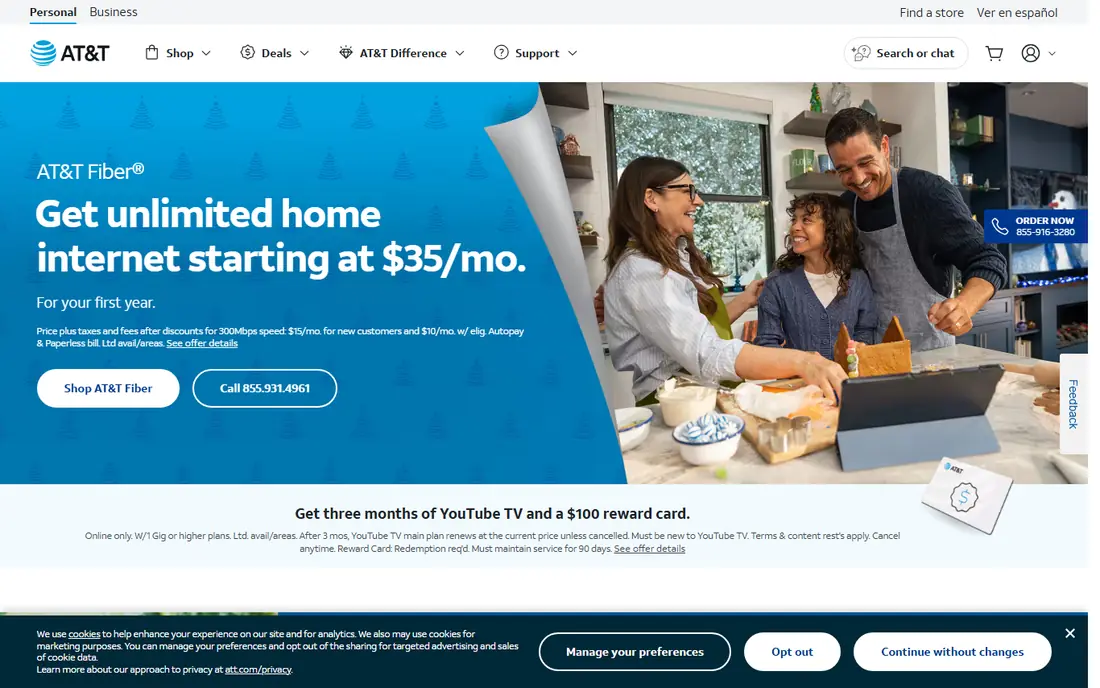
AT&T Fiber is the fiber option most readers are likely to find, because its network reaches far more homes than smaller fiber providers. Its fiber plans offer matching upload and download speeds, which is a real advantage over cable for creators, remote workers, and gamers who stream. The plan range also covers modest households and heavy users, so you do not have to buy gigabit speed to get fiber.
Be careful to confirm that the address qualifies for fiber, not for an older AT&T service with a similar name. Ask for the exact speed, the monthly price after any promotion ends, and whether equipment is included. If fiber is available, AT&T is often the best balance of speed and coverage in this list.
- Broad fiber footprint for a fiber provider
- Symmetrical speeds on fiber plans
- Equipment often included in the plan price
- Fiber is not available at every AT&T address
- Some addresses only get slower non-fiber service
- Promotional pricing can change after the promo period
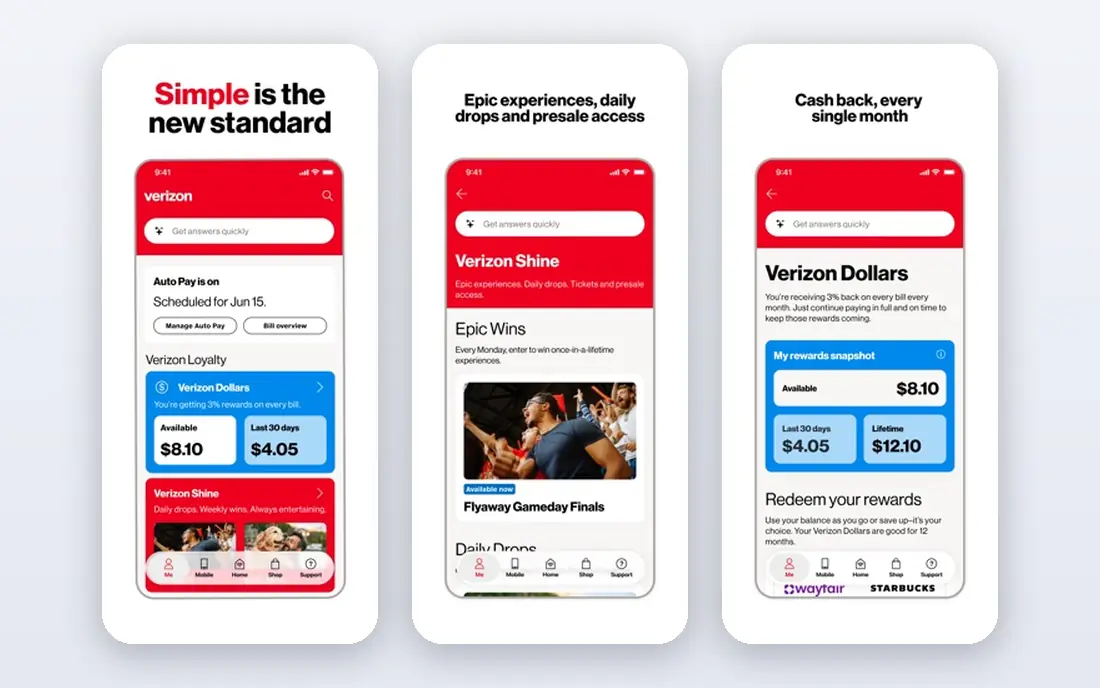
Verizon Fios has long been a favorite in its region, and the reason is straightforward. It is a full fiber service, so uploads keep pace with downloads, and its plans suit households with many connected devices. Streaming in several rooms, gaming, and video calls at the same time are the kind of loads Fios handles well.
The main limit is geography. Fios covers parts of the Northeast and Mid-Atlantic, and even inside those states, some streets have Fios while nearby streets do not. Check the address carefully, and confirm router costs and any price guarantee in writing. For households inside the footprint, Fios is one of the most dependable choices available.
- Fiber speeds with matching uploads
- Strong reputation for reliability
- No annual contract on many plans
- Limited to the Northeast and parts of the Mid-Atlantic
- Router rental may add cost
- Availability varies street by street
Xfinity is the default cable choice for millions of homes, and its reach is the main reason. It serves a large share of the country, and its speed tiers run from basic plans for light use to gigabit plans for busy households. Bundling with mobile service can also make sense for some families, though you should compare the bundle total against buying internet alone.
Cable has a known trade-off. Downloads are fast, but uploads are slower than on fiber, which can show up during video calls and large file uploads. Some areas also have a data cap, so ask if your plan includes one and what happens if you exceed it. Xfinity is best when fiber is not available and you want a widely supported cable plan.
- Very wide cable footprint
- Broad range of speeds
- Bundles with mobile and TV for some households
- Upload speeds lag downloads on cable
- Data cap applies in some areas
- Prices can rise after promotions
Spectrum is a practical pick for renters and households that want cable without a long contract commitment. Its internet plans are widely available, and the company describes its plans as having no data caps, which removes one common cable worry. The modem is often included, which keeps the monthly bill closer to the advertised plan price.
The trade-offs are familiar for cable. Upload speeds are slower than fiber, and the price after an introductory period can be higher than the first-year rate, so ask for that figure before you commit. Spectrum suits households that need solid download speeds, broad availability, and a simple setup more than they need the fastest uploads.
- Wide cable coverage
- No data cap on its internet plans as described by the company
- Modem often included
- Upload speeds lag fiber
- Prices can rise after the first year
- Advanced Wi-Fi may cost extra
Frontier Fiber is worth checking if you live in its service area, because its fiber plans often start at a lower price point than other fiber brands. You get the core fiber benefit, matching upload and download speeds, without paying for the fastest tier. That makes it a good fit for families that want fiber reliability on a tighter budget.
Availability is the constraint, as it is with every fiber provider. Frontier serves many states but not every town, and older parts of its network may still offer non-fiber service. Confirm fiber availability at your exact address, and ask about installation and equipment fees. Where fiber is offered, Frontier is a strong value option.
- Fiber plans with matching uploads
- Competitive entry pricing in many markets
- No data cap described on fiber plans
- Footprint is smaller than national cable providers
- Service quality can vary by area
- Some addresses still lack fiber
T-Mobile Home Internet suits people who want internet without a technician visit or a wired installation. The gateway arrives by mail, you plug it in near a window, and the service runs over the mobile network. That simplicity appeals to renters, people in short-term housing, and homes where cable installation is difficult.
Speed is the variable to watch. Because the service shares mobile network capacity, speeds can dip during busy hours and vary with signal strength at your address. It is generally fine for streaming, browsing, and video calls, but competitive gamers and households with very heavy upload needs may prefer wired service. Try it where a trial or return window is offered, and test speeds at the times you use the internet most.
- Easy self-install gateway
- No annual contract on the plan as described
- Equipment included in the plan price
- Speeds vary with cell signal and congestion
- Not ideal for competitive gaming
- Availability depends on network capacity
Starlink is the option for homes that wired providers have skipped. It uses low-orbit satellites, so it can reach rural properties, cabins, and farms where fiber and cable do not run. For households that previously relied on slow DSL or expensive legacy satellite, Starlink can be a major step up in usable speed.
It is not a like-for-like replacement for fiber. The hardware kit is an upfront cost, the dish needs a clear view of the sky, and speeds can vary with weather and network load. Latency is also higher than fiber or cable, which matters for fast-paced online gaming. Even so, for rural homes with no good wired choice, Starlink is often the best available service.
- Available in many rural and remote areas
- No wired line needed
- Improving speeds as the satellite network grows
- Hardware kit costs extra
- Speeds and latency vary with weather and obstructions
- Higher monthly price than many wired plans
How we picked these
We compared official provider pages, plan structures, and coverage patterns, and we weighed what matters most for ordinary households: speed in both directions, availability, data caps, equipment costs, and price changes after promotions. We favored providers with broad footprints or a clear advantage in their footprint, and we included wireless and satellite options because wired service is not available everywhere. Prices and availability vary by location, so confirm the exact plan with the provider before you sign up.
What to check before you choose
Start with what is actually available at your address, not with the fastest advertised speed. Enter your address on each provider site, and write down the exact plan, speed, monthly price after promotions, equipment fees, data cap, and contract terms. Fiber is the best pick when it is available and fits your budget, because uploads match downloads. Cable is a solid second choice for most households, and fixed wireless works well when your cell signal is strong.
Think about how your household uses the internet at the busiest hour. A home with two people browsing and streaming can manage on a mid-tier plan, while a home with remote work, gaming, and several streams at once benefits from a faster tier. Do not pay for gigabit speed if your devices and Wi-Fi setup cannot use it, and do not buy the cheapest plan if video calls freeze during work hours. Also check the router situation. A provider gateway may be fine, but large homes sometimes need additional equipment for full coverage.
Frequently asked questions
What is the best home internet service provider for most people?
Fiber is the best choice when it is available at your address, because it offers matching upload and download speeds and consistent performance. If fiber is not available, a cable provider such as Xfinity or Spectrum is usually the next best option. Fixed wireless and satellite fill the gap where wired service is weak or absent.
How much speed do I need at home?
Light use with one or two people usually works on a plan around 100 to 300 Mbps. Busy households with remote work, gaming, and several streams at once should consider 300 Mbps or more. Upload speed matters most for video calls, live streaming, and cloud backups, which is where fiber has an edge over cable.
Why do prices vary so much by location?
Providers build different networks in different areas, and competition varies by town. Promotions, equipment fees, and taxes also differ, so the same provider can quote different prices at two addresses. Always confirm the price at your own address, including the price after any promotion ends.
Is satellite internet good enough for working from home?
Satellite service such as Starlink can support video calls and general work tasks in rural areas where wired options are poor. Latency is higher than fiber or cable, and speeds can vary with weather, so it is best viewed as a strong rural option rather than a first choice where fiber or cable exists.
Do I need to buy my own router?
Not always. Many providers include a gateway or modem, and some charge a monthly rental for a router. Using your own compatible router can save rental fees over time, but check compatibility first. Large homes may need extra coverage equipment regardless of which gateway the provider supplies.
Sources
See where you really rank - block by block
ProMapRanker scans Google Maps across a grid of your service area. Simple monthly plans from $19, white-label on every plan.
Start freeKeep reading
 zscaler alternatives
Best Zscaler Alternatives in 2026
Looking for zscaler alternatives? We compare 9 SASE and zero trust platforms on architecture, data protection, pricing, and fit for your network and team.
Read → zapier alternatives free
Best Zapier Alternatives Free in 2026
Nine automation tools for zapier alternatives free in 2026, all with genuinely free tiers, plus free plan limits, starting prices and upgrade paths explained.
Read → which platform is best for online reputation
Which Platform Is Best for Online Reputation in 2026
Wondering which platform is best for online reputation? We compare 8 review, listing, and response tools for small and multi-location businesses and agencies.
Read →