 ProMapRanker
Best Healthcare Software in 2026

Key takeaways
- Epic and Oracle Health suit large hospitals and health systems, while athenahealth suits growing independent practices.
- SimplePractice suits solo therapists, while larger medical systems suit multi-provider practices.
- DrChrono, Tebra, and AdvancedMD suit small to mid-size medical practices that need billing plus charting.
- Pricing is often quoted, so ask for total cost including implementation, training, migration, and support.
Quick comparison
| Pick | Great for | Pricing starts at | Free tier | |
|---|---|---|---|---|
 Epic | Large hospitals and systems | See website | No | Visit |
 Oracle Health | Large hospitals on Oracle | See website | No | Visit |
 athenahealth | Growing independent practices | See website | No | Visit |
 eClinicalWorks | Mid-size multi-specialty groups | See website | No | Visit |
 DrChrono | Mobile-first medical practices | See website | No | Visit |
 SimplePractice | Solo therapists and wellness | See website | No | Visit |
 Tebra | Small practices with billing needs | See website | No | Visit |
 NextGen Healthcare | Ambulatory specialty practices | See website | No | Visit |
 Practice Fusion | Small practices on a budget | $199 per month | No | Visit |
The best healthcare software
This guide covers electronic health records, practice management, billing, scheduling, and telehealth for United States practices. It is general information only, not medical advice, and it does not replace clinical or legal review. Practices should confirm HIPAA controls, state rules, and payer requirements with each vendor before signing.
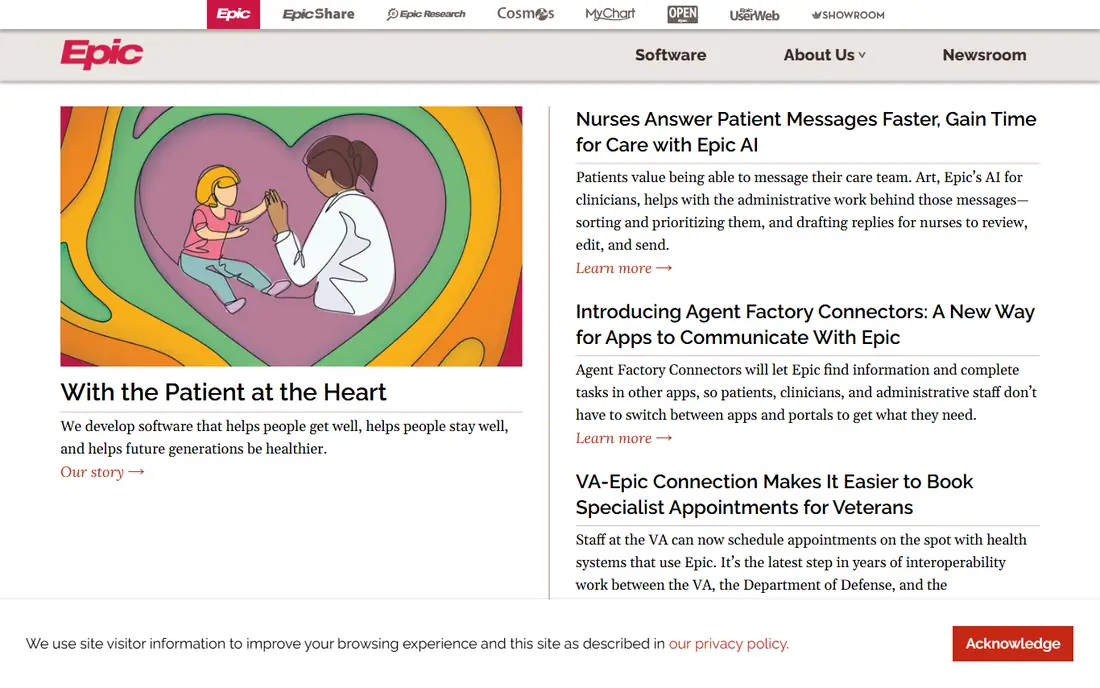
Epic is the leading electronic health record system for large hospitals and health systems in the United States. It covers inpatient, ambulatory, emergency, billing, scheduling, and patient engagement in one platform, with a widely used patient portal. Large systems choose Epic for depth, integration, and the size of its customer community.
We rank Epic first for hospitals and large groups, but not for small clinics. Implementation can take a year or more, and total cost runs far beyond a monthly subscription. Small practices should look at athenahealth, DrChrono, or Tebra instead, because Epic scale brings complexity that a small team does not need.
- Deep hospital and ambulatory workflows
- Large interoperability ecosystem
- Strong patient portal
- Implementation cost and timeline suit large organisations, not small clinics
- Training burden is high
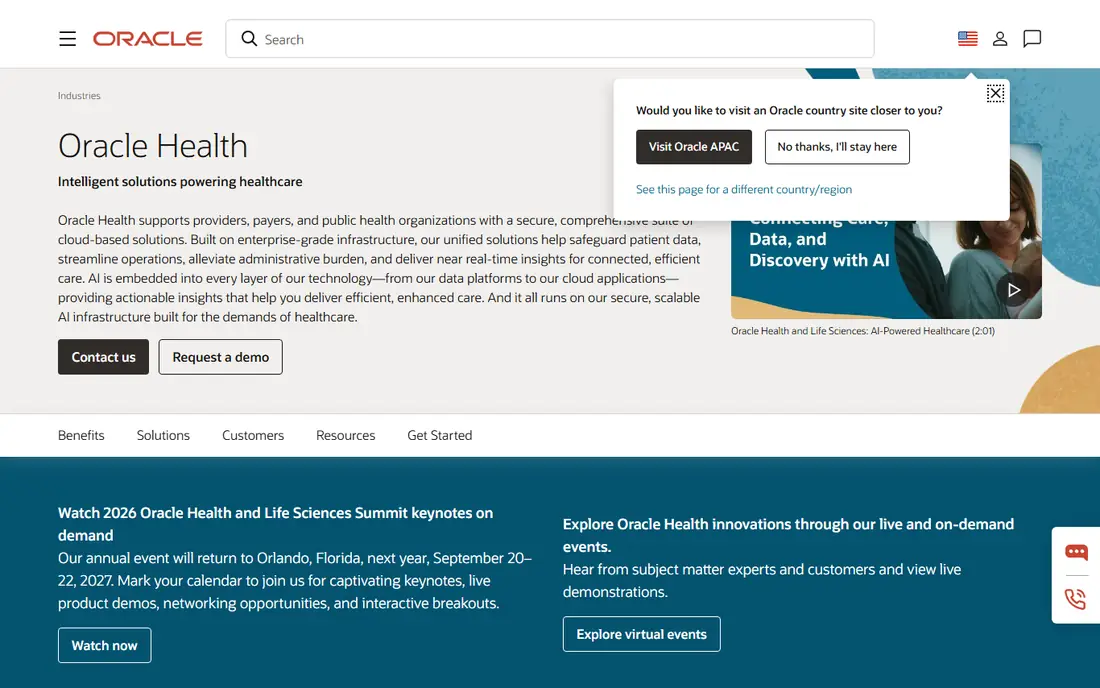
Oracle Health, formerly Cerner, provides electronic health records, revenue cycle, population health, and analytics tools for hospitals and health systems. Its Oracle cloud backing suits large organisations that already use Oracle systems for data and analytics. Clinical, scheduling, and billing workflows sit in a single enterprise platform.
We include Oracle Health for large systems evaluating an alternative to Epic. It suits organisations with Oracle infrastructure and enterprise IT teams. Small and mid-size practices will find implementation scope and cost too large, and should choose a cloud ambulatory system instead.
- Hospital EHR plus Oracle cloud and analytics
- Broad clinical and revenue tools
- Large system support
- Quote-based enterprise pricing
- Migration from older Cerner systems needs careful planning
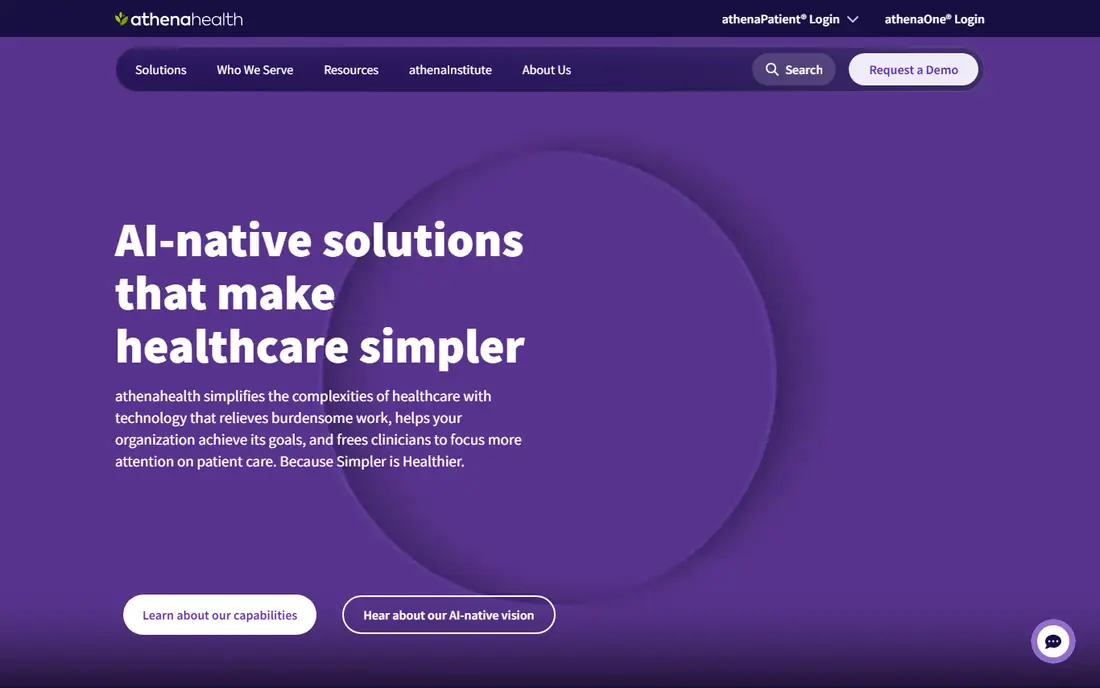
athenahealth offers athenaOne, a cloud suite that combines electronic health records, practice management, patient engagement, and revenue cycle services. Practices can use its billing team to submit and follow up claims, which helps independent practices without a large billing staff. Telehealth, e-prescribing, and patient portal tools are part of the platform.
We pick athenahealth for growing independent practices that want billing help as well as charting. The managed billing model can improve collections, but it also means pricing depends on practice revenue, so compare it against flat per-provider pricing. Ask what is included in support, clearinghouse fees, and implementation before signing.
- Integrated EHR, billing, and patient engagement
- Managed revenue cycle option
- Cloud-based access
- Pricing often ties to collections, which varies by practice
- Contract terms need close review
eClinicalWorks serves ambulatory practices across many specialties, with charting, e-prescribing, scheduling, billing, telehealth, and patient portal tools. Its templates cover primary care and many specialties, and its population health tools help groups track care gaps and quality measures.
We recommend eClinicalWorks for mid-size groups that need specialty depth without hospital-scale cost. Solo practices may find the feature range more than they need, and should compare simpler tools first. Get a quote that lists every add-on, because telehealth, billing, and analytics options can change the total.
- Broad ambulatory EHR and practice management
- Telehealth and patient engagement
- Multi-specialty templates
- Interface can feel busy for small teams
- Pricing and add-ons need a full quote
DrChrono is a cloud electronic health record and practice management platform with a strong mobile focus, especially on iPad. It covers charting, scheduling, billing, e-prescribing, and telehealth, with templates for many specialties. Practices that chart on tablets during visits often find its workflow natural.
We like DrChrono for mobile-first practices and procedural specialties that value tablet charting. Desktop-heavy practices should test the web workflow first, because the mobile design shapes the whole experience. Confirm billing, clearinghouse, and support terms in the quote, because those costs sit outside the base subscription.
- IPad-first charting
- Integrated billing and scheduling
- E-prescribing and patient portal
- Mobile focus may not suit desktop-heavy workflows
- Support experience varies by plan
SimplePractice is a practice management platform for therapists, counsellors, and wellness providers. It combines scheduling, intake forms, progress notes, billing, a client portal, and HIPAA-compliant telehealth. Solo providers can set it up quickly without IT help, and monthly billing suits small practices.
We pick SimplePractice for solo and small mental health practices that want one simple system. Larger medical practices with complex billing, multi-specialty templates, or hospital integration should look at athenahealth or eClinicalWorks instead. Check current pricing on the vendor site, because plan prices and telehealth add-ons change over time.
- Simple setup for therapists
- Scheduling, notes, billing, and telehealth in one place
- Client portal
- Less suited to complex medical billing
- Customisation and reporting stay basic for larger groups
Tebra combines electronic health records, practice management, billing, and patient engagement tools for small and independent medical practices. It offers online scheduling, automated reminders, claims submission, denial management, and marketing tools that help new practices attract patients. The platform suits practices where billing and growth matter as much as charting.
We recommend Tebra for small practices that struggle most with billing and patient volume. The billing depth is a real strength, but users should test support responsiveness during a trial, because support quality affects daily work when claims stall. Compare Tebra against athenahealth on total billing cost, not just subscription price.
- EHR plus billing and patient growth tools
- Online booking and reminders
- Claims and denial tools
- Support response times draw mixed reports
- Feature depth varies by specialty
NextGen Healthcare provides electronic health records, practice management, and revenue cycle tools for ambulatory and specialty practices. Its templates and workflows cover many specialties, and its analytics help practices track financial and clinical performance. Patient engagement and telehealth tools round out the suite.
We include NextGen for specialty groups that need ambulatory depth and integrated billing. Solo practices may find it heavier than SimplePractice or Practice Fusion, while large hospitals will still prefer Epic or Oracle Health. Ask for implementation timelines and training costs, because specialty setup takes time.
- Ambulatory EHR and practice management
- Specialty templates
- Integrated billing and analytics
- Enterprise-style implementation suits larger groups
- Pricing is quoted, not published
Practice Fusion is a cloud electronic health record for small practices, with charting, e-prescribing, lab integration, and patient portal tools. Its published starting price gives small practices a clear budget figure, which is rare in this market. Setup is simpler than enterprise systems, and the system suits practices with straightforward workflows.
We pick Practice Fusion for small practices that want a clear price and a simple cloud record system. Practices with heavy billing needs should compare it against Tebra and athenahealth, because billing depth is lighter here. Confirm what is included at the starting price, including support and any billing service fees.
- Published per-provider pricing
- Cloud charting and e-prescribing
- Simple setup for small teams
- Billing features are more limited than larger suites
- Telehealth options need checking per plan
How we picked these
We compared official product pages, pricing pages, and documentation for healthcare systems still offered in October 2026. We mixed hospital systems, ambulatory suites, and therapist-focused tools, and we kept only systems with current United States availability. Where pricing was quoted rather than published, we wrote See website rather than repeating an unverified estimate.
What to check before you buy healthcare software
Start with your practice size and specialty. A hospital system will overwhelm a solo clinic, while a therapist tool will frustrate a multi-specialty group. List must-have workflows: charting, e-prescribing, labs, scheduling, billing, telehealth, and patient portal. Test those workflows with real patient scenarios during a demo, not just a sales presentation.
Data, security, and compliance
Confirm HIPAA safeguards, access controls, audit logs, data encryption, and breach response terms. Ask who owns your data, how you export it, and what export costs if you leave. Check integration with labs, pharmacies, clearinghouses, and payer systems you already use. A system that cannot connect to your lab or clearinghouse will create daily manual work.
Total cost and contract terms
Ask for a full cost breakdown: subscription, implementation, training, data migration, clearinghouse fees, telehealth add-ons, and support tiers. Check contract length, renewal terms, price increase clauses, and exit fees. Small practices can go live in weeks on cloud systems, while mid-size groups often need two to four months including migration and training.
Frequently asked questions
Which healthcare software solutions are the best for small practices?
For small medical practices, athenahealth, Tebra, DrChrono, and Practice Fusion lead our list, while SimplePractice leads for solo therapists. The best pick depends on billing needs, specialty, and whether you want managed billing help.
What are the top healthcare software companies in the USA?
Epic and Oracle Health lead for hospitals, while athenahealth, eClinicalWorks, NextGen Healthcare, and Tebra lead for ambulatory practices. SimplePractice and Practice Fusion serve smaller practices and solo providers.
What is the best healthcare app for therapists?
SimplePractice is our pick for solo therapists, thanks to scheduling, notes, billing, client portal, and telehealth in one simple system. Larger therapy groups should compare it against broader practice management tools for reporting and admin controls.
How much does healthcare software cost?
Costs range from a published monthly fee for small cloud systems to quoted enterprise contracts for hospitals. Always ask for total cost including implementation, training, migration, clearinghouse fees, and support, because those items can double the headline price.
Is healthcare software HIPAA compliant?
Leading vendors design for HIPAA compliance, but compliance also depends on how your practice configures access, trains staff, and handles devices. Ask for a business associate agreement, security documentation, and audit log details before signing.
Sources
See where you really rank - block by block
ProMapRanker scans Google Maps across a grid of your service area. Simple monthly plans from $19, white-label on every plan.
Start freeKeep reading
 zoho inventory alternatives
6 Alternatives to Zoho Inventory, Compared on Price and Fit
Zoho Inventory alternatives: 6 tools compared on price, free plans and fit. Katana leads the list for manufacturers. Fit and flaws are laid out for each entry.
Read → zoho crm alternatives
Best Zoho CRM Alternatives (2026)
Need Zoho CRM alternatives? We compare 7 tools on cost, free access and who each suits. Every pick gets a straight assessment. Built for quick decisions.
Read → zelle alternatives
Best Zelle Alternatives in 2026
Compare the best Zelle alternatives for sending money to friends, paying sellers and moving funds abroad, with honest notes on fees, speed and safety in 2026.
Read →