 ProMapRanker
Best healthcare IT companies in 2026

Key takeaways
- Epic, Oracle Health and MEDITECH fit large hospitals and health systems, while athenahealth and eClinicalWorks fit outpatient groups.
- Interoperability, implementation time and total cost matter more than a feature list alone.
- Cloud, AI charting and revenue cycle tools are now central to most EHR buying decisions.
- Small practices need a different system from a multi-hospital network, so size and specialty should drive the shortlist.
Quick comparison
| Pick | Great for | Pricing starts at | Free tier | |
|---|---|---|---|---|
 Epic | Large health systems | See website | No | Visit |
 Oracle Health | Enterprise and government health | See website | No | Visit |
 athenahealth | Outpatient groups and revenue cycle | See website | No | Visit |
 MEDITECH | Community and mid-size hospitals | See website | No | Visit |
 eClinicalWorks | Mid-size ambulatory practices | See website | No | Visit |
 NextGen Healthcare | Specialty and behavioural health | See website | No | Visit |
 Greenway Health | Ambulatory practices | See website | No | Visit |
 Veradigm | Ambulatory EHR and practice tools | See website | No | Visit |
 AdvancedMD | Independent practices | See website | No | Visit |
 CureMD | Small to mid-size practices | See website | No | Visit |
The best healthcare IT companies for providers in 2026
We compared healthcare IT vendors on EHR scope, hospital and ambulatory fit, interoperability, revenue cycle support and implementation demands. The list focuses on vendors with live products in 2026, not on closed or merged brands presented as standalone options.
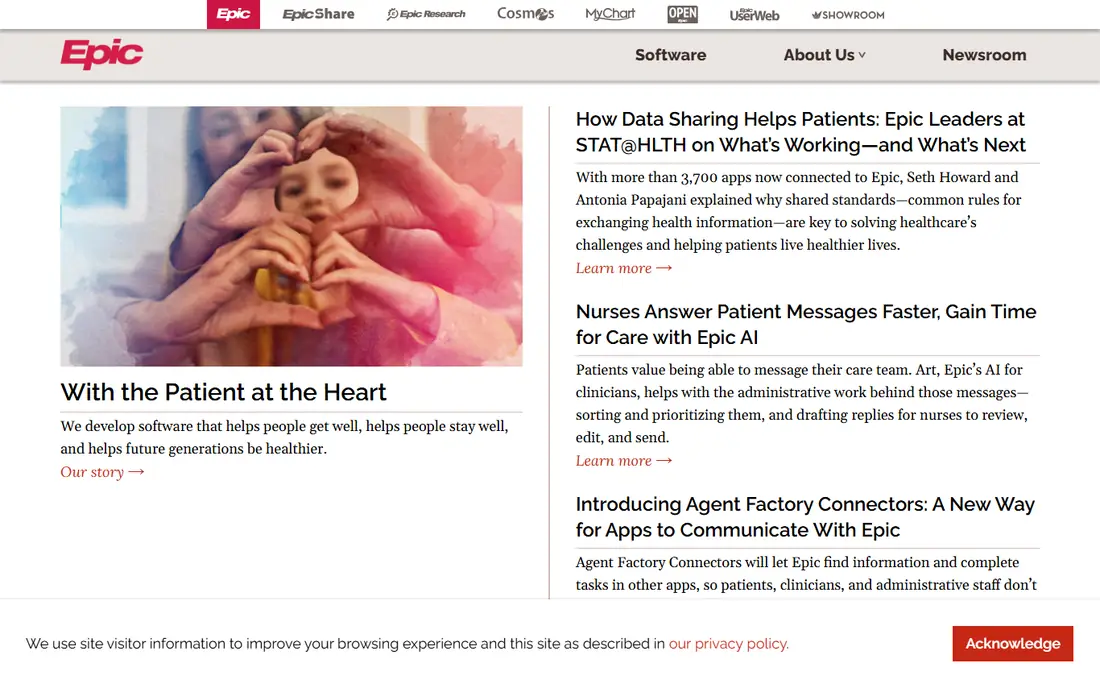
Epic is the leading EHR vendor for large hospitals, academic medical centres and integrated health systems. Its platform covers inpatient, outpatient, emergency, pharmacy, laboratory and population health work in one system, which reduces the need for separate tools. Data sharing through Care Everywhere also helps Epic organisations exchange records with other Epic sites, a practical advantage for referral networks. The cost is scale and complexity. Epic implementations take months or longer, need dedicated training and support staff, and can feel rigid for small practices. A solo clinic will rarely need Epic depth, and the price and staffing demands can outweigh the benefits. For a large system that needs one record across many sites, Epic remains the default shortlist entry.
- Broadest hospital and ambulatory coverage
- Strong data sharing through Care Everywhere
- Deep specialty workflows
- High cost and long implementation
- Steep learning curve for new users
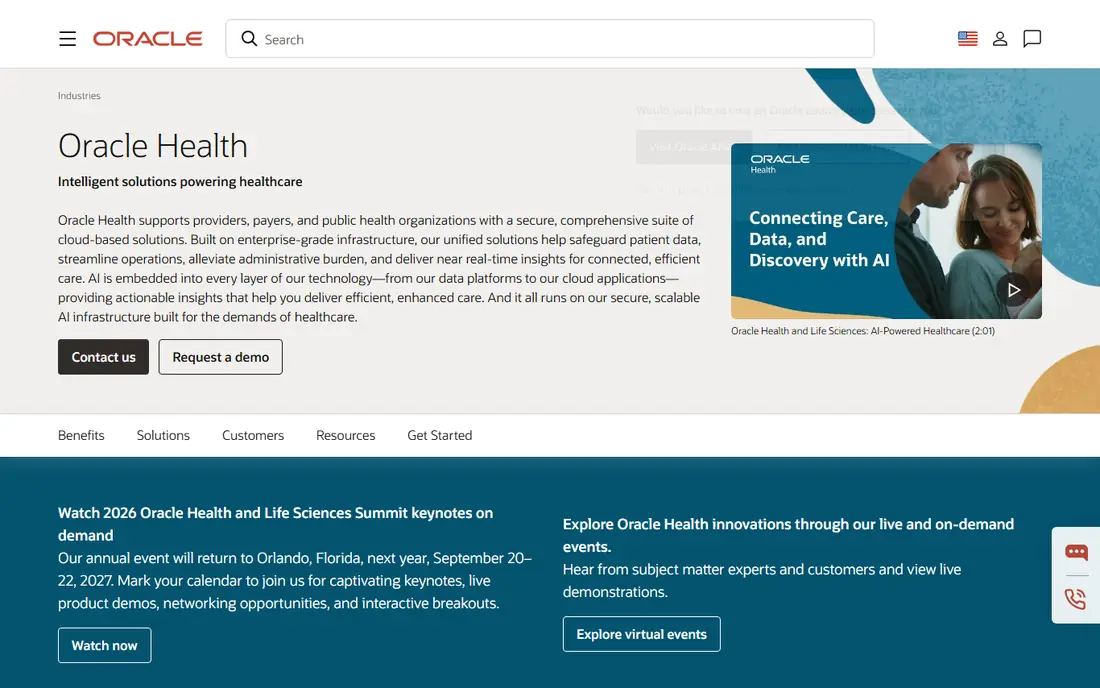
Oracle Health, formerly Cerner, serves large health systems, multi-specialty groups and government health organisations. Its EHR covers inpatient and ambulatory care, population health and revenue cycle work, and Oracle cloud infrastructure now sits behind the platform. That enterprise scope suits organisations that already use Oracle systems or need a large, integrated deployment. Configuration is the main weakness. Oracle Health deployments can be complex, and former Cerner customers face migration and alignment work as the platform moves further into Oracle cloud services. Small practices will find the system heavy and costly. For a large system that needs enterprise scale and federal alignment, Oracle Health is a serious alternative to Epic.
- Broad enterprise EHR scope
- Cloud infrastructure from Oracle
- Strong federal and large-system presence
- Complex configuration
- Migration work for former Cerner sites can be long
athenahealth offers athenaOne, a cloud-based suite that combines EHR, revenue cycle management and patient engagement for outpatient groups. Its network model means payer rules and billing updates flow to many practices at once, which can cut claim denials and manual work. For multi-location outpatient groups, that revenue cycle strength is often the deciding factor. athenahealth is not built as a full inpatient hospital system, so large hospitals will need a different core EHR. The cloud model also depends on reliable internet access, which matters for rural clinics. For ambulatory groups that want billing and clinical work in one cloud system, athenahealth is one of the strongest fits.
- Cloud-based ambulatory EHR
- Strong revenue cycle and payer connections
- Network-based updates
- Limited inpatient depth
- Depends on reliable internet access
MEDITECH Expanse is a web-based EHR designed for hospitals and health systems, with particular strength in community and critical access hospitals. Its interface is built for web use, which can ease training compared with older client-server systems, and MEDITECH offers cloud deployment options through partners. For a mid-size hospital that wants a full EHR without Epic scale, MEDITECH is a practical choice. The ecosystem is smaller than Epic, so some specialised integrations may need more work. Specialty workflows also vary, and large academic centres may need deeper research or specialty modules. For community hospitals, the balance of cost, usability and hospital depth often favours MEDITECH over larger enterprise systems.
- Web-based Expanse EHR
- Good fit for community hospitals
- Cloud deployment options
- Smaller third-party ecosystem than Epic
- Specialty depth varies
eClinicalWorks serves ambulatory practices with an EHR, practice management, patient engagement and revenue cycle tools in one suite. Its large customer base means many practices already use it, which can ease staff hiring and training. AI charting assistants and telehealth tools are part of the current platform, reflecting the wider move toward AI-assisted documentation. Support and implementation quality can vary by practice size and region, a common complaint for large ambulatory vendors. The interface packs many tools into one screen, which can feel busy for new users. For a mid-size practice that wants a broad ambulatory suite at a lower enterprise cost, eClinicalWorks remains a strong shortlist option.
- Broad ambulatory EHR and practice tools
- AI charting assistants
- Large ambulatory customer base
- Implementation and support quality can vary
- Interface can feel busy
NextGen Healthcare, now part of the wider NextGen group, offers an ambulatory EHR with practice management, revenue cycle and patient engagement tools. Its specialty templates and behavioural health workflows suit practices that need more than a generic primary care system. That specialty focus helps groups in areas such as behavioural health, orthopaedics and multi-specialty ambulatory care. NextGen is not a hospital EHR, so inpatient organisations will need a separate system. Pricing is quote-based, and costs rise with modules, users and interfaces. For an ambulatory group with clear specialty needs, NextGen offers a focused alternative to broader EHR suites, provided the quote is compared on the same modules as rivals.
- Strong specialty and behavioural health workflows
- Ambulatory EHR plus practice management
- Interoperability support
- Hospital depth is limited
- Pricing is quote-based and varies by modules
Greenway Health provides Intergy, an ambulatory EHR with practice management and revenue cycle tools for physician practices and groups. Its long history in ambulatory care means workflows are built for office-based practice rather than adapted from a hospital system. For independent and mid-size groups, that focus can mean faster setup and clearer daily workflows. Scale is the limit. Greenway is smaller than athenahealth or eClinicalWorks, so its third-party ecosystem and payer network may be narrower in some regions. Hospital organisations will also need a separate inpatient system. For an ambulatory practice that wants a focused, office-based EHR, Greenway is a credible option to test beside larger rivals.
- Ambulatory EHR with practice management
- Long ambulatory history
- Revenue cycle tools
- Smaller scale than athenahealth or eClinicalWorks
- Hospital use is limited
Veradigm, formerly Allscripts, offers ambulatory EHR, practice management and data tools for physician practices and groups. Its heritage in ambulatory care gives it a broad practice base, and its data and payer connections support population health and research use cases. For practices that need EHR plus data tools, Veradigm can cover both in one vendor relationship. The brand history can confuse buyers, because Allscripts products moved under Veradigm after corporate changes. Hospital depth is also limited compared with Epic or Oracle Health. Buyers should confirm exactly which Veradigm product is quoted, which modules are included, and how support is structured for their practice size before comparing prices.
- Ambulatory EHR heritage
- Practice management and data tools
- Payer and life sciences connections
- Brand and product history can confuse buyers
- Hospital depth is limited
AdvancedMD offers a cloud-based suite that combines EHR, practice management, medical billing and patient engagement for independent practices and groups. Its cloud model suits practices that want no on-site servers and a single vendor for clinical and billing work. Patient scheduling, messaging and payment tools sit beside the EHR, which can cut separate software costs. Large hospitals will find AdvancedMD too light for inpatient work, and some advanced specialty modules are less deep than larger rivals. Pricing is quote-based, so practices should compare the same user count and modules. For an independent practice that wants a cloud suite without enterprise complexity, AdvancedMD is a practical shortlist entry.
- Cloud-based EHR, practice management and billing
- Suited to independent groups
- Patient engagement tools
- Less suited to large hospitals
- Advanced specialty modules vary
CureMD provides a cloud-based EHR with practice management, billing and patient engagement tools for small to mid-size practices. Its specialty templates help smaller groups that need workflows for their field without buying a large enterprise system. Cloud delivery also removes on-site server work, which suits practices with limited IT staff. Vendor scale is the main limit. CureMD is smaller than Epic, Oracle Health or athenahealth, so large-system integrations and payer networks may need more setup in some regions. For a small practice that wants an affordable cloud EHR with billing included, CureMD is worth a demo beside AdvancedMD and eClinicalWorks.
- Cloud EHR with practice management and billing
- Specialty templates
- Suited to smaller groups
- Smaller vendor scale
- Large-system integrations may need extra work
How we picked these
We compared official vendor pages, EHR comparison guides, KLAS-related coverage and public product descriptions, with a focus on vendors that still sell and support a live EHR or healthcare IT platform in October 2026. We favoured vendors with a clear hospital or ambulatory fit, published interoperability support, and a real customer base in their segment. We did not test any EHR ourselves, and we did not treat market share alone as proof of usability. We also separated hospital systems from ambulatory systems, because a vendor that excels in one setting can be a poor fit in the other. Where pricing was not published on the vendor site, we wrote See website rather than copying an old per-provider estimate as a current price.
How to choose a healthcare IT vendor
Match size and setting first
A large hospital, a community hospital and a solo practice need different systems. Start with setting, bed count or provider count, and specialty needs, then shortlist vendors that serve that segment well. A vendor that serves all segments on paper may still be weak in yours.
Test interoperability and migration
Ask how records move in and out, which FHIR and HL7 interfaces are included, and what migration from your current system costs in time and money. A system that traps data will cost more later than a slightly higher licence fee today. Request a migration plan and a data export sample before signing.
Price the full implementation
Licence fees are only part of the cost. Add implementation, training, interfaces, support, hardware and staff time. Ask for a three-year total cost for the same user count and modules across vendors, and confirm what happens to pricing when you add providers or sites.
Frequently asked questions
What is the best EHR for a large hospital?
Epic and Oracle Health lead for large hospitals, with MEDITECH as a strong option for community and mid-size hospitals. The best choice depends on specialty mix, existing systems, budget and implementation capacity. A large hospital should run a structured tender with clinical, IT and finance input rather than choosing on brand alone.
What is the best EHR for a small practice?
Small practices often fit cloud ambulatory systems such as athenahealth, eClinicalWorks, AdvancedMD or CureMD, depending on specialty and billing needs. The right system depends on provider count, payer mix and whether billing is handled in-house. A demo with your own workflows matters more than a generic feature list.
How long does EHR implementation take?
Timelines vary widely. A small cloud practice system can go live in weeks, while a large hospital EHR can take many months or more than a year. Implementation time depends on data migration, interfaces, training and change management. Ask each vendor for a timeline for an organisation of your size.
Do these systems support FHIR interoperability?
Most major vendors support FHIR-based interfaces, but the scope, included interfaces and fees differ. Confirm which FHIR version is supported, which resources are included, and whether third-party app access carries extra charges. Interoperability claims should be tested with your actual exchange partners.
Is cloud EHR better than on-site EHR?
Cloud EHR suits many ambulatory practices because it removes server maintenance and supports remote access. Large hospitals may still use hosted or on-site models for control, performance or compliance reasons. The best model depends on IT staffing, internet reliability and data governance needs.
How much does an EHR cost?
Costs vary by vendor, provider count, modules and implementation scope, and most enterprise vendors price by quote. Public estimates for purchase and install costs run into tens of thousands per provider for larger systems, but that figure does not apply to every practice. Request a three-year quote for the same scope from each shortlisted vendor.
Sources
- https://www.epic.com
- https://www.oracle.com/health
- https://www.athenahealth.com
- https://www.meditech.com
- https://www.eclinicalworks.com
- https://www.nextgen.com
- https://www.greenwayhealth.com
- https://www.veradigm.com
- https://www.advancedmd.com
- https://www.curemd.com
- https://www.commure.com/blog-scribe/best-emr-software
- https://lifebit.ai/blog/best-electronic-medical-records-companies/
See where you really rank - block by block
ProMapRanker scans Google Maps across a grid of your service area. Simple monthly plans from $19, white-label on every plan.
Start freeKeep reading
 worlds best local seo company
8 Worlds Best Local SEO Companies for Map Pack Growth in 2026
Compare the worlds best local seo company options for Google Business Profile work, citations, reviews, and multi-location rankings and reporting in 2026.
Read → world's best web hosting company
World's Best Web Hosting Company in 2026
Searching for the world's best web hosting company? We compared 10 hosts on price, renewal rates, speed, and support to help you choose well today in 2026.
Read → who's got the best nanny tax services
Who's Got the Best Nanny Tax Services in 2026
We answer who's got the best nanny tax services, comparing full filing, back taxes, software, and pricing so families can handle nanny taxes correctly.
Read →