 ProMapRanker
8 Top Healthcare HR Software Options Compared (2026)


Organizations standardized on ADP payroll · Pricing starts at: See website
Direct answer
Start with ADP Workforce Now if you need organizations standardized on ADP payroll. If your case is different, Workday suits very large multi-entity health systems and symplr suits provider credentialing and workforce operations. The full list of 8 tools follows, with prices and free plan facts.
Key takeaways
- The list opens with ADP Workforce Now, aimed at organizations standardized on ADP payroll.
- Before buying ADP Workforce Now, weigh this: healthcare features rely on extras and integrations.
- None of the 8 tools, from ADP Workforce Now to Paycor, has a free plan, so budget for a subscription or use a trial.
- For mid-sized healthcare and long-term care, Paycor is worth a look.
Quick comparison
| Pick | Great for | Pricing starts at | Free tier | |
|---|---|---|---|---|
| ADP Workforce Now | Organizations standardized on ADP payroll | See website | Demo | Visit |
 Workday | Very large multi-entity health systems | See website | Demo | Visit |
 symplr | Provider credentialing and workforce operations | See website | Demo | Visit |
 UKG | Large multi-facility hospital systems | See website | Demo | Visit |
 Dayforce | Health systems wanting single-system payroll and HCM | See website | Demo | Visit |
 HR Cloud | Purpose-built healthcare HR and compliance | See website | Demo | Visit |
 MedTrainer | Workforce readiness, credentialing and training compliance | See website | Demo | Visit |
 Paycor | Mid-sized healthcare and long-term care | See website | Demo | Visit |
The best healthcare HR software
Choosing healthcare HR software usually comes down to price, fit and limits. This ProMapRanker guide sets 8 tools side by side on those three points, with the facts kept short and checkable.
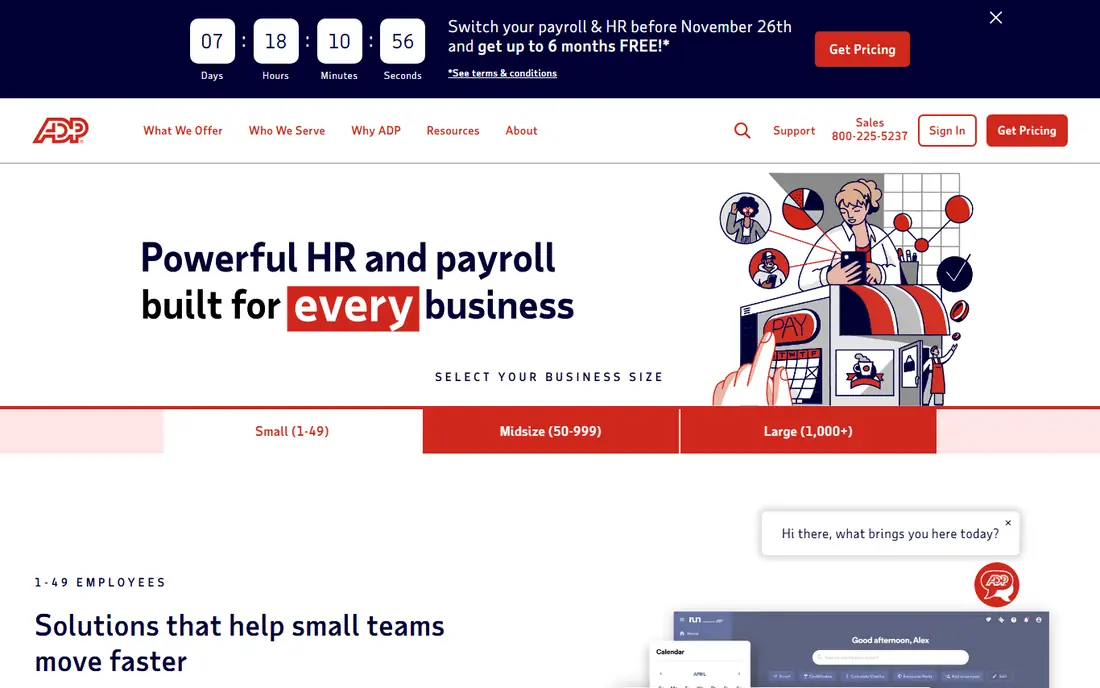
Where ADP Workforce Now fits: organizations standardized on ADP payroll. The healthcare specificity comes from those extras instead of the core, so map your credentialing and scheduling requirements carefully and price the full module stack, not the base quote.
Support experiences vary at ADP's scale. ADP Workforce Now does not show a starting price in this comparison, so check the vendor site for current pricing. Trial and free access: Demo.
What to check first: Large-vendor support experience varies.
- Wide HR module coverage
- Marketplace integrations including healthcare specialists
- Healthcare features rely on extras and integrations
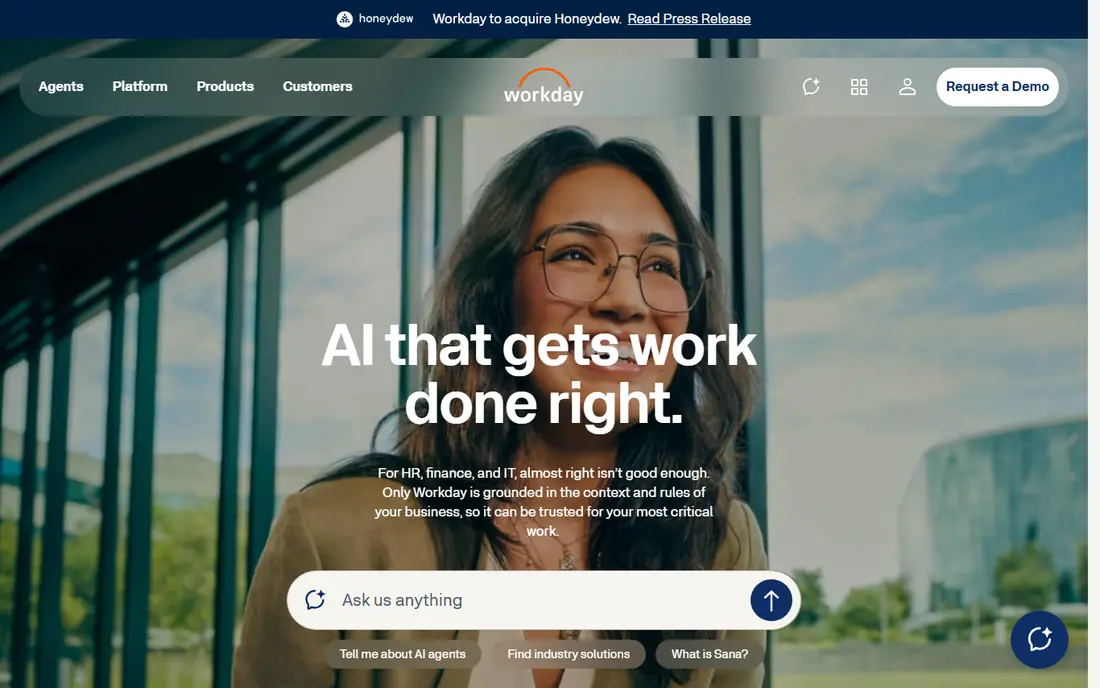
Pick Workday if this describes you: very large multi-entity health systems. Be clear-eyed about the cost and the fit.
Limits to weigh: Healthcare credentialing is customizable, not purpose-built.
Smaller systems will get more healthcare function per dollar elsewhere. Buy Workday when the organization is large enough that consolidation itself is the value. Pricing for Workday is not stated here, so ask the vendor for current figures. Free access: Demo.
Main advantages: Solid analytics.
- Deep HCM and financials in one
- Proven at the largest health systems
- Needs significant internal team
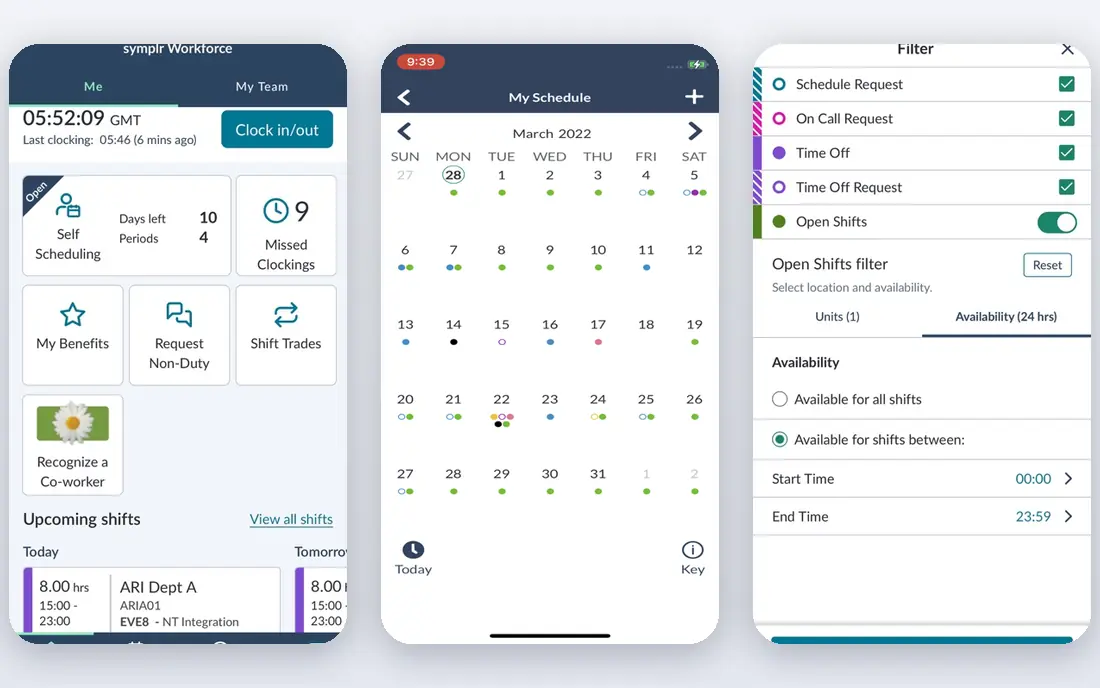
Pick symplr if this describes you: provider credentialing and workforce operations. symplr centres on the provider side of healthcare operations: credentialing, privileging, payer enrollment and workforce management, expanded through acquisitions including scheduling and workforce tools.
Beyond that, like MedTrainer, it is a specialist, not a replacement for payroll and core HR. No starting price is listed for symplr here; confirm pricing on the vendor site. Free plan details: Demo.
Best features of symplr: Strong hospital customer base. Honest limits: Integration work to link with core HR; Credentialing-first.
- Deep provider credentialing and privileging
- Workforce management additions via acquisition
- Enterprise sales motion
Think of UKG for large multi-facility hospital systems. Expect a significant deployment project and dedicated administrators to run it well. But for large systems where the scheduling problem is genuinely hard, UKG's workforce management remains the benchmark the others are measured against.
Watch-outs: Overkill for small clinics.
UKG, formed from the Kronos and Ultimate Software merger, is a fixture in hospital workforce management. Its scheduling engine understands healthcare staffing: skill and certification-based assignments, shift differentials, union rules and multi-facility float pools. Everything about UKG is enterprise-grade, including the cost and the implementation. Check the vendor site for UKG pricing; none is listed in this comparison. Free plan details: Demo.
- Solid healthcare customer base
- Deep workforce management
- Complexity needs dedicated administrators
Dayforce works best for health systems wanting single-system payroll and HCM. Dayforce, from Ceridian, runs payroll, HR, benefits, time and talent on a single data model with continuous calculation, so there is no batch payroll reconciliation. For everyday use, Workforce management handles the scheduling and timekeeping complexity of clinical operations at scale.
In daily use, pricing and implementation sit firmly in the enterprise level. From a buyer's view, the credentialing tools are general HCM compliance features instead of healthcare-specific license tracking, so verify they meet your state's requirements. No starting price is listed for Dayforce here; confirm pricing on the vendor site. On free options: Demo.
What to check first: Healthcare-specific credentialing is general-purpose.
- Single data model
- Scales to large health systems
- Long implementations
Choose HR Cloud for purpose-built healthcare HR and compliance. HR Cloud is one of the few HR products designed around healthcare from the start instead of adapted to it.
Where it is weaker: Less depth outside healthcare workflows.
The trade-offs are vendor scale and pricing transparency. Beyond that, ask for references from organizations with your facility count and staff mix. Pricing for HR Cloud is not stated here, so ask the vendor for current figures. Trial and free access: Demo.
- Automatic 30/60/90-day credential expiration alerts
- Healthcare-specific onboarding
- Smaller vendor than the HCM giants
MedTrainer
Great for: Workforce readiness, credentialing and training compliance
MedTrainer is built with Workforce readiness, credentialing and training compliance in mind. MedTrainer is not an HRIS; it is the compliance layer healthcare HR teams bolt onto one. Since it is not a full HR system, you still need payroll, core HR and scheduling elsewhere.
That is the honest architecture for numerous providers: MedTrainer for readiness and compliance, plus an HRIS for the rest. Organizations report meaningfully quicker provider onboarding after replacing manual verification, which translates straight into revenue when clinicians start sooner. MedTrainer does not show a starting price in this comparison, so check the vendor site for current pricing. Free options: Demo.
Points against: not a full HRIS; Compliance layer. What users get: Quicker provider onboarding.
- Purpose-built healthcare credentialing and exclusion checking
- Training and LMS for mandatory education
- Needs pairing with payroll and core HR
For mid-sized healthcare and long-term care, Paycor is a natural candidate. Paycor has built a real healthcare practice, especially in long-term care, home health and outpatient settings where turnover is high and margins are thin.
This comparison lists no price for Paycor; ask the vendor. Free access: Demo.
What to check first: Advanced analytics trail the enterprise suites.
- Practical implementation
- Recruiting through payroll in one system
- Less suited to very large multi-state systems
What went into this list
Each tool was reviewed on what its vendor publishes: price, plan limits, core features and stated drawbacks. We did not run hands-on tests. Figures are shown as the vendors publish them. Billing terms, seat minimums and add-ons can change the real cost. We ordered the tools by general fit, then by how clearly pricing is shown, then by free access. A buyer with unusual needs may reorder them.
What to check before you buy
- Confirm the entry price with every vendor: no tool from ADP Workforce Now to Paycor shows a fixed starting price.
- Read the limits listed for ADP Workforce Now first: healthcare features depend on extras and integrations.
- Make sure HR Cloud lets you export your data in a format another tool can read.
- Check the support hours and onboarding help Dayforce offers; smaller vendors vary a lot here.
- List the apps you already depend on and check that UKG supports each one on the plan you would buy.
Frequently asked questions
Is ADP Workforce Now the right pick for everyone comparing healthcare HR software?
No single tool suits every team. ADP Workforce Now comes first because it fits organizations standardized on ADP payroll, while Workday suits very large multi-entity health systems and symplr suits provider credentialing and workforce operations. Match the tool to your own size, budget and workflow before deciding.
How do we deal with credentialing across multiple states?
Look for automatic expiration tracking per credential, primary source verification, and rules that account for multi-state licenses and different renewal cycles. Test with your actual credential types and float-staff scenarios in the demo.
Do these tools publish their prices?
No. None of the tools, from ADP Workforce Now to Paycor, shows a fixed starting price here, so budget time for quotes.
Can I try these options before paying?
Not by default. None of the tools, from ADP Workforce Now to Paycor, lists a free plan or a free trial here, so ask each vendor for a demo before committing.
How long does implementation take?
Mid-market systems usually go live in weeks to a handful of months; enterprise suites take numerous months. Ask for a written timeline with your data volumes, and confirm who does the migration work.
How are the tools for healthcare HR software ordered?
The order follows typical fit for healthcare HR software, with ADP Workforce Now first and Paycor last, then price clarity and free access. It is editorial judgement, not a score, so another team could rank the tools differently.
Sources
See where you really rank - block by block
ProMapRanker scans Google Maps across a grid of your service area. Simple monthly plans from $19, white-label on every plan.
Start freeKeep reading
 zscaler alternatives
Best Zscaler Alternatives in 2026
Looking for zscaler alternatives? We compare 9 SASE and zero trust platforms on architecture, data protection, pricing, and fit for your network and team.
Read → zapier alternatives free
Best Zapier Alternatives Free in 2026
Nine automation tools for zapier alternatives free in 2026, all with genuinely free tiers, plus free plan limits, starting prices and upgrade paths explained.
Read → which platform is best for online reputation
Which Platform Is Best for Online Reputation in 2026
Wondering which platform is best for online reputation? We compare 8 review, listing, and response tools for small and multi-location businesses and agencies.
Read →