 ProMapRanker
Best Healthcare Companies to Work in 2026

Key takeaways
- This guide describes employers to research, not a verified ranking, and no pay figures or scores are claimed here.
- Large hospital systems suit people who want many locations, training routes and clinical specialties under one employer.
- Medical product firms and health technology employers suit people who prefer office, laboratory, sales or software roles.
- The best next step is to compare open roles, shift patterns, benefits and locations on each employer's own careers page.
- Experience varies a lot by department, site and manager, so shortlist by role first and employer second.
Quick comparison
| Pick | Great for | Pricing starts at | Free tier | |
|---|---|---|---|---|
 Mayo Clinic | Clinical careers and research | See website | No | Visit |
 Cleveland Clinic | Large hospital system careers | See website | No | Visit |
 St. Jude Children's Research Hospital | Pediatric care and research | See website | No | Visit |
 Houston Methodist | Texas hospital careers | See website | No | Visit |
 Northwell Health | New York area health careers | See website | No | Visit |
 Kaiser Permanente | Integrated care careers | See website | No | Visit |
 Johnson and Johnson | Medical product careers | See website | No | Visit |
 Optum | Health technology and services | See website | No | Visit |
The best healthcare companies to work
This is a guide to employers worth researching, not a verified ranking of workplaces. We compared public careers pages, the range of roles on offer and the kinds of settings each employer runs, and we left pay figures out because they change by role, location and experience.
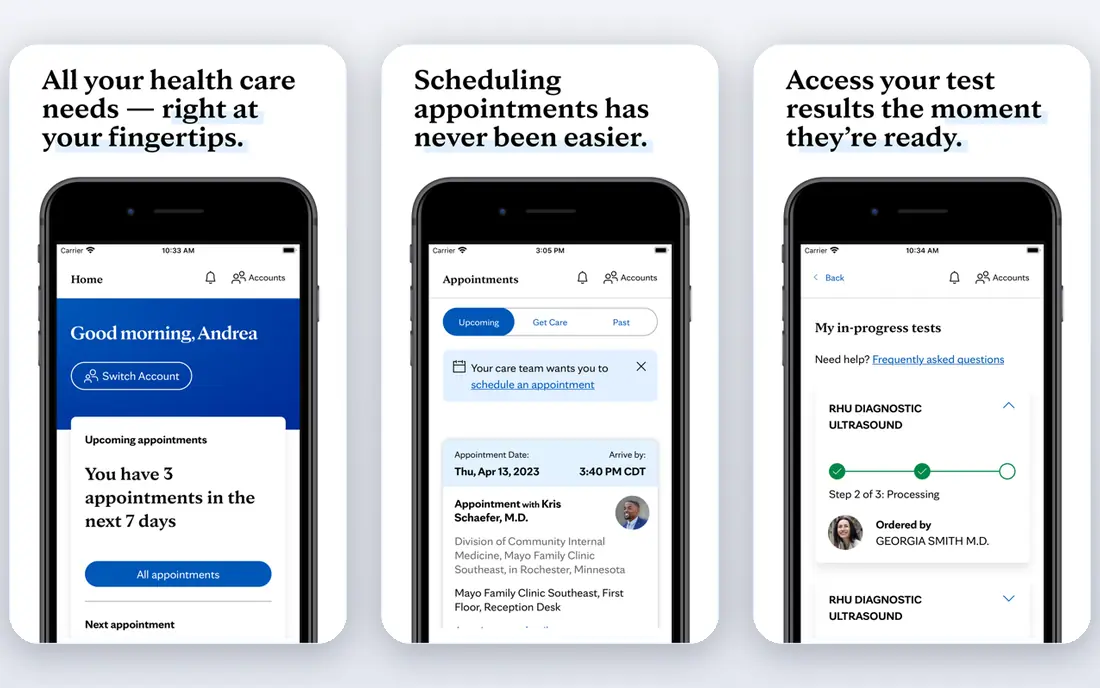
Mayo Clinic is a nonprofit academic medical center with major campuses in Minnesota, Arizona and Florida, plus a wider health system. That size matters for jobseekers because a nurse, laboratory scientist, therapist or analyst can often move between specialties without leaving the organization. Research roles sit close to clinical work, which suits people who want patient care and study to sit side by side.
The honest catch is scale and demand. Well known employers attract many applicants, and the hiring process can feel slow. Location also matters, since the main campus is in Rochester, Minnesota, and not every role is remote. Check the specific site, team and shift pattern before you judge the whole employer.
- Large range of clinical specialties
- Research and education roles alongside patient care
- Locations in several states
- Competition for popular roles can be strong
- Some sites are in smaller cities
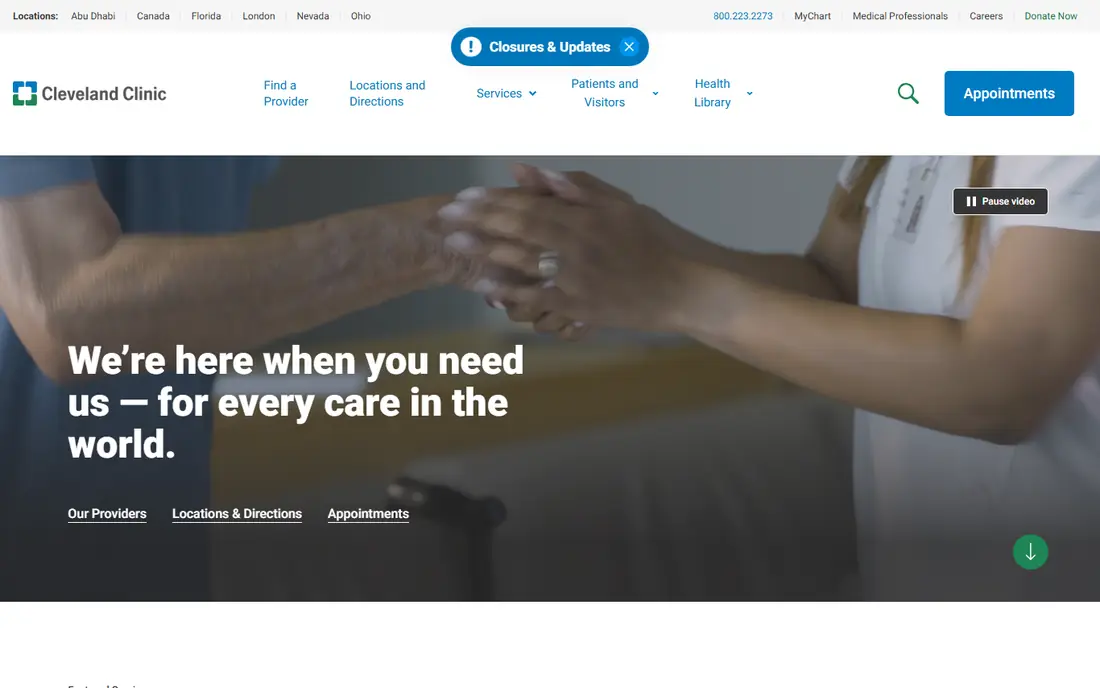
Cleveland Clinic runs a large nonprofit academic medical center in Ohio, with additional hospitals and outpatient sites. For jobseekers, the draw is breadth. Clinical roles span surgery, cardiology, cancer care, neurology and primary care, and support roles span administration, IT, supply chain and facilities. People who want to change direction inside health care may find more internal routes here than at a single hospital.
Size is also the weakness. A system this large does not feel the same on every ward or in every office. One team may offer strong mentoring while another is stretched. Read the job description closely, ask about staffing and training at interview, and weigh the site as much as the brand name.
- Very large hospital system with many specialties
- Training programs for early career staff
- Facilities in several states and countries
- A very large system can feel impersonal
- Experience can differ sharply between departments
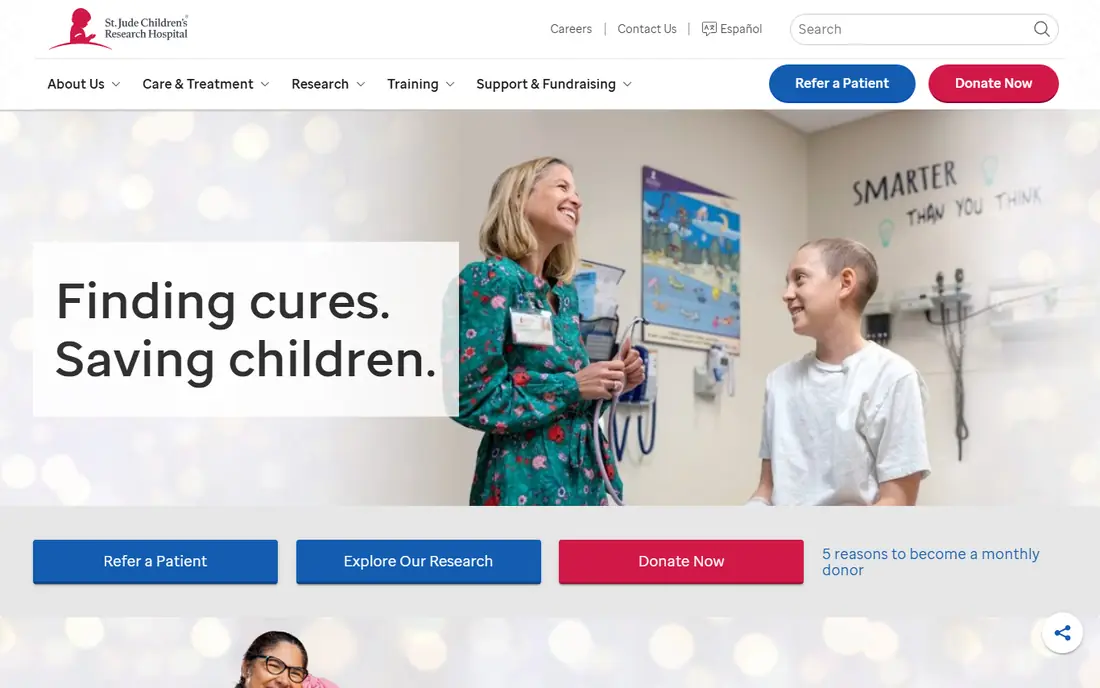
St. Jude Children's Research Hospital in Memphis, Tennessee, treats children with cancer and other life threatening diseases and carries out research on those conditions. That focus gives staff a clear shared purpose, and it creates roles that are hard to find elsewhere, from pediatric oncology nursing to laboratory science and clinical trial work. Support roles in data, finance, fundraising and operations sit alongside the clinical teams.
This is not an easy workplace to judge from the outside. Pediatric care carries emotional weight, and specialist roles may require specific training or relocation to Memphis. People drawn to the mission should still ask about caseloads, support for staff and the day to day rhythm of the team they would join.
- Focused mission in childhood cancer and serious illness
- Research and clinical care in one place
- Memphis campus with many specialist roles
- Pediatric specialist work is emotionally demanding
- Most roles are tied to one main campus
Houston Methodist is a nonprofit health system based in Houston, Texas, with hospitals and outpatient locations across the region. Its academic medical center work sits alongside community hospitals, so jobseekers can compare a large teaching hospital setting with smaller local sites. Clinical, research, administrative and technical roles are all part of the system.
Geography is the main limit. If you do not want to live in or near Houston, this employer may not fit. Hospital roles also commonly involve nights, weekends or on call patterns, depending on the department. Compare sites and schedules before applying, since a system name alone does not describe a single job.
- Large Texas system with academic and community hospitals
- Wide range of clinical and support roles
- Houston location with many sites
- Roles are concentrated in the Houston area
- Large hospital work can involve shift and weekend patterns
Northwell Health is a large nonprofit health system in New York, with hospitals, outpatient centers and laboratories across the region. The range of roles is wide, from nursing and allied health to laboratory science, digital health, finance and administration. For people already in the New York area, the number of sites can make it easier to find a role close to home or to move between settings.
The trade off is cost and complexity. Living costs in parts of the region are high, and pay for a given role may not stretch as far as the same pay elsewhere. Site location, travel time and shift pattern deserve as much attention as the job title. Northwell suits jobseekers who want a large system and are comfortable with the pace of a major metropolitan employer.
- Large New York system with hospitals and outpatient sites
- Many roles across clinical, research and corporate teams
- Strong training routes
- Cost of living in the New York area is high
- Commuting and shift patterns vary by site
Kaiser Permanente combines a health plan with hospitals and medical groups in several western and eastern states. That structure creates jobs on both sides, from doctors, nurses and pharmacists to claims, customer service, IT and operations staff. People who like a single organization handling coverage and care may find the model appealing, and the scale brings training and internal movement options.
The limit is geography. Kaiser Permanente does not operate everywhere, so candidates outside its states may find few openings. The integrated model also means some roles sit inside a tightly managed system, with set processes and tools. That suits people who value structure, and it may frustrate people who prefer a smaller, more independent setting.
- Integrated health plan and care delivery model
- Large workforce across several states
- Many clinical and administrative roles
- Roles are concentrated in its service states
- The integrated model may feel different from a standalone hospital
Johnson and Johnson is a large health care company whose work includes medical devices and pharmaceuticals. For jobseekers, the appeal is the range of non hospital roles, including laboratory science, engineering, quality, regulatory affairs, manufacturing, sales and marketing. People with a science or technical background can build a health care career without working on a ward.
A corporate health care company is not the same as a hospital, and the comparison matters. Some teams move at the pace of product development and regulation, which can feel slow. Others are tied to sales targets or factory schedules. Look at the specific business unit, since experience at Johnson and Johnson varies as much by division as it does by job title.
- Large medical technology and pharmaceutical business
- Roles in research, manufacturing, sales and corporate teams
- Global locations
- Corporate roles differ greatly from clinical roles
- Large company processes can be slow
Optum provides health services, data and technology used by health plans, providers and employers, and it sits within UnitedHealth Group. That position creates a broad set of roles for people interested in health care IT, analytics, consulting, care coordination and administration. It is a useful option for jobseekers who want health care work with a technology or business focus rather than direct hospital care.
Scale brings the same warning as other large employers on this list. Optum is made up of many businesses, so one team may feel like a technology company while another feels like a call center or a clinic. Check the business unit, the work pattern and the location, and treat the company name as a starting point rather than a promise about a specific job.
- Large health services and technology employer
- Roles in data, software, care delivery and operations
- Part of UnitedHealth Group
- Very large corporate structure
- Experience varies by business unit and location
How we picked these
We compared public careers pages, the range of roles each employer offers and the settings in which those roles sit. We favored large employers with a clear presence in the United States, a mix of hospital, medical product and health technology work, and open roles that a jobseeker can check directly. We did not rank these employers, and we did not invent pay figures, scores or staff survey results. Any list of this kind reflects public information at a point in time, so the careers page for the exact role is the final check.
What to check before you apply
Start with the role, not the logo. A nursing job, a laboratory job and a software job at the same employer can differ in pay, hours, training and manager support. Read the full description, note the site and the shift pattern, and search for the team or department rather than only the company name.
Next, compare the practical parts of the offer. Location and travel time, shift and weekend patterns, training routes, and benefits for your situation matter more than a general reputation. If the posting is vague, ask at interview about staffing, onboarding, and how new staff are supported in the first months. Shortlist two or three employers, apply to real openings, and use interviews to test the day to day reality.
Questions to ask at interview
Ask how the team is staffed on a normal week, what training looks like in the first three months, and how often staff move into other roles inside the organization. Ask about the shift pattern over a full rota, not just a single week. The answers will tell you more about the job than any general guide can.
Frequently asked questions
What are the best healthcare companies to work for?
There is no single answer, since the best employer depends on your role, location and preferred setting. Large hospital systems suit clinical staff who want many specialties, while medical product and health technology firms suit science, engineering and office roles. Use this guide as a shortlist, then compare real openings.
Which are the best medical companies to work for?
Medical product firms such as Johnson and Johnson suit people in research, engineering, quality, regulatory work, manufacturing and sales. Hospital systems such as Mayo Clinic and Cleveland Clinic suit people who want direct patient care. The right choice depends on the kind of work you want to do each day.
What are the best health companies to work for if I am not clinical?
Health technology and services employers such as Optum offer roles in data, software, operations and care coordination. Hospital systems also hire large administrative, IT, finance and facilities teams. Search by job function, not only by employer name, to find these roles.
What are the best healthcare IT companies to work for?
Optum is a strong starting point for health services and technology work, and large hospital systems also run sizable IT teams. Compare the specific team, since health IT can mean software development, data analysis, support or digital product work. Ask about the systems you would work with and the on call pattern.
How do I choose the best healthcare company to work for?
Compare the role, site, shift pattern and training route, then check benefits and travel time. Apply to a small number of real openings and use interviews to ask about staffing and support. A well known employer with a poor fit for your role is a worse choice than a less famous employer with a strong team.
Sources
See where you really rank - block by block
ProMapRanker scans Google Maps across a grid of your service area. Simple monthly plans from $19, white-label on every plan.
Start freeKeep reading
 zoho inventory alternatives
6 Alternatives to Zoho Inventory, Compared on Price and Fit
Zoho Inventory alternatives: 6 tools compared on price, free plans and fit. Katana leads the list for manufacturers. Fit and flaws are laid out for each entry.
Read → zoho crm alternatives
Best Zoho CRM Alternatives (2026)
Need Zoho CRM alternatives? We compare 7 tools on cost, free access and who each suits. Every pick gets a straight assessment. Built for quick decisions.
Read → zelle alternatives
Best Zelle Alternatives in 2026
Compare the best Zelle alternatives for sending money to friends, paying sellers and moving funds abroad, with honest notes on fees, speed and safety in 2026.
Read →