 ProMapRanker
Top 7 Headless Commerce Platforms for 2026, Compared


Teams that require a quick data layer between backend and storefront · Pricing starts at: See website (custom quote)
Direct answer
If you need teams that require a quick data layer between backend and storefront, Nacelle is the first tool to look at here. For a different need, BigCommerce covers mid-market brands that want SaaS simplicity with headless freedom and Crystallize covers content-rich commerce with a free starting level.
Key takeaways
- Nacelle takes the first slot, best suited to teams that require a quick data layer between backend and storefront.
- Just one of the 7 tools, Crystallize, has a free plan.
- Shopify fits keeps that want headless without leaving the Shopify ecosystem.
- Before buying BigCommerce, weigh this: the cheapest plans are still SaaS plans, not composable suites.
- Starting prices begin at $29/month Starter with Swell.
Quick comparison
| Pick | Great for | Pricing starts at | Free tier | |
|---|---|---|---|---|
| Nacelle | Teams that require a quick data layer between backend and storefront | See website (custom quote) | No | Visit |
 BigCommerce | Mid-market brands that want SaaS simplicity with headless freedom | $39/month Core ($29 billed yearly, per 2026 plan structure) | Free trial (15 days) | Visit |
 Crystallize | Content-rich commerce with a free starting level | $949/month Atom plan (plus metering; free Particle tier available, per vendor-cited pricing) | Yes | Visit |
 Swell | Developers who want headless with native subscriptions | $29/month Starter (up to $50K annual sales, per vendor pricing) | Free trial | Visit |
 commercetools | Enterprises building completely composable commerce | See website (custom quote) | No | Visit |
 Fabric | Retailers modernizing without a full replatform | See website (custom quote) | No | Visit |
 Shopify | Keeps that want headless without leaving the Shopify ecosystem | $39/month Basic ($29 billed annually; Hydrogen and Oxygen included free on premium plans) | Free trial (3 days) | Visit |
Our 7 picks for headless commerce platform
If you are comparing headless commerce platform, this page covers 7 tools in one place: what each is best for, what it costs to start, whether it has a free plan, and the main limit to know about.
Nacelle
Great for: Teams that require a quick data layer between backend and storefront
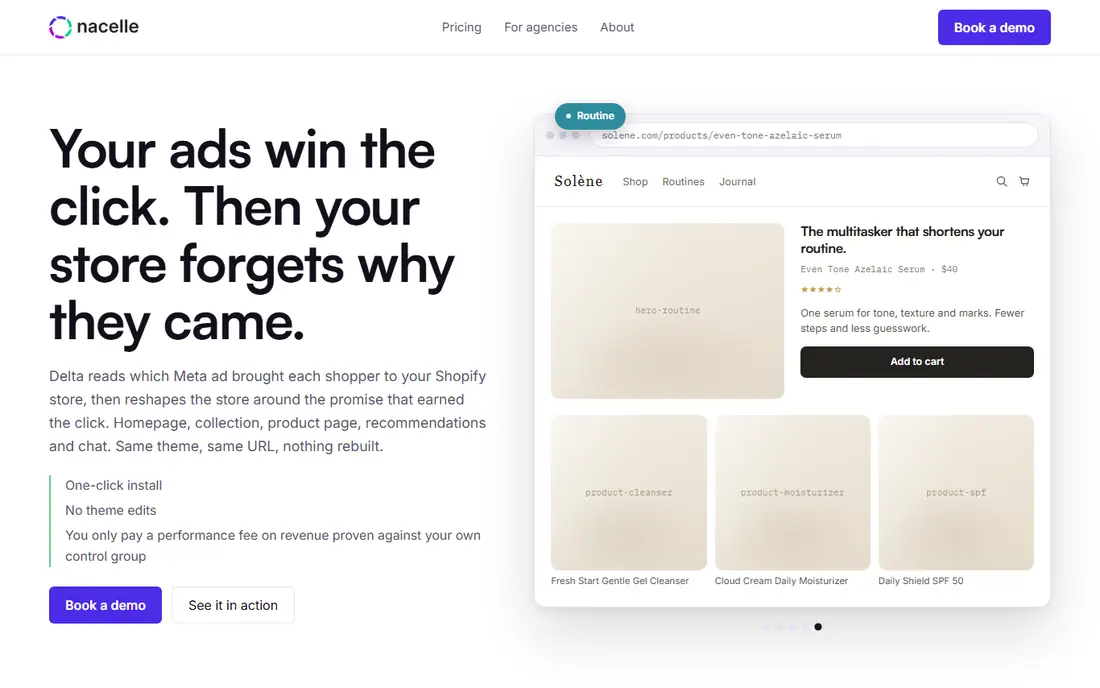
Nacelle works best for teams that need a quick data layer between backend and storefront. It ingests data from your existing system, maintains a quick commerce-specific index, and serves it through a unified API to whatever storefront you build. On top of that, pricing is quoted.
On top of that, for teams going headless on top of Shopify or Magento, it removes an entire category of integration pain. The honest catch is understanding what you are buying. Check the vendor site for Nacelle pricing; none is listed in this comparison. No free plan comes with Nacelle.
Trade-offs to know: Quote-based pricing; Narrower scope than the suites above.
Upsides: Magento and custom backends to quick frontends.
- Connects Shopify
- Purpose-built data orchestration for headless storefronts
- Not a full commerce system, so you still need a backend
BigCommerce
Great for: Mid-market brands that want SaaS simplicity with headless freedom
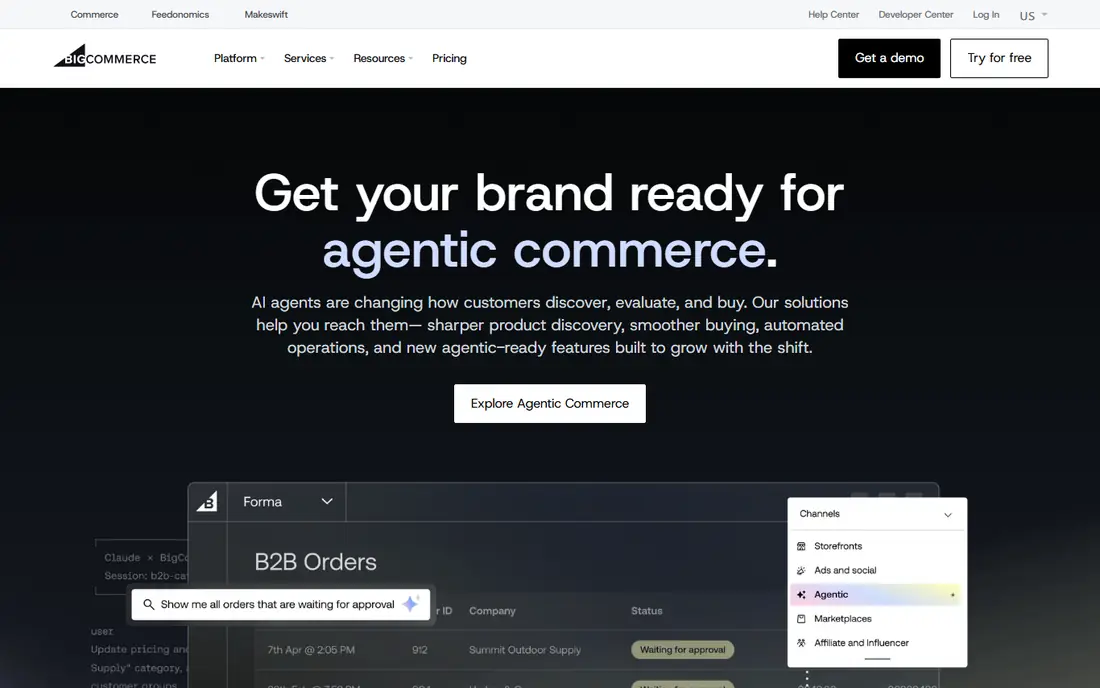
BigCommerce is a good fit for mid-market brands that want SaaS simplicity with headless freedom. The system exposes its catalog, cart and checkout through APIs, supports headless storefronts on any framework, and keeps the managed SaaS benefits: hosting, security and updates handled for you. The honest catch is the ceiling between SaaS and composable.
Worth adding: pricing begins at $39 a month for Core, which makes headless experimentation cheap. For everyday use, for most mid-market brands that is a feature, not a bug. As for the details, BigCommerce has spent years positioning as the open SaaS alternative, and headless is where that openness pays off. More specifically, you get freedom at the frontend, but the backend is still BigCommerce's, with its data model and limits. The starting price for BigCommerce: $39/month Core. As for free access: Free trial (15 days).
The main drawbacks: Advanced headless builds need developer partners.
- Strong B2B functionality for a SaaS product
- Published pricing from $39 a month
- Plan names and pricing changed in June 2026, so verify current tiers
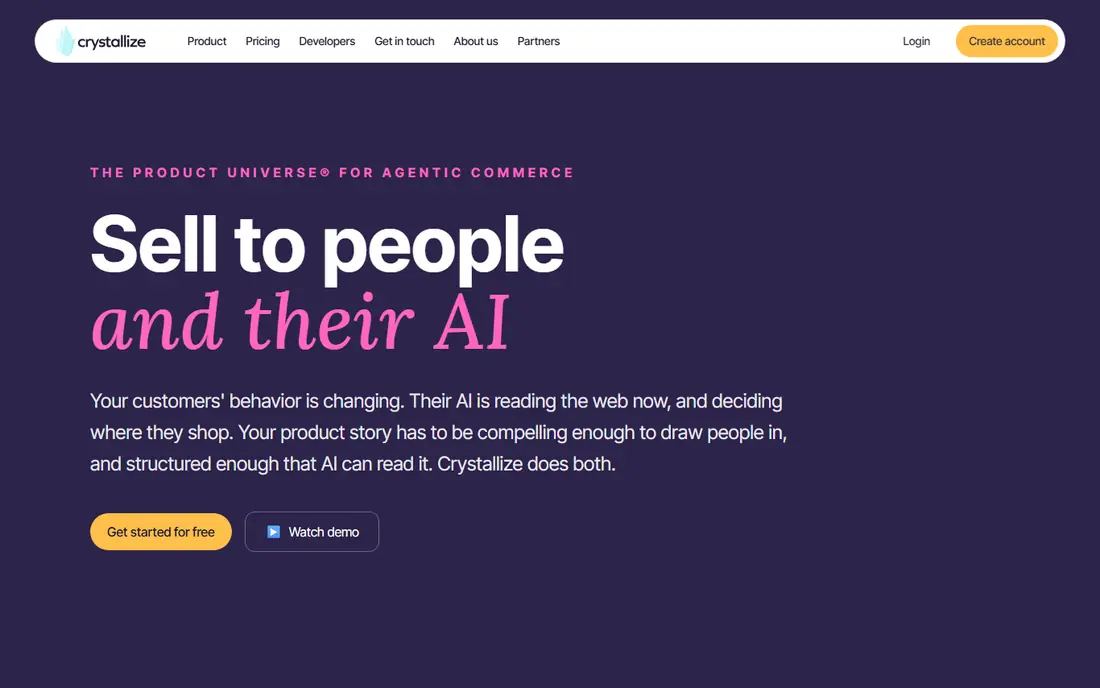
For content-rich commerce with a free starting level, Crystallize is a natural candidate. Crystallize is the rare headless product with a free level worth mentioning. Its content modeling treats editorial content as a first-class citizen, which fits brands where storytelling sells.
Downsides: premium plans start high relative to SaaS choices.
Verify the current numbers with the vendor, since headless pricing moves frequently. This is a product for teams that value the architecture and the free on-ramp, not for bargain hunters. On top of that, the honest catch is the jump to premium. Crystallize starts at: $949/month Atom plan. Free access exists with Crystallize.
- Headless-first with GraphQL APIs
- Solid content modeling alongside commerce
- Metering on top of the base price needs modeling
Swell was built for developers who want headless with native subscriptions. Swell is the developer's headless system that does not pretend to be enterprise software. Also, the native subscription engine is a real differentiator; most systems make you bolt on an external app for recurring billing.
Drawbacks to consider: The low levels cap annual sales volume.
The honest catch is scale in both directions. But for a developer-led team that wants to build, not buy, the value is hard to argue with. Swell pricing: $29/month Starter. Trial and free access: Free trial.
- Published pricing beginning at $29 per month
- API-first with multi-storefront support from one backend
- Smaller vendor with a smaller ecosystem
Where commercetools fits: enterprises building completely composable commerce. commercetools invented the category language everyone else now uses. For large enterprises running several brands, regions and business models on one backbone, that modularity is the entire argument.
From a buyer's view, firms without a solid engineering team, or without one they can hire, should look at the SaaS choices below instead. The honest catch is that composable means you compose. Pricing for commercetools is not stated here, so ask the vendor for current figures. No free plan comes with commercetools.
The main drawbacks: You are buying building blocks, so budget serious development.
- The reference implementation of composable commerce, with 300+ APIs
- MACH Alliance founding member with a mature partner ecosystem
- Quote-based enterprise pricing
Fabric is a good fit for retailers modernizing without a full replatform. Fabric's pitch is pitched at a specific pain: the retailer that knows its monolith is holding it back but cannot afford a two-year replatform. Its modular APIs for product information, orders, loyalty and subscriptions can be adopted piece by piece, modernizing the stack incrementally.
Worth adding: the honest catch is that "weeks not months" depends heavily on your starting point. More specifically, a tangled legacy stack still needs untangling, and the quote-based pricing means budgeting needs a sales conversation. That said, for teams that require commerce modernization without a big-bang migration, the incremental model is genuinely appealing. No starting price is listed for Fabric here; confirm pricing on the vendor site. Fabric has no free plan.
Watch-outs: Quote-based pricing. What users get: Positioning around avoiding painful replatforms.
- Includes PIM
- Order management
- The modular story needs validation against your specific stack
Choose Shopify for keeps that want headless without leaving the Shopify ecosystem. Shopify's headless story is straightforward: keep the backend you trust, rebuild the frontend however you want. Hydrogen is Shopify's own React framework for custom storefronts, Oxygen hosts it on Shopify's edge network.
Where it is weaker: Headless means custom development; Plus pricing starts around $2,300 a month.
What users get: payments and admin you already know. Both are free on any premium plan beginning at $39 a month. As for the details, for the millions of keeps already on Shopify, that removes the platform-migration question entirely. On top of that, a proper Hydrogen storefront is a custom development project, and agencies quote accordingly. The starting price for Shopify: $39/month Basic. Trial and free access: Free trial (3 days).
- Hydrogen framework and Oxygen hosting included free on premium plans
- The largest app and partner ecosystem in commerce
- Shopify expertise at that level is pricey
How these tools were picked
ProMapRanker looked at what each vendor publishes: pricing, plan limits, feature coverage for headless commerce platform and stated drawbacks. No hands-on testing is claimed. Plan names, prices and limits change often. Treat the figures here as a starting point and verify them with the vendor. The sequence is a judgement call: typical use case first, then pricing transparency, then free access. Use the profiles to check fit.
Questions to settle before buying
- Ask Nacelle, commercetools and Fabric for a written quote, since no starting price is shown.
- Look at the free plan from Crystallize closely: its caps decide whether it is usable for real work.
- Run a trial of BigCommerce, Swell and Shopify with real work before paying for a year; your own workflow is the best test.
- Read the limits listed for Nacelle first: quote-based pricing.
- Let daily users try BigCommerce on real work; their feedback beats any feature checklist.
- Ask Nacelle how an export works before you move any records in; an easy exit lowers the risk.
Frequently asked questions
What is the difference between headless and composable commerce?
Headless separates the frontend from the backend. All composable commerce is headless, but not all headless setups are composable; Shopify with a Hydrogen frontend is headless but not completely composable.
Is Nacelle the right pick for everyone comparing headless commerce platform?
No single tool suits every team. Nacelle comes first because it fits teams that need a fast data layer between backend and storefront, while BigCommerce suits mid-market brands that want SaaS simplicity with headless freedom and Crystallize suits content-rich commerce with a free starting tier. Match the tool to your own size, budget and workflow before deciding.
How are the tools for headless commerce platform ordered?
Nacelle sits first and Shopify last because the order follows typical fit for headless commerce platform, then price clarity and free access. It is a judgement call, so read each profile for fit and limits.
Is headless commerce worth it for a small store?
Typically not. Headless pays off when you need custom experiences across several touchpoints, have complicated business requirements, or operate at a scale where frontend performance straight moves revenue.
What is headless commerce?
It is an architecture that separates the storefront (the "head") from the commerce backend. The backend handles products, carts, orders and payments through APIs, whereas the frontend can be any website, app or device experience.
Do these tools publish their prices?
Not all of them. Nacelle, commercetools and Fabric publish no starting price, so expect a quote request for those. The rest, BigCommerce included, show a starting price, though seats and billing terms still change the final cost.
Sources
See where you really rank - block by block
ProMapRanker scans Google Maps across a grid of your service area. Simple monthly plans from $19, white-label on every plan.
Start freeKeep reading
 zoho inventory alternatives
6 Alternatives to Zoho Inventory, Compared on Price and Fit
Zoho Inventory alternatives: 6 tools compared on price, free plans and fit. Katana leads the list for manufacturers. Fit and flaws are laid out for each entry.
Read → zoho crm alternatives
Best Zoho CRM Alternatives (2026)
Need Zoho CRM alternatives? We compare 7 tools on cost, free access and who each suits. Every pick gets a straight assessment. Built for quick decisions.
Read → zelle alternatives
Best Zelle Alternatives in 2026
Compare the best Zelle alternatives for sending money to friends, paying sellers and moving funds abroad, with honest notes on fees, speed and safety in 2026.
Read →