 ProMapRanker
Best HACCP Software in 2026: 9 Tools Compared

Key takeaways
- FoodDocs and Zip HACCP suit smaller sites that want a clear starting point without a long setup project.
- Safefood 360, FoodReady, and SafetyChain suit larger operations that need supplier, traceability, and audit work in one place.
- SafetyCulture is the most flexible pick when inspections and checklists matter more than a full HACCP plan builder.
- Prices vary widely by site, user count, and module, so a written quote matters more than a headline price.
- No tool replaces a trained food safety lead, and every plan still needs review against the rules that apply to your product.
Quick comparison
| Pick | Great for | Pricing starts at | Free tier | |
|---|---|---|---|---|
 FoodDocs | Small food businesses | See website | Free trial | Visit |
 Safefood 360 | Large food manufacturers | See website | No | Visit |
 SafetyCulture | Multi-site inspections | $24 per seat per month | Yes | Visit |
 Zip HACCP | Restaurants and small chains | $59.99 per location per month | Free trial | Visit |
 FoodReady | Manufacturers plus consulting help | See website | No | Visit |
 SafetyChain | Multi-site manufacturers | See website | No | Visit |
 ComplianceMate | Temperature checks and checklists | See website | No | Visit |
 Jolt | Task lists and food safety checks | See website | Free trial | Visit |
 Icicle Technologies | Traceability and production control | See website | No | Visit |
The best HACCP software
HACCP software helps a food business write its hazard plan, record daily checks, and show an auditor a clean trail of evidence. The tools below differ in how much hand-holding they give, how they handle multiple sites, and how they price that work.
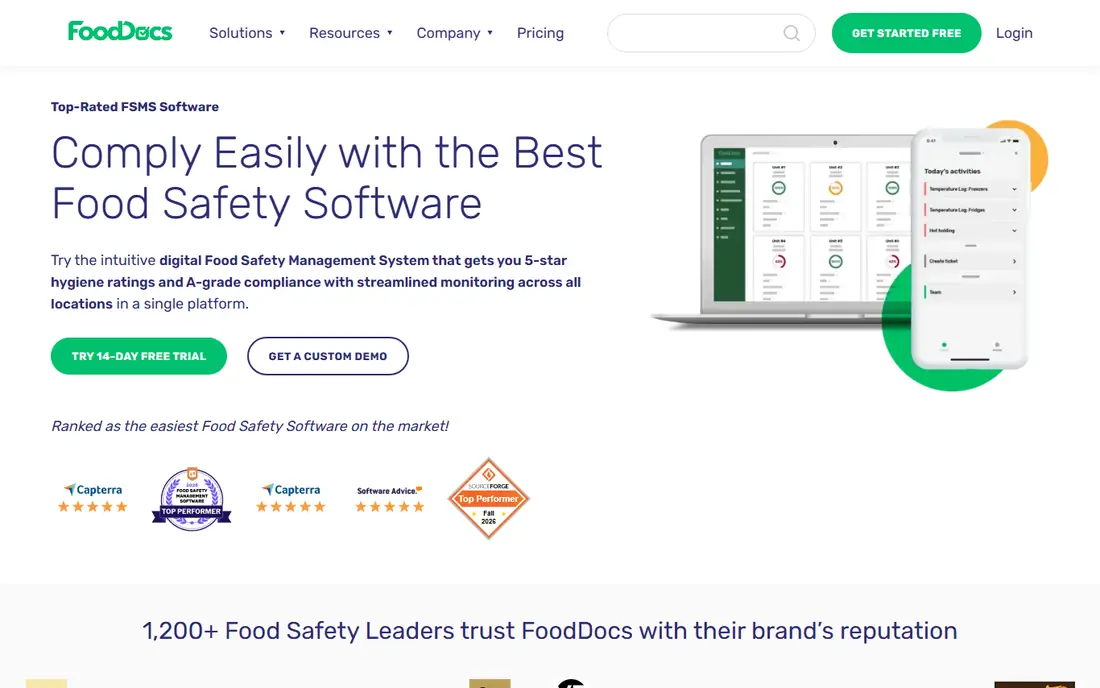
FoodDocs is our pick for a small producer, caterer, or restaurant group that wants to move from paper forms to a digital system without hiring a consultant for every step. Its questionnaire style setup walks a team through hazards, controls, and monitoring tasks, and the mobile app lets staff complete checks where the work happens. That structure helps a new site get a usable plan in place, rather than staring at a blank template.
The honest catch is scope. FoodDocs covers a lot of daily food safety work well, but a large manufacturer with complex supplier approvals and detailed lot traceability may outgrow the simpler tiers. Check which modules sit in the quoted plan, and ask how records export for an audit. For a single site or a small group, though, the balance of guidance and price is hard to beat.
- Guided HACCP plan setup
- Mobile monitoring app
- Ready-made checklist templates
- Advanced traceability may need a higher tier
- Pricing depends on sites and modules
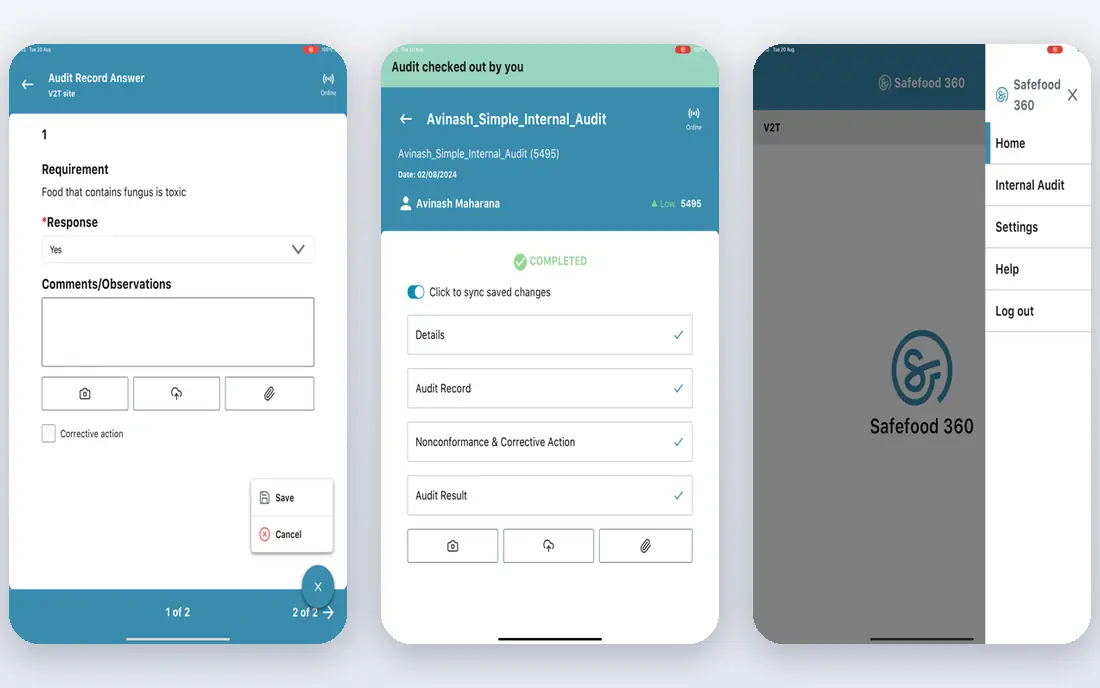
Safefood 360 is built for manufacturers that live with audits, customer codes, and supplier paperwork every week. Its module range covers food safety management and supplier quality work, so corrective actions, audits, and supplier records can sit in one system instead of scattered spreadsheets. That breadth is the reason larger teams pick it, even when the price is only available on request.
The tradeoff is effort. A system this broad needs owners, training, and a clear rollout plan, and a very small business may find it heavier than it needs. Ask for a demo using your own product types and audit standard, and confirm what implementation support is included. For a mid-size or large plant, that upfront work pays off at audit time.
- Wide module range for food safety and supplier quality
- Audit-ready record structure
- Supports major recognised standards
- Quote-only pricing
- Setup and training take real time
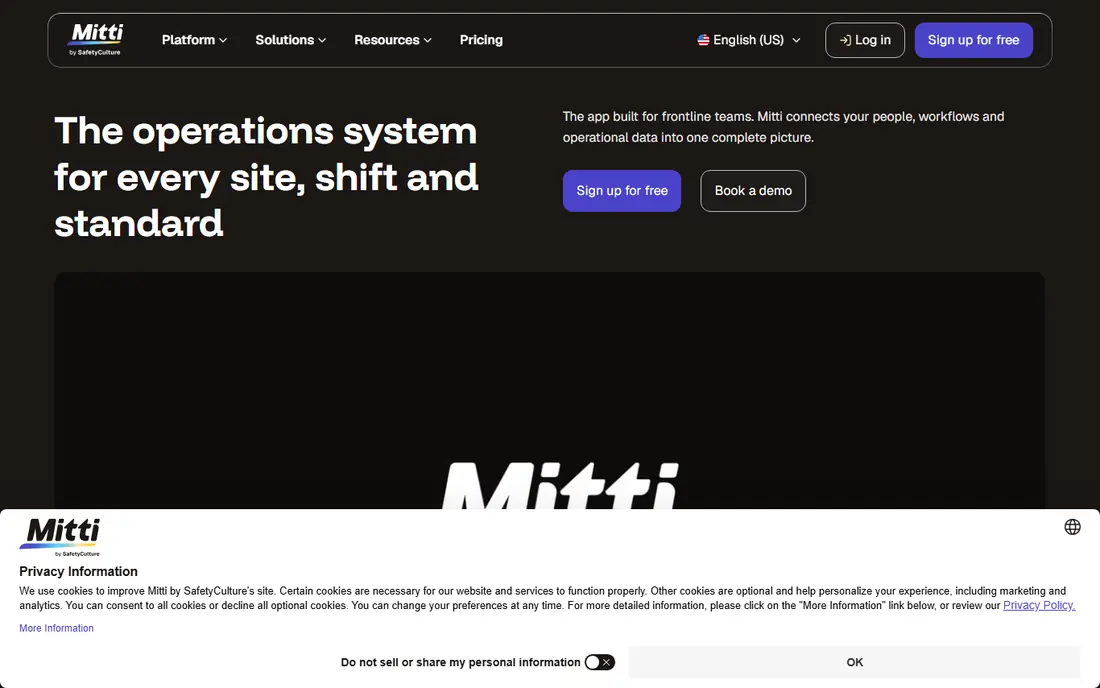
SafetyCulture, formerly known as iAuditor, is best when the daily problem is consistent checks across many sites. Teams can build inspection forms, assign corrective actions, and review results from a central dashboard. The free tier gives a small team a low-risk way to test whether digital checklists actually stick with staff on the floor.
It is not the same as a dedicated HACCP plan builder, so a business that needs a formal hazard analysis from scratch should pair it with specialist advice or a more food-specific tool. Templates help, but they do not replace that analysis. If your main need is reliable, visible daily execution, SafetyCulture is a strong and flexible choice.
- Strong inspection templates
- Mobile checklists that work across sites
- Free tier for small teams
- Not a dedicated HACCP plan builder
- Food-specific depth varies by template
Zip HACCP speaks the language of restaurants and small chains. Its daily task lists, temperature logs, and checklists fit a kitchen routine, and per-location pricing makes budgeting simple when a group grows site by site. Staff do not need to learn a manufacturing system to complete a shift check.
The limit shows up for manufacturers. Lot traceability, supplier approval workflows, and complex production records are not its core strength. For a food service business, that focus is a benefit, not a flaw, because the tool stays close to what the team actually does each day. Confirm the trial covers your full checklist set before committing.
- Clear per-location pricing
- Food service checklists
- Mobile friendly daily tasks
- Less depth for manufacturing traceability
- Plan building is limited compared with specialist tools
FoodReady pairs software with people who know food safety compliance, which matters when a manufacturer is preparing for a demanding audit or a new customer code. Its templates and consulting support can shorten the time between buying the tool and having a plan an auditor can follow. Traceability and monitoring features support day-to-day control once the plan is live.
That help comes at a price, and first-year cost can be higher than a self-serve tool. A team that already has strong in-house expertise may not need the consulting layer. A team that does not should weigh that support against the cost of a failed audit or a delayed customer approval, where the extra help often earns its keep.
- Food safety software plus consulting support
- Templates for common standards
- Traceability and monitoring tools
- Quote-only pricing
- Consulting element may raise first-year cost
SafetyChain fits manufacturers that run more than one plant and need the same quality and supplier processes everywhere. Mobile data capture brings floor checks into the system quickly, and central reporting helps quality managers spot a weak site before an auditor does. Its focus on food manufacturing, rather than general inspections, shows in its workflows.
Rolling it out across sites takes coordination, and pricing is quoted, so a small business should not expect a simple self-serve purchase. Ask how data moves between sites, how suppliers are onboarded, and what training is included. For a growing manufacturer, that structure is exactly what paper and spreadsheets cannot provide.
- Built for multi-site food manufacturing
- Supplier and quality workflows
- Mobile data capture
- Quote-only pricing
- Implementation needs planning across sites
ComplianceMate is a practical pick when temperature control is the main daily risk. Its monitoring tools, including sensor options, reduce manual logging and flag problems sooner than a paper log found at the end of a shift. Checklist and corrective action features keep the follow-up visible instead of buried in a notebook.
Hardware and subscription costs need to be quoted together, or the total can surprise a buyer. It also suits food service and retail more than a complex manufacturing plan. If cold chain control and daily checks are your priority, and your HACCP plan itself is already in good shape, ComplianceMate earns a close look.
- Automated temperature monitoring options
- Checklist and corrective action tools
- Suited to food service and retail
- Hardware may be part of the cost
- Less suited to full manufacturing HACCP plans
Jolt works well for teams that struggle most with consistency, not with writing a plan. Lists, labels, and checklists give every shift a clear set of tasks, and managers can see what was missed without walking every station. That visibility helps a busy kitchen or store keep standards steady when staff change often.
Because Jolt covers wider operations work, a manufacturer needing deep hazard analysis and traceability should look elsewhere or pair it with a specialist system. For food service, retail, and hospitality teams, that breadth is useful, since food safety tasks sit alongside other daily jobs. Use the trial with real shift lists to judge adoption.
- Clear task lists and checklists
- Label and checklist features for food operations
- Easy staff adoption
- Broader operations tool, not a pure HACCP specialist
- Pricing varies by needs
Icicle Technologies suits processors and manufacturers that need traceability tied closely to production. When a lot moves through receiving, production, and shipping, the record trail matters for recalls and customer questions, and Icicle is designed around that flow. Quality and safety records sit with production data, which reduces the hunt for evidence during an audit.
Smaller teams may find the system more than they need, and pricing is quoted. A demo should use your actual product flow, not a generic example, so you can see how recalls and traceability reports work in practice. For a manufacturer where traceability is the weak link, it is a serious contender.
- Traceability linked to production
- Quality and safety records in one system
- Suited to manufacturers and processors
- Quote-only pricing
- Learning curve for smaller teams
How we picked these
We compared vendor product pages, pricing pages where published, and public descriptions of each tool's food safety features, with a focus on HACCP plan support, daily monitoring, multi-site use, and audit evidence. We favoured tools that are still offered and maintained, that clearly fit food safety work, and that cover different business sizes, from a single restaurant to a multi-site manufacturer. Where a vendor does not publish a price, we say so instead of guessing, and we note where a tool is stronger on inspections than on formal plan building.
What to check before you buy HACCP software
Start with the audit you actually face. A restaurant group, a small producer, and a manufacturer supplying major retailers face different evidence demands, and the right tool follows that audit, not the longest feature list. List your product types, your sites, and the standard or customer code you must meet, then test each shortlisted tool against that list.
Next, test the daily routine. Ask staff to complete a real shift check on a phone, record a corrective action, and pull the record back for review. If that loop feels slow or confusing in a trial, it will feel worse on a busy day. Also confirm how records export, how long data is kept, and who can change a completed record, since auditors ask those questions.
Finally, price the whole system. Include per-site or per-user fees, any sensors or hardware, implementation, and training. A low monthly headline can hide a large first-year total, while a quote-only tool may include support that a cheaper tool charges for later. Get the total in writing before you sign.
Questions to ask on a demo
- Can you show a HACCP plan, a monitoring log, and a corrective action for a product like ours?
- How does the system handle multiple sites, users, and permissions?
- What happens to our records if we leave, and in what format can we export them?
Frequently asked questions
What is HACCP software?
HACCP software digitises a hazard analysis and critical control point plan, turning paper checks into scheduled tasks, logs, and audit-ready records. It helps teams record monitoring, corrective actions, and verification in one place, but it does not create a valid plan on its own. A trained person still needs to review hazards, limits, and controls for each product.
Is HACCP software the same as food safety software?
Not exactly. Food safety software is a wider term that can cover inspections, supplier management, and traceability. HACCP software focuses on the hazard plan itself, including critical control points and monitoring records. Many tools do both, so check whether plan building or daily checks are the stronger part.
What is the best HACCP app for a small business?
FoodDocs and Zip HACCP are good starting points for small businesses, because they offer guided setup and clear daily checklists without a large implementation project. SafetyCulture also works well when inspections are the main need. The best fit still depends on whether you run a restaurant, a small producer, or a retail site.
How much does HACCP software cost?
Costs range from a modest monthly fee per location for food service tools to a quoted annual contract for manufacturing platforms. Per-user, per-site, and module pricing all appear in this market, and hardware can add to the total. Ask for a written quote that covers every site, user, and module you plan to use.
Do I still need a food safety consultant?
Often, yes, at least for the first plan. Software can structure and store a plan, but hazard analysis needs product and process knowledge that a template cannot supply alone. Some vendors include consulting support, while others expect you to bring your own expertise. Budget for that advice if your team lacks it.
Sources
See where you really rank - block by block
ProMapRanker scans Google Maps across a grid of your service area. Simple monthly plans from $19, white-label on every plan.
Start freeKeep reading
 zscaler alternatives
Best Zscaler Alternatives in 2026
Looking for zscaler alternatives? We compare 9 SASE and zero trust platforms on architecture, data protection, pricing, and fit for your network and team.
Read → zapier alternatives free
Best Zapier Alternatives Free in 2026
Nine automation tools for zapier alternatives free in 2026, all with genuinely free tiers, plus free plan limits, starting prices and upgrade paths explained.
Read → which platform is best for online reputation
Which Platform Is Best for Online Reputation in 2026
Wondering which platform is best for online reputation? We compare 8 review, listing, and response tools for small and multi-location businesses and agencies.
Read →