 ProMapRanker
Best Gym Scheduling Software in 2026

Key takeaways
- Mindbody suits boutique studios that value marketplace discovery, while PushPress and Gymdesk suit gyms that want clearer pricing and strong class tools.
- Class scheduling only works when memberships, payments, waitlists, and check-in share one system, so test the member journey from booking to door.
- Many gym tools price by location, member band, or plan, so model cost at your current and expected member counts, not just at launch.
- Prices and availability vary by location and organisation, and no tool can guarantee fuller classes, because programming, coaching, and demand also matter.
Quick comparison
| Pick | Great for | Pricing starts at | Free tier | |
|---|---|---|---|---|
 Mindbody | Boutique studios wanting discovery | $79 per month | No | Visit |
 Glofox | Boutique multi-location studios | $99 per month | No | Visit |
 Zen Planner | Martial arts and class-based gyms | $99 per month | No | Visit |
 TeamUp | Class-based gyms with simple pricing | $99 per month | No | Visit |
 Wodify | CrossFit and functional training gyms | $199 per month | No | Visit |
 Gymdesk | Small to mid-sized gyms and martial arts schools | $75 per month | No | Visit |
 WellnessLiving | Wellness studios and group classes | $69 per month | No | Visit |
 Vagaro | Service-based fitness and wellness booking | $30 per month | No | Visit |
 PushPress | CrossFit and independent gyms | Free | Yes | Visit |
 Eversports | Studios in Europe and growing markets | See website | No | Visit |
The best gym scheduling software
We compared class scheduling, appointment booking, memberships, payments, member apps, and published pricing, and we kept only tools that still serve gyms and studios in October 2026.
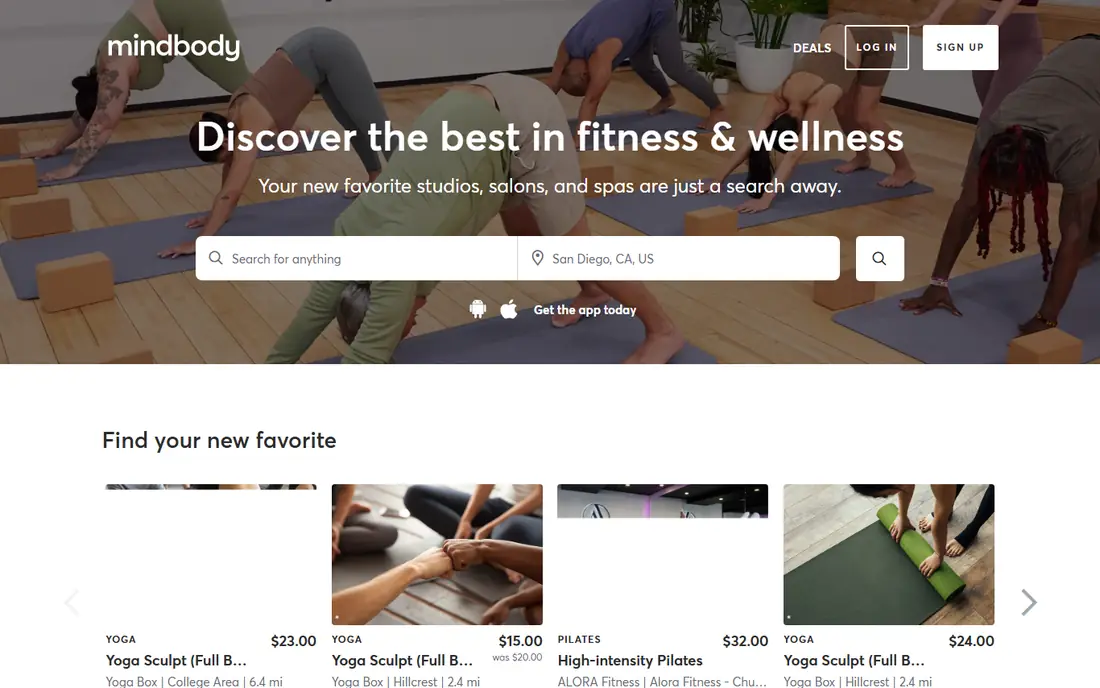
Mindbody remains the best-known gym and wellness scheduling platform, largely because its consumer marketplace helps new clients discover classes, while its business tools handle class schedules, appointments, memberships, and payments. Starting pricing is reported at $79 per month per US location, with higher tiers quoted, and branded app and marketing features often sit above the entry plan. For a boutique studio in a competitive city, that discovery value can outweigh a higher total cost.
The catch is total cost and contracts. Real-world pricing often rises with add-ons, payment processing, and plan upgrades, and lead tools are gated on higher tiers. A studio should get a written quote for its location count, class volume, and marketing needs before comparing Mindbody with cheaper rivals.
- Large consumer marketplace for discovery
- Strong class and appointment tools
- Wellness and spa fit
- Quote-based pricing above entry tier
- Lead and marketing tools sit on higher tiers
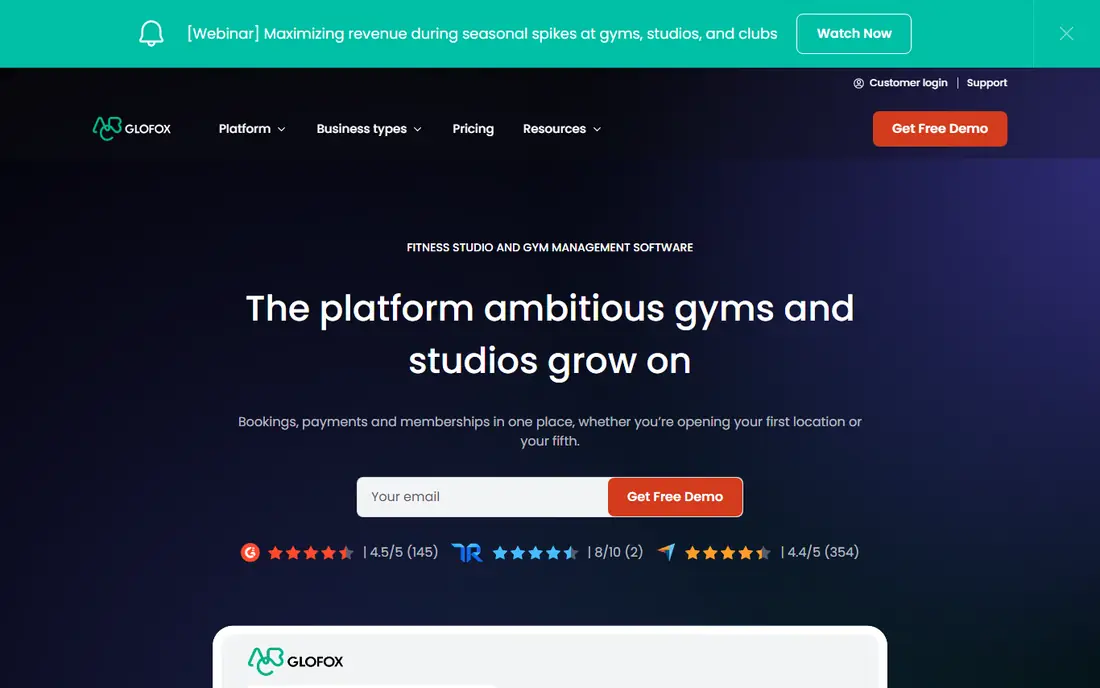
Glofox, now part of ABC Fitness, suits boutique studios and multi-location operators that want a polished member experience across sites. It covers class scheduling, memberships, payments, and a branded member app, with plans reported from $99 per month per location and higher tiers quoted by business needs. That multi-location design helps a growing studio brand keep schedules, memberships, and reporting consistent.
The limit is pricing transparency. Entry pricing does not tell the full story for larger studios, and some public feedback has raised support concerns since acquisition. A studio should test support response and confirm the full tier cost for its location count before committing.
- Polished member app
- Multi-location management
- Class and membership tools
- Quote-led tiers above entry pricing
- Support quality concerns reported after acquisition

Zen Planner has long served martial arts schools, CrossFit boxes, yoga studios, and class-based gyms, with scheduling, memberships, billing, and workout tracking in one system. Its Studio plans are reported from $99 per month, rising with active member bands to around $289 per month, which makes cost predictable at a given size but higher as a gym grows. Its class and belt or progression features suit schools that track student levels alongside attendance.
The trade-off is marketing. The Engage marketing module is a separate add-on, reported around $249 per month, so a gym that wants full lead automation should budget for that on top of the base plan. For a gym whose main need is scheduling and member management, Zen Planner remains a solid, proven choice.
- Strong martial arts and class features
- Member management and billing
- Workout tracking
- Marketing module is a separate add-on
- Price rises with active member bands
TeamUp, from TeamUp, focuses on class-based gyms, studios, and boxes that want straightforward scheduling, memberships, and payments without enterprise complexity. Its pricing is based on active customer bands, with reports showing around $99 to $119 per month for smaller bands and $189 per month for 101 to 200 active customers, which helps a gym forecast cost as it grows. Its member app and class booking flow are well regarded by small gym owners.
The limit is growth cost. As active customers rise, the monthly price rises even without new features, and a branded app sits as an extra. A gym should model TeamUp cost at its expected member count in six and twelve months, not only at launch.
- Simple class scheduling and memberships
- Strong member app
- Clear active-customer bands
- Pricing rises with active customers
- Branded app costs extra
Wodify is built for CrossFit and functional training gyms, with class scheduling, memberships, payments, workout tracking, and a member app designed around daily programming. List pricing is reported from $199 per month per location, with some promotional entry points lower, and higher packages quoted. That focus helps a box manage class caps, waitlists, coach assignments, and member performance in one place.
The drawback is entry cost. A very small gym may find $199 per month steep compared with Gymdesk or PushPress, and payment processing sits on top of subscription cost. For a CrossFit gym that lives on class programming and performance data, Wodify fit often justifies the price.
- Strong CrossFit and class workflow
- Performance tracking
- Member app
- List pricing starts high for small gyms
- Higher packages are quote-led
Gymdesk suits martial arts schools and small to mid-sized gyms that want all-in-one scheduling, memberships, billing, and CRM without gated lead tools. Its pricing is clear by active member band, at $75, $100, $150, and $200 per month through 400 active members, which makes growth cost easy to forecast. Every plan includes CRM tools, which is a real advantage over rivals that gate lead management on top tiers.
The limit is messaging and support hours. SMS is a paid add-on, and phone support is weekday only, so a gym that relies heavily on text reminders should budget for that add-on. For a gym that wants transparent pricing and strong core tools, Gymdesk is one of the best value picks on this list.
- Clear member-band pricing
- All plans include CRM tools
- No setup fee reported
- SMS is a paid add-on
- Phone support is weekday only
WellnessLiving serves wellness studios, yoga and Pilates studios, spas, and group-class businesses with scheduling, memberships, appointments, and payments in one platform. Entry pricing is reported around $69 per month for smaller studios, rising to around $99 or $149 per month as size grows, which keeps it accessible for a new studio. Its rewards, marketing, and client app tools help a wellness business keep clients returning, not just booking once.
The trade-off is tiering. Advanced features and higher volume sit on more expensive plans, so a growing studio should confirm which plan covers its class volume and marketing needs. For a wellness-focused studio, WellnessLiving balance of price and features is attractive.
- Group class and appointment scheduling
- Wellness business fit
- Rewards and marketing tools
- Pricing varies by size and plan
- Advanced features sit on higher tiers
Vagaro suits personal trainers, wellness providers, and small studios that book mainly by appointment rather than by large group classes. Its list price is $30 per month for one bookable calendar, with a promotional rate reported at $23.99 for the first six months, which makes it one of the cheapest entry points on this list. It also offers a consumer marketplace, payments, and marketing tools for service businesses.
The limit is gym fit. Per-calendar pricing adds up when many trainers or rooms need calendars, and its group class tools are thinner than Mindbody, PushPress, or Wodify. A trainer-led business will get strong value from Vagaro, while a large class gym should choose a gym-first platform.
- Low entry price per bookable calendar
- Strong appointment booking
- Marketplace discovery
- Per-calendar pricing adds up for many providers
- Gym class depth is thinner than gym-first tools
PushPress stands out for its pricing model: a free Core plan, Pro at $159 per month, and Max at $229 per month, with no member limits on those flat tiers. That structure helps a growing gym avoid price rises as members join, which is a real advantage over member-band pricing. It covers class scheduling, memberships, payments, and a member app, with strong roots in CrossFit and independent gym communities.
The catch is CRM and payments. Its full CRM stack runs through a Grow add-on, reported around $488 to $559 per month in total, and payments are reported as Stripe-only, so a gym that needs a different processor should check fit. For a class gym that wants predictable software cost, PushPress Pro is a compelling pick.
- Free Core plan
- Flat Pro pricing with no member limits
- Strong automation
- Full CRM stack needs Grow add-on
- Stripe-only payments reported
Eversports helps fitness, yoga, dance, and wellness studios manage class schedules, course bookings, memberships, and payments, with a consumer marketplace for discovery. Its strength is strongest in Europe, where many studios use it for booking and discovery, and it supports multi-location studios that need consistent schedules and memberships. That marketplace can help a studio attract new clients in cities where Eversports is well known.
The limit is geography. Eversports pricing is quoted, and its US coverage and support are thinner than its European footprint, so a US gym should confirm marketplace value and support hours for its region. For a European studio, Eversports is a natural shortlist pick alongside Mindbody and Glofox.
- Strong studio booking and marketplace
- Class and course scheduling
- Multi-location support
- Quote-based pricing
- US coverage is thinner than European coverage
How we picked these
We compared official pricing pages, published pricing summaries, and gym use cases for class scheduling, appointments, memberships, payments, and member apps, and we kept only tools that still serve gyms and studios in October 2026. We did not run a live class booking through any system, and we favoured tools with clear scheduling workflows over general booking tools with no gym features.
What to check before you buy
Start by testing the member journey for your most common class, from booking to waitlist to check-in, on a phone, because most members book on mobile. Then model total cost at your current member count and at your expected count in a year, including payment processing, branded app fees, SMS, and marketing add-ons. Check cancellation, freeze, and refund handling, confirm how class caps and waitlists work, and ask about data export if you switch vendors later. Finally, train front-desk staff before launch, because a scheduling tool only helps when staff trust it and members know how to use it.
Frequently asked questions
What is gym scheduling software?
Gym scheduling software manages class timetables, appointment bookings, memberships, payments, waitlists, and member check-in in one system. It replaces paper sign-up sheets and scattered booking tools with a shared schedule for staff and members.
How much does gym scheduling software cost?
Costs vary from PushPress free Core and Vagaro at $30 per month, through Gymdesk at $75 per month and Mindbody at $79 per month, to Wodify at $199 per month and quote-based tiers above that. Payment processing, SMS, branded apps, and marketing add-ons sit on top of subscription costs.
Can members book and cancel on their own?
Yes, most tools offer a member app or web booking portal for class booking, cancellation, waitlist joining, and membership management. A gym should set clear cancellation windows and waitlist rules so classes stay full without overbooking.
Does gym software handle memberships and payments?
Most gym tools handle membership plans, recurring billing, class packs, and payments, though processing rates and supported processors vary. A gym should confirm processing fees, failed payment handling, and freeze or cancellation workflows before signing.
Which tool is best for a small gym?
Gymdesk and PushPress suit many small gyms best, because Gymdesk offers clear member-band pricing with CRM included, while PushPress Pro offers flat pricing with no member limits. Mindbody suits a small boutique studio that values marketplace discovery enough to pay more.
Can gym software guarantee fuller classes?
No. Software can make booking easier and reminders more consistent, but class fill also depends on programming, coaching, pricing, timing, and local demand. A gym should use booking data to adjust schedules, rather than expecting software alone to fill every class.
Sources
See where you really rank - block by block
ProMapRanker scans Google Maps across a grid of your service area. Simple monthly plans from $19, white-label on every plan.
Start freeKeep reading
 what’s the best risk software for enterprises
What Is the Best Risk Software for Enterprises in 2026
We compared what’s the best risk software for enterprises on risk registers, controls, third-party risk, and reporting, with pricing notes for large teams.
Read → what's the best pam software for enterprises
What is the Best PAM Software for Enterprises in 2026
Find what's the best pam software for enterprises, with vaulting, session recording, just in time access and pricing compared for large enterprise IT teams.
Read → what’s the best grc software
What Is the Best GRC Software in 2026
We compared what’s the best grc software on risk, compliance, audit and vendor risk, so teams can pick a platform that fits their frameworks and budget.
Read →