 ProMapRanker
Best Google Review Removal Service in 2026


Free self service disputes · Pricing starts at: Free
Key takeaways
- No service can delete a Google review on demand, since Google alone decides whether a review breaks its policies.
- Legitimate services focus on false, spam, off topic or harassing reviews, and they file a policy based dispute through Google's own process.
- Be wary of any service that promises guaranteed removal, claims a contact inside Google or offers to post fake positive reviews.
- A strong response to a review that stays up, plus fresh reviews from real customers, often helps more than a long dispute alone.
Quick comparison
| Pick | Great for | Pricing starts at | Free tier | |
|---|---|---|---|---|
| Google Business Profile | Free self service disputes | Free | Yes | Visit |
 ReviewTactic | Pay only if a review comes down | $99 per removed review | No | Visit |
 Renew Local | Documented policy disputes | $425 per review dispute | No | Visit |
 Vital Sign Digital | Pay on removal disputes | $199 per removed review | No | Visit |
 Essentras | Bundled dispute cases | $499 per review | No | Visit |
 Birdeye | Review monitoring at scale | See website | No | Visit |
 Podium | Text based review requests | See website | No | Visit |
 ReviewTrackers | Multi location review tracking | $89 per location per month | Free trial | Visit |
 NiceJob | Simple review requests for small firms | $75 per month | Free trial (14 days) | Visit |
The best Google review removal services
This list covers only legitimate reputation help: disputing false or policy violating reviews through Google's own process, monitoring reviews, and collecting fresh reviews from real customers. It lists no service that posts fake reviews, removes honest reviews or claims to pay Google for deletion. An honest negative review from a real customer will usually stay up, and the right response is a calm public reply, not a removal request.
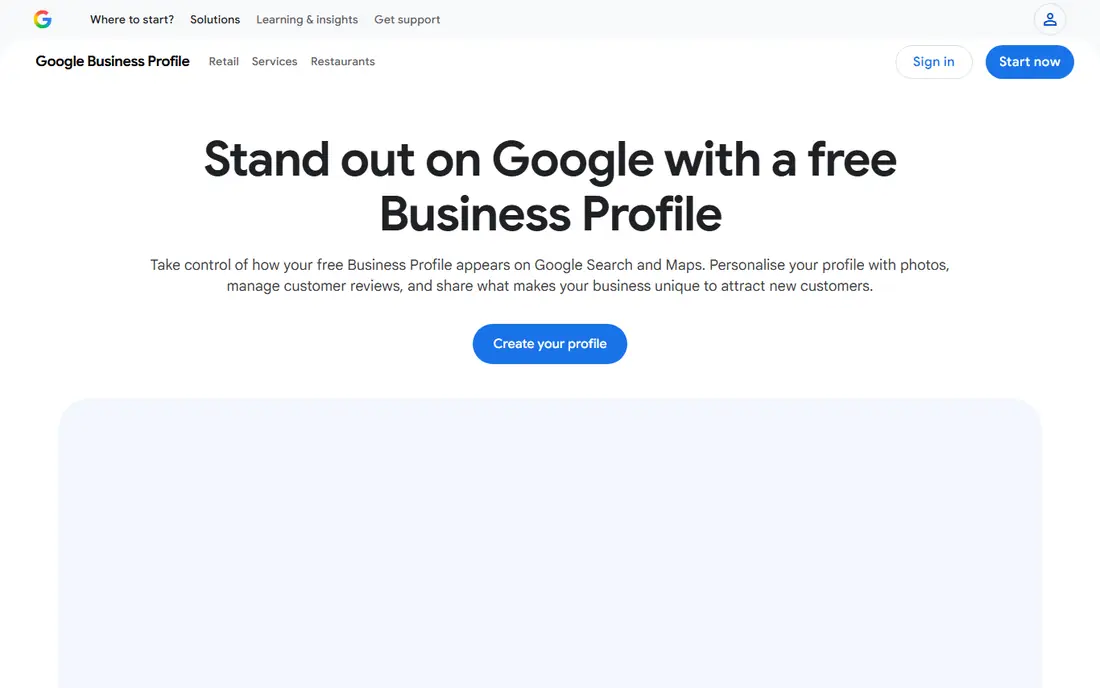
Google Business Profile is where every legitimate dispute starts. A business owner can flag a review, choose a policy reason such as spam, conflict of interest or personal information, and track the outcome. If Google rejects the flag, you can appeal once for most reviews, and support pages explain the current status of each case.
The limit is effort and expertise. Flagging without a clear policy reason rarely works, and a factual dispute about service quality is not, on its own, a policy violation. For one clear case of spam or a review for the wrong business, this free route is often enough. For several complex cases, a specialist service may save time, but it cannot change Google's final decision.
- Free and direct
- Flagging and appeal tools built in
- You control your own profile and responses
- Takes time per review
- No help drafting a policy case
- Google decisions can be slow
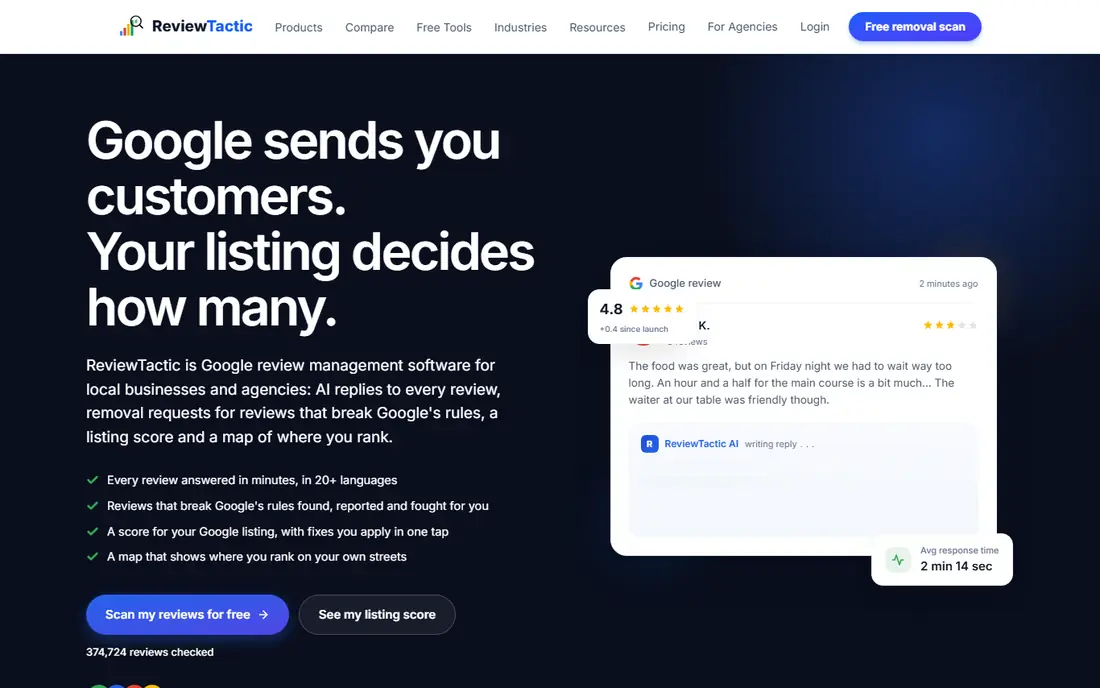
ReviewTactic fits a business with one or two reviews that look like clear policy violations. The service audits the review first, at no charge, and only takes cases where it sees a policy breach. If Google removes the review, you pay the per review fee. If Google keeps it, you do not pay for that removal attempt under this model.
That model keeps incentives honest, but it also means the service will turn away weak cases. A review you dislike, but that describes a real visit in strong terms, is not a good candidate. Use ReviewTactic when the review is fake, spam, off topic or from a competitor, and you have evidence to support that claim.
- Success fee model, so you pay only on removal
- Free audit before you commit
- Focuses on policy violations only
- No help if Google keeps the review
- Limited to reviews that clearly break a policy
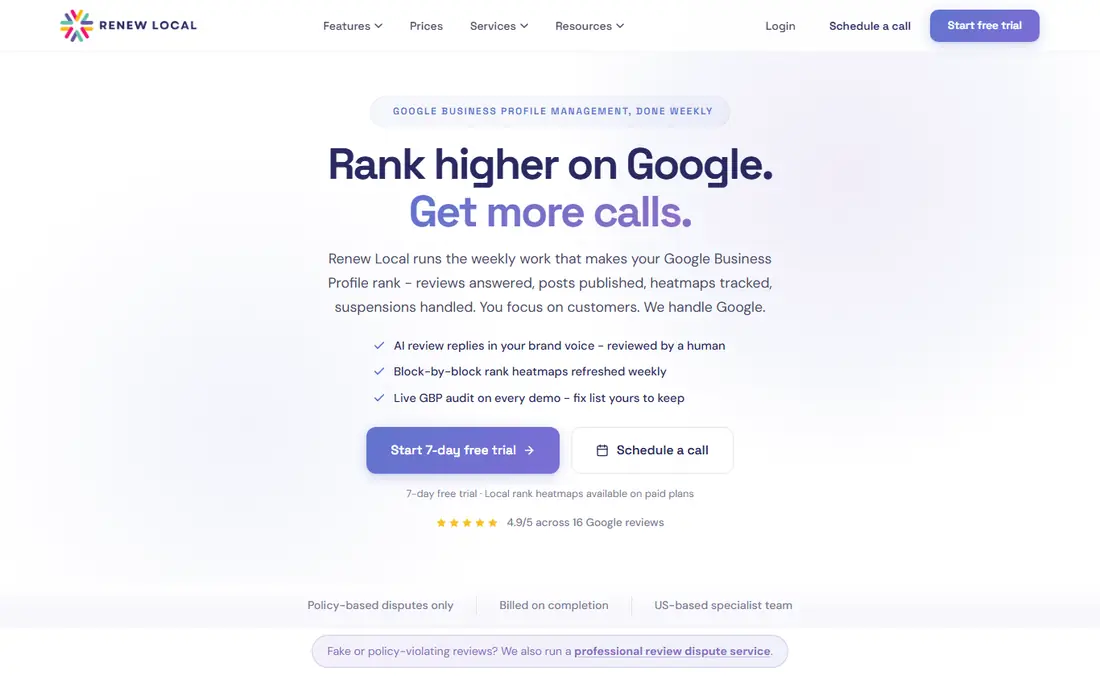
Renew Local takes a more formal approach, with a free audit, a written policy case and a dispute filed through Google's channels. It states plainly that honest reviews stay live and that it does not write or buy reviews. That clarity is a good sign in a market full of vague promises.
The price is higher than some rivals, so it suits a case where the review is doing real harm and the policy breach is well documented. For a low value single review, a cheaper success fee service or a free self service flag may be the better first step. Check the billing terms in writing before you submit a review.
- Free policy audit before billing
- Documented evidence for each dispute
- Service credit if a removed review reposts within 30 days
- Higher per review price than success fee rivals
- Billed on completion, not only on removal
Vital Sign Digital, under its Vital Defense service, files policy based disputes through Google's official channels and charges only if the review comes down. The service lists fake, spam and policy violating reviews as its focus, and it starts with a free audit so you can see whether a case is realistic before you pay anything.
This is a middle ground between a low cost success fee and a high cost documented case. The refile offer for reviews that reappear is useful, since removed reviews can sometimes return. As with every service here, the key question is whether the review breaks a stated Google policy, not whether you agree with it.
- Pay only when a review is removed
- Free audit first
- Refile offer if a review reappears within 30 days
- Mid range price for a success fee
- No guarantee, since Google decides
Essentras classifies each review as removable, legally actionable or likely to stay, before you pay. That triage is valuable, because it stops you spending money on reviews Google will almost certainly keep. Bundles reduce the per review cost if you have three, five or ten valid cases, which can happen after a spam attack or a coordinated review campaign.
The single review price is high, so do not use Essentras for a single borderline case. It fits a business facing several policy violations at once, or a case that may need legal advice alongside a Google dispute. For a single clear spam review, start with the free Google route or a lower cost success fee service.
- Free audit with a clear classification
- Bundles for several reviews
- Escalation path for ignored cases
- Highest single review price on this list
- Bundles only help if you have several valid cases
Birdeye is not a removal service in the narrow sense. It helps you monitor reviews across sites, respond fast, collect new reviews from real customers and keep listings accurate. That broader work matters, because a steady flow of fresh, honest reviews dilutes the impact of one unfair review that Google keeps up.
The catch is price transparency. Birdeye prices by location and contract, so you will need a sales conversation for a firm quote. For a multi location brand that needs one dashboard for reviews, that cost may be justified. For a single location firm with one bad review, Birdeye is likely more tool than you need.
- Reviews, listings, messaging and surveys in one platform
- Strong for multi location brands
- Alerts for new reviews
- Quote based pricing
- Broad suite may be more than a small firm needs
Podium's strength is getting more real customers to leave reviews, by text, at the moment they are happiest with your service. That steady volume is the legitimate way to rebuild a rating after an unfair review stays up. Podium also centralises messages, so a review complaint can turn into a private conversation and a fix.
Be clear on limits. Podium cannot remove a Google review, and no text tool can. Its value is prevention and recovery, not deletion. If your main need is a single policy dispute, use Google's own process or a dispute specialist first, then use Podium to build fresh review volume.
- Review requests by text, which customers actually answer
- Messaging and payments in one inbox
- Good for local service firms
- Quote based pricing
- No power to delete reviews, despite marketing claims in this category
ReviewTrackers suits a business with several locations that needs to see every new Google review in one place, respond on time and spot patterns. A sudden run of similar one star reviews at one site, for example, is easier to spot and document from a central dashboard than from separate profiles.
For a single location, the per location price may feel high for monitoring alone. The tool does not change Google's decision, but it does make sure no review sits unanswered and no valid dispute is missed. That discipline helps both with customers and with any later dispute evidence.
- Central monitoring across locations and sites
- Response tools and reporting
- Useful for franchise and multi site teams
- Per location pricing adds up fast
- Dispute help is monitoring, not a removal guarantee
NiceJob is the simplest tool on this list for a small firm that wants more honest reviews without a complex platform. You send requests after a job, customers leave reviews on Google and other sites, and you can display recent reviews on your website. That flow, repeated after every job, builds a rating that can absorb one unfair review.
NiceJob will not dispute a review for you, and it should not be bought for that job. Buy it to fix the underlying problem: too few recent reviews from happy customers. Pair it with a free Google flag for a truly false review, and you cover both the dispute and the recovery in a legitimate way.
- Simple setup with no long contract on Starter
- Review requests and social proof tools
- Good for home service firms
- No dispute service
- Review volume depends on how consistently you ask customers
How we picked these
We compared official pricing, service descriptions and Google's own dispute guidance for tools live in October 2026. We kept only services that describe their work as policy based disputes through Google, or as monitoring and honest review collection. We excluded any service that promised guaranteed removal, claimed insider access to Google or offered to post fake reviews, since those claims break Google policy and put your profile at risk.
What to do before you pay anyone
Start by reading the review against Google's published content policies. Fake engagement, spam, off topic content, conflict of interest, impersonation, hate speech, harassment and personal information are the categories most likely to support removal. A review that simply says service was slow or rude, even if you dispute the facts, is usually treated as opinion and will stay up.
Gather evidence before you flag. Note whether the reviewer was ever a customer, whether the review mentions another business, whether the text is duplicated elsewhere and whether it contains personal details. A short, specific policy citation beats a long complaint about fairness. If you cannot point to a policy breach, spend your time on a calm public response and on asking recent happy customers for reviews.
Avoid red flags. Walk away from guaranteed removal in 24 hours, from services that ask you to pay Google directly, from offers to bury a bad review with fake positives and from anyone who will not explain the policy they are citing. Those tactics can lead to review removal in the other direction, with Google removing fake positives and flagging your profile.
Frequently asked questions
Can a service delete my Google review for me?
No service can delete a review directly. Only Google can remove a review, and only when it agrees the review breaks its content policies. A legitimate service can file a stronger, better documented dispute, but Google makes the final decision.
How long does a Google review dispute take?
Timing varies. Simple flags can resolve in days, while appeals and support cases can take longer. Services on this list do not control Google's queue, so treat any promise of removal in 24 hours as a warning sign, not a selling point.
What reviews can Google remove?
Google can remove reviews that break its policies, such as fake reviews, spam, reviews from competitors or people with a conflict of interest, off topic reviews, reviews for the wrong business, hate speech, harassment and reviews that share personal information. Honest opinions about a real experience usually stay up.
Should I respond to a review I am disputing?
Yes, in most cases. A short, calm response shows future customers that you take feedback seriously, even while a dispute is pending. Do not argue facts in public, do not share personal details and do not offer incentives for a changed review, since that can break policy.
Is it legal to pay for review removal?
Paying for a legitimate dispute service is legal, but paying for fake reviews, or paying someone to post false positives, breaks Google policy and can create legal risk. Keep the work to policy based disputes and honest review requests from real customers, and keep records of what was filed.
Sources
- https://business.google.com
- https://reviewtactic.com/product/remove/
- https://renewlocal.com/services/google-review-dispute
- https://vitalsigndigital.com/google-review-removal.html
- https://essentras.com/services/google-review-removal
- https://www.birdeye.com
- https://www.podium.com
- https://www.reviewtrackers.com
- https://www.nicejob.com
See where you really rank - block by block
ProMapRanker scans Google Maps across a grid of your service area. Simple monthly plans from $19, white-label on every plan.
Start freeKeep reading
 zoro.to alternatives
Best Zoro.to Alternatives in 2026
We compare the best zoro.to alternatives in 2026, listing only legal licensed anime streaming services, from Crunchyroll to free options for fans today.
Read → zip alternatives
Best Zip Alternatives in 2026
We compare the best zip alternatives for buy now, pay later in 2026, covering pay-in-4 plans, fees, spending limits, and credit reporting options today.
Read → yesware alternatives
Best Yesware Alternatives in 2026
Compare the best yesware alternatives for sales email tracking, templates, and sequences, with current pricing and honest tradeoffs for small sales teams.
Read →