 ProMapRanker
Best Global EOR Services in 2026

Key takeaways
- An employer of record hires staff on your behalf in another country, so you can hire without opening a local entity there.
- Published starting prices in this guide cluster between about $400 and $699 per employee per month, with several providers quoting custom prices instead.
- Coverage, owned entities, benefits quality and support depth matter more than the headline price alone.
- Employment, tax and compliance rules vary by country, and this guide is general information only, not legal advice.
Quick comparison
| Pick | Great for | Pricing starts at | Free tier | |
|---|---|---|---|---|
 Deel | Fast scaling across many countries | $599 per month | No | Visit |
 Remote | Compliance focused distributed teams | $699 per month | No | Visit |
 Oyster | Remote first teams and benefits | $699 per month | No | Visit |
 Papaya Global | Payroll control at scale | $499 per month | No | Visit |
 Rippling | Teams that want HR in one system | $499 per month | No | Visit |
 Multiplier | Lower cost international hiring | $400 per month | No | Visit |
 Remofirst | Budget conscious global hiring | $199 per month | No | Visit |
 Velocity Global | Large and complex global workforces | See website | No | Visit |
 G-P | Broad coverage for larger employers | See website | No | Visit |
The best global EOR services
These services handle local employment contracts, payroll, taxes and benefits while you direct the day to day work. We compared official pricing pages, coverage claims, platform scope and public service descriptions to build this list.
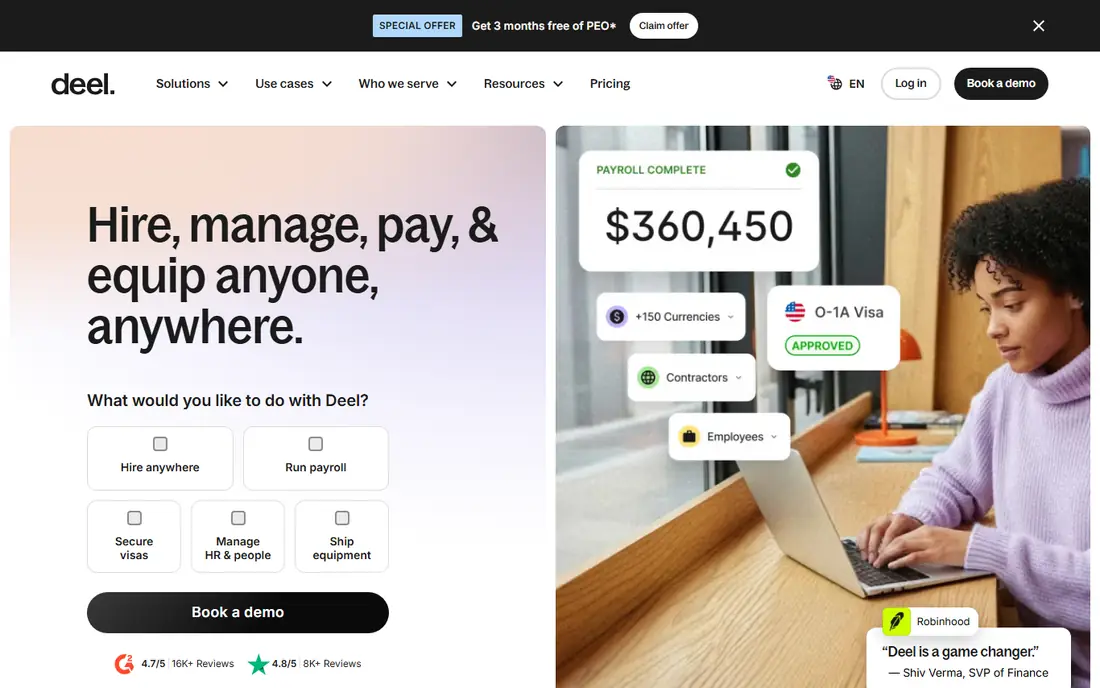
Deel suits companies that need to move quickly. Its platform covers employee hiring, contractor management, payroll and benefits, which keeps several tasks in one place rather than spread across vendors. That breadth helps when a team grows from one country to several in a short period.
The catch is cost and variation. The starting price sits at the higher end for smaller teams, and the exact benefits, contract terms and onboarding speed still depend on the country. Check the country page for each hire before you sign, and ask what is included in the quoted price.
- Wide country coverage
- Contractor and employee hiring in one platform
- Immigration support in many markets
- Higher cost than budget options
- Some services vary by country
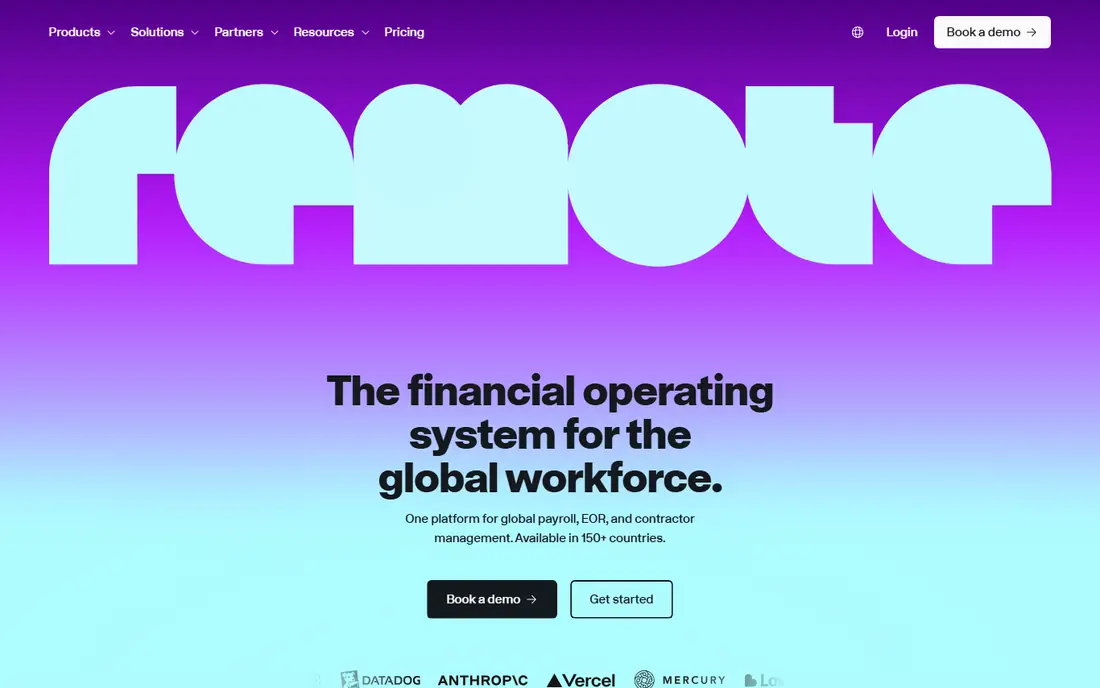
Remote appeals to teams that put compliance first. Its model leans on owned local entities in many markets, which can give more direct control over contracts, payroll and local filings than a partner heavy model. The platform also handles onboarding, time off and expenses in a fairly direct way.
The main drawback is price. At $699 per employee per month to start, it costs more than budget providers, so it fits best when compliance risk or employee experience matters more than the lowest monthly fee. Smaller teams should compare the total cost across all planned hires, not just one role.
- Strong focus on owned entities
- Clear payroll and benefits workflows
- Contractor management included
- Premium starting price
- Coverage is narrower than some rivals
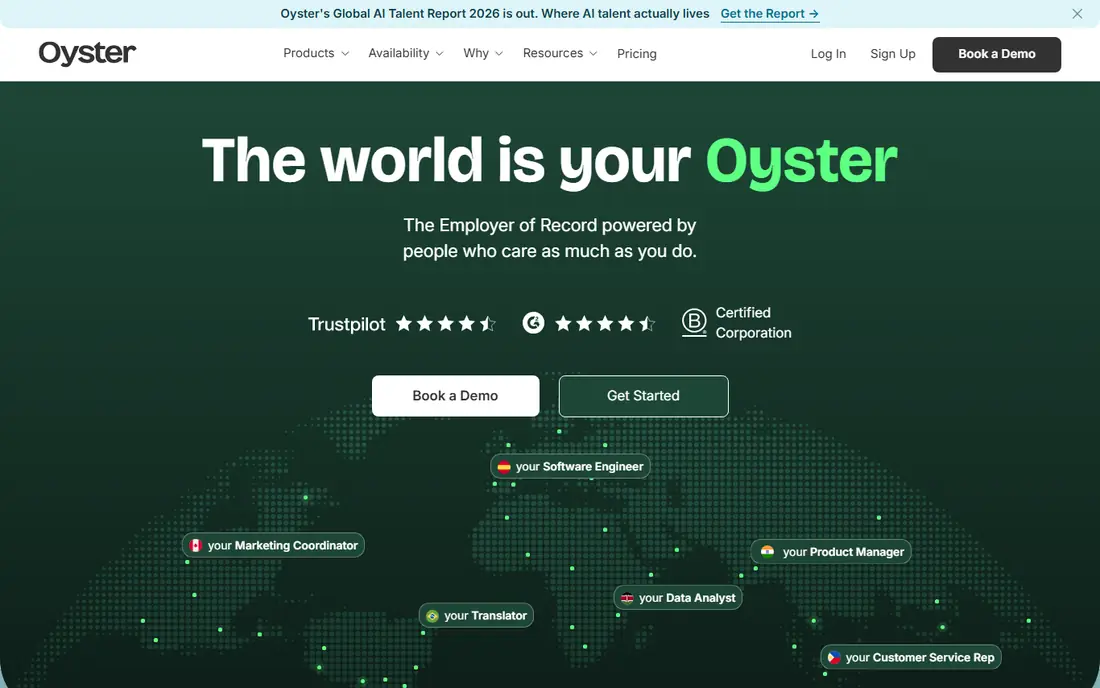
Oyster was built for remote first companies, and that shows in how it presents hiring, benefits and employee support. It aims to give workers in different countries a consistent experience, with local benefits guidance and payroll handled through the platform. That consistency can help with retention when a team is spread widely.
Pricing is the trade off. The starting rate matches Remote at the premium end, so a company hiring many people should model the annual cost carefully. Benefits depth also varies by country, so confirm the package for each location during the sales process.
- Clear employee experience focus
- Benefits and total rewards tools
- Hiring across many countries
- Premium starting price
- Some local support varies by market
Papaya Global fits companies that already think in payroll terms. Its reporting and analytics give finance teams a clearer view of costs across countries, currencies and worker types. That view matters once headcount passes a handful of countries and spreadsheets stop working well.
The model relies on partners in some markets, so local service depth can vary. Pricing also needs care, since the starting figure may not include every module a larger employer needs. Ask for a full quote that covers payroll, benefits and any reporting tools you plan to use.
- Strong payroll analytics
- Wide country coverage
- Workforce management tools
- Partner reliant model in some markets
- Pricing can rise with add ons
Rippling makes sense if you already want one system for HR, payroll, devices and apps. Adding global employment to that same system can reduce admin work, since employee records, access and payroll stay connected. For US based companies expanding abroad, that single system appeal is real.
The limit is coverage depth. As a broader HR platform, its EOR footprint is smaller than that of providers focused only on global employment. Check that every country on your hiring plan is supported before committing, and confirm whether EOR pricing is bundled or separate.
- Combines US and global HR
- Automation for onboarding and payroll
- Broad app integrations
- EOR coverage is smaller than pure EOR specialists
- Quote based pricing for some plans
Multiplier is a practical pick for cost conscious teams. Its starting price undercuts several well known providers, which adds up quickly across multiple hires. The platform covers onboarding, payroll and benefits administration, with a self service style that suits tech savvy teams.
The compromise is depth. Benefits and local support vary by market, and teams that need close guidance may want more hands on help. It works best when you know your target countries, have internal HR capacity, and want a lower monthly fee without giving up core EOR coverage.
- Lower starting price than many rivals
- Multi country payroll
- Self service onboarding
- Benefits depth varies by country
- Support model is less hands on than premium rivals
Remofirst stands out mainly on price. At $199 per employee per month to start, it is far below the premium providers in this guide, and it also offers contractor management without an EOR fee in some cases. That combination suits startups and small teams testing international hiring for the first time.
Low price calls for careful checking. Confirm which benefits, compliance services and support levels are included, and which items cost extra. For a single hire in a straightforward market, the value is clear. For complex or regulated hires, compare the full service scope with a premium provider first.
- Lowest starting price in this list
- Broad country coverage
- Free contractor management tier
- Lower price may mean fewer included services
- Check what counts as an add on
Velocity Global targets companies with larger or more complex global workforces. Its service covers EOR, immigration, benefits and contractor management, with support aimed at employers that need structure across many countries at once. That scope suits enterprises more than a two person startup.
The drawback for small buyers is transparency. Without a published starting price, you need a sales conversation to learn the cost, which makes quick comparison harder. It is worth the call if your hiring plan is large, but smaller teams may prefer a provider with a clear published rate.
- Broad coverage
- Experience with larger employers
- Immigration and benefits support
- Pricing is not published as a simple starting rate
- May be more than small teams need
G-P, formerly Globalization Partners, is one of the established names in this market. Its coverage reaches a large number of countries, and its processes are built for employers that need consistent global hiring at scale. Larger companies often value that track record when the stakes involve many employees.
Quote based pricing is the main friction. Without a published starting rate, small teams cannot judge cost quickly, and the final price may sit at the premium end. Still, for broad or complex hiring plans, G-P belongs on the shortlist alongside Deel and Remote.
- Very broad country coverage
- Long track record in global employment
- Established compliance processes
- Pricing is quote based
- Can be costly for small teams
How we picked these
We compared official pricing pages, coverage descriptions, platform scope and public service information for established EOR providers. We favored providers with live global employment services in October 2026, clear payroll and compliance offerings, and coverage across multiple regions. We left out providers with only contractor tools, since this guide is about full employment through an employer of record.
What to check before you sign an EOR contract
Confirm the country, not just the provider
Coverage lists can hide gaps. A provider may support a country for contractors but not for full employees, or may offer limited benefits there. Ask for the contract type, probation rules, termination rules and mandatory benefits for each specific country.
Compare the full monthly cost
Starting prices rarely tell the whole story. Ask about deposits, currency conversion, benefits administration, offboarding fees and any charges for changes to employment terms. A lower starting rate can end up higher once add ons are included, and a premium rate can be fair if it covers more.
Test support before you need it
Employment problems are time sensitive. Ask who answers compliance questions, how quickly they respond, and whether support is local to the employee's country. A provider with in country experts is often worth more than a slightly cheaper platform when a payroll or contract issue appears.
Frequently asked questions
What does an employer of record actually do?
An employer of record becomes the legal employer for tax, payroll and compliance purposes, while you manage the employee's daily work. It issues a locally compliant contract, runs payroll, handles tax filings and administers benefits. You still set duties, goals and working hours within local law.
Is an EOR the same as hiring a contractor?
No. A contractor runs their own business and handles their own taxes in most cases, while an EOR employee receives a local employment contract with statutory protections and benefits. Misclassifying an employee as a contractor can create tax and legal risk, so the distinction matters in every country.
How much does an EOR service cost?
Published starting prices in this guide range from $199 to $699 per employee per month, while some providers quote custom prices. Total cost depends on the country, benefits package, headcount and add on services. Always request a written quote for your exact countries and roles.
Do I still need to worry about local employment law?
Yes. The EOR handles local compliance tasks, but you should still understand notice periods, working time rules and termination costs in each country. Employment, tax and compliance rules vary by country, and this guide is general information only, not legal advice. For complex cases, speak to a local employment lawyer.
Can I move EOR employees to my own entity later?
In many cases, yes. Providers often support transfers when you open a local entity, though timing, contract changes and benefits continuity need planning. Ask about transfer fees and notice periods before you start, so a later move does not surprise you.
Which EOR is best for a first international hire?
For a first hire, a provider with a clear published price, support in your target country and a simple onboarding flow is usually the safest pick. Deel, Remote and Remofirst all fit different budgets here. Compare the country specific benefits and support, not just the headline monthly fee.
Sources
See where you really rank - block by block
ProMapRanker scans Google Maps across a grid of your service area. Simple monthly plans from $19, white-label on every plan.
Start freeKeep reading
 worlds best local seo company
8 Worlds Best Local SEO Companies for Map Pack Growth in 2026
Compare the worlds best local seo company options for Google Business Profile work, citations, reviews, and multi-location rankings and reporting in 2026.
Read → world's best web hosting company
World's Best Web Hosting Company in 2026
Searching for the world's best web hosting company? We compared 10 hosts on price, renewal rates, speed, and support to help you choose well today in 2026.
Read → who's got the best nanny tax services
Who's Got the Best Nanny Tax Services in 2026
We answer who's got the best nanny tax services, comparing full filing, back taxes, software, and pricing so families can handle nanny taxes correctly.
Read →