 ProMapRanker
Best Global Education Companies in 2026

Key takeaways
- This is a guide based on public reputation and services, not a verified ranking, and order does not mean one company suits every learner.
- Course marketplaces, university partners, language apps and tutoring firms serve different goals, so start with the goal.
- Free learning exists, but certificates, tutoring and graded work usually cost money, so check what the price actually buys.
- The best company for global education depends on subject, level, language and budget, not on brand size alone.
Quick comparison
| Pick | Great for | Pricing starts at | Free tier | |
|---|---|---|---|---|
 Pearson | Textbooks, tests and courses | See website | No | Visit |
 Coursera | University and company courses | See website | Yes | Visit |
 Udemy | Low cost skill courses | See website | No | Visit |
 Duolingo | Language learning on mobile | Free | Yes | Visit |
 Khan Academy | Free school and maths learning | Free | Yes | Visit |
 Chegg | Study help and textbook rental | See website | No | Visit |
 Kaplan | Test preparation courses | See website | No | Visit |
 McGraw Hill | School and college course materials | See website | No | Visit |
The best global education companies
These companies work across many countries, but they do not do the same job. Some publish textbooks, some host university courses, some teach languages, and some tutor students for tests. We explain each one by learner goal.
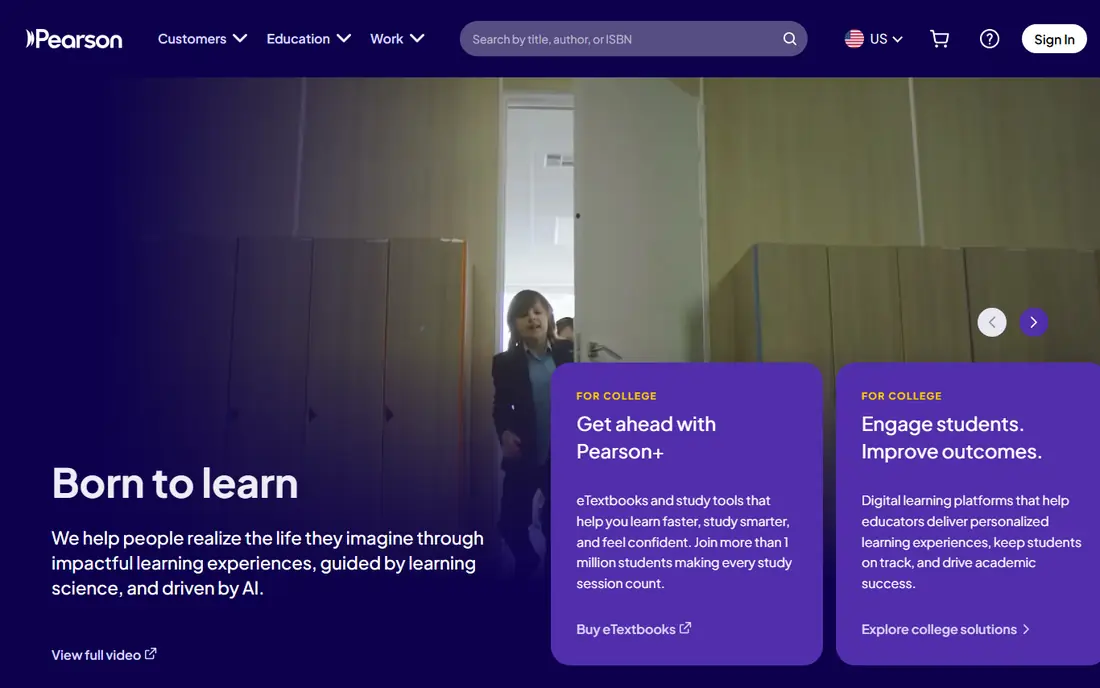
Pearson is a large education company known for textbooks, course materials, assessments and professional qualifications. Schools, colleges and employers use its books, digital courses and tests, and learners may meet Pearson through a course their institution chose rather than by shopping directly. That breadth is useful when a learner needs recognised materials that match a syllabus.
The drawback is price and complexity. A Pearson product for one course may be bundled with a test, a digital platform or a licence, and costs differ by country and institution. Check what is included, how long access lasts and whether a used or rental option exists. Pearson fits learners and institutions that need established, syllabus linked materials.
- Very broad catalogue across school, college and work
- Test and qualification products
- Materials in many markets
- Pricing varies widely by product and country
- Textbook costs can be high
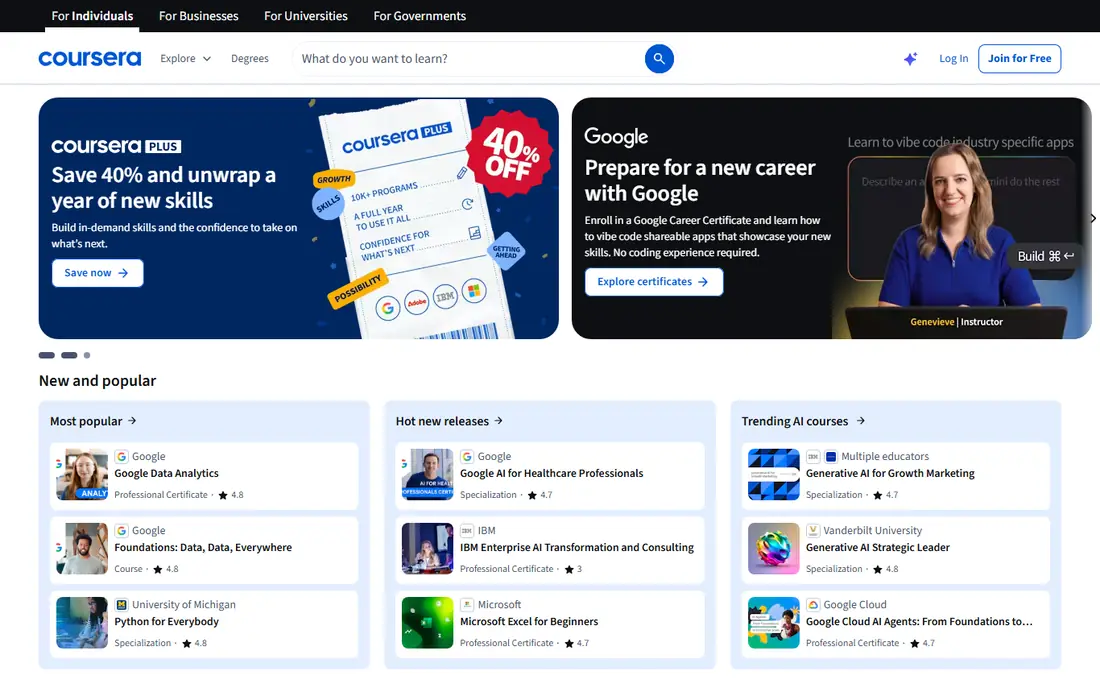
Coursera hosts online courses, Specializations and degrees from universities and companies, covering business, data, health, arts and more. Learners can often audit a course for free to watch lectures, then pay for graded work and a certificate if they want proof of completion. That model suits career changers who want structured learning without enrolling full time.
Check the details before paying. A certificate shows completion, but it is not the same as a university degree, and employers value them differently by field. Also check deadlines, peer grading and refund terms. Coursera fits motivated self directed learners who want university style courses at flexible pace.
- Courses from universities and companies
- Certificates and degrees in some fields
- Many courses allow free audit
- Certificate and degree prices vary
- Course quality varies by provider
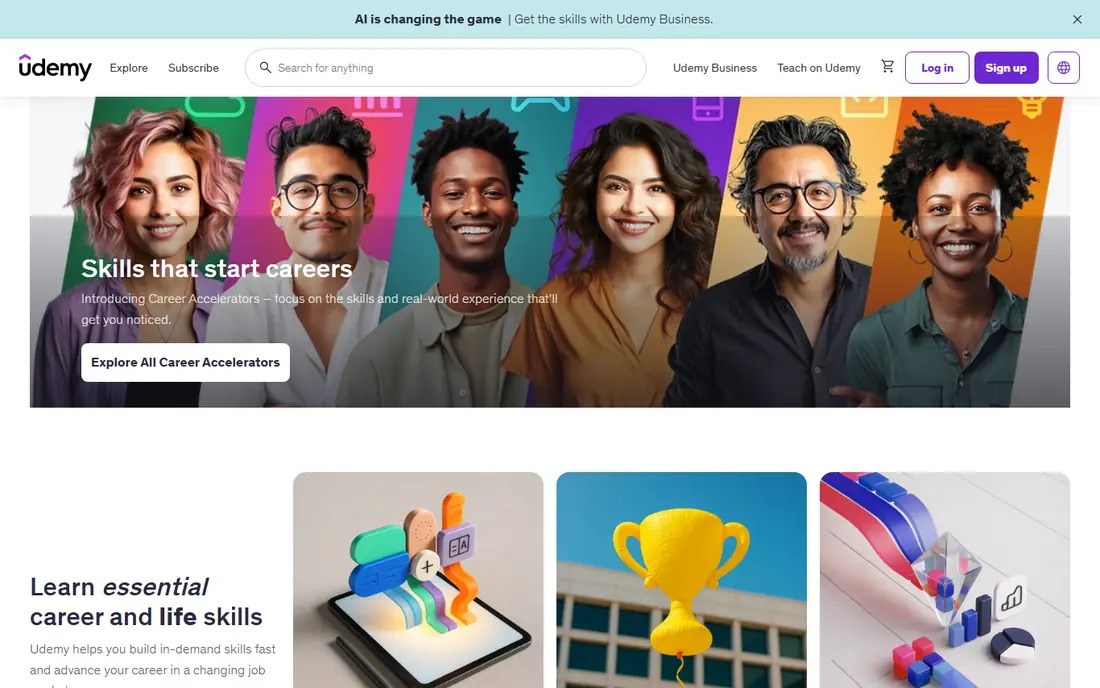
Udemy is a marketplace where instructors sell courses on coding, design, business, music and many other skills. Learners buy single courses, often at sale prices, and can learn at their own pace with video lessons and exercises. For a concrete skill, such as spreadsheet work or a programming language, a well reviewed Udemy course can be a fast, low cost start.
Quality is the main risk, since anyone can publish a course. Read recent reviews, check the preview lessons, look at update dates and confirm the course covers the version of the tool you use. Udemy fits learners who want practical skills quickly and can judge course quality before buying.
- Huge range of practical courses
- Frequent sale prices
- Lifetime access for many paid courses
- Quality varies by instructor
- Courses are not usually accredited
Duolingo teaches languages through short, game style lessons on phone and web, with reading, listening and basic speaking practice. It suits beginners and casual learners who want a daily habit, and the free plan makes it easy to try a language before paying. Schools and families also use it as a supplement to classes.
It is not a full replacement for conversation classes. Advanced learners will need real speaking practice, grammar study and reading outside the app. The paid plan removes ads and adds extra features, so compare whether those extras matter for your routine. Duolingo fits beginners who want a free, daily language habit.
- Free core lessons
- Short daily lessons suit busy learners
- Many languages available
- Free plan includes ads and limits
- Speaking practice is limited on its own
Khan Academy is a nonprofit offering free video lessons and practice in maths, science, computing, economics and test preparation. Students, parents and teachers use it to fill gaps, revise for class or learn at a different pace from school. The practice system tracks progress and suggests next steps, which helps learners who need structure.
It is not a tutoring service, so learners who need live help or feedback on essays will need another option. Coverage is strongest in maths and science, and weaker in some other subjects. Khan Academy fits school learners and self learners who want free, structured practice without a subscription.
- Free lessons across maths, science and more
- Practice exercises and progress tracking
- Used by schools worldwide
- No live tutoring in the free core product
- Depth varies by subject
Chegg started with textbook rental and now sells study help, homework tools and writing support. Students use it to rent books, check worked solutions and get help with maths and writing questions. For a student facing a hard problem set, a worked example can show the method, not just the answer.
Academic rules matter here. Students should use study help to learn the method and then do their own work, and they should check their school policy before submitting anything. Also compare rental prices with buying used, since the cheapest route depends on the book and the term. Chegg fits college students who need study support and textbook options in one place.
- Textbook rental and study tools
- Step by step problem help
- Writing and maths tools
- Subscription cost adds up
- Use must follow school rules on original work
Kaplan sells test preparation for exams such as the SAT, ACT, GRE, GMAT and professional licensing tests, with live classes, self paced courses and practice tests. The value is structure: a study plan, timed practice and explanations, rather than just a book. Learners who struggle to plan on their own often benefit from that structure.
Test prep is not a guarantee of a score, and the right course depends on the test, the target score and the time left. Compare live versus self paced formats, check what practice tests are included, and ask about score improvement terms in plain terms. Kaplan fits test takers who want a planned course with practice and support.
- Structured courses for many major tests
- Live and self paced options
- Practice tests and score tools
- Courses can be costly
- Results depend on study time and starting level
McGraw Hill publishes textbooks and digital learning platforms for schools, colleges and professional learners. Students often meet it through a course that requires a textbook or an online homework system, and teachers use its platforms to assign work and track progress. The link between book and platform is the main strength.
The catch is access. Some products need a paid access code, and access may expire after a term, so check duration and whether the code can be reused. Used books may not include digital access, which can change the real cost. McGraw Hill fits institutions and learners who need course linked books and homework platforms.
- Long record in school and college publishing
- Digital platforms linked to textbooks
- Materials across many subjects
- Access codes and prices vary
- Digital access terms need checking
How we picked these
We compared official company pages, product descriptions and public service ranges, and we avoided invented scores, revenue claims and ranking numbers. We included firms with live global services in October 2026 and a clear fit for learners, schools or employers. Where a price depends on course, country or institution, we wrote See website.
What to check before you choose
Start with the learning goal and the proof you need. A language habit, a test score, a job skill and a university credit are different goals, and each one points to a different kind of company. Write down the subject, the level, the deadline and whether you need a certificate, a grade or just knowledge.
Then check total cost and time. A low course price can still need many hours, and a subscription can renew quietly, so check renewal terms and access length. Read recent learner reviews for the exact course, not just the brand, since quality varies inside large catalogues.
Finally, test the free option first where one exists. Audit a Coursera course, try Duolingo free lessons, or work through Khan Academy practice before paying. A short trial will show whether the teaching style, pace and platform suit you better than any list can.
Frequently asked questions
Which global education company is the best?
There is no single best company, since the answer depends on subject, level and goal. Coursera suits university style courses, Duolingo suits language habits, Khan Academy suits free school learning, and Kaplan suits test preparation.
What is the best company for global education for adults?
For adults, Coursera and Udemy are strong starting points, with Coursera leaning to structured university and company courses and Udemy leaning to low cost practical skills. Check whether you need a certificate or just the skill.
What are the best companies for global education for children?
Khan Academy and Duolingo are useful free or low cost options for children, with Khan Academy strong in maths and science and Duolingo strong for early language learning. Parents should still check age settings and screen time.
Are free education companies as good as paid ones?
Free products can be excellent for learning, but paid products often add graded work, certificates, live teaching or tutoring. Judge by the outcome you need, not by price alone.
Do online course certificates help with jobs?
Certificates can help show a skill, especially when paired with work samples, but employers differ by field. A certificate is not a degree, so check how employers in your field treat it before paying for a long program.
How do I avoid wasting money on an online course?
Check the syllabus, preview lessons, recent reviews and refund terms before paying, and confirm access length. Start with a free audit or trial where one is offered, and set a weekly study time you can actually keep.
Sources
See where you really rank - block by block
ProMapRanker scans Google Maps across a grid of your service area. Simple monthly plans from $19, white-label on every plan.
Start freeKeep reading
 zscaler alternatives
Best Zscaler Alternatives in 2026
Looking for zscaler alternatives? We compare 9 SASE and zero trust platforms on architecture, data protection, pricing, and fit for your network and team.
Read → zapier alternatives free
Best Zapier Alternatives Free in 2026
Nine automation tools for zapier alternatives free in 2026, all with genuinely free tiers, plus free plan limits, starting prices and upgrade paths explained.
Read → which platform is best for online reputation
Which Platform Is Best for Online Reputation in 2026
Wondering which platform is best for online reputation? We compare 8 review, listing, and response tools for small and multi-location businesses and agencies.
Read →