 ProMapRanker
Best Gaming Companies in 2026

Key takeaways
- The largest companies differ by strength, with some leading on consoles, some on mobile, and some on PC and subscription services.
- A company can be a good match for one kind of player and a poor match for another, so platform and game taste matter more than size alone.
- Subscription services and free-to-play games change the cost of playing, but they also change which games stay available over time.
- This guide is based on publicly reported factors such as catalogues, platforms, and services, not on a verified ranking or invented scores.
Quick comparison
| Pick | Great for | Pricing starts at | Free tier | |
|---|---|---|---|---|
 Tencent | Mobile and online games | See website | No | Visit |
 Sony Interactive Entertainment | PlayStation console players | See website | No | Visit |
 Microsoft Gaming | Game Pass and cross-platform play | See website | No | Visit |
 Nintendo | Family-friendly console games | See website | No | Visit |
 Electronic Arts | Sports and large franchise games | See website | No | Visit |
 Take-Two Interactive | Big story and open-world games | See website | No | Visit |
 Roblox | Player-made games and younger players | Free | Yes | Visit |
 NetEase | Mobile and online multiplayer games | See website | No | Visit |
The best gaming companies
This is a plain guide to the companies behind many of the games people play, not a claim that one company wins for everyone. We looked at what each company makes, which platforms it supports, and how its games reach players.
Tencent sits behind a wide set of mobile and online games, and it also holds stakes in studios outside China. That mix gives it reach across genres, from competitive mobile titles to large online worlds. For players who mainly play on a phone, Tencent-linked games are hard to avoid, and that breadth is its main appeal.
The catch is consistency. Availability, content, and payment models can differ by country, so a game that is popular in one region may look different in another. Players who dislike in-game purchases should check how a specific title is monetised before settling in, because the company label alone does not tell you how fair a single game feels.
- Very large mobile catalogue
- Strong stakes in well-known studios
- Broad online game experience
- Many titles vary by region
- Some games rely heavily on in-game purchases
Sony Interactive Entertainment is the name behind PlayStation, and its strongest case rests on story-driven console games that are closely tied to its hardware. Players who value polished single-player adventures, from action games to narrative titles, will find much of that catalogue here. The PlayStation store and subscription tiers also keep older and newer games in one place.
The trade-off is platform lock-in. If you do not own a PlayStation console, much of the appeal is harder to reach, even though some titles later arrive on PC. Subscription costs also stack up over time, so it helps to count how many games you actually finish each month before choosing a tier.
- Strong single-player exclusive games
- Established PlayStation hardware
- Large back catalogue
- Best experience usually needs a PlayStation console
- Subscription tiers add ongoing cost
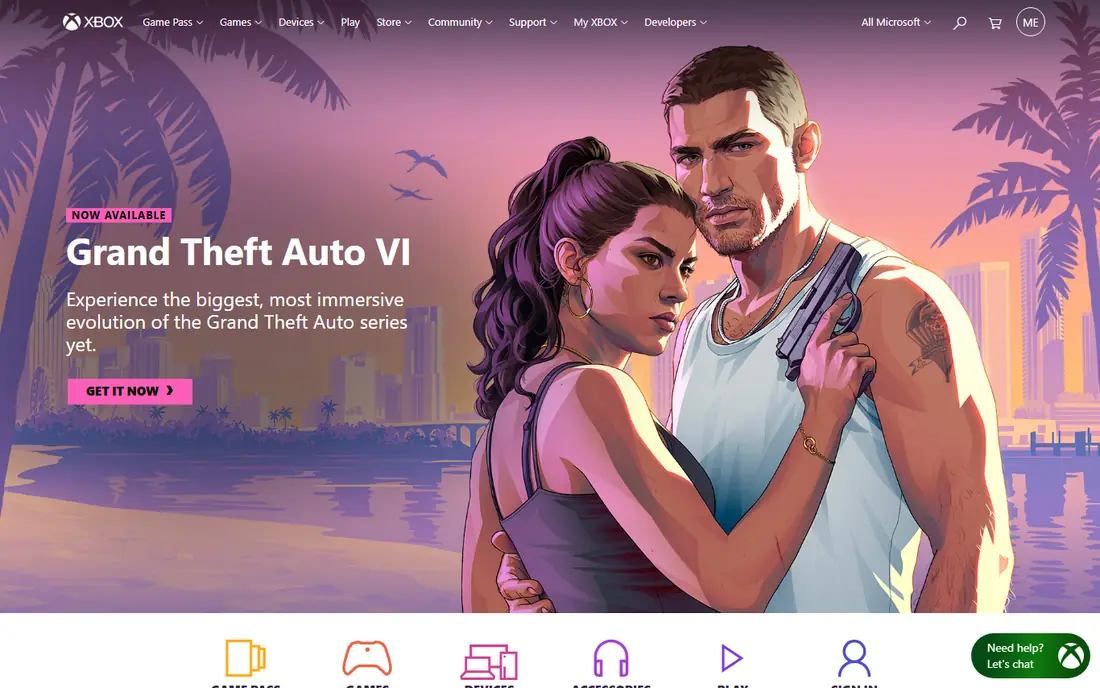
Microsoft Gaming covers Xbox consoles, PC games, and cloud play, and its best-known service is Game Pass. For players who try many games rather than buying one title at a time, a subscription library can be good value. The company also owns studios behind long-running series, which gives the library a mix of shooters, role-playing games, strategy titles, and family games.
The honest limit is that a subscription is only good value if you use it. A player who plays one game for months may spend less by buying that game outright. Cloud play also depends on connection quality, so it is a bonus for many players rather than a full replacement for a console or PC.
- Game Pass library across console, PC, and cloud
- Large studio group
- Cross-device saves on many titles
- Some major releases arrive at different times on different platforms
- Subscription value depends on play time
Nintendo stands apart because its games and its hardware are designed together. Its best-known franchises remain a draw for households, and many titles work well when several people share one screen or one console. The Switch family, including the newer Switch 2 hardware, keeps that portable and living-room mix at the centre of the offer.
Players who want the most detailed graphics or the largest third-party release list may find Nintendo thinner than its rivals. Its online service is also more basic in places, and some popular third-party games arrive late or not at all. For households that prize local play and familiar characters, those limits matter less than the games themselves.
- Distinctive first-party franchises
- Consoles suited to shared play
- Games that suit a wide age range
- Hardware is less powerful than rival consoles
- Online features are simpler than some competitors
Electronic Arts, often called EA, is best known for sports games and large franchise series that return each year. That yearly rhythm suits players who follow a sport or a series closely and want updated teams, rosters, and modes. Its multiplayer communities also tend to stay active, which matters for team games and online matches.
The downside is repetition. An annual release may not feel like a big step forward if you already own last year's version, so it pays to compare new modes before buying. Some EA titles also include optional purchases that can change how quickly you progress, and players who prefer a single upfront price should check the store page for each game.
- Long-running sports series
- Large multiplayer communities
- Games across console, PC, and mobile
- Annual sports releases can feel similar year to year
- Some titles include heavy in-game purchase options
Take-Two Interactive publishes through labels that include Rockstar Games and 2K, which explains why its name is tied to some of the most talked-about releases in gaming. Its open-world and story games reward players who like long campaigns, detailed worlds, and plenty to explore after the main story ends. Its sports titles give it a second pillar for players who prefer competition.
Patience is the price of that quality. Big releases can be years apart, and gaps between flagship titles can feel long if you only follow one label. Launch prices for major games are also often at the top of the market, so waiting for a sale is a sensible move for players who are not in a hurry.
- Highly regarded open-world and story series
- Strong sports label
- Games built for long play sessions
- Major releases are infrequent
- Some games carry a premium price at launch
Roblox is less a single game and more a platform where users build and share their own games and worlds. That makes it a strong pick for younger players and for groups of friends who want to try something new without buying a new title each time. Starting is free, and the range runs from simple obstacle courses to detailed role-playing worlds.
Quality control is the clear weakness. Because anyone can publish, some experiences are polished and some are rough, and content changes often. Parents should set up account controls, spending limits, and chat settings before a child plays unsupervised. For adults, Roblox works best as a casual, social platform rather than a replacement for a full console game.
- Huge range of player-made experiences
- Free to start
- Social play with friends
- Quality varies widely between experiences
- Parental controls need active setup
NetEase is a major publisher and developer from China with a long record in online and mobile games. Its live games suit players who enjoy regular updates, events, and multiplayer sessions with a stable community. It has also expanded its work with studios outside China, which broadens the kinds of games attached to its name.
Region availability is the main snag. Not every NetEase title is offered in every market, and some games are published under different arrangements abroad. Live-service games can also reward frequent play, which does not suit players who prefer to finish a game and move on. Check the specific title, not just the company, before committing time.
- Strong mobile and online catalogue
- Experience with long-running live games
- Growing global studio work
- Some titles are region-limited
- Live-service design can demand regular play
How we picked these
We compared official company and platform pages, public catalogues, and reporting on platforms, services, and game line-ups. We favoured companies with a current, working presence in 2026, a clear platform or genre strength, and games that US players can actually access. We did not assign scores, and we did not treat revenue alone as proof of quality.
What to check before you pick a company to follow
Start with the platform you already own. A great console publisher means little if you play only on a phone, and a great mobile publisher means little if you only play on a PC. List the last five games you enjoyed, then see which companies made or published them. That pattern is a better guide than any single ranking.
Next, look at how you pay. Subscription libraries suit players who sample many games, while single purchases suit players who return to one game for months. Free-to-play games can be the cheapest way in, but they can also cost more over time through optional purchases, so set a spending limit before you start.
Finally, check who else plays. A game is easier to enjoy when friends or family play it too, and when its community stays active. Look at whether a title supports cross-platform play, whether its servers are still supported, and whether its content updates match your interests. Those practical checks beat a brand name every time.
Frequently asked questions
What is the best gaming company?
There is no single winner, because the answer depends on your platform and taste. Sony suits PlayStation players, Nintendo suits household and family play, Microsoft suits subscription and cross-platform players, and Tencent and NetEase suit mobile players.
Which gaming company is best for mobile games?
Tencent and NetEase have the deepest mobile catalogues, while EA, Microsoft, and Roblox also offer strong mobile options. Check the specific game, since availability and payment models vary by title and region.
What is the best video game company for families?
Nintendo is the usual first pick for families because many of its games suit a wide age range and shared play. Roblox can also work for families, provided parents set up controls and spending limits first.
Which company makes the best story games?
Sony and Take-Two are strong choices for story-driven and open-world games, with large single-player catalogues. Microsoft also publishes story games through its studios, so check the individual title rather than judging by the publisher alone.
Do I need a subscription to enjoy games from these companies?
No. Most of these companies still sell games individually, and Roblox is free to start. Subscriptions add a library for a monthly fee, but they are optional and only good value if you play enough games to justify the cost.
Sources
See where you really rank - block by block
ProMapRanker scans Google Maps across a grid of your service area. Simple monthly plans from $19, white-label on every plan.
Start freeKeep reading
 zscaler alternatives
Best Zscaler Alternatives in 2026
Looking for zscaler alternatives? We compare 9 SASE and zero trust platforms on architecture, data protection, pricing, and fit for your network and team.
Read → zapier alternatives free
Best Zapier Alternatives Free in 2026
Nine automation tools for zapier alternatives free in 2026, all with genuinely free tiers, plus free plan limits, starting prices and upgrade paths explained.
Read → which platform is best for online reputation
Which Platform Is Best for Online Reputation in 2026
Wondering which platform is best for online reputation? We compare 8 review, listing, and response tools for small and multi-location businesses and agencies.
Read →