 ProMapRanker
Best Futures Trading Platform in 2026

Key takeaways
- Futures trading uses borrowed funds and is risky, so platform choice matters for margin, fees, order types and data costs, not just the headline commission.
- NinjaTrader is our pick for dedicated futures traders, thanks to futures-specific charting, order flow tools and a free simulation mode.
- Interactive Brokers suits global traders who want many futures markets in a multi-asset account.
- AMP Futures, Tradovate and Optimus Futures compete on low micro-contract costs, while TradeStation and thinkorswim suit strategy testing and analysis.
- This is not financial advice. Futures trading can lose more than your initial deposit, so only risk money you can afford to lose.
Quick comparison
| Pick | Great for | Pricing starts at | Free tier | |
|---|---|---|---|---|
 NinjaTrader | Dedicated futures traders | See website | Free trial | Visit |
 Interactive Brokers | Global futures access | Free | Yes | Visit |
 Tradovate | Cloud-based futures trading | See website | Free trial | Visit |
 AMP Futures | Low-cost micro contracts | See website | Free trial | Visit |
 Optimus Futures | Broker support and platform choice | See website | Free trial | Visit |
 TradeStation | Strategy testing | Free | Yes | Visit |
 tastytrade | Futures alongside options | Free | Yes | Visit |
 Charles Schwab thinkorswim | Analysis and education | Free | Yes | Visit |
The best futures trading platform
We compared official fee schedules, margin information, supported exchanges, platform tools and simulation accounts. The list below favors regulated US brokers and platforms that genuinely support exchange-traded futures, not only contracts for difference.
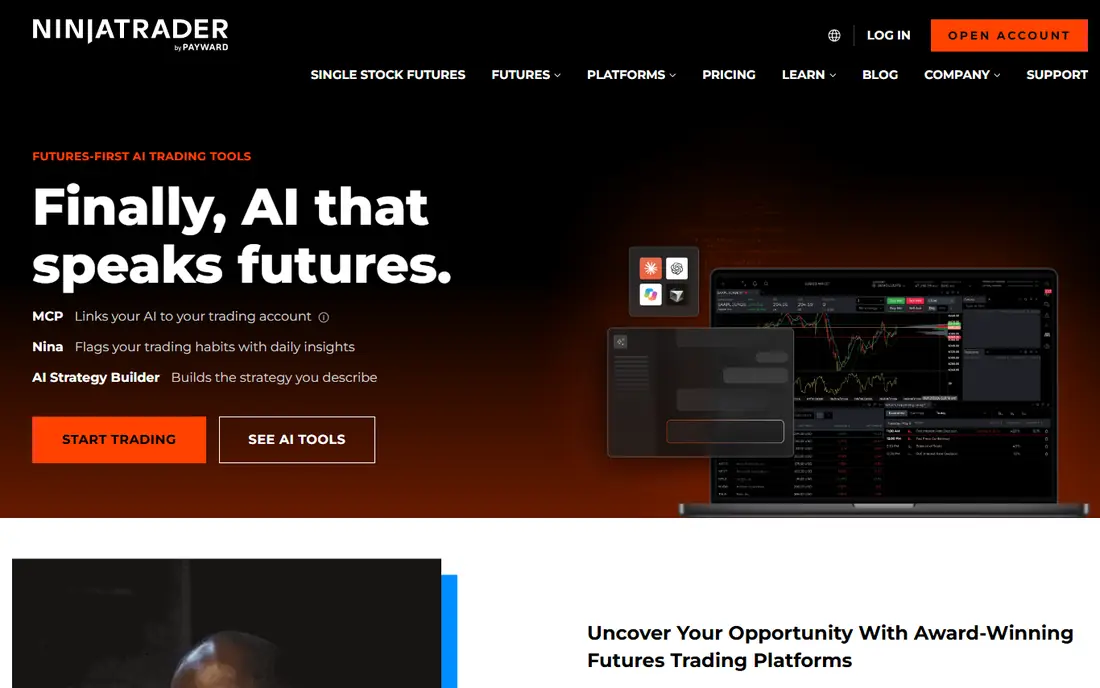
NinjaTrader is built around futures, and that focus shows in its order entry, depth-of-market display and strategy tools. Traders can test ideas with market replay, automate strategies with NinjaScript and practice in simulation before funding a live account. For someone who trades CME micro and E-mini contracts regularly, that depth is hard to match in a general broker app.
The learning curve is real. New users may need time to set up charts, data feeds and order templates, and exchange data subscriptions are a separate cost to check. If you only place an occasional futures trade, a simpler broker may be enough. If futures are your main market, NinjaTrader earns its place at the top.
- Futures-specific charting and order flow tools
- Market replay
- Free simulation trading
- Full feature set takes time to learn
- Data fees can add up
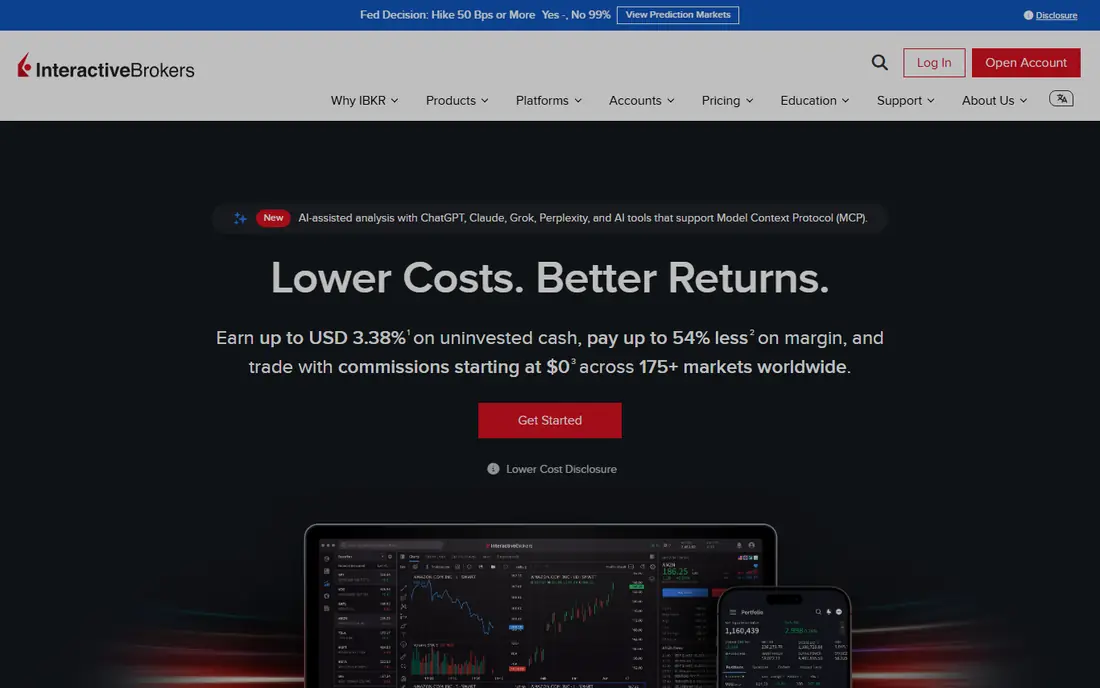
Interactive Brokers suits traders who want CME, Eurex, ICE and other futures markets alongside stocks, options and forex in one account. That breadth helps if you trade spreads across markets or hold a mixed portfolio. Paper trading lets you learn the platform without risking capital, which matters given how many order types it offers.
Complexity is the main drawback. Fees, margins and data costs differ by exchange, and the desktop platform can feel dense at first. Check the contract fee for each market you plan to trade, since a low rate in one market does not guarantee the same rate elsewhere.
- Access to many global futures markets
- Multi-asset account
- Paper trading available
- Trader Workstation is complex
- Margin and fee structures vary by market
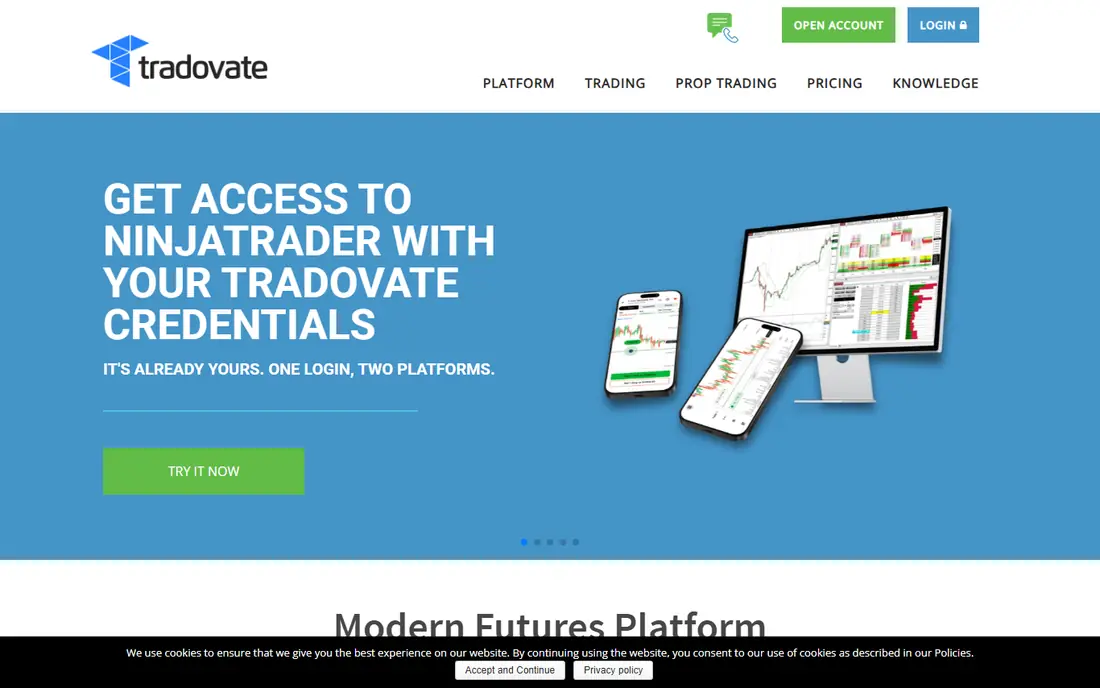
Tradovate appeals to traders who want to open a browser or phone and trade, without managing a desktop platform. Its cloud design makes it easy to switch devices, and its pricing plans include options aimed at frequent traders. A simulation account helps new futures traders learn order entry and margin before going live.
The catch is depth. Traders who rely on advanced order flow or custom indicators may find Tradovate lighter than NinjaTrader desktop. Since Tradovate is now part of the NinjaTrader group, check current plan names and pricing before you sign up, as details can change.
- Web and mobile access without a heavy desktop install
- Commission-free plan options
- Simulation account
- Now part of NinjaTrader, so product lines may change
- Advanced charting is lighter than NinjaTrader desktop
AMP Futures is a discount futures broker known for low all-in costs on micro contracts, which makes it popular with small-account traders. It supports many third-party platforms, including NinjaTrader, Sierra Chart and TradingView connections, so you can pick the charting tool you prefer and keep AMP for execution.
That freedom adds a decision. Beginners must choose a platform, data feed and commission plan, and the best combination depends on how often they trade. If you know what you want and trade micros often, AMP is strong value. If you want one guided package, a broker with a single built-in platform may feel simpler.
- Competitive micro-contract commissions
- Many platform choices
- Low day-trading margins for micros
- Platform choice can confuse beginners
- Support and data costs vary by setup
Optimus Futures stands out for service. Its team helps traders pick a platform, data feed and margin setup, which is useful when you are moving from simulation to live trading. It supports platforms such as Optimus Flow, Rithmic tools, NinjaTrader and TradingView, giving experienced traders room to choose.
The downside is that pricing is not a single headline number. Commission, exchange fees, regulatory fees and data costs combine into the total, so ask for an all-in quote for your contracts and volume. For traders who value a phone call over a help page, that service is worth the extra comparison work.
- Hands-on broker support
- Access to several platforms
- Competitive commissions
- Pricing depends on platform and volume
- Not a single all-in-one app
TradeStation suits systematic traders who want to build, test and automate ideas. Its EasyLanguage scripting, backtesting and charting tools are well established, and it also covers stocks, options and futures in one account. Traders who test before they trade will appreciate that workflow.
Cost is the trade-off. Its futures commissions sit above the cheapest discount brokers, so high-frequency micro traders may pay more over time. If your edge comes from tested strategies rather than ultra-low commissions, TradeStation remains a credible choice.
- Strong backtesting and strategy tools
- Desktop, web and mobile access
- Multi-asset account
- Futures commissions are higher than discount specialists
- Platform depth takes learning
Tastytrade works well for traders who mix futures with options and options on futures. Its interface is fast, its probability tools help with position sizing, and its fee structure is easy to follow for equity options. Futures traders who already use tastytrade for options can add futures without learning a new broker.
Specialist futures traders may miss deeper order flow and market replay tools. Tastytrade is best viewed as a strong multi-asset broker with good futures access, rather than a pure futures terminal. Check its current futures commission schedule, since micro and standard contracts differ.
- Clear futures and options workflow
- Capped opening commissions on many equity options
- Futures and options in one account
- Futures charting is simpler than specialist platforms
- No paper trading for some products
Thinkorswim, through Schwab, is one of the best places to learn futures analysis. Its charting, options tools, paper trading and education material help new traders understand risk before they trade live. It also sits inside a full-service brokerage account, which suits investors who hold stocks alongside futures.
The main weakness is cost. Futures commissions are materially higher than specialist discount brokers, so frequent traders will notice the difference. If you trade futures occasionally and value analysis and education above the lowest commission, thinkorswim is a sound pick.
- Deep charting and analysis
- PaperMoney paper trading
- Strong education material
- Futures commissions are higher than discount brokers
- Platform can feel heavy
How we picked these
We compared official commission schedules, margin information, exchange coverage, platform features and simulation options, plus public broker comparisons updated in 2026. We favored CFTC-regulated and NFA-registered US brokers for US traders, and we excluded platforms that only offer unregulated contracts for difference. We did not claim hands-on testing; our findings rest on vendor pages, fee schedules and public reviews.
How to choose a futures platform
Start with total cost, not just commission per side. Add exchange fees, regulatory fees, data subscriptions and any platform fee, then compare that all-in figure for the contracts you trade most, especially micros. Next, check intraday and overnight margin for your contracts, since margin rules decide how much capital you need and how quickly a position can be closed.
Then test the platform. Use a simulation account to place bracket orders, set stops and manage a losing trade, and confirm the charting and order flow tools match your style. Finally, confirm customer support hours, since futures trade almost around the clock, and make sure you understand the risk from borrowed funds before funding an account.
Frequently asked questions
What is the best platform to trade futures for beginners?
NinjaTrader and thinkorswim are strong starting points because both offer simulation trading, education and futures-specific tools. Beginners should practice in simulation, learn margin rules and start with micro contracts, which are smaller than standard contracts. Futures trading carries high risk, so keep position sizes small.
What are the best futures trading platforms for low fees?
AMP Futures, Tradovate and Optimus Futures are often among the lowest-cost options for micro contracts, but the cheapest choice depends on your volume, platform and data needs. Compare all-in costs, including exchange and data fees, rather than commission alone.
What is the best platform for futures trading on CME products?
NinjaTrader, Interactive Brokers, AMP Futures and Tradovate all support CME products, including E-mini and micro contracts. The best choice depends on whether you want specialist charting, global market access or the lowest micro-contract cost.
Do futures platforms offer paper trading?
Many do. NinjaTrader, TradeStation, Interactive Brokers and thinkorswim offer simulation or paper trading, and several discount brokers offer demo accounts. Use paper trading to learn order entry and risk controls, but remember that live fills, slippage and emotions differ.
Can I trade futures with a small account?
Micro contracts make futures more accessible, and some brokers accept low minimum deposits, but borrowed funds mean losses can still exceed your deposit. Check margin requirements, data costs and fees before opening an account, and only use money you can afford to lose.
Is futures trading riskier than stock trading?
Yes, in general. Futures use borrowed funds, contracts expire, and prices can move sharply overnight. That borrowed funding can increase both gains and losses. This article is educational only and is not financial advice.
Sources
See where you really rank - block by block
ProMapRanker scans Google Maps across a grid of your service area. Simple monthly plans from $19, white-label on every plan.
Start freeKeep reading
 youtube alternatives
Best YouTube Alternatives in 2026
Looking for youtube alternatives in 2026? We compare Vimeo, Dailymotion, Twitch, Rumble, and more on price, audience, monetization, control and privacy.
Read → what's the best ai tool for photo editing
What Is the Best AI Tool for Photo Editing in 2026
What is the best AI tool for photo editing? We compare ten tools for 2026, from Photoshop and Lightroom to Luminar, Topaz, Canva and mobile editors today.
Read → twitter alternatives
Best Twitter Alternatives in 2026
Compare the best twitter alternatives for 2026, from Bluesky, Threads, and Mastodon to Reddit, Tumblr, and Micro.blog, with free plans and audience notes.
Read →