 ProMapRanker
Best Fulfillment Companies USA in 2026

Key takeaways
- Most US fulfillment pricing is custom, so compare quotes on the same order profile, not headline rates alone.
- ShipBob and ShipMonk suit direct to consumer brands, while Red Stag and Stord suit heavier or more complex catalogs.
- Warehouse locations matter for delivery speed and shipping cost, especially for brands with national customers.
- Returns, kitting, storage and receiving fees can change the cheapest quote, so ask for them up front.
Quick comparison
| Pick | Great for | Pricing starts at | Free tier | |
|---|---|---|---|---|
 ShipBob | Direct to consumer brands | See website | No | Visit |
 ShipMonk | Subscription and kitting brands | See website | No | Visit |
 ShipNetwork | Growing omnichannel brands | See website | No | Visit |
 ShipFusion | Custom fulfillment and kitting | See website | No | Visit |
 Red Stag Fulfillment | Heavy and bulky products | See website | No | Visit |
 ShipHero | High volume warehouse operations | See website | No | Visit |
 Flowspace | Flexible warehouse network | See website | No | Visit |
 Stord | Omnichannel and retail fulfillment | See website | No | Visit |
The best fulfillment companies USA
We compared official service pages, rate cards, integration lists and public reviews for third party logistics providers with US warehouses. The picks below cover direct to consumer, subscription, retail and heavy product brands, since a good fit depends on order volume, product size and sales channels.
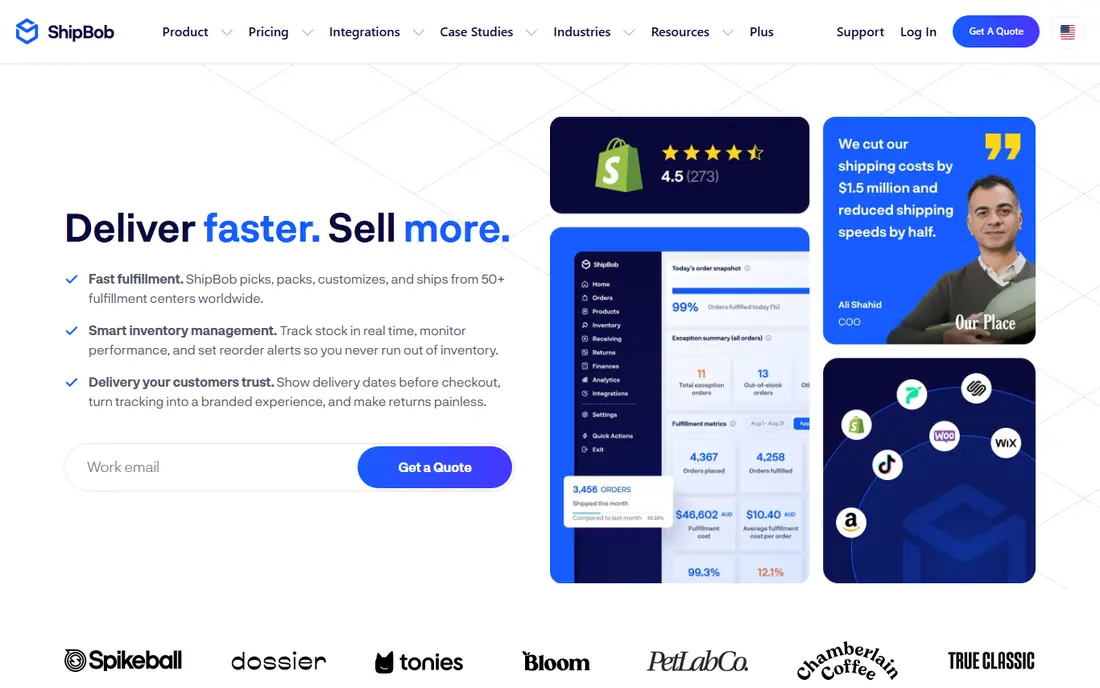
ShipBob is the default shortlist pick for many direct to consumer brands because it combines a broad warehouse network with integrations for Shopify, Amazon, Walmart and other channels. Brands can split inventory across regions to cut transit time, and the dashboard tracks orders, inventory and shipping performance in one place. ShipBob also supports subscriptions, bundles and retail distribution for brands that grow beyond a single store.
The catch is cost structure. Pricing is custom, with monthly minimums and separate charges for receiving, storage, picks and returns in many plans, so a quote on your real order profile is essential. Some brands also find support less personal at lower volumes. For a growing direct to consumer brand that needs national two day reach, ShipBob remains a strong starting point.
- Large US and global warehouse network
- Strong Shopify and marketplace integrations
- Clear dashboard and inventory tools
- Pricing is custom with minimums
- Receiving and storage fees need close review
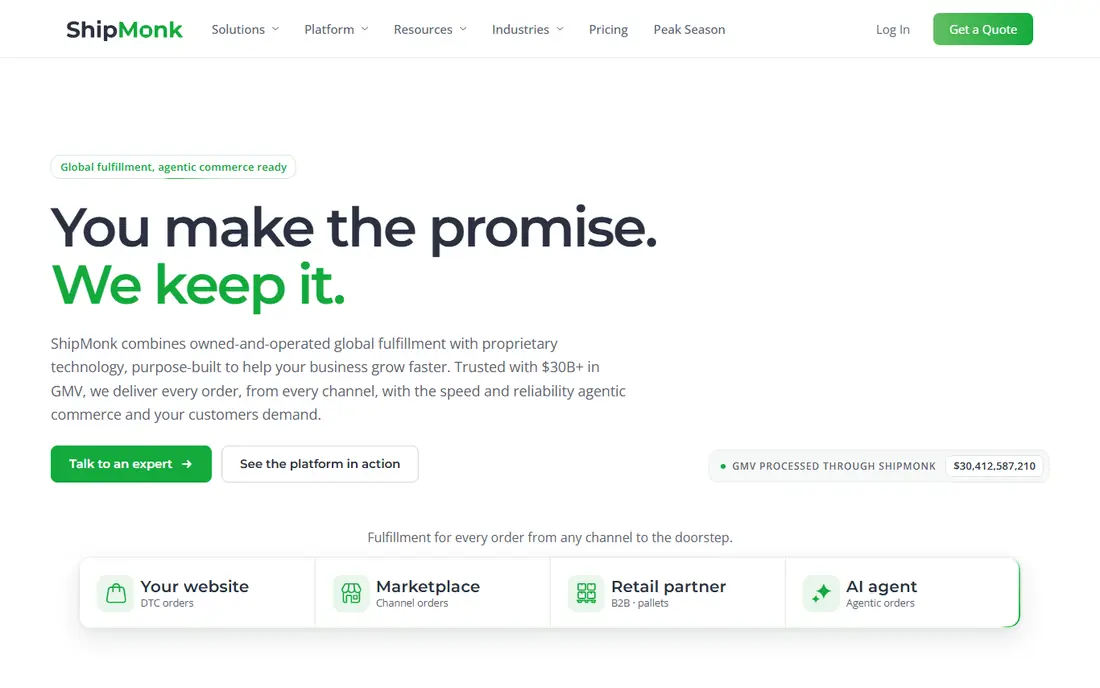
ShipMonk suits brands built around subscription boxes, bundles and kits, where assembly accuracy matters as much as shipping speed. Its warehouses handle kitting, custom packaging and subscription cycles, and its platform tracks inventory across sales channels. US facilities are FDA registered, which helps supplement and food brands that need documented handling standards, and several sites hold additional quality certifications.
The downside is pricing complexity. ShipMonk quotes pick fees, postage, storage and project fees separately, and contracts commonly run for a year with renewal terms. That makes a same profile comparison with ShipBob essential before signing. For subscription and bundle heavy brands, the kitting strength often outweighs the quoting effort.
- Strong kitting and subscription box workflows
- Multiple US warehouses
- Dedicated account support at higher volumes
- Pricing is custom and term based
- Pick fees are charged separately from postage
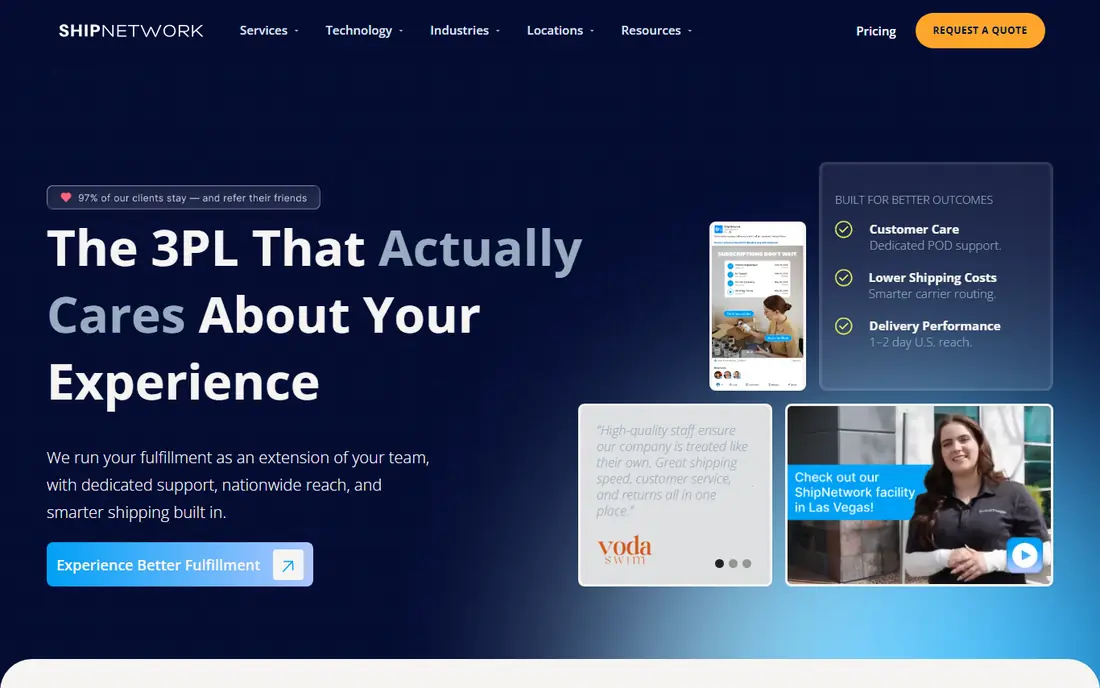
ShipNetwork serves omnichannel brands that sell direct, on marketplaces and through retail. Its warehouses support pick and pack, kitting and retail compliance work, which helps brands that ship both single orders and wholesale cases. Platform integrations cover common storefronts and marketplaces, so inventory can be managed from one system.
The honest weakness is that pricing and minimums are quoted rather than published, so smaller brands need a direct conversation to learn fit. Service levels also vary by warehouse and product type, so references from similar brands matter. For a brand moving from a single channel to several channels, ShipNetwork offers a useful middle ground between a startup focused 3PL and a large enterprise provider.
- US warehouse network for direct and retail orders
- Custom packaging options
- Integration with major ecommerce platforms
- Pricing is quoted
- Smaller brand fit depends on volume and product mix
ShipFusion appeals to brands that need more than standard pick and pack, including custom boxes, inserts, bundles and retail ready packaging. Its team works closely with brands on assembly steps, quality checks and special projects, which suits product launches and gift sets. Warehouses in the US and Canada also help brands that sell across North America without managing two providers.
The trade-off is scale. ShipFusion does not run as many warehouses as ShipBob or Stord, so delivery speed depends on where your customers live relative to its sites. Pricing is quoted, and special projects are priced by scope. For brands where presentation and assembly quality drive repeat orders, that hands on model can be worth more than an extra warehouse node.
- Custom kitting and assembly services
- US and Canadian warehouses
- Hands on account management
- Pricing is quoted
- Network is smaller than the largest national providers
Red Stag Fulfillment stands out for heavy, bulky and high value products that many general 3PLs handle poorly. Its warehouses are set up for large items, fragile goods and complex packing, and it publishes accuracy focused service standards for order fulfillment. Integrations cover Shopify, Amazon, Walmart and other major channels, so heavy product brands can still sell omnichannel without a separate system.
The catch is fit and cost. Red Stag is designed for brands with steady order volume, and very small or very light parcel brands may find a generalist cheaper. Heavy goods also carry higher shipping costs no matter the provider, so packaging and carrier choice matter. For furniture, fitness equipment, large consumer goods and similar catalogs, Red Stag is one of the first providers to quote.
- Built for heavy, large and high value goods
- Accuracy guarantees on key services
- Strong ecommerce integrations
- Minimum order expectations for some brands
- Not the cheapest choice for small light parcels
ShipHero combines warehouse management software with a fulfillment network, which appeals to brands and 3PLs that want tight control over inventory and picking. Its system tracks inventory in real time, supports barcode scanning and wave picking, and connects to Shopify, Amazon and other channels. That software depth helps high SKU brands reduce errors as order volume grows.
The downside is that ShipHero shines most when volume and catalog complexity justify its system. Very small brands may find a simpler 3PL cheaper and easier to start with. Pricing is quoted based on volume and services. For brands that have outgrown spreadsheets and need warehouse grade accuracy, ShipHero offers a strong upgrade path.
- Warehouse management software plus fulfillment network
- Strong inventory and order accuracy tools
- Marketplace integrations
- Pricing is quoted
- Best value shows at higher volumes with complex catalogs
Flowspace runs a network model that lets brands use warehouse space and fulfillment services in multiple US locations without signing for a single large facility. Its software shows inventory, orders and shipments across the network, and it supports direct to consumer, marketplace and wholesale orders. That flexibility helps seasonal brands and brands testing new regions without a long warehouse commitment.
The honest weakness is consistency. Because fulfillment runs through network warehouses, day to day service can vary by site, so onboarding and quality checks matter. Pricing is quoted by volume and service mix. For brands that need geographic flexibility and want to avoid a single warehouse bet, Flowspace is worth a quote alongside ShipBob and Stord.
- Network model lets brands place inventory near customers
- Software for inventory and order visibility
- Retail and wholesale support
- Pricing is quoted
- Service experience can vary by network warehouse
Stord suits brands that want warehousing, fulfillment and freight under one provider as they scale into retail. Its network covers direct to consumer and business to business orders, including retail compliance, kitting and value added services. The software layer gives visibility into inventory and orders across channels, which helps brands that sell on their own site, on marketplaces and through retailers at the same time.
The trade-off is scope. Stord is built for growing and mid-market brands, and very early stage sellers may find a smaller 3PL simpler to start with. Pricing is quoted, so compare it on the same order, storage and returns profile as other finalists. For an omnichannel brand planning retail expansion, Stord offers a path that avoids switching providers mid growth.
- Combined warehousing, fulfillment and freight services
- Omnichannel and retail support
- Software visibility across channels
- Pricing is quoted
- Smaller brands may find enterprise scope more than they need
How we picked these
We compared official service pages, published rate cards where available, integration lists and public reviews, and we favored providers with active US warehouses and current ecommerce integrations. We marked custom pricing as See website rather than repeating outdated third party rate tables as fact. Warehouse coverage, product fit, kitting and returns handling, and software visibility weighed more than brand size alone.
What to check before you sign
Quote on your real orders
Send every finalist the same sample: average order size, items per order, product dimensions and weight, monthly volume, return rate and sales channels. Ask for receiving, storage, pick and pack, packaging, shipping, returns and account fees in one document. Without that shared profile, a low pick fee can hide expensive storage or returns charges.
Test delivery speed by customer location
Map your customers by state and ask each provider which warehouses would hold your stock and what transit times result. Two day delivery from one region is not the same as national two day coverage, and split inventory adds storage cost. Balance shipping savings against extra storage and complexity before you split stock across many nodes.
Check returns, kitting and service levels
Ask how returns are inspected, restocked or disposed of, and what each step costs. For kits and bundles, ask for assembly error rates and quality checks, not just a price per kit. Confirm support hours, escalation contacts and service level terms in writing, since fulfillment problems show up as customer complaints fast.
Frequently asked questions
What does a 3PL charge for fulfillment in the US?
Most US 3PLs charge a mix of receiving, storage, pick and pack, packaging, shipping and returns fees, and most quote custom rates by volume and product type. Some publish partial rate cards, but the only reliable comparison is a quote on your own order profile. Ask for all fees in writing before you sign.
Is ShipBob or ShipMonk better for a small brand?
ShipBob often suits direct to consumer brands that want a large network and broad integrations, while ShipMonk often suits subscription and kitting brands. The better choice depends on your items per order, kitting needs, volume and customer locations. Get quotes from both on identical orders before deciding.
How many warehouses do I need?
Many brands start with one or two warehouses near their largest customer clusters, then add nodes as volume grows. More warehouses cut transit time and shipping cost but raise storage and inventory complexity. Use your customer map and shipping quotes to decide, not a fixed rule.
Can a 3PL handle Amazon, Shopify and retail orders?
Yes, most providers on this list integrate with Shopify, Amazon and other marketplaces, and several support retail and wholesale orders. Confirm each channel you sell on, including retail compliance requirements such as barcodes, routing and packaging rules, before you onboard.
What happens if I want to leave a 3PL?
Leaving involves moving inventory, closing open orders and handling returns in transit, so check contract length, notice periods and exit fees before signing. Ask how inventory transfer works and what it costs. A clear exit plan protects you even if you never use it.
Sources
See where you really rank - block by block
ProMapRanker scans Google Maps across a grid of your service area. Simple monthly plans from $19, white-label on every plan.
Start freeKeep reading
 worlds best local seo company
8 Worlds Best Local SEO Companies for Map Pack Growth in 2026
Compare the worlds best local seo company options for Google Business Profile work, citations, reviews, and multi-location rankings and reporting in 2026.
Read → world's best web hosting company
World's Best Web Hosting Company in 2026
Searching for the world's best web hosting company? We compared 10 hosts on price, renewal rates, speed, and support to help you choose well today in 2026.
Read → who's got the best nanny tax services
Who's Got the Best Nanny Tax Services in 2026
We answer who's got the best nanny tax services, comparing full filing, back taxes, software, and pricing so families can handle nanny taxes correctly.
Read →