 ProMapRanker
Best Fulfillment Companies for Startups in 2026

Key takeaways
- Startup-friendly fulfillment means low or flexible minimums, clear per-order pricing and integrations with your store platform.
- ShipBob and ShipMonk suit direct-to-consumer startups at scale, while eFulfillment Service and ShipFusion suit smaller or high-accuracy needs.
- Fulfillment by Amazon suits Amazon-first sellers, but it is less flexible for direct-to-consumer orders off Amazon.
- Always request a quote based on your real order volume, product size and storage needs, since published rates rarely tell the full cost.
Quick comparison
| Pick | Great for | Pricing starts at | Free tier | |
|---|---|---|---|---|
 ShipBob | Direct-to-consumer brands at scale | See website | No | Visit |
 ShipMonk | Subscription and recurring orders | See website | No | Visit |
 ShipFusion | High-accuracy direct-to-consumer fulfilment | See website | No | Visit |
 ShipHero | Growing brands needing warehouse software | See website | No | Visit |
 Flexport | Freight plus fulfilment under one provider | See website | No | Visit |
 Fulfillment by Amazon | Amazon-first sellers | See website | No | Visit |
 eFulfillment Service | First-time outsourcers with no minimum | See website | No | Visit |
 Stord | Tech-first omnichannel brands | See website | No | Visit |
The best fulfillment companies for startups
We compared official company pages, pricing disclosures and public comparisons, plus integration lists for major store platforms. Fulfilment pricing depends on order volume, product size, storage and shipping distance, so we list starting price as See website where a single flat rate would mislead. All companies below were actively offering fulfilment services in October 2026.
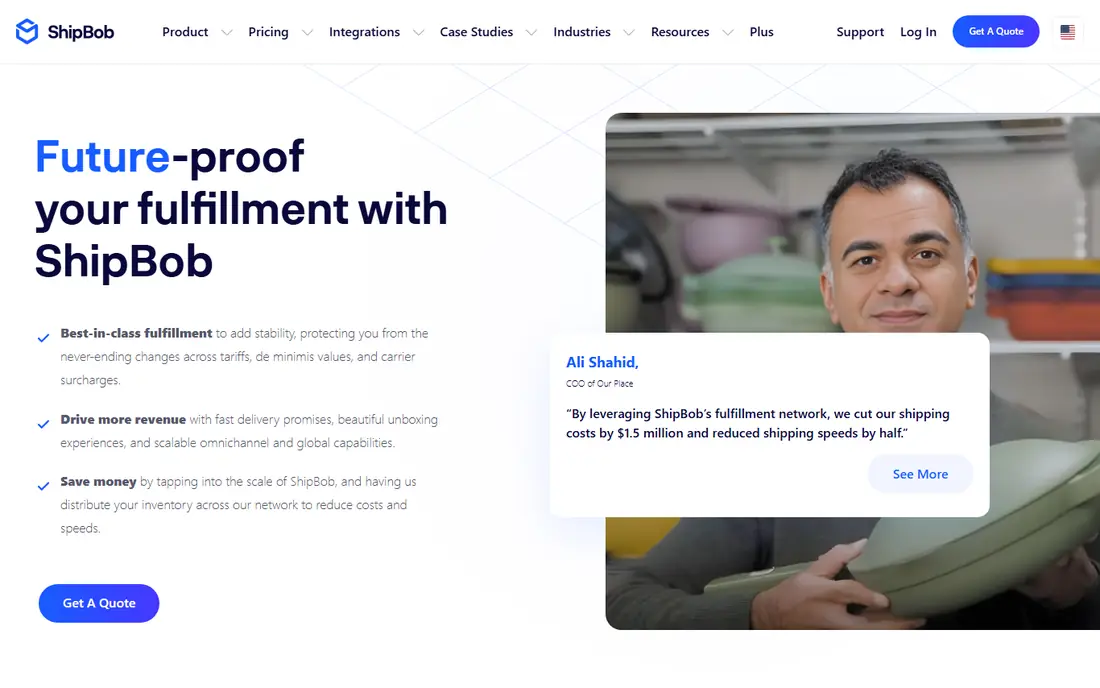
ShipBob is the default shortlist pick for direct-to-consumer startups that expect to grow quickly and ship internationally. Its network spans the United States, Canada, Europe and Australia, which helps brands place inventory closer to customers and cut delivery times. Integrations with Shopify, WooCommerce and other platforms sync orders and inventory without manual uploads.
The minimum is the catch for very early brands. ShipBob applies a monthly minimum, reported at $275 per month in recent comparisons, which can strain a startup shipping only a handful of orders. Pricing is also itemised across receiving, storage, pick and pack, and shipping, so request a full quote on your actual order profile. For startups past the earliest stage, the network and software justify the cost.
- Large warehouse network across several countries
- Strong store integrations
- Transparent dashboard for orders and inventory
- Monthly minimum applies
- Pricing is quote based and itemised, so total cost needs careful modelling
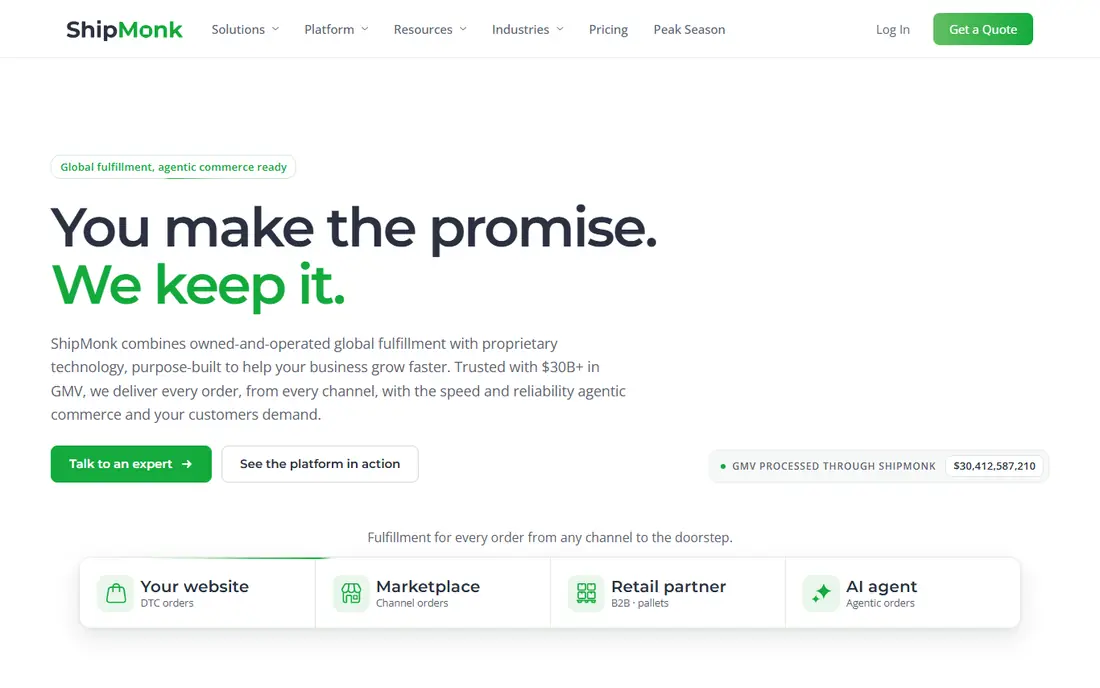
ShipMonk suits startups built around subscriptions, bundles and recurring shipments, where kitting and repeat orders matter more than one-off speed. Its software handles subscription logic, inventory and order routing, and its carrier network selects carriers by cost and service. Warehouses in the United States, Canada and Europe support brands selling across those markets.
A monthly minimum, reported at $250 per month in recent comparisons, makes ShipMonk a better fit once orders are steady rather than sporadic. Its fees are split across picks, packaging, storage and shipping, so compare the total landed cost per order, not just the pick fee. For subscription startups with predictable volume, ShipMonk is a strong contender.
- Strong subscription box and kitting support
- Virtual carrier network
- Integrations with major platforms
- Monthly minimum applies
- Fee structure separates several cost centres, so quotes need care
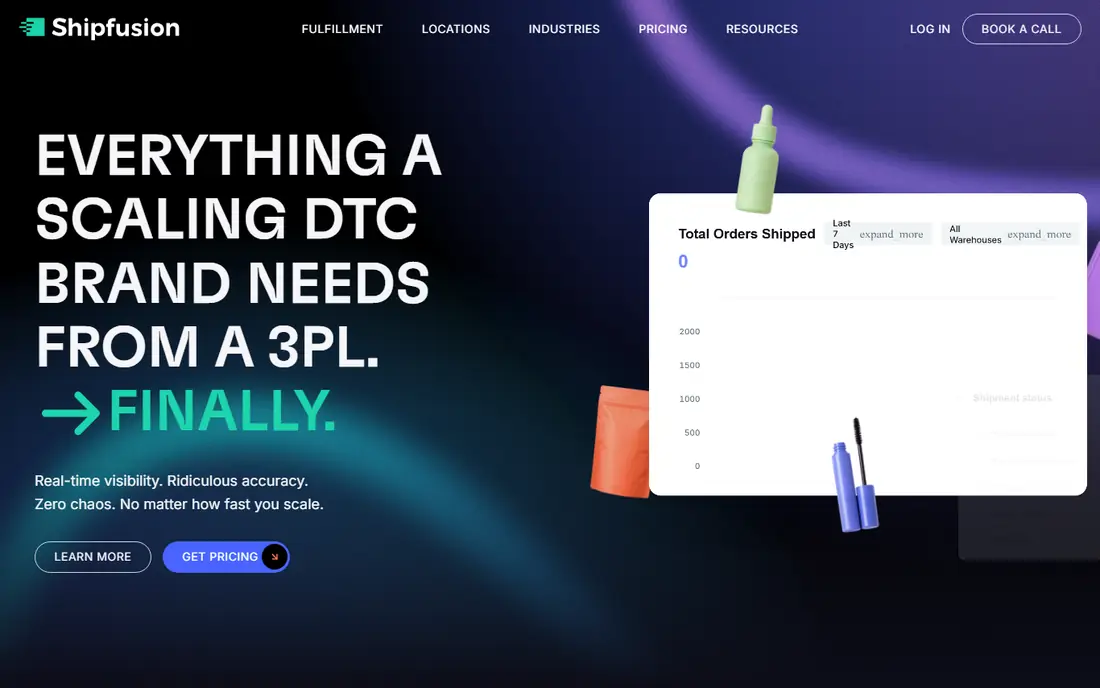
ShipFusion appeals to startups that cannot afford shipping errors, especially brands selling higher-value or fragile products where a wrong item damages trust. Its accuracy focus, reported at 99.99 percent in recent comparisons, reflects tight warehouse processes and checks. Warehouses in the United States and Canada cover North American customers well, and its software integrates with major store platforms.
Volume expectations are the limitation. ShipFusion suits brands shipping several hundred orders a month or more, rather than a brand shipping a few orders a week. Pricing is quoted, so provide your SKU count, order volume and product dimensions for a realistic figure. For accuracy-sensitive startups with steady volume, ShipFusion is worth a quote.
- High reported accuracy
- Warehouses in the United States and Canada
- Direct-to-consumer focus
- Higher volume expectations than no-minimum providers
- Pricing is quote based
ShipHero combines fulfilment services with warehouse management software, which helps startups that want tight control over inventory, orders and reporting. That software focus suits brands selling across Shopify, Amazon and other channels, since inventory stays in one view. Its fulfilment network supports direct-to-consumer and wholesale orders, which helps brands that later add retail.
Early-stage brands may find the quote higher than a simple no-minimum provider, and the software adds most value once SKU counts and order volumes rise. Request a quote that separates software, storage and per-order fees, so you can see what you pay for each part. For growing brands that want software and fulfilment together, ShipHero is a practical choice.
- Warehouse management software included
- Good for multi-channel brands
- Inventory visibility
- Pricing is quote based
- Best value comes once volume and SKU counts grow
Flexport suits startups that import goods and want freight, customs and fulfilment coordinated by one provider, rather than juggling separate vendors. Its US fulfilment network, built from Deliverr, supports direct-to-consumer orders, while its freight business handles inbound shipments. That combination can simplify supply chains for brands sourcing overseas.
The minimum spend is the barrier for tiny startups, with recent comparisons reporting a $5,000 minimum monthly fulfilment spend since January 2026. Smaller brands should confirm current terms before assuming Flexport fits. For import-heavy startups with real volume, the combined freight and fulfilment service can save coordination time and cost.
- Freight forwarding and fulfilment combined
- Deliverr network for US fulfilment
- Global logistics expertise
- Minimum monthly fulfilment spend reported since January 2026
- Complex for very small brands
Fulfillment by Amazon, or FBA, is the obvious pick for startups whose main channel is Amazon. Products stored in Amazon centres can qualify for Prime delivery, which many shoppers filter for, and Amazon handles packing, shipping and much of the customer service for those orders. For a new brand trying to gain visibility on Amazon, that reach is hard to match with a third-party provider.
Fees depend on product size, weight, category and storage duration, and long-term storage charges can bite slow-moving stock. FBA is also less straightforward for direct-to-consumer orders from your own website, where a dedicated third-party provider may offer better branding and packaging control. Amazon-first startups should still model FBA fees against a third-party quote before committing all inventory.
- Prime eligibility for qualifying products
- Huge warehouse network
- Handles storage, packing and customer service for Amazon orders
- Fees vary by size and category
- Less flexible for off-Amazon direct orders
- Amazon policies govern the account
eFulfillment Service is one of the most accessible options for a startup outsourcing fulfilment for the first time. With no order minimum reported in recent comparisons, a brand shipping a few dozen orders a month can start without a monthly spend commitment. Its Traverse City, Michigan warehouse handles receiving, storage, pick and pack, and shipping for Shopify, WooCommerce and other platforms.
The single warehouse is the trade-off. Delivery to the far coasts takes longer than a distributed network, and international shipping options are more limited. Brands that later need two-day national delivery will likely outgrow a single site. For a first fulfilment partner, though, the low barrier and simple onboarding make eFulfillment Service a sensible starting point.
- No order minimum reported
- Single US warehouse with straightforward onboarding
- Good for small brands
- Single location limits delivery speed to distant regions
- Fewer international options than larger networks
Stord suits startups that sell across direct-to-consumer, Amazon and retail channels and want one software layer over fulfilment. Its network covers multiple US nodes plus Europe and the United Kingdom, which helps brands shipping internationally. The platform gives inventory, order and shipment visibility in one place, reducing the spreadsheet work that grows with channel count.
Pricing is quoted by volume and service mix, so pre-launch brands without order history may find the sales process heavier than a no-minimum provider. Stord works best once a startup has some sales data and a forecast to share. For omnichannel brands that want technology and fulfilment together, it belongs on the shortlist.
- Software-led fulfilment across channels
- Multi-node US network plus Europe and UK
- Omnichannel support
- Pricing is quote based
- Suits brands with clearer volume forecasts than pre-launch startups
How we picked these
We compared official company pages, pricing disclosures, warehouse networks and integration lists, plus public fulfilment comparisons. We kept only providers actively offering third-party fulfilment in October 2026, and we favoured providers with clear minimums, store integrations and a track record with smaller brands. We left out providers whose fulfilment service could not be confirmed, or that serve only enterprise clients.
How to compare fulfilment quotes fairly
Send every provider the same data: monthly order count, average items per order, product dimensions and weights, SKU count, storage needs, return rate and destination mix. Ask for a total cost per order that includes receiving, storage, pick and pack, packaging, shipping and returns, plus any monthly minimum or account fee. A low pick fee means little if storage or shipping costs are high.
Next, test integrations with your store platform and check reporting, inventory alerts and returns handling. Ask about onboarding time, inbound shipment rules and what happens during peak season. Finally, start with a trial period or a short initial term if offered, and measure accuracy, delivery time and customer complaints before moving all inventory.
Frequently asked questions
What does a fulfilment company actually do?
A fulfilment company receives your inventory, stores it, picks and packs orders as they arrive, ships them to customers and often handles returns. You keep selling and marketing, while the provider handles warehouse work and carrier relationships.
How much does fulfilment cost for a startup?
Costs vary by order volume, product size, storage time and shipping distance, plus any monthly minimum. Request a quote on your real order profile, and compare total cost per order, not just one fee line.
Do I need a minimum order volume to use a fulfilment company?
Not always. Some providers, such as eFulfillment Service, report no minimum, while others apply a monthly minimum or spend threshold. Match the provider to your current volume, not just your hoped-for volume.
Can I use a fulfilment company for Amazon and my own website?
Yes, many providers support both, though Fulfillment by Amazon is strongest for Amazon orders and third-party providers often give better control for your own site. Check packaging, branding and returns rules for each channel before choosing.
When should a startup outsource fulfilment?
When packing orders takes time away from product and marketing, when shipping errors rise, or when storage at home no longer works. If you ship only a few orders a month, self-fulfilment may still be cheaper until volume grows.
Sources
See where you really rank - block by block
ProMapRanker scans Google Maps across a grid of your service area. Simple monthly plans from $19, white-label on every plan.
Start freeKeep reading
 worlds best local seo company
8 Worlds Best Local SEO Companies for Map Pack Growth in 2026
Compare the worlds best local seo company options for Google Business Profile work, citations, reviews, and multi-location rankings and reporting in 2026.
Read → world's best web hosting company
World's Best Web Hosting Company in 2026
Searching for the world's best web hosting company? We compared 10 hosts on price, renewal rates, speed, and support to help you choose well today in 2026.
Read → who's got the best nanny tax services
Who's Got the Best Nanny Tax Services in 2026
We answer who's got the best nanny tax services, comparing full filing, back taxes, software, and pricing so families can handle nanny taxes correctly.
Read →