 ProMapRanker
Best Fulfillment Companies for Small Businesses in 2026

Key takeaways
- Small-business fulfilment is won on total landed cost, not on a headline pick fee, since storage, receiving, packaging and shipping all add up.
- ShipBob suits multi-channel brands that need a wide warehouse network, while ShipMonk suits subscription and kitting work with lower minimums.
- eFulfillment Service and Fulfillrite suit first-time outsourcers, because neither demands high volume to start.
- Red Stag suits heavy, bulky or high-value goods, while most lightweight parcel providers are a poor fit for that freight.
Quick comparison
| Pick | Great for | Pricing starts at | Free tier | |
|---|---|---|---|---|
 ShipBob | Multi-channel small brands | See website | No | Visit |
 ShipMonk | Subscription and kitting | See website | No | Visit |
 eFulfillment Service | First-time outsourcers | See website | No | Visit |
 Fulfillrite | Startups with simple needs | See website | No | Visit |
 ShipFusion | Accuracy-focused DTC brands | See website | No | Visit |
 Simpl Fulfillment | Founder-led brands | See website | No | Visit |
 Saltbox | Hands-on brands | See website | No | Visit |
 ShipNetwork | Distributed US inventory | See website | No | Visit |
 Red Stag Fulfillment | Heavy and high-value goods | See website | No | Visit |
The best fulfillment companies for small businesses
Outsourcing fulfilment means a third party stores inventory, picks and packs orders, ships them and often handles returns. We compared official service pages, pricing models, warehouse footprints and public reviews for the firms below, with a focus on small-business minimums, integration with common store platforms and service for different product types. A plain note first: fulfilment pricing depends on volume, storage, pick and pack and shipping, so compare on total landed cost, not headline rates.
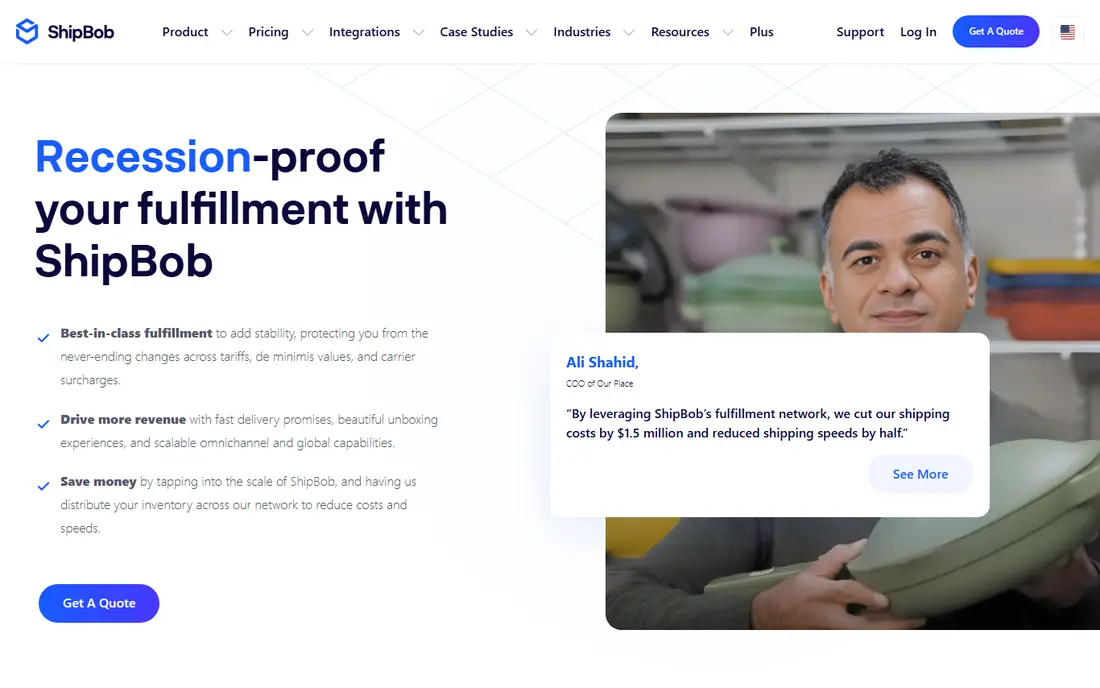
ShipBob is the default shortlist entry for a small brand that sells on several channels and wants faster delivery across the US. Its network lets a brand split inventory across regions, and its software connects orders from Shopify, Amazon, WooCommerce and other platforms into one flow. Inventory forecasting tools help a growing brand avoid stockouts during peaks.
The cost structure needs a full quote. Pick, pack, storage, receiving and shipping are charged separately, so a low pick fee can still produce a high total. ShipBob suits brands shipping enough volume to justify multi-node stock, while very small brands should check minimums and implementation fees before committing.
- Wide US and international warehouse network
- Integrations with Shopify, Amazon and other channels
- Inventory and forecasting tools
- Quote-based pricing, so headline comparisons are hard
- Multi-node inventory adds forecasting work
- Support tiers vary by plan
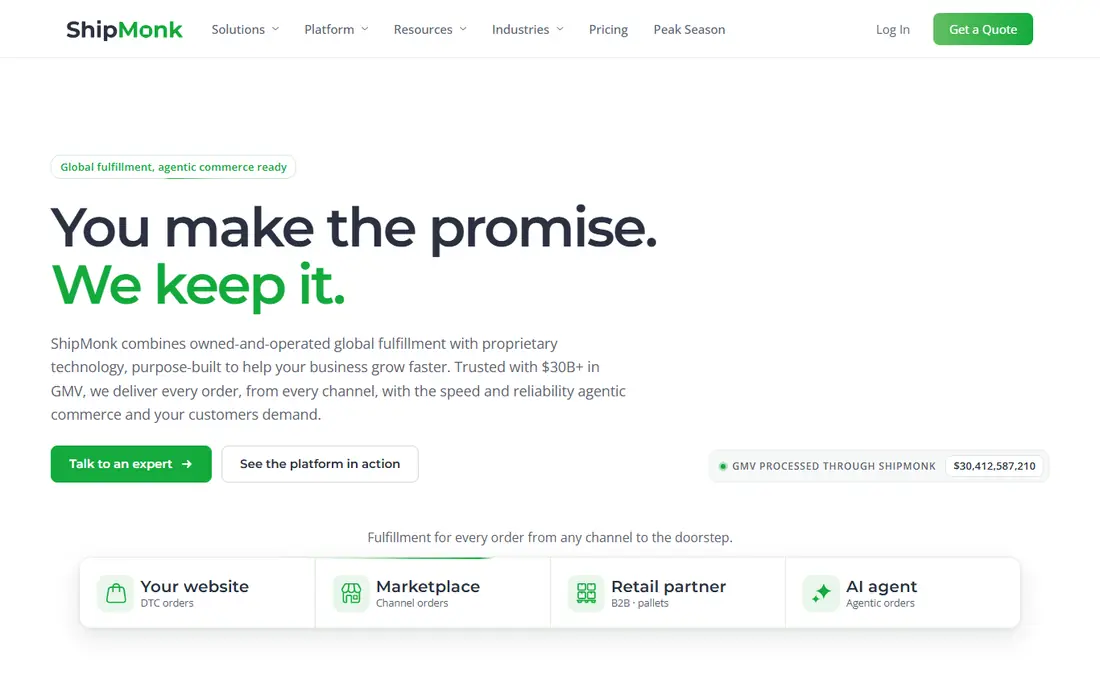
ShipMonk suits brands built around subscriptions, bundles and kits, where each order may contain several items assembled in a specific way. Its software handles recurring shipments, bundle rules and returns, and its monthly minimum is lower than the threshold some larger providers set. That combination helps a growing brand that is not yet shipping thousands of orders a month.
Setup still matters. A catalogue with many variants, bundles and packaging rules needs careful configuration, and errors there show up as mispicks. ShipMonk fits brands that will use its kitting depth, while a brand shipping one simple product may find a simpler provider cheaper overall.
- Strong subscription box and kitting support
- Lower monthly minimums than some rivals
- Detailed invoicing and software
- Monthly minimum applies
- Complex catalogues need careful setup
- Support is shared rather than dedicated on many plans
eFulfillment Service is a gentle first step out of self-fulfilment. With no order minimum advertised and a pay-as-you-go model, a seasonal or early-stage brand can outsource without committing to volume it does not yet have. Standard onboarding without a setup fee also lowers the cost of trying a provider for the first time.
The network is smaller, so delivery speed to distant regions may lag a multi-node provider. Brands that grow quickly may outgrow it and need to migrate. For a first outsourcing move, though, the low barrier matters more than a national footprint.
- No order minimum advertised
- Pay-as-you-go model
- No setup fee advertised for standard onboarding
- Smaller warehouse network than ShipBob
- Fewer enterprise features
- Accuracy and service claims are less documented than larger rivals
Fulfillrite targets startups that want a fast, clear start rather than a long enterprise sales process. Its pricing is presented as transparent per-order terms, and setup is positioned as quick, which helps a founder who needs to stop packing boxes at home. Simple catalogues with standard parcels fit its model well.
Scale is the limit. A brand with rapid growth, many warehouses needs or complex retail compliance may need a larger provider sooner. Fulfillrite suits the early stage, where speed and clarity beat network size.
- Fast setup focus
- Transparent per-order pricing claims
- Suits simple catalogues and startups
- Smaller scale than national providers
- Fewer warehouse locations
- Higher-volume brands may need more capacity
ShipFusion suits direct-to-consumer brands where a mispick or a wrong variant creates a costly return and a lost customer. Its accuracy focus, warehouse controls and reporting help brands with many SKUs keep stock and shipments correct. US and Canada coverage also helps brands selling across the border.
Minimums are the catch. Reported thresholds around several hundred orders a month put ShipFusion out of reach for a brand just starting out. It fits brands that have already proven demand and now need accuracy at scale.
- High accuracy claims
- US and Canada coverage
- Good for brands that need tight inventory control
- Higher volume minimums reported
- Quote-based pricing
- Less suited to very small or seasonal brands
Simpl Fulfillment suits a founder-led brand that wants one clear contact and predictable pricing from a single warehouse. Its Austin operation ships nationwide, and its flat-rate claims make it easier to model cost than an itemised quote with many small fees. Same-day fulfilment for orders received before its cutoff helps brands that promise fast dispatch.
A single node is a real limit for delivery speed to distant regions, since a parcel from Texas takes longer to reach the East or West Coast than stock held locally. Simpl fits brands that value a named contact and clear pricing over the fastest possible transit time everywhere.
- Flat-rate pricing claims
- Named account manager for every client advertised
- Same-day fulfilment for early orders
- Single Austin warehouse node
- Monthly minimum applies
- Less suited to brands needing multi-region stock
Saltbox suits a brand owner who wants to stay involved with inventory, packing and quality checks while still getting warehouse space and shipping help. Its locations combine workspace with fulfilment services, so a founder can visit stock, check packaging and meet the team handling orders. That closeness appeals to brands with handmade or quality-sensitive products.
It is not a fully hands-off provider. Brands that want to delegate everything and never visit a warehouse may prefer ShipBob or ShipMonk. Saltbox fits owners who value control and proximity over a fully managed, multi-node network.
- Flexible workspace plus fulfilment
- Suits brands that want to stay close to inventory
- No strict order minimum on many plans
- More hands-on than a fully managed provider
- Coverage varies by city
- Less suited to brands that want to hand off everything
ShipNetwork, formerly Rakuten Super Logistics, suits mid-volume US brands that want stock in several regions for faster delivery. Its hub network and accuracy claims help brands that have outgrown a single warehouse but do not need a global footprint. Integrations with major platforms keep order flow simple.
Minimums and quote-based pricing mean small brands should check fit before investing time in a sales process. ShipNetwork fits brands with steady mid-volume orders and a clear need for distributed US stock.
- Multiple US hubs for distributed inventory
- Accuracy guarantee claims
- Integrations with major store platforms
- Higher volume minimums reported
- Quote-based pricing
- Smaller brand profile than ShipBob
Red Stag is the specialist pick for goods that other providers handle poorly, including heavy fitness equipment, furniture parts and high-value items. Its two US facilities focus on careful handling, and its guarantees cover mispicks, shrinkage and late shipments in financial terms. That focus matters when one damaged shipment costs more than a month of fulfilment fees.
Premium pricing and minimums make it a poor fit for cheap, lightweight parcels, where a general provider will be cheaper. Red Stag suits brands whose products are heavy, bulky, fragile or valuable enough to justify paying for specialist handling.
- No weight limit advertised
- Financially backed accuracy guarantees
- Strong for fragile, heavy and high-value items
- Premium pricing
- Minimums around 200 orders a month reported
- Not cost-effective for cheap lightweight parcels
How we picked these
We compared official service pages, pricing models, minimums, warehouse footprints and public reviews, and we favoured providers with a clear small-business route rather than enterprise-only terms. Where pricing is quoted, we wrote See website instead of inventing a per-order figure. Fulfilment pricing depends on volume, storage, pick and pack and shipping, so total landed cost, not headline rates, should drive the final choice.
How to compare fulfilment quotes on total landed cost
Build a quote from your real numbers: monthly orders, average items per order, product weight and size, storage volume and return rate. Ask each provider for pick, pack, packaging, receiving, storage, account fees and shipping as separate lines, then add them for a typical month. A provider with a low pick fee but high storage or receiving charges can cost more overall.
Send a test batch before moving all stock. Check pick accuracy, packaging quality, tracking updates and return handling on real orders. Confirm who pays for a mispick, how quickly support responds, and what happens during a peak week. A short trial reveals more than a polished sales call.
Questions to ask before signing
Ask for the full fee schedule, including fees that only appear at peak or on returns. Ask how inventory is counted, how discrepancies are handled, and how quickly stock can be moved out if you leave. Get service levels in writing, with remedies when they are missed.
Frequently asked questions
How much does fulfilment cost for a small business?
Cost depends on order volume, items per order, product size and weight, storage needs and shipping zones, so no single figure fits every brand. Many small brands report all-in costs of a few dollars per order plus shipping and storage, but the only reliable figure is a quote built from your own numbers. Compare total landed cost across providers.
What is the minimum order volume for fulfilment?
Minimums vary widely. Some providers advertise no minimum, while others set monthly minimums or volume thresholds. eFulfillment Service and Fulfillrite suit low-volume starts, while ShipFusion and Red Stag suit higher-volume brands. Confirm the minimum in writing, including what happens in a slow month.
Should a small business use ShipBob or ShipMonk?
ShipBob suits multi-channel brands that need a wide warehouse network and fast national delivery. ShipMonk suits subscription, bundle and kitting brands with lower minimums. The better choice depends on product type, channel mix and volume, so get a total-cost quote from both before deciding.
Does fulfilment include returns handling?
Most providers offer returns handling, but the scope and fees vary, including inspection, restocking and disposal terms. Confirm whether returns are included in the base fee or charged separately. Clear returns terms matter for apparel, beauty and other categories with higher return rates.
How long does it take to switch to a fulfilment provider?
Onboarding often takes days to a few weeks, depending on catalogue size, integrations and stock transfer. Simple catalogues move faster, while many SKUs, bundles and retail rules take longer. Plan stock transfer around a quiet period, and keep a buffer of inventory at home until the new provider proves accuracy.
Can fulfilment handle heavy or fragile products?
Yes, but not every provider does it well. Red Stag specialises in heavy, bulky and high-value goods, while general parcel providers may impose weight limits or charge more for oversized items. Confirm weight limits, packaging methods and damage guarantees for your exact products before signing.
Sources
See where you really rank - block by block
ProMapRanker scans Google Maps across a grid of your service area. Simple monthly plans from $19, white-label on every plan.
Start freeKeep reading
 worlds best local seo company
8 Worlds Best Local SEO Companies for Map Pack Growth in 2026
Compare the worlds best local seo company options for Google Business Profile work, citations, reviews, and multi-location rankings and reporting in 2026.
Read → world's best web hosting company
World's Best Web Hosting Company in 2026
Searching for the world's best web hosting company? We compared 10 hosts on price, renewal rates, speed, and support to help you choose well today in 2026.
Read → who's got the best nanny tax services
Who's Got the Best Nanny Tax Services in 2026
We answer who's got the best nanny tax services, comparing full filing, back taxes, software, and pricing so families can handle nanny taxes correctly.
Read →