 ProMapRanker
Best Fuel Card for Small Trucking Company in 2026

Key takeaways
- No single card wins on discount, acceptance, and fees at once, so pick your top priority first.
- Truck-stop cards suit regular lanes, while Visa and Mastercard cards suit varied routes.
- Always get fees and discount terms in writing and run the math on your own gallons.
- Driver controls, fraud alerts, and IFTA reporting matter as much as the per-gallon discount.
Quick comparison
| Pick | Great for | Pricing starts at | Free tier | |
|---|---|---|---|---|
 WEX Fleet Card | Wide nationwide acceptance | See website | No | Visit |
 Fuelman | Mixed fleets and broad networks | See website | No | Visit |
 Comdata | Truck-stop fleets and driver payments | See website | No | Visit |
 TCS Fuel Card | Truck-stop discounts for small fleets | See website | No | Visit |
 AtoB | App-first trucking fleets | See website | No | Visit |
 Coast | Small teams wanting tight controls | See website | No | Visit |
 Fleet One EDGE | Small over-the-road carriers | See website | No | Visit |
 OTR Fuel Card | Carriers using factoring | See website | No | Visit |
The best fuel card for small trucking company fleets
This is not financial advice. Fuel discounts, fees, and network coverage vary by account, location, and volume, and no card in this guide promises a fixed saving. We focused on cards that suit small carriers and owner-operators: truck-stop coverage, driver controls, and reporting that helps with fuel tax filings.
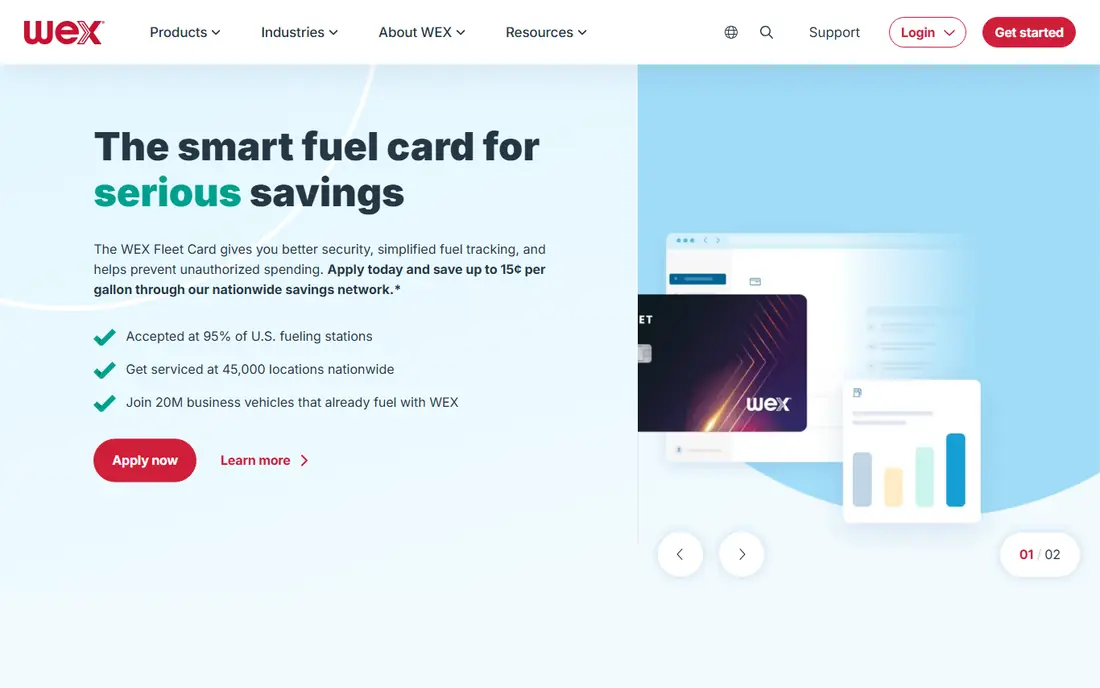
WEX is the wide-acceptance choice for a small carrier that fuels in many places. Its network covers most gas stations and truck stops in the US, so drivers rarely need to hunt for an in-network stop. Controls by driver, vehicle, time, and product help an owner stop unauthorized purchases, and reporting gives a clear view of spend by truck.
The discount is not a single headline number. Terms vary by program and location, and fees depend on the card and plan chosen, so a quote in writing is essential. For a carrier that values acceptance everywhere and clean reporting over the deepest truck-stop rebate, WEX is a steady, well-established pick.
- Accepted at most US fuel locations
- Driver and vehicle controls
- Detailed reporting
- Discount terms vary by program
- Fees depend on card and plan
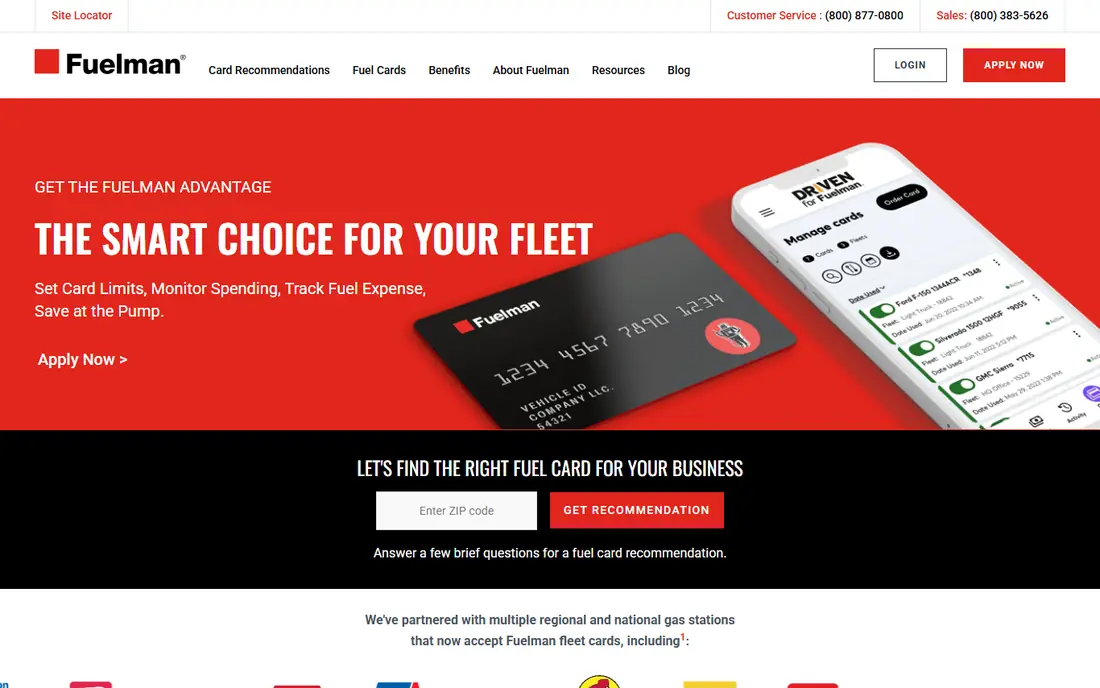
Fuelman, part of Corpay, suits a small carrier with mixed vehicles, since it covers both regular stations and truck stops. Driver controls, purchase limits, and reporting help a small office keep fuel spend visible without a separate system. Diesel-focused plans may offer larger discounts at participating locations than mixed-fleet plans.
Fees and discounts vary by plan, and published comparisons note monthly account fees on higher tiers, so the total depends on volume and plan choice. A low-volume carrier should check whether a monthly fee eats the discount. For mixed fleets that fuel across networks, Fuelman is a flexible, widely available option.
- Broad station and truck-stop acceptance
- Driver controls
- Fleet reporting tools
- Discount and fee terms vary by plan
- Higher tiers carry monthly account fees
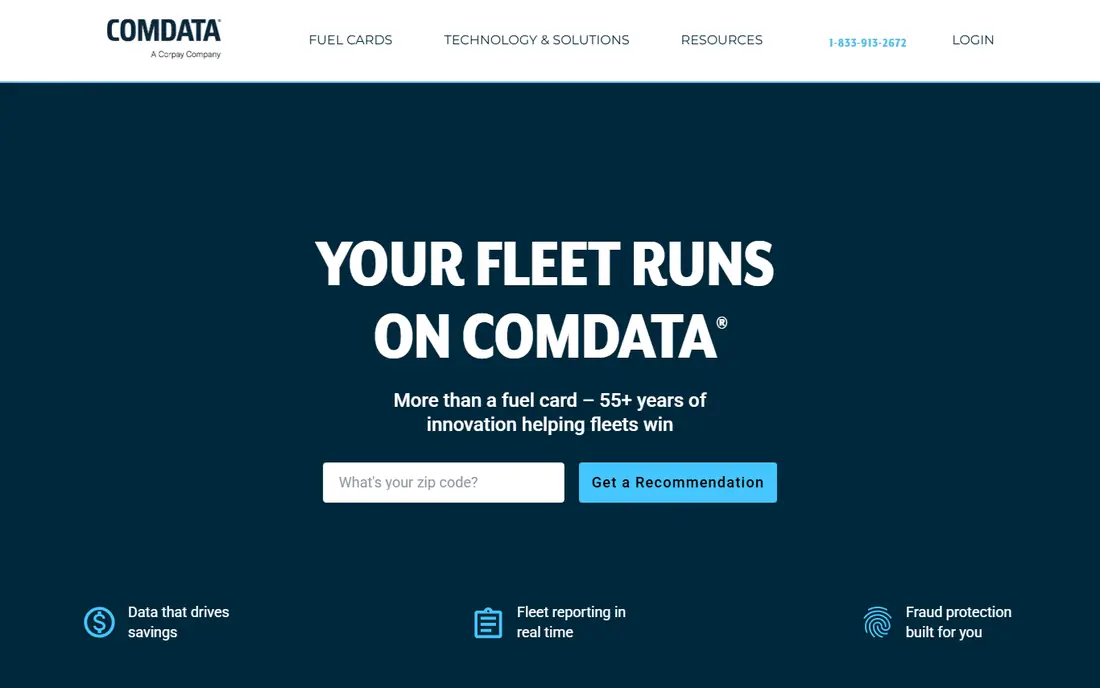
Comdata is a long-standing trucking card, built around truck stops, driver payments, and fleet expense tools. For a small carrier running over-the-road lanes, the truck-stop network, cash advance options, and IFTA reporting support fit daily operations. Driver controls and transaction reporting help owners spot unusual purchases early.
Discounts at participating stops vary, and the fee structure depends on the account, so do not judge it from a single advertised figure. Smaller carriers should also check minimums and service terms. For a trucking-focused operation that needs more than fuel alone, Comdata remains a serious, road-tested choice.
- Major truck-stop network
- Cash advances and driver payment options
- IFTA reporting help
- Terms vary by account
- Fee structure needs a written quote
TCS, short for TransConnect Services, is built for fleets that fuel mainly at major truck stops. Its discount program, IFTA reporting, and spending controls suit small carriers that run regular lanes and want a simple card for diesel. Roadside assistance options add value for an owner-operator who cannot afford a breakdown delay.
The network is truck-stop focused, so a carrier that often fuels at small independents or regular stations may find fewer discounts there. Discounts also depend on the stop and the program terms. For a small fleet that plans routes around truck stops, TCS is worth a quote and a route check.
- Truck-stop discount program
- IFTA reporting
- Spending controls and roadside help
- Discounts depend on stop and program
- Network is truck-stop focused
AtoB runs on Mastercard rails, so drivers can fuel at a very wide range of stations, not only truck stops. Its driver app, spend controls, fraud tools, and IFTA reporting suit a small, tech-comfortable fleet. Published material describes large discounts at select locations, with much smaller discounts at ordinary stations, so route and app use shape the result.
That variation is the catch. A headline discount at a partner stop does not mean the same saving everywhere, and chasing a discount can add miles. Fees also depend on the plan. For a small carrier whose drivers already use apps and who fuel across varied locations, AtoB offers flexibility that closed-network cards cannot.
- Mastercard acceptance at many locations
- Driver app
- Spend controls and fraud tools
- IFTA reporting
- Discounts vary sharply by location
- Some savings need app-based station choices
Coast is a Visa-based fuel card aimed at small and mid-size fleets that want control first. Owners can set limits by card, see spend in a dashboard, and link telematics data they already use. Because it runs on Visa rails, drivers are not limited to a single fuel network, which helps carriers with varied routes and local work.
Discounts vary by location and are modest at many stations, and per-card fees apply on some plans, so the math depends on gallons per card. It is not the deepest truck-stop discount card. For a small team that values control, visibility, and wide acceptance over a maximum rebate, Coast is a clean, modern choice.
- Visa acceptance
- Per-card controls
- Telematics links
- Clear fleet dashboard
- Discounts vary by location
- Per-card fees apply on some plans
Fleet One EDGE, part of WEX, targets small over-the-road carriers with a truck-stop discount program and fleet controls. Drivers get access to a large truck-stop network, while owners get reporting by driver and vehicle. For a carrier with a handful of trucks running regular interstate lanes, that combination is practical and easy to explain to drivers.
Fees include per-card and account charges on published comparisons, and discounts depend on the stop, so net savings need a real calculation on your lanes. A carrier with low volume or irregular routes may do better with a wide-acceptance card. For steady truck-stop routes, Fleet One EDGE is a focused, trucking-first option.
- Truck-stop network
- Diesel discount program
- Driver controls and reporting
- Per-card and account fees apply
- Discounts depend on stop
OTR Fuel Card, from OTR Solutions, suits a small carrier that already uses factoring or wants fuel tied to cash flow. Fuel purchases can draw on factoring advances, which helps a carrier cover urgent loads without waiting for broker payment. Discounts at major stops, driver controls, and trucking-focused support round out the offer.
The tie to factoring is both the strength and the limit. Terms depend on that relationship, and a carrier that does not factor may find a simpler card better value. Discounts also vary by stop. For a small carrier that factors invoices and wants fuel and cash flow in one workflow, OTR is worth comparing.
- Trucking-focused card
- Factoring integration
- Discounts at major stops
- Cash advance options
- Terms depend on factoring relationship
- Discounts vary by stop
How we picked these
We compared official product pages and recent fleet-card guides for trucking fuel cards, and we favored cards that are live, serve small carriers or owner-operators, and offer driver controls plus reporting. We did not promise savings figures, since discounts, fees, and coverage vary by account, stop, and volume. Where a vendor does not publish a single price, we wrote See website, and readers should get fees and discount terms in writing before signing.
How to pick a fuel card for a small fleet
Start with your routes, not the headline discount. List the stops your drivers actually use for a month, then check which cards discount those stops. A deep discount at stops you never visit is worthless, while a modest discount at your regular stops adds up. Map the card to the road you drive.
Then run the full math. Add monthly account fees, per-card fees, transaction fees, and late fees, then subtract the realistic discount on your gallons. A no-fee card with a small discount can beat a fee-heavy card with a large headline rebate, especially for a low-volume fleet. Ask for every fee in writing, including fees that only appear after a missed payment or a lost card.
Finally, check controls and tax reporting. Can you limit each driver by product, gallons, time, and location, and can you freeze a card fast? Does the card produce IFTA-ready reports by state and vehicle? Those features save hours at quarter end and reduce fraud risk, and they matter every week, not just at sign-up.
Frequently asked questions
What is the best fuel card for small trucking companies?
It depends on your routes. WEX suits wide acceptance, TCS and Fleet One EDGE suit regular truck-stop lanes, and AtoB or Coast suit varied routes. Compare cards on your actual stops and gallons.
What are the best fuel cards for small trucking companies with few trucks?
Cards with no or low account fees and wide acceptance, such as WEX or Coast, suit very small fleets. A fee-heavy truck-stop card only pays when volume and stop discounts are high enough to cover the fees.
How do fuel card discounts work?
Discounts usually apply at participating locations and vary by stop, fuel type, and program terms. Some cards offer a per-gallon rebate, others a cash-price discount, and some offer larger savings only at partner stops.
Do fuel cards help with IFTA reporting?
Many trucking cards provide reports by vehicle, state, and gallons that help prepare IFTA filings, including TCS, Comdata, and AtoB. Confirm the report format matches your filing process before you commit.
What fees should a small trucking company watch for?
Watch monthly account fees, per-card fees, transaction fees, late fees, and fees for extra services. Get the full fee schedule in writing and compare it against your expected gallons before signing.
Sources
See where you really rank - block by block
ProMapRanker scans Google Maps across a grid of your service area. Simple monthly plans from $19, white-label on every plan.
Start freeKeep reading
 zscaler alternatives
Best Zscaler Alternatives in 2026
Looking for zscaler alternatives? We compare 9 SASE and zero trust platforms on architecture, data protection, pricing, and fit for your network and team.
Read → zapier alternatives free
Best Zapier Alternatives Free in 2026
Nine automation tools for zapier alternatives free in 2026, all with genuinely free tiers, plus free plan limits, starting prices and upgrade paths explained.
Read → which platform is best for online reputation
Which Platform Is Best for Online Reputation in 2026
Wondering which platform is best for online reputation? We compare 8 review, listing, and response tools for small and multi-location businesses and agencies.
Read →