 ProMapRanker
Best Friendship Apps in 2026: 9 Apps Compared

Key takeaways
- Bumble For Friends is our pick for most adults who want to chat first, then meet locally.
- Meetup is best for recurring groups and hobbies, since seeing the same people again builds real friendships.
- Timeleft is best if you want to skip endless chat and sit down for dinner with new people.
- Slowly suits patient writers who prefer letters and global pen friends over fast local meetups.
- Meet in public, tell someone you trust where you are going, and do not share personal details early.
Quick comparison
| Pick | Great for | Pricing starts at | Free tier | |
|---|---|---|---|---|
 Bumble For Friends | Chatting then meeting locally | Free | Yes | Visit |
 Meetup | Hobby groups and events | Free | Yes | Visit |
 Timeleft | Dinners with strangers | See website | No | Visit |
 Slowly | Global pen friends | Free | Yes | Visit |
 Patook | Platonic matching | Free | Yes | Visit |
 Nextdoor | Neighbourhood connections | Free | Yes | Visit |
 Friender | Activity-based matching | Free | Yes | Visit |
 Meet5 | Group activities | Free | Yes | Visit |
 Peanut | Friendship for mothers | Free | Yes | Visit |
The best friendship apps
Making friends as an adult is harder than it looks, because work, moves, and busy schedules leave little room for chance meetings. The apps below take different routes: swiping, groups, dinners, letters, and neighbourhood posts. We compare them on how you meet, what they cost, and how to stay safe.
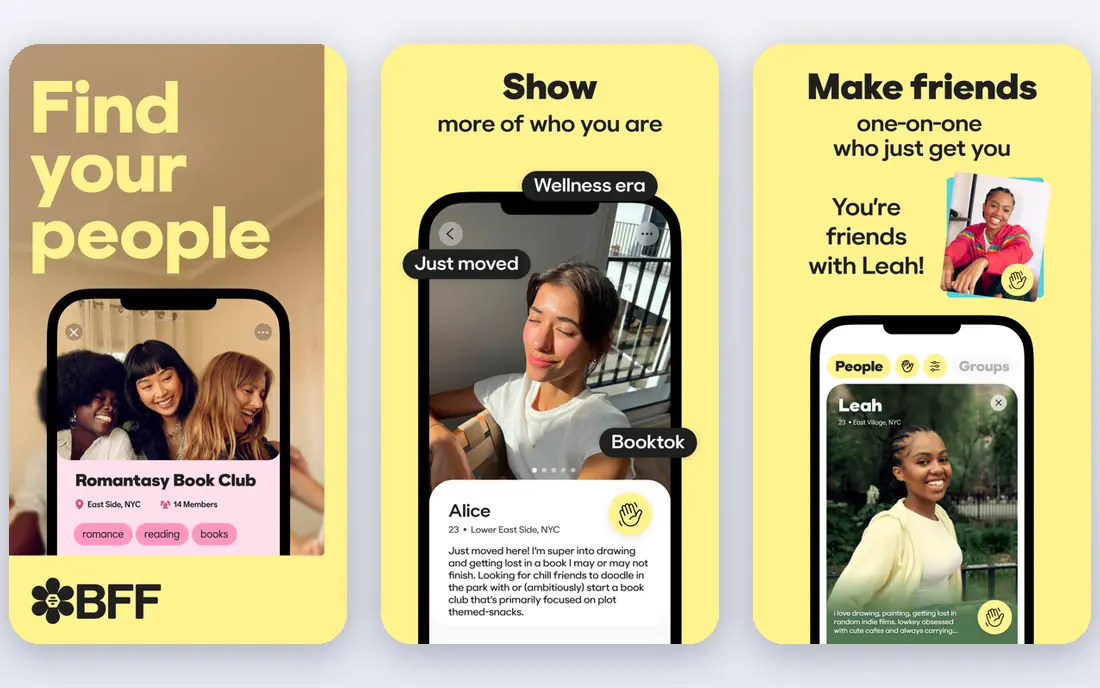
Bumble For Friends is a standalone friendship app from Bumble, relaunched in 2025 with groups alongside one-on-one chats. You build a profile around interests, swipe through nearby people, and chat when you both show interest. That familiar flow helps people who already understand dating apps but want platonic connections only.
The app is free to download and use, with optional in-app purchases for extra features. In the US, recent listings describe the core features as free, though paid options still exist in some regions. As with any swipe app, results depend on how many active users live near you, so check activity in your city before judging it on one quiet week.
- Dedicated friendship mode
- Profile verification options
- Groups alongside one-on-one chats
- Paid upgrades for extra features
- Match quality varies by city
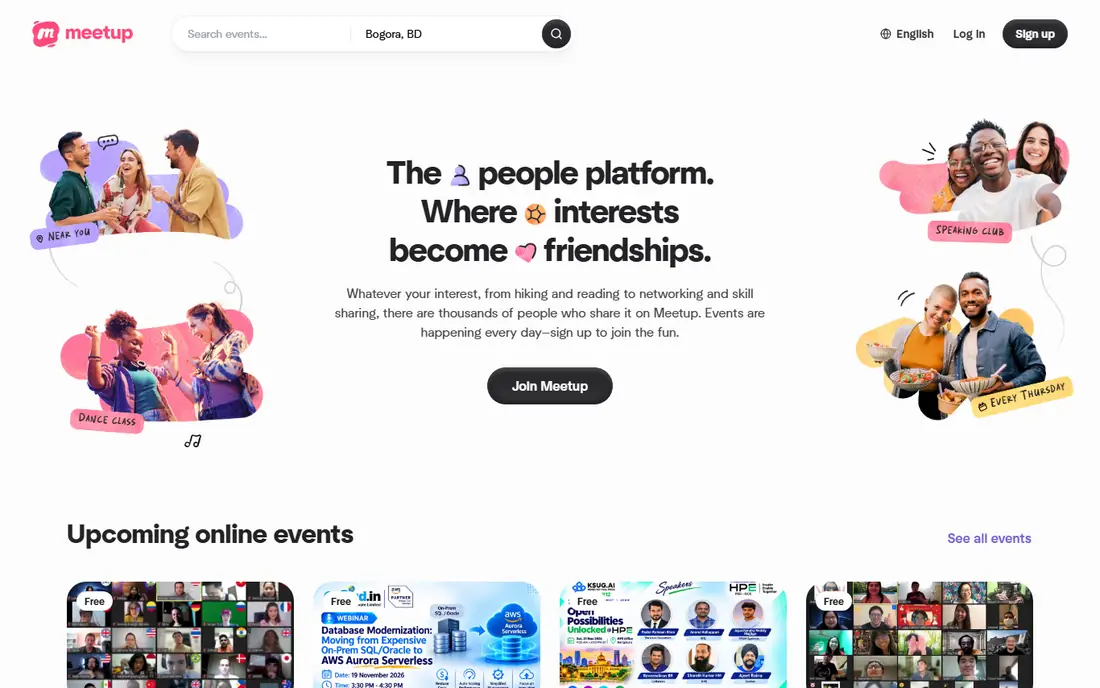
Meetup remains the best option for people who prefer activities over profiles. You join groups for hiking, books, board games, language practice, or professional networking, then attend events in person. Seeing the same group week after week is one of the most reliable ways to turn acquaintances into friends, since familiarity grows with repetition.
Most groups are free to join, though some events charge to cover venue or materials costs, and organisers pay to run groups. That cost model means popular groups in large cities are well run, while smaller towns may have fewer choices. If you are new to a city, join two or three groups and attend each more than once before deciding.
- Widest range of groups
- Recurring events build familiarity
- Most groups are free to join
- Some events charge a fee
- Group quality varies by organiser
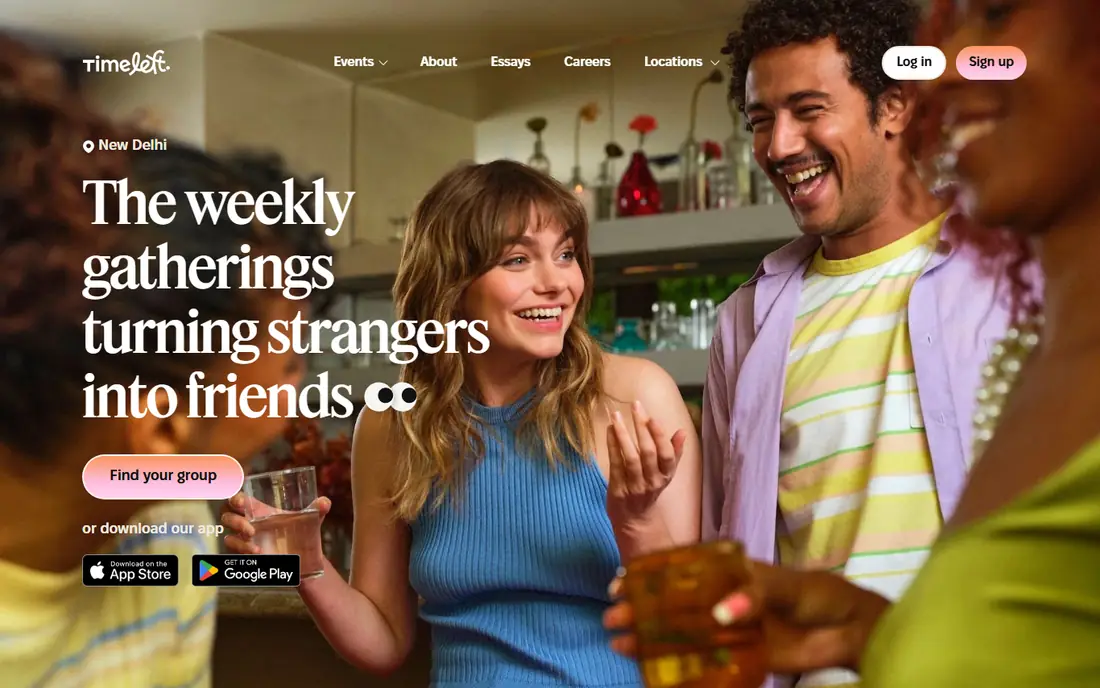
Timeleft removes the hardest part of friendship apps: turning a chat into a plan. You take a short personality quiz, choose preferences for neighbourhood, language, diet, and budget, and Timeleft matches you with five strangers for dinner at a chosen restaurant. An icebreaker game helps the table talk, and you can stay in touch if interest is mutual.
You need a subscription or ticket before booking, and prices vary by country, plus you pay for your own meal. That cost is a barrier for some, but it also filters for people who will actually show up. If endless messaging puts you off, Timeleft is the most direct route to a real conversation.
- No swiping or endless chat
- Curated dinner groups
- Women-only tables in select cities
- Subscription or ticket needed
- You pay for your own food and drinks
Slowly brings back pen friends for phones, with letters that take time to arrive based on distance between writers. You match on interests and language, use a nickname and avatar, and write thoughtful letters without pressure to reply at once. That slower pace suits introverts, language learners, and people who value writing over small talk.
Unlimited letters are free, with optional premium features for extra stamps and features. The obvious limit is speed: if you want a local friend this weekend, Slowly will not help. If you want a global friend and enjoy writing, it is one of the most distinctive and calm friendship apps available.
- Letter-based, low-pressure contact
- No real names or photos required
- Free unlimited letters
- Letters take hours or days to arrive
- Not suited to fast local meetups
Patook is built only for platonic friendship, with a points-based filter system that lets you rank interests and traits you care about. You can control who sees your profile, including by gender or by score, and the app uses mutual ratings to suggest compatible matches. That focus helps people who want clear boundaries from the start.
The user base is smaller than mainstream apps, so matches depend heavily on your city. The interface is functional rather than modern, which may put off users who expect a polished design. If a strictly platonic space matters more to you than a huge user count, Patook is worth trying alongside a larger app.
- Strictly platonic focus
- Detailed interest filters
- Privacy controls for who sees your profile
- Smaller user base than Bumble or Meetup
- Interface feels older
Nextdoor connects people in the same neighbourhood, which makes it useful for local groups, events, recommendations, and casual introductions. You can join interest groups, post about a local walk or coffee meet, and meet people who live close enough to see again easily. That local focus is a real advantage over apps that match across a whole city.
Nextdoor is not a friendship app in the strict sense, and neighbourhood feeds can include complaints and local news alongside social posts. Use groups and events rather than the main feed for friendship, and keep early meetups public. For newcomers who want to feel part of a neighbourhood, it is a useful second app.
- Local neighbours and groups
- Useful for events and recommendations
- Free core use
- Not designed only for friendship
- Neighbourhood tone varies widely
Friender matches people on activities they want to do together, such as sports, food, travel, or creative hobbies, rather than on looks or long bios. That activity focus gives you a natural first plan, which is often the hardest part of making a new friend. Profiles are simple, and the core app is free to use.
As a smaller app, Friender works best in cities with enough active users, and it may feel quiet elsewhere. Treat it as a complement to Meetup or Bumble For Friends, not as your only option, until you see real activity near you. If you know what you want to do but not who to do it with, Friender matches that need directly.
- Matches on shared activities
- Simple profile setup
- Free core use
- Smaller user base
- Availability varies by city
Meet5 organises group activities for adults who want to meet people without one-on-one pressure. You join activities that interest you, meet a group in person, and decide afterwards who you want to stay in touch with. Many activities are free, with a paid plan for private messages and extra features.
Coverage is strongest in some European cities and growing elsewhere, so check your city before relying on it. The group format suits people who feel awkward about one-on-one first meetings, since the activity carries the conversation. If group outings feel safer and more fun than private chats, Meet5 is a strong pick.
- Group activities without pressure
- Many activities are free
- Paid plan for private messages
- Coverage varies by country and city
- Private messaging needs a paid plan
Peanut is a friendship app for mothers, with swiping, groups, and community features that connect women at similar stages of motherhood. That shared life stage helps conversations start quickly, since sleep, childcare, work, and local schools are common ground. The app is free with an optional paid tier for extra features.
The focused audience is both its strength and its limit: it is not a general friendship app for everyone. For mothers who want friends who understand their daily life, that focus is exactly the point. As with all apps in this list, keep first meetups public and share plans with someone you trust.
- Built for mothers at similar life stages
- Groups and community features
- Free core use
- Focused audience only
- Optional paid tier for extra features
How we picked these
We compared official app pages, app store listings, and recent friendship app guides, and we kept only live, legitimate apps with a clear platonic or group focus. We excluded Hey VINA, which recent reporting describes as closed, since a closed app cannot match new users. We did not list dating apps as friendship apps, and we noted where prices vary by region or require a subscription for full use.
How to stay safe meeting new friends
Meet in a public place for the first few times, such as a cafe, park, or group event, and tell a trusted person where you are going and when you expect to be back. Do not share your home address, workplace details, or financial information early, and do not share photos or details that identify children. If a conversation feels pushy, sexual, or focused on money, end it and use the app report and block tools.
Trust the pace that feels right. A good new friend will accept a public meeting, a group setting, and a slow start. You do not owe anyone a private meeting, a ride, or personal details to prove you are friendly. Apps can introduce people, but your own boundaries decide whether a connection becomes a friendship.
Frequently asked questions
What is the best app to meet new friends?
Bumble For Friends is best for chatting first, Meetup is best for recurring groups, and Timeleft is best for skipping chat and meeting for dinner. The best app depends on whether you prefer profiles, groups, or a planned activity.
What is the best app for finding friends as an adult?
Meetup and Bumble For Friends are the most reliable starting points for adults, because they have the largest active user bases in many cities. Add a group activity app such as Meet5 if one-on-one chats feel awkward, and attend events more than once.
Are friendship apps safe?
They can be, if you use them carefully. Meet in public, do not share personal details early, tell someone you trust about plans, and use verification, reporting, and blocking tools. Avoid anyone who pressures you to meet privately, share money, or move off the app quickly.
Are there free friendship apps?
Yes. Bumble For Friends, Meetup, Slowly, Patook, Nextdoor, Friender, Meet5, and Peanut all offer free core use, though some charge for extra features. Timeleft is the exception in this list, since it needs a subscription or ticket before booking.
How do I turn an app match into a real friendship?
Suggest a specific, low-pressure plan soon, such as coffee or a group event, and follow up after you meet. Show up more than once, since friendships grow from repeated contact, not a single good chat. Keep expectations realistic: not every match will become a close friend, and that is normal.
Sources
See where you really rank - block by block
ProMapRanker scans Google Maps across a grid of your service area. Simple monthly plans from $19, white-label on every plan.
Start freeKeep reading
 zscaler alternatives
Best Zscaler Alternatives in 2026
Looking for zscaler alternatives? We compare 9 SASE and zero trust platforms on architecture, data protection, pricing, and fit for your network and team.
Read → zapier alternatives free
Best Zapier Alternatives Free in 2026
Nine automation tools for zapier alternatives free in 2026, all with genuinely free tiers, plus free plan limits, starting prices and upgrade paths explained.
Read → which platform is best for online reputation
Which Platform Is Best for Online Reputation in 2026
Wondering which platform is best for online reputation? We compare 8 review, listing, and response tools for small and multi-location businesses and agencies.
Read →