 ProMapRanker
Best Friends App in 2026: 9 Apps Compared

Key takeaways
- Bumble For Friends suits one-to-one friend matching, while Meetup suits joining groups around a shared interest.
- Patook is built only for platonic friendship, with a strict no-flirting policy.
- Nextdoor helps you meet neighbours, not just online contacts, but friendship is not its main product.
- Meeting in public, telling a friend where you are going, and keeping personal details private are the core safety habits.
- The app that works is the one with active people near you, so check local activity before paying for extras.
Quick comparison
| Pick | Great for | Pricing starts at | Free tier | |
|---|---|---|---|---|
 Bumble For Friends | One-to-one matching | Free | Yes | Visit |
 Meetup | Group activities | Free | Yes | Visit |
 Friended | Matched chat | Free | Yes | Visit |
 Patook | Strictly platonic matching | Free | Yes | Visit |
 Nextdoor | Neighbours | Free | Yes | Visit |
 Peanut | Moms nearby | Free | Yes | Visit |
 Timeleft | Group dinners | See website | No | Visit |
 Hey VINA | Women friendships | Free | Yes | Visit |
 Slowly | Pen pals and letters | Free | Yes | Visit |
The best friends apps
Our pick for most people is Meetup if you like group activities, or Bumble For Friends if you prefer one-to-one matching first. Every app below is built for friendship or community, not dating.
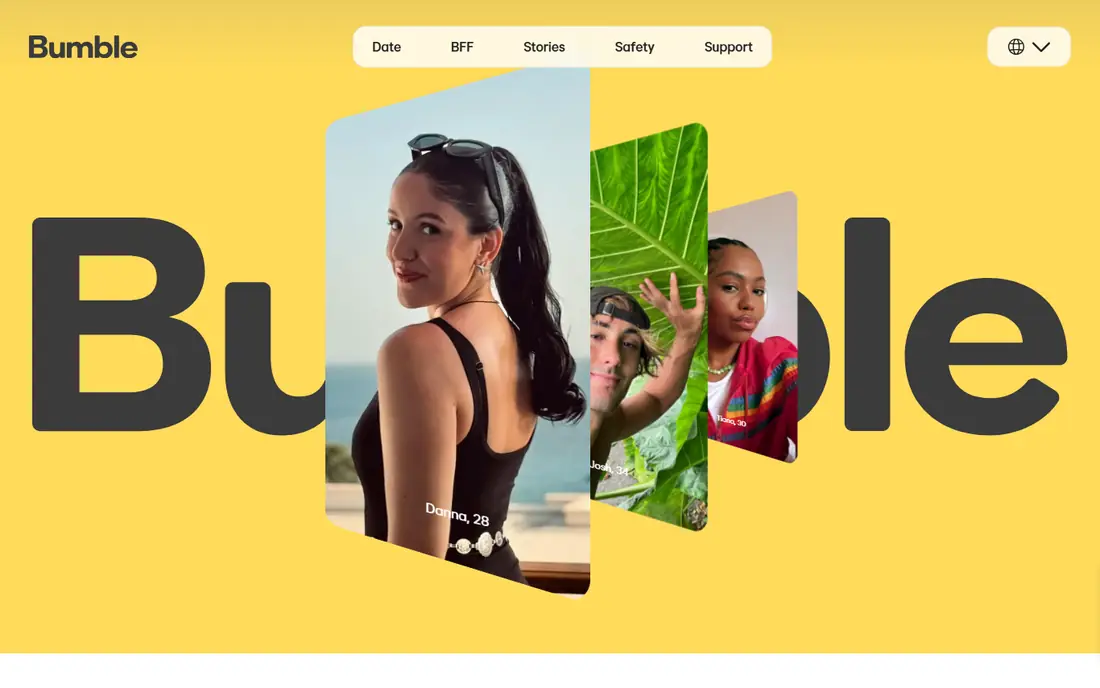
Bumble For Friends, formerly called Bumble BFF, is the friends-only mode inside Bumble. You build a friend profile, swipe on people looking for friends, and chat only after a mutual match. That structure suits adults who want one-to-one friendship and prefer to chat a little before meeting.
The catch is local density. In large cities, matches come quickly, while in smaller towns the pool can feel thin. Premium features add filters and boosts, but core matching is free. If you like the swipe format and want a clearly platonic space, Bumble For Friends is the easiest place to start.
- Friends-only mode separate from dating
- Mutual match before chat
- Interest filters
- Success depends on local users
- Premium features tempt frequent upsells
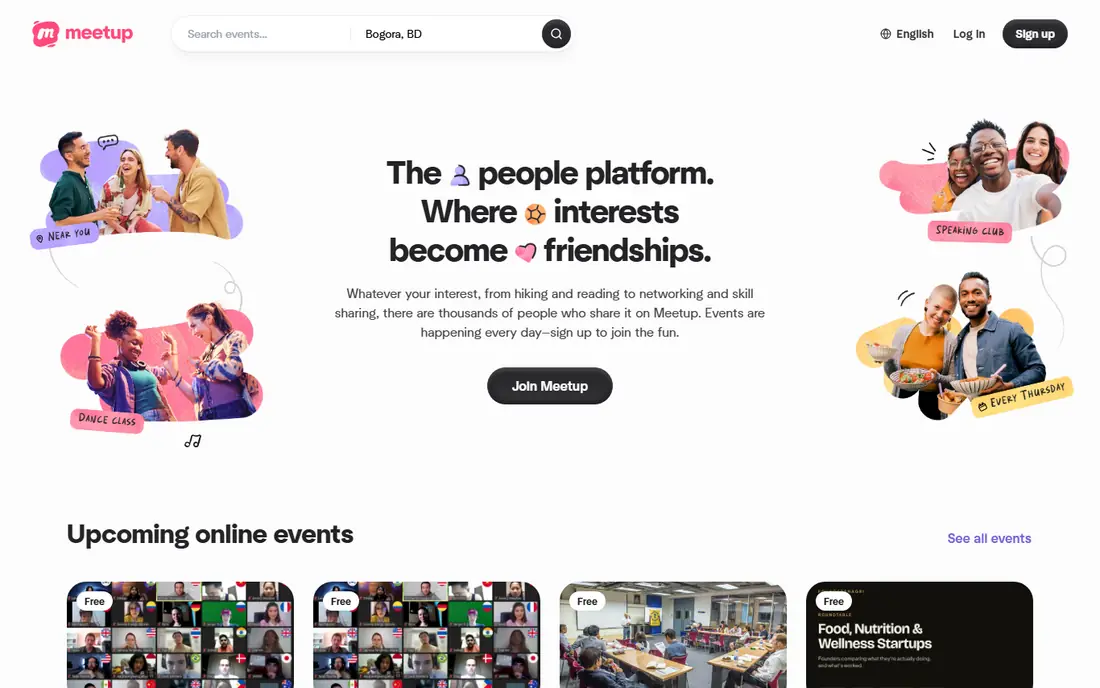
Meetup remains the strongest app for turning a shared interest into a real friendship. You join groups for hiking, board games, book clubs, cooking, language practice, or professional networking, then show up to regular events. Seeing the same people week after week builds familiarity in a way that chat-only apps cannot match.
Some groups charge small event fees, and organizer quality varies, so try more than one group before judging Meetup as a whole. Attending is free for most groups, and the app itself is free to join. If you prefer meeting people through an activity rather than a profile, Meetup is the top pick.
- Huge range of local groups
- Regular meetings build real friendships
- Events for every interest
- Some groups charge event fees
- Quality varies by organizer

Friended matches people by shared interests and lets you chat after matching, with a focus on friendship rather than dating. The app suits people who like to talk first and meet later, and its interest prompts give conversations a natural starting point. Messaging after a match is free, which keeps the core experience open.
Friended has a smaller user base than Bumble or Meetup, so results depend heavily on your city. In places with an active Friended crowd, it feels personal and low pressure. In quieter areas, it works best as a second app beside Meetup.
- Chat-first matching
- Interest-based profiles
- Free messaging after a match
- Smaller user base than big apps
- Availability varies by city
Patook is the most clearly platonic app on this list, with a strict no-flirting policy and moderation to back it. Users earn points for thoughtful messages, which pushes conversation beyond a quick hello. That design suits people who want friendship without romantic crossed wires.
The user base is smaller than the big apps, and the interface is plain rather than polished. Patook also works best for people willing to chat for a while before meeting, since it is chat-first by design. If a strictly platonic space matters most to you, Patook is the right choice.
- Strictly platonic by design
- Points reward real conversation
- Clear moderation rules
- Smaller user base
- Interface is plain
Nextdoor connects you with verified neighbours in your area, which makes it useful for meeting people on your street and learning about local life. Neighbourhood groups, events, and recommendations give natural reasons to talk, and local meetups sometimes grow from those threads. For someone new to an area, Nextdoor answers the practical question of who lives nearby.
Friendship is not Nextdoor's main product, so it works best beside a friend-matching app, not instead of one. The feed can also feel noisy with lost pets, sales posts, and local news. Used with a clear purpose, such as finding a walking group or a local club, Nextdoor is a helpful free tool.
- Real neighbourhood network
- Local events and recommendations
- Free to join
- Friendship is not the main product
- Feed can feel noisy
Peanut is built for moms and moms-to-be looking for friends nearby, with matching, groups, and chat around motherhood. Shared experience makes conversation easier, from pregnancy and newborn life to school-age parenting. Groups cover topics such as work, fitness, and local outings, so friendships can grow beyond a single stage.
Peanut is by design limited to moms, so it will not suit everyone reading this list. Reach is also stronger in larger cities. For moms who want friends who understand their daily life, Peanut is the most focused app available.
- Community for moms and moms-to-be
- Groups and chat
- Local matching
- Limited to moms
- Smaller reach outside large cities
Timeleft takes a different approach. Instead of chatting for weeks, you answer a personality quiz, get matched into a small group of strangers, and meet for dinner at a set time. That in-person-first design suits people who are tired of matches that never become meetings. Groups are small, usually four to six people, which keeps conversation manageable.
Timeleft is paid, since you pay for the dinner experience, and it only runs in cities where it operates. The weekly schedule also suits people with flexible evenings more than shift workers. If you want a structured push to actually meet people, Timeleft is worth trying in a city where it runs.
- Personality-matched dinner groups
- In-person from the start
- No endless chatting
- Paid dinners
- Limited to cities where it operates
- Weekly schedule may not suit all
Hey VINA is a women-only app for making friends, with matching based on interests, life stage, and location. The women-only space suits users who want a friendship app without mixed-gender dating pressure. Profiles include prompts and interests, which give matches a clear starting point for chat.
As with all matching apps, results depend on how many users live near you. Hey VINA is women-only by design, so it will not suit everyone. For women looking for friends in a dedicated space, it is a strong, focused option.
- Women-only matching
- Interest-based profiles
- Community features
- Women-only by design
- User base varies by city
Slowly revives pen pal culture with digital letters that take time to arrive, based on distance between writers. That slow pace suits introverts and people who like thoughtful, longer messages rather than rapid chat. Matching by interests and language helps you find pen pals around the world, including people who share a hobby or a language goal.
Slowly is not a fast route to a local meetup, since letters arrive slowly by design. It suits people who enjoy writing and patience, and who want friendship that grows through letters first. As a complement to a local app such as Meetup, Slowly adds a calm, global layer to making friends.
- Letter-style pen pal matching
- Global reach
- Thoughtful slow conversation
- Letters take hours to arrive by design
- Not for fast local meetups
How we picked these
We compared apps that are actively available in 2026 and built for friendship, community, or meetups, using official app pages, app store listings, and current feature descriptions. We left out dating apps, even those with a friends option buried inside dating, except where the friends mode is clearly separate. We also left out apps with a known history of unsafe or unmoderated stranger chat. Prices vary by city and plan, so check the app store listing before paying.
Meeting people safely through a friends app
Meet in public first, every time
Choose a busy public place for a first meeting, such as a cafe or a group event, and keep the first meeting short. Tell a friend where you are going, who you are meeting, and when you expect to be back. Do not share your home address, workplace details, or financial details with someone you just met online.
Trust app tools and your own judgment
Use verification, reporting, and blocking tools inside the app, and end any chat that feels pushy, asks for money, or pressures you to meet privately. A well-moderated app helps, but no app can make a stranger safe. If a profile feels fake or a conversation turns uncomfortable, block and report, then move on.
Show up more than once
Friendship grows through repeated contact, so go to the same group twice, reply to a second message, and suggest a simple follow-up such as coffee after a group event. One meeting rarely creates a close friend. Regular, low-pressure contact does, and group apps such as Meetup make that repetition easy.
Frequently asked questions
What is the best friends app?
Meetup is the best app for group activities and regular in-person meetings, while Bumble For Friends is the best app for one-to-one friend matching. Patook suits people who want a strictly platonic space. The best app for you depends on whether you prefer groups, one-to-one chats, or structured dinners.
What is the best friend finder app that is not a dating app?
Patook, Meetup, and Friended are built for friendship without a dating core. Bumble For Friends is a friends-only mode kept separate from dating inside Bumble. Check the app's stated purpose and moderation rules before you join, and avoid apps that mix dating and friendship without a clear boundary.
Are friends apps safe?
Friends apps from larger makers publish safety rules, verification, reporting, and blocking tools, which help. Your habits matter more, so meet in public first, tell a friend your plans, keep personal details private, and never send money to someone you met online. Report and block users who break the rules.
Can I make friends on an app as an adult?
Yes, many adults use friend apps after a move, a job change, or a life change. Group apps work well because shared activities give you a reason to return. Expect to try more than one group and to attend more than once before a friendship forms, since repetition builds trust.
Is Bumble For Friends free?
Core friend matching on Bumble For Friends is free, with paid features for extra filters and boosts. You can match and chat without paying, though some users choose to pay for more visibility. Start free and pay only if the app already works well in your area.
Which friends app works best in a small town?
Meetup and Nextdoor often work best in smaller places, because groups and neighbourhood networks need fewer users to feel active. Matching apps can feel thin where the user pool is small, so combine a group app with a local club, class, or volunteer group. Local activity matters more than any app ranking.
Sources
See where you really rank - block by block
ProMapRanker scans Google Maps across a grid of your service area. Simple monthly plans from $19, white-label on every plan.
Start freeKeep reading
 zscaler alternatives
Best Zscaler Alternatives in 2026
Looking for zscaler alternatives? We compare 9 SASE and zero trust platforms on architecture, data protection, pricing, and fit for your network and team.
Read → zapier alternatives free
Best Zapier Alternatives Free in 2026
Nine automation tools for zapier alternatives free in 2026, all with genuinely free tiers, plus free plan limits, starting prices and upgrade paths explained.
Read → which platform is best for online reputation
Which Platform Is Best for Online Reputation in 2026
Wondering which platform is best for online reputation? We compare 8 review, listing, and response tools for small and multi-location businesses and agencies.
Read →