 ProMapRanker
Best French Learning Apps in 2026

Key takeaways
- Duolingo is the easiest free starting point for a daily French habit, but it is not a full path to fluent conversation on its own.
- Babbel and Pimsleur suit learners who want structure or audio-first practice, while italki suits learners who need live speaking time.
- Busuu stands out for feedback from native speakers, and LingQ suits readers who want to learn from real French content.
- Prices vary by billing period and app store, so check the vendor site before you pay, and start with a free tier or trial where one is offered.
- The strongest setup for most learners pairs one daily app with regular speaking, even if that speaking is short and simple at first.
Quick comparison
| Pick | Great for | Pricing starts at | Free tier | |
|---|---|---|---|---|
 Duolingo | Daily habit and beginners | Free | Yes | Visit |
 Babbel | Structured grammar lessons | See website | No | Visit |
 Rosetta Stone | Immersion without translation | See website | No | Visit |
 Pimsleur | Audio learning and pronunciation | $20.95 per month | No | Visit |
 Busuu | Native speaker feedback | Free | Yes | Visit |
 Memrise | Vocabulary from real speakers | Free | Yes | Visit |
 italki | Live one-to-one lessons | See website | No | Visit |
 Mondly | Short daily lessons | See website | No | Visit |
 LingQ | Reading and listening immersion | See website | No | Visit |
The best french learning apps
French rewards steady, small practice more than occasional long sessions. The apps below cover different styles, from game-like daily lessons to live tutoring, so the right pick depends on how you learn and how much time you can give each day.

Duolingo is where many French learners start, and the reason is simple: it makes showing up easy. Lessons are short, the path is clear, and the free tier covers core vocabulary, sentence patterns, listening, and speaking prompts. For a beginner who has ten minutes a day, that low friction matters more than any single feature.
The honest limit is depth. Duolingo builds a foundation and keeps vocabulary fresh, but it does not replace conversation with a person or detailed grammar study. Use it as your daily base, then add speaking or reading when you are ready to move past the beginner stage.
- Free core French course
- Short lessons that fit a daily streak
- Speech and listening practice built into lessons
- Grammar explanations can feel thin
- Progress slows at intermediate level without extra speaking practice
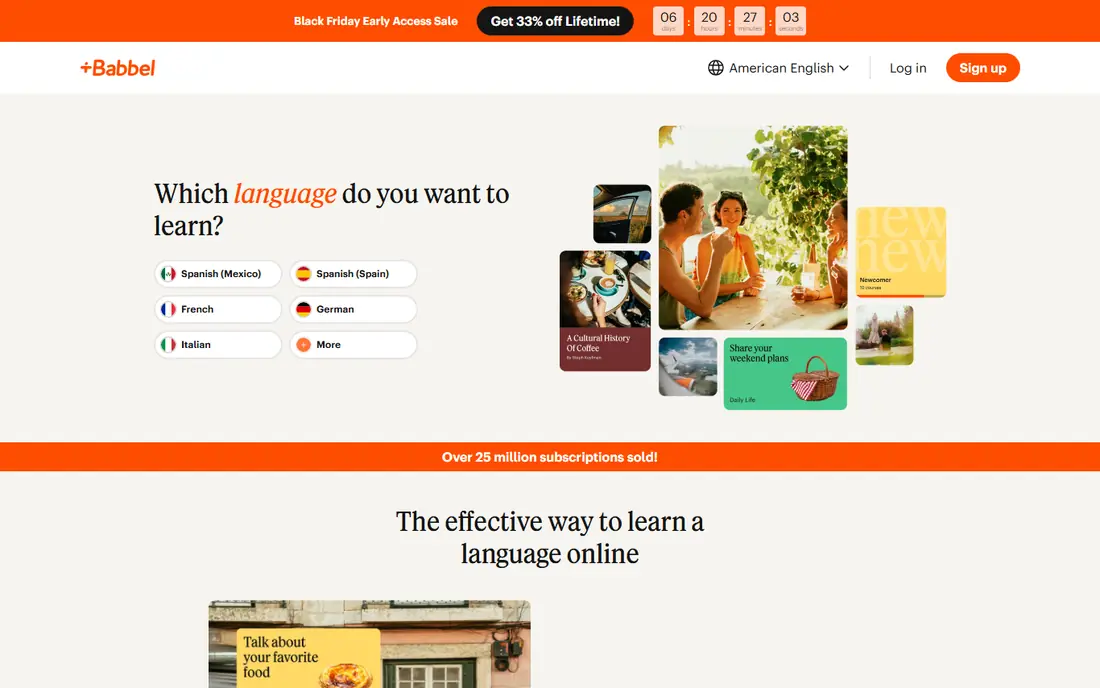
Babbel takes a more classroom-like approach than Duolingo, with lessons that explain how French sentences work instead of only drilling patterns. That structure helps learners who get frustrated when an app shows a rule without explaining it. Topics move from everyday phrases to longer conversations, and review sessions bring back older vocabulary.
The trade-off is cost and commitment. Babbel is a paid course, so it suits learners who know they want a structured path and will use it several times a week. If you only want a free taste of French, start elsewhere and return to Babbel when you are ready to pay for structure.
- Lessons built around grammar in context
- Clear progression from beginner topics upward
- Speech recognition for pronunciation practice
- First lesson of each course is free, but the full course is paid
- Less free content than Duolingo for casual learners

Rosetta Stone teaches French through pictures, audio, and matching exercises, rather than translating every phrase into English. That method trains you to link French words directly to meanings, which can help listening and recall over time. Pronunciation feedback adds a speaking check that purely visual apps lack.
The same method can frustrate learners who want to know why a sentence is built a certain way. Rosetta Stone answers that question through repeated examples, not through grammar tables. Patient learners often like that approach, while learners who want rules spelled out may prefer Babbel alongside it.
- Visual immersion method with no translation crutch
- Pronunciation feedback through speech recognition
- Offline access on paid plans
- No translation can feel slow for learners who want quick grammar explanations
- Paid plans cost more than some rivals over a year
Pimsleur is built for ears and mouths, not screens. Each lesson asks you to listen, repeat, and answer prompts aloud, which trains pronunciation and quick recall in a way that tapping answers cannot. That makes it a strong pick for commuters and for learners who freeze when they try to speak.
The limit is balance. Pimsleur alone gives you little reading, spelling, or grammar detail, so pair it with a reading or writing app if you want full coverage. As a speaking warm-up before a trip or a tutoring session, though, few apps match its focus.
- Thirty-minute audio lessons built for speaking aloud
- Strong focus on pronunciation and recall
- Works well while commuting or walking
- Audio-only format offers little reading practice
- Monthly price is higher than many app-only options
Busuu mixes structured lessons with a community feature that sets it apart: native speakers can correct your written and spoken exercises. That feedback catches errors that automated checks miss, such as word choice that is technically correct but sounds unnatural. Lessons follow a level structure, so you can see where you stand.
The free tier is useful for trying the method, but premium gives access to the full course and offline access. If speaking feedback matters to you and live tutoring feels like too much too soon, Busuu is a sensible middle step between solo app practice and a tutor.
- Free tier with core lessons
- Writing and speaking exercises reviewed by native speakers
- Lessons organized by language level
- Full premium features require a paid plan
- Community feedback quality can vary by exercise
Memrise focuses on the gap between textbook French and French as people actually speak it. Short clips show native speakers using phrases in context, which helps with listening speed and natural phrasing. Spaced repetition then brings those words back at intervals designed to strengthen recall.
Memrise works best as a vocabulary partner to a main course, not as a complete course on its own. Pair it with Babbel or Duolingo for grammar and structure, and use Memrise to build the word bank you need for real conversations.
- Short videos of native speakers in real settings
- Spaced repetition for vocabulary recall
- Free tier for core learning
- Less structured grammar teaching than Babbel
- Paid features are needed for the full experience
italki is not an app course in the usual sense. It connects you with human tutors for live video lessons, which is the fastest way to turn app knowledge into spoken French. You can book conversation practice, structured lessons, or exam preparation, and you pay per lesson rather than committing to a monthly plan.
The main work is choosing well. Read tutor profiles, watch introduction videos, and try a trial lesson before booking a block. A good tutor will correct you kindly and keep you talking, while a poor fit will feel like an expensive chat. When the fit is right, italki often does more for speaking confidence than any solo app.
- Live lessons with native French tutors
- Pay per lesson with no subscription required
- Tutor choice by price, style, and availability
- Lesson prices vary widely by tutor
- Progress depends on finding a tutor who suits you
Mondly suits learners who want quick, varied practice without a long lesson commitment. Daily lessons, vocabulary builders, and a chatbot for simple conversation keep sessions short and varied. Speech recognition gives a basic pronunciation check, and the app tracks a streak in the same way Duolingo does.
Depth is the limit. Mondly is stronger for building routine and vocabulary than for deep grammar or advanced conversation. Use it as a daily supplement, or as a first app if Duolingo's style does not appeal to you, and add a tutor or structured course when you reach intermediate level.
- Bite-size lessons with speech recognition
- Chatbot conversation practice
- Wide language catalog if you learn more than one language
- Lessons can feel shallow at higher levels
- Full access requires a paid plan
LingQ takes the opposite route from a fixed course: you read and listen to real French content, save unknown words, and review them later. That method suits intermediate learners who already know basic grammar and want to grow vocabulary through stories, news, and podcasts. The library includes content at different levels, so you can step up gradually.
Beginners may feel lost without a set lesson path, and LingQ does not teach grammar in a structured sequence. Its value grows once you can follow simple French text with help. If reading French books or articles is your goal, LingQ is one of the most direct tools for that job.
- Learn from real French articles, stories, and audio
- Click any word to save it for review
- Strong for intermediate readers
- Less guidance for complete beginners
- Interface takes time to learn
How we picked these
We compared official feature pages, pricing pages, and app store listings for widely used French learning apps and tutoring platforms, and we kept only products that offer a real French course or live French tutoring in 2026. We favored a mix of free starters, structured courses, audio methods, and live speaking, rather than listing only the best-known names. Prices shown are starting points only, since app store prices and billing periods vary, and we used See website where current vendor pricing was not consistent across sources.
How to choose the right French app
Start with your goal and your available time, not with a ranking. A traveler who needs basic phrases in a month needs a different tool from a student preparing for an exam or a professional who must hold meetings in French. Write down your goal in one sentence, then pick the app whose strength matches that sentence.
Match the app to your level
Beginners do best with a guided path such as Duolingo or Babbel, where each lesson builds on the last. Intermediate learners often gain more from LingQ, italki, or Busuu feedback, because their main need is real input and correction, not another beginner course. If you are unsure of your level, try a free tier for a week and notice where you struggle: vocabulary, grammar, listening, or speaking.
Build speaking into the plan early
Reading and tapping answers feel productive, but speaking is a separate skill that needs its own practice. Add short speaking sessions from the start, even if they are only repeating phrases aloud in Pimsleur or recording answers in Busuu. When you can afford it, a regular italki lesson, even once every two weeks, will show gaps that solo apps hide.
Keep the routine small and daily
Fifteen focused minutes a day beats two hours once a week for most learners. Pick one main app, one backup for busy days, and a review habit for words you keep forgetting. If an app stops being fun or useful, switch the main app rather than quitting French altogether, and keep the daily slot protected.
Frequently asked questions
What is the best app for learning French?
Duolingo is the best free starting point for most beginners, while Babbel suits learners who want structured grammar lessons. For speaking, italki with a live tutor usually helps more than any solo app, so the best overall setup often pairs a daily app with live practice.
What is the best app for French learning for beginners?
Duolingo and Babbel are both strong for beginners, with Duolingo offering a free core course and Babbel offering more grammar explanation. Try the free options first, then choose the style that keeps you practicing daily.
Is there good French learning software for computers as well as phones?
Yes, most apps on this list work on the web as well as on phones, including Babbel, Rosetta Stone, Pimsleur, Busuu, and LingQ. Web access helps for longer reading and typing sessions, while phone apps suit short daily practice.
Can an app alone make me fluent in French?
No app alone is likely to make you fluent, because fluency needs live conversation, listening to natural speech, and reading real French. Apps build vocabulary, grammar, and habits, and tutoring or immersion adds the speaking and listening depth that apps cannot fully provide.
How long should I practice French each day?
Fifteen to thirty minutes a day is a realistic target for most adults, with longer sessions on days when you have time. Consistency matters more than session length, so a short daily habit you keep for months beats a long habit you drop after two weeks.
Is italki worth it for French?
italki is worth it if your main gap is speaking confidence or natural conversation, since live feedback catches errors that apps miss. Start with a trial lesson, check the tutor's style and price, and book regularly only if the sessions keep you talking and learning.
Sources
- https://www.duolingo.com
- https://www.babbel.com
- https://www.rosettastone.com
- https://www.pimsleur.com
- https://www.busuu.com
- https://www.memrise.com
- https://www.italki.com
- https://www.mondly.com
- https://www.lingq.com
- https://www.italki.com/en/blog/best-online-platform-to-learn-french
- https://bestlanguageapp.com/
See where you really rank - block by block
ProMapRanker scans Google Maps across a grid of your service area. Simple monthly plans from $19, white-label on every plan.
Start freeKeep reading
 zscaler alternatives
Best Zscaler Alternatives in 2026
Looking for zscaler alternatives? We compare 9 SASE and zero trust platforms on architecture, data protection, pricing, and fit for your network and team.
Read → zapier alternatives free
Best Zapier Alternatives Free in 2026
Nine automation tools for zapier alternatives free in 2026, all with genuinely free tiers, plus free plan limits, starting prices and upgrade paths explained.
Read → which platform is best for online reputation
Which Platform Is Best for Online Reputation in 2026
Wondering which platform is best for online reputation? We compare 8 review, listing, and response tools for small and multi-location businesses and agencies.
Read →