 ProMapRanker
Best Free Online Software Development Courses in 2026

Beginners who want a full free curriculum · Pricing starts at: Free
Key takeaways
- freeCodeCamp is the best free starting point for most beginners, with a broad curriculum and free certifications earned through projects.
- Harvard CS50 gives the strongest computer science foundation, and it is free to audit, with a paid certificate optional.
- The Odin Project and Full Stack Open suit learners who want real projects and professional tooling rather than guided lessons alone.
- A certificate helps less than a portfolio, so finish projects you can show, deploy them, and keep the code public where possible.
- Pair one main course with one practice tool, such as Exercism or MDN, instead of starting five courses at once.
Quick comparison
| Pick | Great for | Pricing starts at | Free tier | |
|---|---|---|---|---|
| freeCodeCamp | Beginners who want a full free curriculum | Free | Yes | Visit |
 Harvard CS50x | Computer science foundations | Free | Yes | Visit |
 The Odin Project | Project-heavy full-stack web development | Free | Yes | Visit |
 Full Stack Open | Modern JavaScript and React development | Free | Yes | Visit |
 Khan Academy | Gentle intro to programming concepts | Free | Yes | Visit |
 MDN Web Docs Learn | HTML, CSS, and JavaScript reference learning | Free | Yes | Visit |
 Exercism | Coding practice with feedback | Free | Yes | Visit |
 Python for Everybody | A first Python course with a university structure | Free | Yes | Visit |
 Harvard CS50P | A rigorous first Python course | Free | Yes | Visit |
The best free online software development courses
These courses differ in style, from video lectures to project guides, so pick by how you learn best rather than by popularity alone.
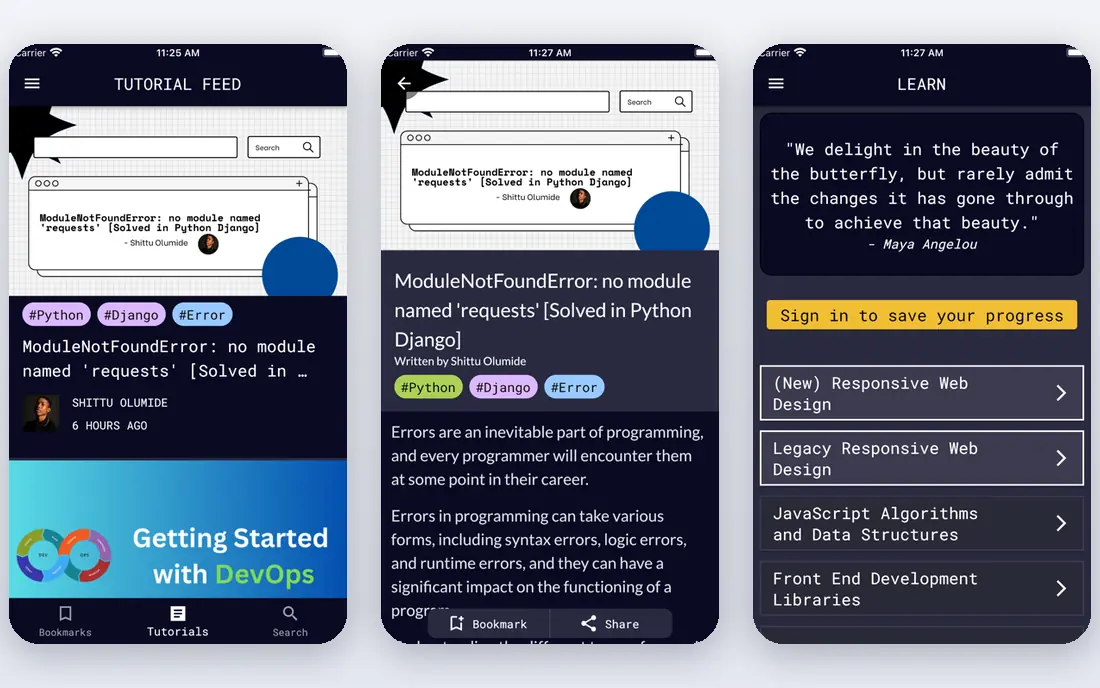
freeCodeCamp is our pick for most people starting from zero. Its curriculum covers responsive web design, JavaScript, Python, databases, back-end APIs, and more, and certifications are earned by completing projects rather than by watching videos alone. That project focus matters, because employers and clients look at finished work more than at a list of completed lessons.
The catch is discipline. There is no cohort, no tutor chasing you, and no deadline except the ones you set, so progress can stall after the early lessons feel easy. The community forum and study groups help, and pairing freeCodeCamp with a daily schedule makes a real difference. For a free, structured path with no paywall on the core material, it remains the strongest starting point.
- Fully free curriculum and certifications
- Project-based lessons
- Large community forum for help
- Self-paced format needs strong self-discipline
- Less personal feedback than a paid course
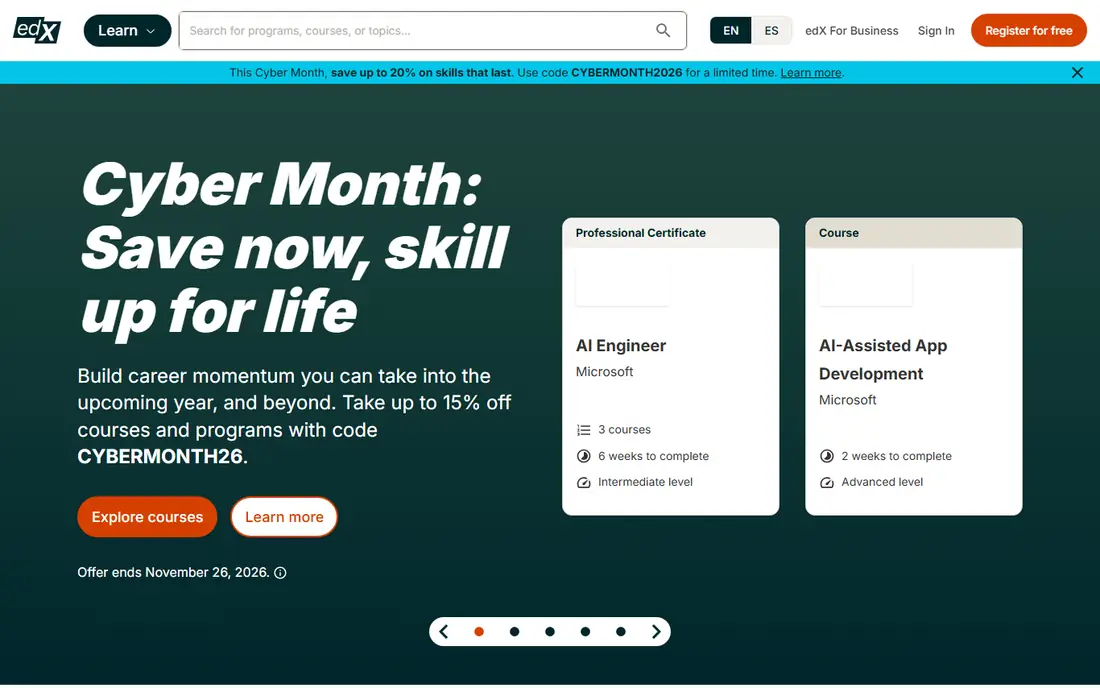
CS50x is Harvard's introduction to computer science, offered through edX, and it is the best free choice for understanding how computing works rather than just learning one language. It covers C, Python, SQL, and JavaScript, along with algorithms, data structures, and memory, which gives learners a base that transfers to new languages later. Lectures are clear and energetic, and problem sets are genuinely challenging.
That rigor is also the warning. CS50 moves fast, and the early C material trips up many beginners who expected a gentle coding tutorial. Learners who push through gain real confidence, but those who want a quick web project first may do better starting with freeCodeCamp and returning to CS50 later. Audit access is free, while a verified certificate is paid.
- Free to audit the full course
- Strong teaching on algorithms and data structures
- Respected university course
- Fast pace and hard problem sets
- Paid certificate costs extra
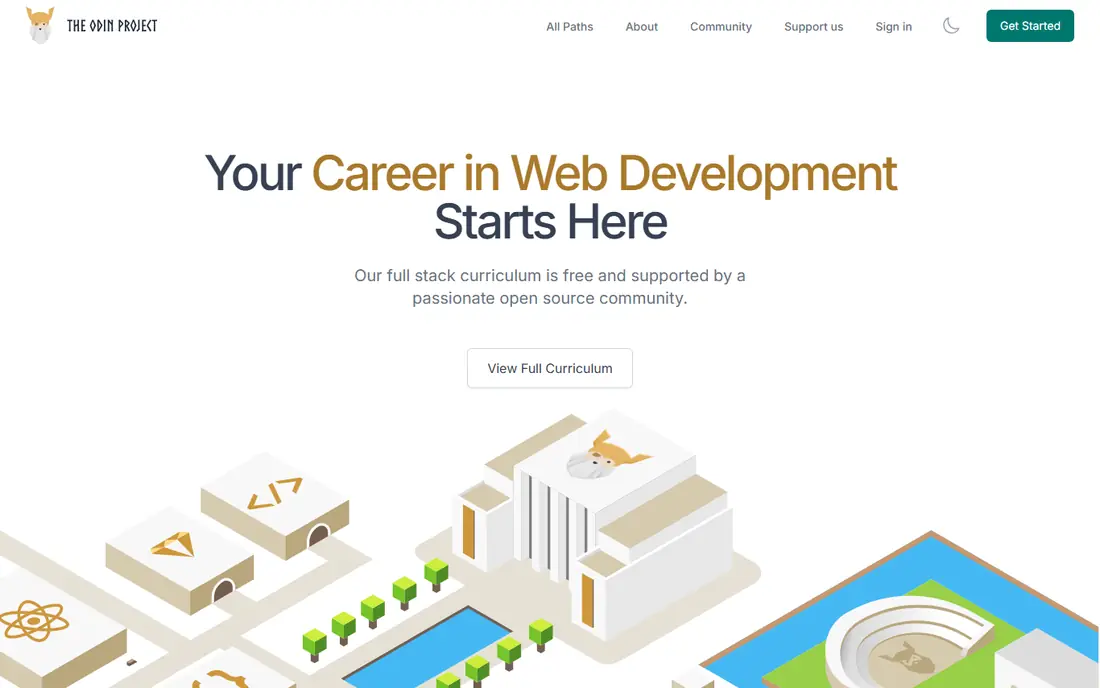
The Odin Project takes a different route from most free courses: it guides learners through official documentation and real projects rather than spoon-feeding every step. Full-stack paths cover JavaScript or Ruby, along with HTML, CSS, databases, and testing, and the projects are large enough to show in a portfolio. Learners also pick up Git and GitHub early, which mirrors how developers actually work.
That independence suits learners past the very first stage, but it can frustrate absolute beginners who want step-by-step lessons. There is no certificate, so the proof of learning is the portfolio itself. For a learner who wants to build real sites and learn to read documentation along the way, The Odin Project is one of the best free programs available.
- Fully free and open source
- Teaches Git, GitHub, and real tooling
- Portfolio-ready projects
- Less hand-holding than guided platforms
- No certificate at the end
Full Stack Open, from the University of Helsinki, teaches modern web development with React, Node.js, Express, and testing, and it is free to take online. The course is project-driven, with exercises that build toward full applications, and it covers topics that many beginner courses skip, such as state management, authentication, and testing. That depth makes it a strong second course after the basics.
It is not the gentlest first step. Learners with no programming background may find the early parts move quickly, and the course expects comfort with reading code and solving problems alone. For someone who already knows basic JavaScript and wants a modern, job-relevant stack, Full Stack Open is an excellent free choice.
- Free university course from Helsinki
- Modern React, Node, and testing coverage
- Graded exercises with feedback options
- Assumes some programming basics
- Pace and depth suit intermediate learners best
Khan Academy is a good first stop for learners who want concepts explained slowly and clearly. Its computing courses cover introductory programming with JavaScript, HTML, and CSS, plus algorithms and related computer science topics, in short videos with practice exercises. The tone is patient, which helps learners who felt rushed by faster courses.
The limit is scope. Khan Academy teaches understanding well, but it does not offer the large, portfolio-ready projects found at freeCodeCamp or The Odin Project. Use it to build confidence and fill gaps in understanding, then move to a project-heavy course for the work you will show to others. As a free supplement, it is hard to fault.
- Completely free
- Short, clear videos
- Practice exercises for programming and computer science topics
- Less depth than dedicated coding platforms
- Fewer large portfolio projects
MDN Web Docs Learn
Great for: HTML, CSS, and JavaScript reference learning
MDN Web Docs is the reference most working web developers turn to, and its Learn section turns that reference into guided pathways for HTML, CSS, and JavaScript. The material is accurate, current, and written for real browser behavior, which makes it a reliable place to check how a feature actually works. It pairs well with any project course, because every project eventually raises a question that MDN answers clearly.
MDN is not a bootcamp, and it does not hold your hand through a full career path. Learners who want lessons, quizzes, and certificates will prefer freeCodeCamp or Codecademy. For learners who want trustworthy explanations while they build, MDN belongs in the daily toolkit, and it costs nothing to use.
- Free and maintained by Mozilla
- Accurate, detailed web documentation
- Learning pathways for core web skills
- Reference style suits self-directed learners
- No certificates or cohort support
Exercism fills a gap that courses leave open: deliberate practice. Its tracks cover many languages, with small exercises that build from basics to harder problems, and community mentoring offers feedback on solutions. That feedback loop helps learners spot habits that a solo course would miss, such as unclear naming or needless complexity.
Exercism alone will not teach a full software development path, since it focuses on exercises rather than large projects or career guidance. It works best as a second tool next to a main course, used for thirty minutes a day to build fluency. For free, focused practice with human feedback, it is one of the best options in this list.
- Free practice tracks in many languages
- Mentoring and community feedback
- Short exercises that fit daily practice
- Practice tool rather than a full course
- Needs a main course alongside it for structure
Python for Everybody, from the University of Michigan on Coursera, is a well-known first Python course, and it suits learners who want a university structure without a university price. Lessons build from variables and loops to data structures, files, and databases, in a calm, clear style that works for complete beginners. Audit access lets learners watch and read the material free, though certificates and graded work require payment or financial aid.
The gentle pace is both a strength and a limit. Beginners benefit from it, while learners with some experience may want to move faster or skip ahead. For a first language, Python is a sensible choice, since it applies to back-end work, data tasks, and automation. This course remains a safe, free entry point to that path.
- University-backed Python course from Michigan
- Clear, gentle pace
- Free audit access on Coursera
- Certificate and graded assignments need payment or aid
- Pace feels slow for experienced learners
CS50P is Harvard's introduction to programming with Python, offered through edX, and it gives learners the CS50 teaching style without the early C material. It covers functions, loops, data structures, files, and libraries, with problem sets that require real problem solving rather than copying examples. For learners who want Python depth with university rigor, it is a strong free option.
Like CS50x, it is demanding, and learners should expect to spend time debugging and rethinking solutions. That effort is the point, since debugging skill transfers to every later language. Audit access is free, with a paid verified certificate optional. Pair CS50P with a project course if you also want portfolio work, since its strength is foundations rather than finished products.
- Free to audit
- Harvard teaching focused on Python
- Problem sets that build real skill
- Demanding problem sets
- Paid certificate costs extra
How we picked these
We compared official course pages, platform descriptions, and recent course listings, and we kept only courses and programs whose core material is free to access in October 2026. We favored structured paths with lessons and projects over loose video lists, and we covered different learning styles, from video lectures to project guides to practice tracks. Where a certificate or graded feature is paid, we say so, so the free label always refers to learning access rather than a certificate.
How to choose the right free course
Start with your goal. If you want web development, begin with freeCodeCamp or The Odin Project. If you want computer science depth, start with CS50x or CS50P. If you want Python for data or automation, Python for Everybody or CS50P fits. Pick one main course and commit to it for at least a month before judging it, since switching courses is the most common reason free learning stalls.
Next, build a routine that includes projects and practice. Watch or read a lesson, then write code the same day, and keep a simple log of what you finished. Use Exercism for short practice and MDN when you need a trustworthy explanation. Finally, finish projects and put them online, with a short description of what each project does and how you built it. A small set of finished projects tells a stronger story than a long list of started courses.
Frequently asked questions
What are the best online software training options that are free?
freeCodeCamp, Harvard CS50x, The Odin Project, and Full Stack Open are the strongest free options, each with a different style. freeCodeCamp suits guided beginners, CS50x suits learners who want foundations, The Odin Project suits project builders, and Full Stack Open suits intermediate JavaScript learners. Pick one main path and add practice tools around it.
What are the best online software development courses for beginners?
For complete beginners, freeCodeCamp and Khan Academy are the gentlest starts, with Python for Everybody as a good first Python course. CS50x is excellent but harder, so beginners who want a softer start can begin with freeCodeCamp and return to CS50 later. The best beginner course is the one you finish, so favor a pace you can keep daily.
What are the best software development programs for a portfolio?
The Odin Project, freeCodeCamp, and Full Stack Open produce the most portfolio-ready work, because their projects are large and realistic. Deploy finished projects, write clear descriptions, and keep the code in a public repository where possible. Three finished projects beat ten half-finished tutorials when someone reviews your work.
Are free courses enough to get a software job?
Free courses can teach the skills, but a job also needs a portfolio, interview practice, and persistence through applications. Use free courses for learning, build projects that solve real problems, and practice coding problems with tools such as Exercism. Paid bootcamps add structure and career help, but they do not replace the learning itself.
Do free courses give certificates?
Some do, and some do not. freeCodeCamp gives free certifications for completed curricula, while CS50x and CS50P offer paid verified certificates through edX, and The Odin Project gives no certificate at all. Check each platform before starting if a certificate matters to you, and remember that a portfolio often carries more weight.
What are the best software courses for learning Python free?
CS50P and Python for Everybody are the strongest free Python courses, with freeCodeCamp also covering Python in its curriculum. CS50P is more rigorous, while Python for Everybody moves at a gentler pace. Either one gives a solid base, and Exercism adds extra Python practice once the basics are in place.
Sources
See where you really rank - block by block
ProMapRanker scans Google Maps across a grid of your service area. Simple monthly plans from $19, white-label on every plan.
Start freeKeep reading
 zscaler alternatives
Best Zscaler Alternatives in 2026
Looking for zscaler alternatives? We compare 9 SASE and zero trust platforms on architecture, data protection, pricing, and fit for your network and team.
Read → zapier alternatives free
Best Zapier Alternatives Free in 2026
Nine automation tools for zapier alternatives free in 2026, all with genuinely free tiers, plus free plan limits, starting prices and upgrade paths explained.
Read → which platform is best for online reputation
Which Platform Is Best for Online Reputation in 2026
Wondering which platform is best for online reputation? We compare 8 review, listing, and response tools for small and multi-location businesses and agencies.
Read →