 ProMapRanker
Best Free Language Apps in 2026

Key takeaways
- Duolingo has the most complete free course, but ads and daily limits push regular learners toward a paid tier.
- Free apps work best in combination: one for lessons, one for speaking, and one for reading real content.
- No free app alone takes you to fluency; speaking with real people is the step most apps cannot replace.
- Check what is truly free before you commit, since several apps offer only a first lesson free and then require payment.
Quick comparison
| Pick | Great for | Pricing starts at | Free tier | |
|---|---|---|---|---|
 Duolingo | Free daily lessons and habit building | Free | Yes | Visit |
 Memrise | Vocabulary and video clips of native speakers | Free | Yes | Visit |
 Busuu | Structured lessons with community feedback | Free | Yes | Visit |
 HelloTalk | Chatting with native speakers | Free | Yes | Visit |
 Tandem | Language exchange with a partner | Free | Yes | Visit |
 LingQ | Reading and listening to real content | Free | Yes | Visit |
 Drops | Five-minute vocabulary sessions | Free | Yes | Visit |
 Clozemaster | Vocabulary in sentence context | Free | Yes | Visit |
The best free language apps
We compared official pricing pages and app store listings to find apps where a learner can make real progress without paying. The best free app to learn a language is not always the most famous one; it is the one whose free tier covers full lessons, not just a sample.
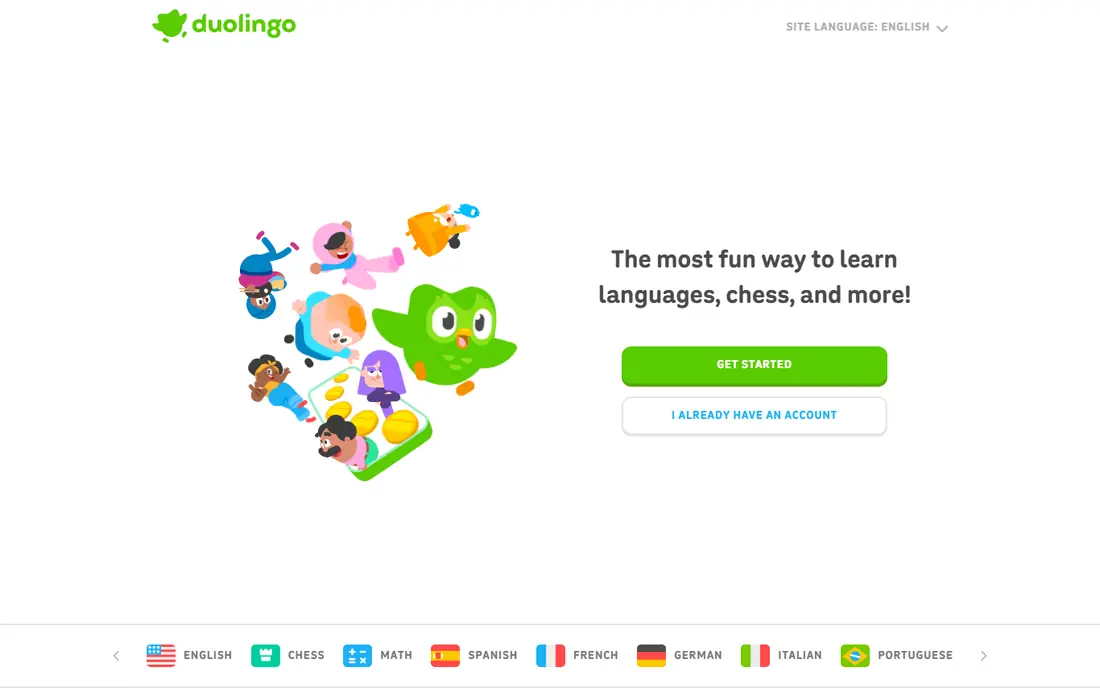
Duolingo is the obvious first install for a free learner. Core lessons are free across many languages, with short exercises, listening, and speaking prompts that fit into five or ten minutes. Streaks, leagues, and daily goals make it easier to return each day, which matters more than any single feature.
The free plan has friction by design: ads appear regularly, and an energy system limits how much you can practice after mistakes. Grammar is taught by example rather than explanation, so many learners pair Duolingo with a grammar source. Super Duolingo, at about $12.99 per month, removes ads and limits, but the free tier alone is enough to build a daily habit.
- Full courses free with ads
- Many languages
- Streaks and leagues keep habits going
- Ads and energy limits on free plan
- Light grammar explanation
- Speaking practice is limited
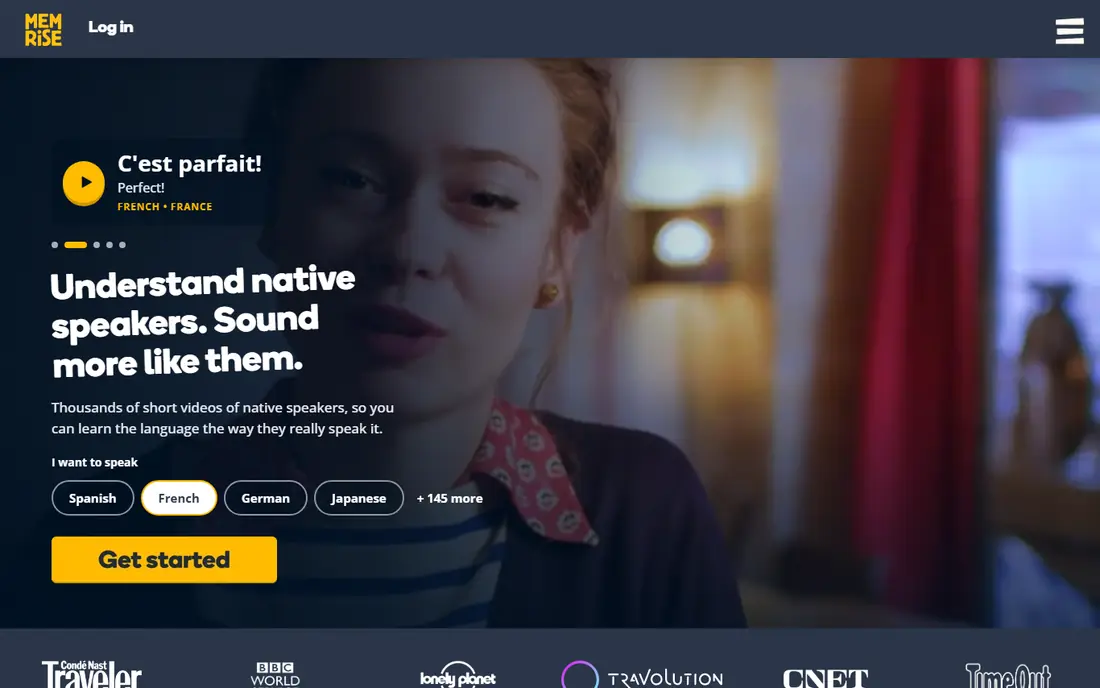
Memrise focuses on words you will actually hear, with short video clips of native speakers using phrases in context. That video angle helps with listening and pronunciation in a way that text drills cannot. Spaced repetition brings words back just as you are about to forget them, which suits vocabulary building.
The free tier is useful but not complete: deeper courses, offline mode, and some AI practice sit behind a subscription. Use Memrise free alongside Duolingo to strengthen listening and vocabulary, and do not expect it to carry a full grammar course on its own.
- Free tier with real lessons
- Short video clips from native speakers
- Spaced repetition for words
- Full courses and AI features need payment
- Less structured grammar teaching
- Some content is paid-only
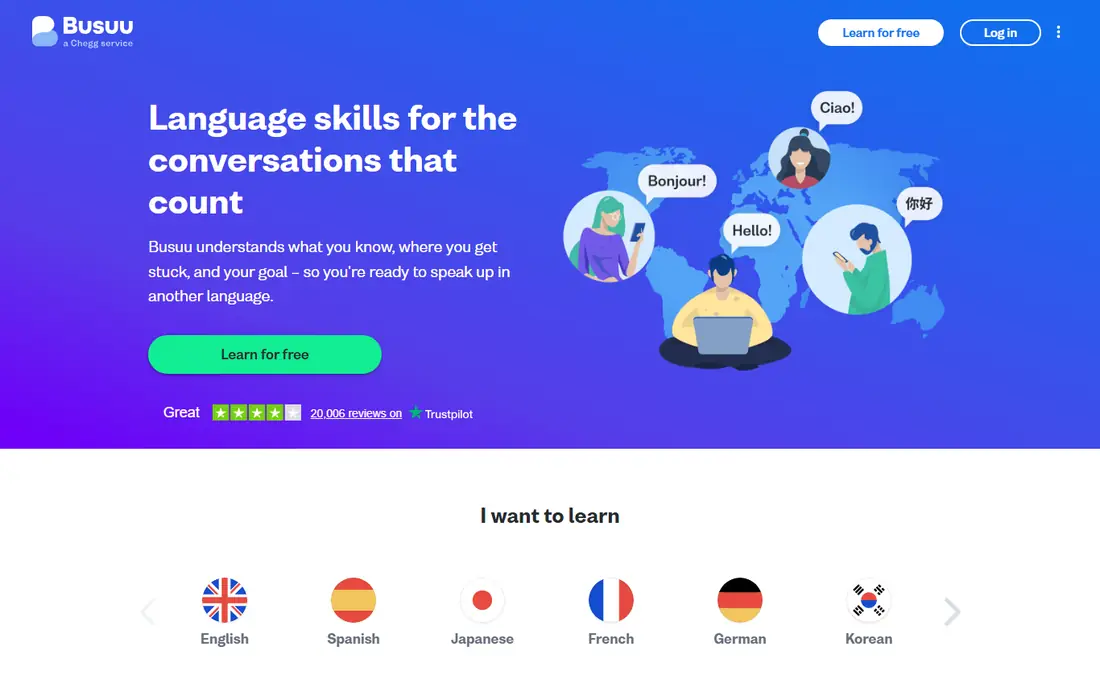
Busuu feels closer to a classroom than a game. Lessons follow a clear path, grammar notes explain the rules, and community members can correct your written and spoken exercises. That feedback loop is valuable for a beginner who wants to know why an answer was wrong, not just that it was wrong.
The catch is scope: the free tier opens only part of each course, so a committed learner will hit a paywall. Treat Busuu free as a structured supplement for grammar and corrections, and pair it with Duolingo or LingQ for volume. Paid plans start with monthly billing, so check the current price on the site before subscribing.
- Clear lesson structure
- Community corrections from native speakers
- Grammar notes included
- Free tier covers only part of each course
- Full access needs a subscription
- Fewer languages than Duolingo
HelloTalk connects learners with native speakers for language exchange, with text, voice messages, and calls built in. Translation, transliteration, and correction tools let a partner fix your sentence without leaving the chat. For speaking and real conversation, no lesson app matches a live exchange.
Partner quality is uneven, and finding a reliable, patient partner takes patience and clear expectations. Set a schedule, agree on how much time each language gets, and use the correction tools every time. The free tier covers core exchange well, while VIP adds extras such as unlimited translation and advanced search.
- Free text, voice, and call exchange
- Built-in translation and correction tools
- Large community
- Quality of partners varies
- Messaging can distract from study
- Some features need a VIP plan
Tandem takes a similar exchange approach, with profiles, matching by interest and language, and the option to book paid tutors for structured lessons. Voice and video calls make it a step closer to real conversation than text-only practice. The community skews toward serious learners, which helps if you want regular partners.
New members go through an application step, and less common languages have fewer partners. That screening is a plus for quality and a minus for speed. Use Tandem free for exchange, and consider a tutor session when you need guided speaking practice that a partner cannot provide.
- Free partner matching
- Tutor booking inside the app
- Voice and video calls
- Application and approval can take time
- Tutor sessions are paid
- Partner availability varies by language
LingQ is for learners who are tired of textbook sentences. You read and listen to real articles, stories, and podcasts, tap unknown words to save them, and review them in context later. That method builds vocabulary fast once you know basic grammar, because every word arrives inside a real sentence.
Beginners may feel lost without a structured course, and the free tier limits how many words you can save and how much you can import. Start with Duolingo for basics, then move to LingQ free when simple texts feel manageable. The shift from drills to real content is where many learners make their biggest jump.
- Real articles, podcasts, and books
- Word tracking across texts
- Free tier for basic reading
- Free tier limits saved words and imports
- Interface takes time to learn
- Beginners need guidance
Drops keeps vocabulary practice short and visual, with five-minute free sessions each day. Words are paired with illustrations and quick matching games, which suits a learner who wants a low-pressure daily habit. Topic packs cover travel, food, business, and everyday life, so you can target words you will use.
Five minutes is both the charm and the limit: it will not teach grammar, sentences, or conversation. Use Drops as a warm-up or a top-up, not as your main course. Unlimited sessions and offline access sit behind a paid plan, so check current pricing if you want more than the free daily dose.
- Free five-minute daily sessions
- Visual word learning
- Many languages and topics
- Free sessions are time-limited
- Little grammar or conversation
- Paid plan needed for unlimited use
Clozemaster fills a gap between flashcards and reading: it shows a sentence with one word missing, and you fill it in from context. That forces you to learn words as they appear in real sentences, not in isolation. Listening mode, multiple-choice mode, and text-input mode let you adjust difficulty as you improve.
It is not a course, and it will not teach you grammar rules or speaking skills. Pair it with Duolingo for structure and HelloTalk for conversation, and use Clozemaster free to lock in vocabulary. For an intermediate learner, it is one of the most efficient free tools in this list.
- Free sentence-based practice
- Many languages
- Listening and multiple-choice modes
- Not a full course
- Grammar explanation is thin
- Interface is plain
How we picked these
We compared official pricing pages and app store listings for language apps with a genuine free tier in October 2026. We favored apps where free users can complete real lessons or exchanges, not just view a sample, and we included different learning styles: lessons, vocabulary, reading, and conversation. We left out apps whose free tier is only a first lesson or a short trial. We did not claim hands-on testing; our comparison rests on vendor pages, pricing, and public reviews.
How to learn a language free without stalling
Pick one main lesson app and two supports, then stick with them for a month before adding more. A workable free stack is Duolingo for daily lessons, HelloTalk or Tandem for speaking, and LingQ or Clozemaster for vocabulary in context. Ten minutes of lessons plus ten minutes of real use beats an hour of drills alone.
Daily routine, speaking, and plateaus
Set a fixed daily time and protect it: a short session every day beats a long session once a week. When progress stalls, change the input, not the app: read a simple news article, watch a short video with subtitles, or ask a partner to correct a paragraph you wrote. If you cannot yet hold a simple conversation after a few months, add more speaking time rather than more vocabulary drills.
Frequently asked questions
What is the best free app to learn a language?
Duolingo is the best free starting point for most learners, thanks to full free courses and a habit system that keeps you returning. Pair it with HelloTalk for speaking and LingQ for reading to cover the skills Duolingo teaches lightly. No single free app covers lessons, speaking, and reading equally well.
Is Duolingo really free?
Yes, Duolingo core lessons are free, supported by ads and an energy system that limits practice after mistakes. Super Duolingo removes ads and limits, but it is not required to learn. If ads frustrate you, a short paid month can help, but the free tier remains a complete course.
Can I become fluent using only free apps?
Free apps can take you a long way, but fluency needs real conversation, reading, and listening beyond drills. Use free exchange apps to speak with native speakers, read simple books and news, and listen to podcasts in your target language. A tutor or class can speed up the final steps, but it is not required to reach a useful conversational level.
What is the best free language app for speaking?
HelloTalk and Tandem are the best free options for speaking, since both connect you with native speakers for voice and video exchange. HelloTalk has a larger community, while Tandem feels more structured. Try both free, keep the partner who corrects you kindly, and meet at a regular time.
How much time should I study each day?
Twenty to thirty minutes a day is enough for steady progress if you study most days. Split the time between lessons and real use, such as a short chat or a paragraph of reading. Consistency matters more than session length, especially in the first three months.
Sources
See where you really rank - block by block
ProMapRanker scans Google Maps across a grid of your service area. Simple monthly plans from $19, white-label on every plan.
Start freeKeep reading
 zoho inventory alternatives
6 Alternatives to Zoho Inventory, Compared on Price and Fit
Zoho Inventory alternatives: 6 tools compared on price, free plans and fit. Katana leads the list for manufacturers. Fit and flaws are laid out for each entry.
Read → zoho crm alternatives
Best Zoho CRM Alternatives (2026)
Need Zoho CRM alternatives? We compare 7 tools on cost, free access and who each suits. Every pick gets a straight assessment. Built for quick decisions.
Read → zelle alternatives
Best Zelle Alternatives in 2026
Compare the best Zelle alternatives for sending money to friends, paying sellers and moving funds abroad, with honest notes on fees, speed and safety in 2026.
Read →