 ProMapRanker
Best Free Gym Workout Apps in 2026

Key takeaways
- Nike Training Club remains the strongest fully free option, with guided workouts and no paid tier to work around.
- Hevy and Strong suit lifters who mainly want a fast, clear log, and both keep useful free tiers.
- JEFIT and Boostcamp suit gym users who want ready-made routines rather than building every session from scratch.
- Fitbod and Freeletics are worth a trial only if you want plans generated for you, since their free access is limited.
- This is general information only, not medical advice, so check with a clinician before starting a new training program.
Quick comparison
| Pick | Great for | Pricing starts at | Free tier | |
|---|---|---|---|---|
 Nike Training Club | Fully free guided workouts | Free | Yes | Visit |
 Hevy | Simple strength logging | $2.99 per month | Yes | Visit |
 JEFIT | Large exercise library | $12.99 per month | Yes | Visit |
 Strong | Minimal gym log | $4.99 per month | Yes | Visit |
 FitOn | Free classes at home or in the gym | Free | Yes | Visit |
 Caliber | Coach-designed strength plans | Free | Yes | Visit |
 Boostcamp | Proven strength programs | See website | Yes | Visit |
 Fitbod | Generated strength workouts | $12.99 per month | Free trial | Visit |
 Freeletics | Bodyweight and gym HIIT plans | See website | Yes | Visit |
The best free gym workout apps
We compared free access first, then paid prices, exercise libraries, and how each app handles gym training. Our pick for most people is Nike Training Club if cost matters most, and Hevy if logging is the main job.
Nike Training Club gives you a large library of trainer-led sessions without asking for a subscription. That makes it the easiest starting point if you want to train in a gym but do not want to plan every set yourself. You can pick a session by goal, time, and equipment, which helps on days when motivation is low.
The trade-off is control. A lifter following a strict progression plan may find the logging and load tracking lighter than in Hevy or Strong. Still, for guided work and general fitness, the free coverage is hard to beat. We would start here, then add a logging app only if you need one.
- No paid tier
- Guided strength, cardio, yoga, and mobility sessions
- Works for home and gym training
- Less detailed barbell logging than a dedicated tracker
- No custom program builder of the same depth as Hevy
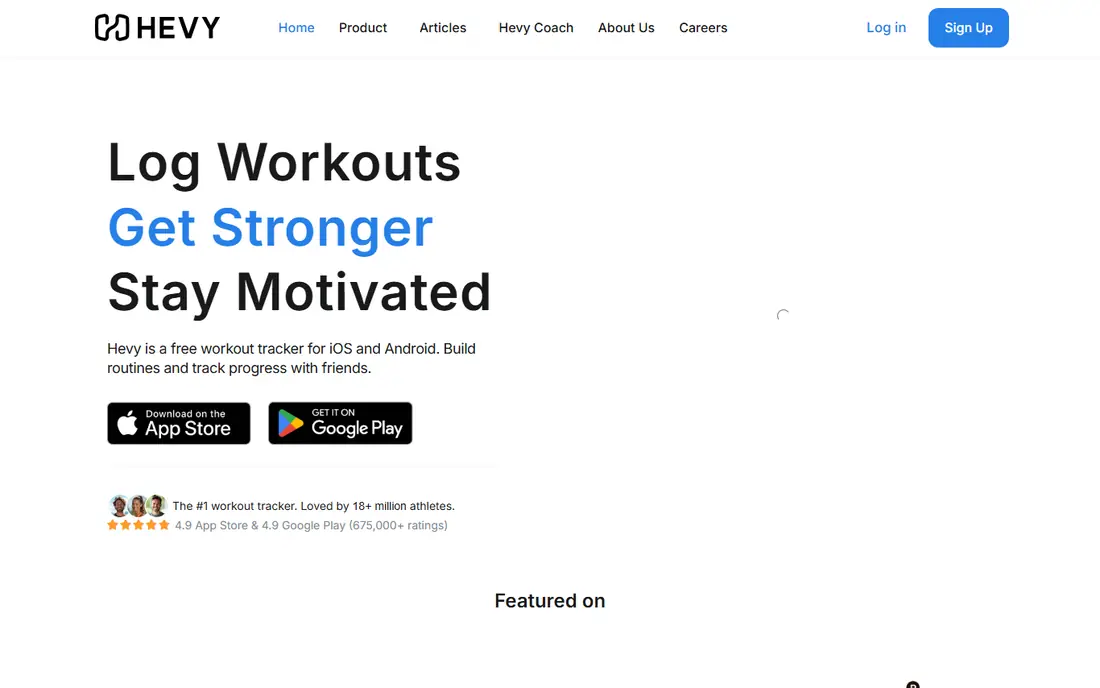
Hevy is built around one clear job: plan a routine, log each set, and see what you lifted last time. The interface stays out of the way during a workout, which matters when you are between sets with chalk on your hands. It also works on watch apps, so you can log without pulling out a phone for every set.
The free version covers the core logging well, but routine limits will push serious lifters toward Pro sooner or later. That paid tier is still low cost compared with most rivals here. If you train with barbells or machines four times a week, Hevy is our pick for logging.
- Fast routine building and set logging
- Unlimited workout logging on the free tier
- Social features for sharing routines
- Free tier caps the number of routines and custom exercises
- Advanced graphs sit behind Pro

JEFIT suits gym users who want choice. Its exercise library covers machines, cables, dumbbells, and barbells, and the demos help when you meet a machine you have not used before. You can follow a ready routine or build your own, and progress charts show whether your main lifts are moving.
Ads in the free version are the main annoyance, and Elite is pricier than Hevy Pro or Strong Pro. Even so, the free tier is usable for a full gym program. Pick JEFIT if you want the widest exercise catalog in one free app.
- Very large exercise database with demos
- Ready-made routines
- Body measurement and progress tracking
- Free version carries ads
- Some video demos and deeper features require Elite
- Interface feels busy at first
Strong takes the opposite approach to JEFIT. It does almost nothing except log workouts, and it does that job very well. You open the app, start a routine, tap each set, and move on. Lifters who already know their program will like that focus, since there is little to tap through mid-workout.
The limit is scope. Strong will not teach you a new program or coach you through a class. If you want guidance, pair it with Nike Training Club or a written program. If you want a clean log and nothing else, Strong is a strong choice.
- Very fast, uncluttered logging
- Warm-up and plate calculator features
- Long history of steady updates
- Free tier caps custom routines at three
- No guided class library
- Progression planning is manual
FitOn is a good second app for gym users who also train at home. Its free library covers a wide range of class styles, and many sessions need little or no equipment. That makes it useful for warm-ups, conditioning days, or travel weeks when you cannot reach your usual gym.
For a pure barbell program, FitOn is not a replacement for Hevy or Strong. Its strength is variety and instruction, not detailed load tracking. Use it for guided sessions, and keep a separate log if you track progressive overload closely.
- Large free class library
- Strength, HIIT, yoga, and Pilates options
- Works without gym equipment for many sessions
- Paid PRO adds features some users will want
- Class style suits guided training more than heavy barbell programs
Caliber tries to bridge guided training and logging. You get a structured strength plan rather than a blank log, and the free tier still lets you log without paying. That mix suits beginners in the gym who want direction but do not want to pay before they know the app fits.
The catch is that the fuller coaching experience is paid, and prices vary by plan. Check the current offer in the app before you commit. For a free start with real programming, Caliber deserves a place on your shortlist.
- Free tier includes unlimited logging
- Coach-designed programs
- Clear progression structure
- Coaching and premium plans add cost
- Smaller community than Nike Training Club or Hevy
Boostcamp stands out because it automates programs many lifters already know, such as 5/3/1 style progression and similar templates. You do not need to calculate each week's loads by hand, since the app handles the progression for you. That saves time and reduces errors for lifters who follow a set plan for months.
It is less of an all-purpose gym app. If you want classes, cardio, or yoga, look elsewhere. If you want to follow a proven lifting program without a spreadsheet, Boostcamp is one of the most practical free starts here.
- Runs well-known strength programs with built-in progression
- Clear session structure
- Good for intermediate lifters
- Less useful for general class training
- Some programs sit behind paid access
- Smaller exercise video library than JEFIT
Fitbod is the best fit in this list if you want the app to decide the workout for you. Tell it what equipment you have, and it generates a session that balances muscle groups and tracks what you did last time. That is helpful in a busy gym, where you may need to swap an exercise when a machine is taken.
The price is the barrier. Without a lasting free tier, you need a trial to judge it, and the monthly cost adds up over a year. Try it only if you value generated plans more than a simple log, and cancel if you find yourself ignoring its suggestions.
- Builds workouts around your equipment, goals, and recovery
- Adapts as you log
- Good gym and home coverage
- No lasting free tier beyond a trial
- Monthly price is high compared with Hevy or Strong
- Generated plans need checking for your skill level
Freeletics suits gym users who like short, intense sessions rather than long barbell workouts. Its plans give structure to HIIT, bodyweight work, and conditioning, and the coach feature adapts the plan over time. That structure helps people who train in a gym but do not follow a powerlifting program.
Barbell lifters will miss detailed logging and load progression. Check the current coach pricing before you pay, since terms vary by term length. For conditioning and general fitness, Freeletics is a useful option alongside a logging app.
- Structured HIIT and bodyweight plans
- Coach-style progression
- Works with little equipment
- Basic free version is limited
- Full coach plans are paid
- Less suited to heavy barbell tracking
How we picked these
We compared official feature pages, app store listings, and published pricing for each app, with free access as the first filter. An app made this list only if a person could train in a gym without paying on day one, either through a lasting free tier or, in Fitbod's case, a trial that lets you judge the generated plans. We left out apps that required payment before any gym workout, and we did not claim hands-on testing we did not do.
We also weighed fit for gym use. A home-only class app with no strength logging or gym equipment options would not belong here, even if it is free. That is why logging apps sit next to guided class apps in this list. Your best choice depends on which of those two jobs matters more to you.
What to check before you pick a gym app
Start with the job, not the brand. If you already have a program, a logger such as Hevy or Strong will serve you better than a class library. If you need someone to tell you what to do each day, Nike Training Club, Caliber, or Boostcamp will give you structure faster.
Check the free limits on day one
Open the app and count what matters: how many routines you can save, whether ads interrupt workouts, and whether progress history is capped. A free tier that looks generous can still frustrate you in week three, when you hit a routine limit mid-program.
Match the app to your equipment
Some apps assume a full gym, while others assume dumbbells or no equipment. Filter by the equipment you actually have, and test one session in your gym before you pay. A plan that needs machines you do not have will not survive contact with a busy gym floor.
Keep safety and progression in mind
This is general information only, not medical advice. Learn good form for barbell lifts, add load slowly, and rest between hard sessions. An app can track your numbers, but it cannot see your form or know when you are tired. If pain persists, stop and get advice from a qualified professional.
Frequently asked questions
What is the best free gym workout app?
Nike Training Club is our pick for most people who want a fully free app, since it offers guided workouts with no paid tier. Hevy is our pick if logging is the main job, since its free tier covers unlimited workout logging with routine limits.
What is the best gym trainer app for beginners?
Caliber and Nike Training Club both suit beginners, since they give structure instead of a blank log. Caliber adds coach-designed strength progression, while Nike Training Club adds trainer-led sessions you can follow step by step.
What are the best workout apps for the gym?
The best gym apps here are Hevy and Strong for logging, JEFIT for exercise choice, and Boostcamp for proven strength programs. Nike Training Club and FitOn add guided sessions for days when you want instruction rather than a log.
Is there a best app for gym workouts free that tracks barbells?
Hevy and Strong both track barbell sets well on their free tiers, with Hevy offering more social and routine features. JEFIT also tracks barbell work, and its larger exercise library helps when you try new movements.
Is Fitbod free?
Fitbod offers a trial, but it does not offer a lasting free tier like Hevy or Nike Training Club. Check the current trial length in the app store before you start, since trial terms can change.
Do I need a paid plan to train in a gym?
No. You can train in a gym with a free app, a notebook, or a written program. Paid plans mainly add unlimited routines, deeper graphs, coaching, or generated plans. Start free, find what limits you, and pay only for the limit that actually gets in your way.
Sources
See where you really rank - block by block
ProMapRanker scans Google Maps across a grid of your service area. Simple monthly plans from $19, white-label on every plan.
Start freeKeep reading
 zscaler alternatives
Best Zscaler Alternatives in 2026
Looking for zscaler alternatives? We compare 9 SASE and zero trust platforms on architecture, data protection, pricing, and fit for your network and team.
Read → zapier alternatives free
Best Zapier Alternatives Free in 2026
Nine automation tools for zapier alternatives free in 2026, all with genuinely free tiers, plus free plan limits, starting prices and upgrade paths explained.
Read → which platform is best for online reputation
Which Platform Is Best for Online Reputation in 2026
Wondering which platform is best for online reputation? We compare 8 review, listing, and response tools for small and multi-location businesses and agencies.
Read →