 ProMapRanker
Best Free CRM Alternatives to Salesforce in 2026

Key takeaways
- HubSpot offers the broadest free starting point for most small teams, while Zoho CRM gives more automation for teams already in the Zoho world.
- Free plans always have limits on users, contacts, records or pipelines, so check the limit that will hit you first.
- A free CRM still needs a clear process for leads, deals and follow ups, or it becomes another spreadsheet with a login.
- Plan the paid upgrade price for your real team size, because per user pricing multiplies fast.
Quick comparison
| Pick | Great for | Pricing starts at | Free tier | |
|---|---|---|---|---|
 HubSpot CRM | All round free starter CRM | Free | Yes | Visit |
 Zoho CRM | Value and automation for small teams | Free | Yes | Visit |
 Freshsales | Sales focused free CRM | Free | Yes | Visit |
 Bitrix24 | Free CRM plus collaboration | Free | Yes | Visit |
 EngageBay | Marketing led free CRM | Free | Yes | Visit |
 Attio | Modern CRM for startups | Free | Yes | Visit |
 Bigin by Zoho | Simple pipeline for small teams | Free | Yes | Visit |
 Capsule | Simple contact and pipeline CRM | Free | Yes | Visit |
 Agile CRM | Free CRM with marketing tools | Free | Yes | Visit |
The best free crm alternatives to salesforce
We compared official pricing pages, free plan limits and feature documentation for CRMs with a permanent free plan and are live in October 2026. Our pick for most small teams is HubSpot CRM, because its free plan covers contacts, deals, forms, live chat and email tools in one place, with a clear upgrade path as you grow.
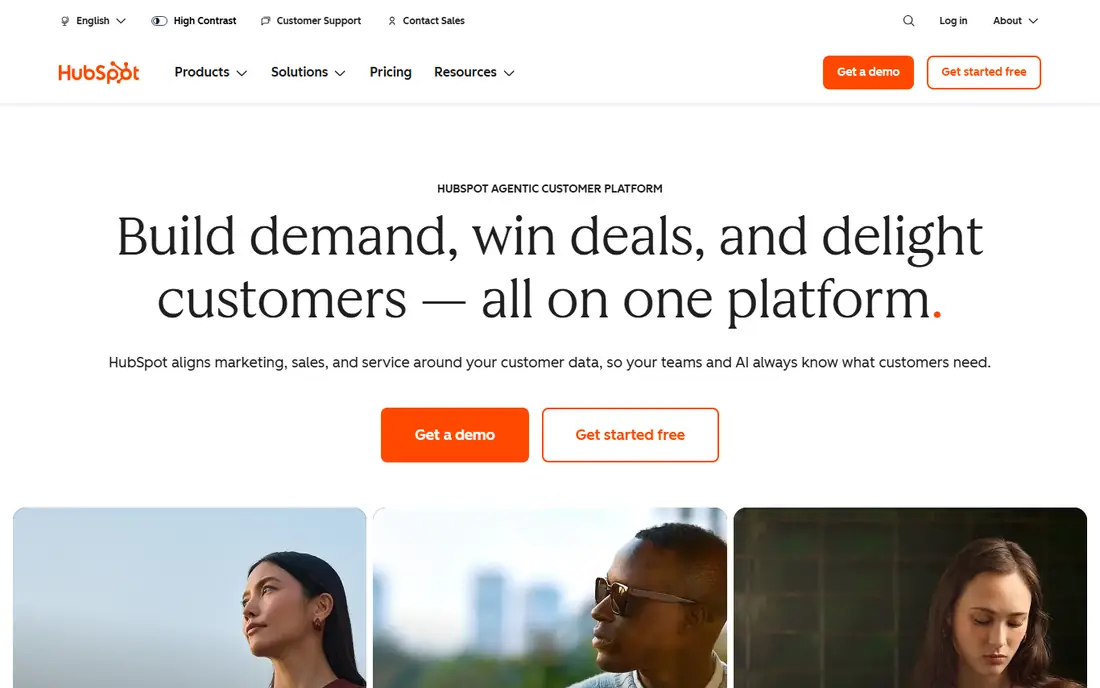
HubSpot CRM gives small teams a real pipeline without a monthly bill. You can store contacts and companies, track deals through stages, log emails and calls, build forms for your website, and add live chat, all from one account. The interface is clean, onboarding is guided, and integrations cover email, calendars and many common business tools.
The limits matter. Newer free accounts face user and contact limits that older accounts did not, and marketing automation, advanced reporting and extra pipelines sit behind paid hubs. Still, for a solo operator or a two person team starting out, HubSpot is the most complete free CRM in this list, and it scales without a migration if you grow.
- Broad free tools including deals, forms and live chat
- Large integration ecosystem
- Clear upgrade path
- Free plan has user and contact limits on newer accounts
- Paid hubs can get expensive
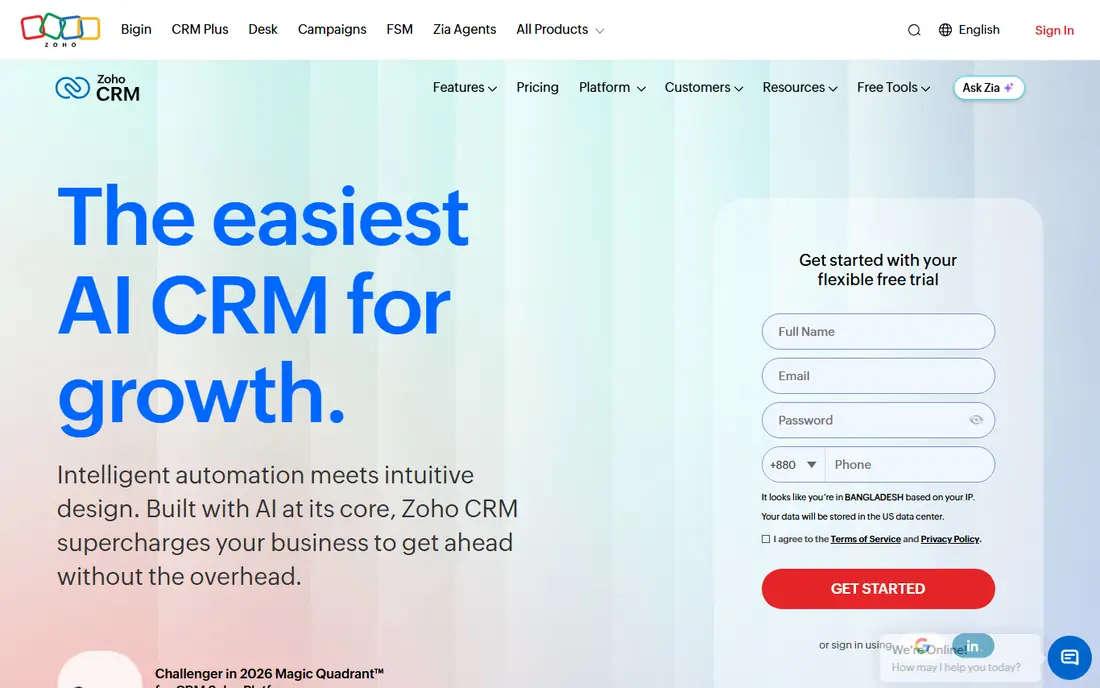
Zoho CRM free plan covers up to 3 users, with contacts, deals, tasks, workflows and webforms, which is more automation than many free CRMs offer at zero cost. Teams already using Zoho Mail, Books or other Zoho apps get shared data and a single login, which cuts duplicate entry.
The interface packs many options onto each screen, so new users need time to set up pipelines and fields cleanly. Higher editions add forecasting, advanced automation and AI assistance, and the price rises per user. For a three person team that wants real workflow automation for free, Zoho CRM is a strong pick.
- Free plan for up to 3 users
- Workflows and webforms included
- Deep Zoho ecosystem
- Interface can feel busy
- Advanced features need paid editions
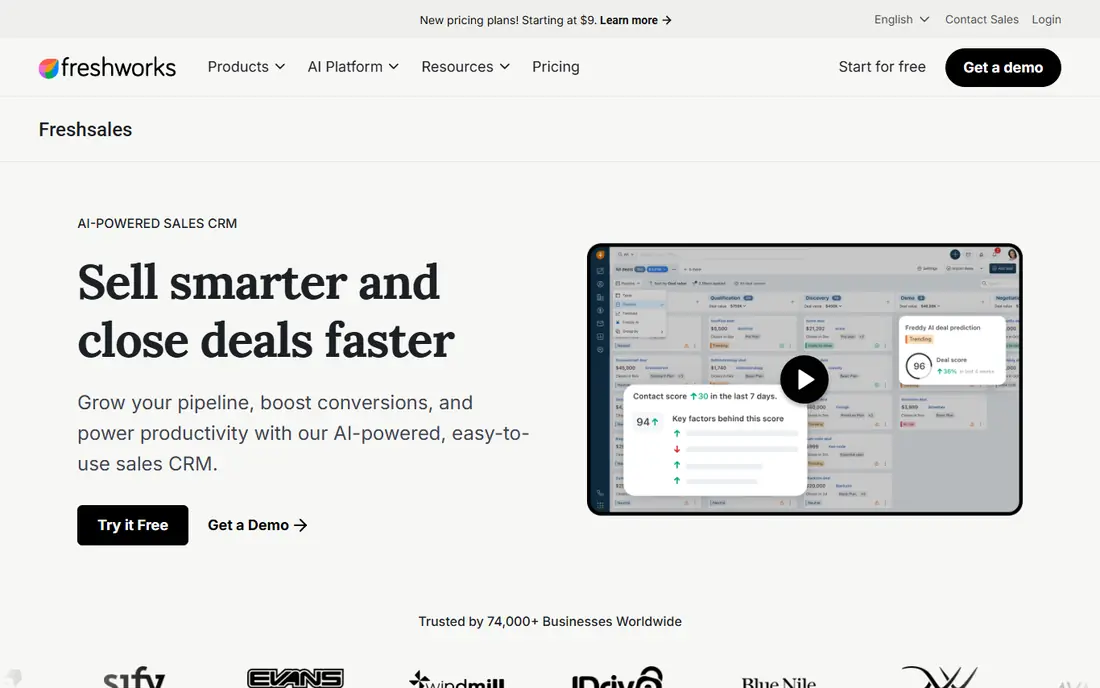
Freshsales, from Freshworks, is a sales focused CRM with a free plan for up to 3 users. It includes contact and deal management, two way email sync, a chat widget for your website and a built in phone dialer on some plans, which suits sales led teams that call and message prospects often.
Sequences, advanced workflows and AI features sit behind paid plans, and the free plan allows only a default pipeline. For a small sales team that needs a fast setup and built in calling and chat, Freshsales is a practical free starting point, with paid plans that stay reasonable at small team sizes.
- Free plan for up to 3 users
- Built in phone and chat
- Clean sales pipeline
- Advanced automation and sequences need paid plans
- Some limits on pipelines
Bitrix24 offers an unusually generous free plan, with unlimited CRM users, contacts and deals, plus tasks, projects, chat and video calls in the same workspace. Small teams can replace a CRM, a task tool and a chat tool with one account, which cuts subscription sprawl.
That breadth is also the weakness. The workspace has many modules, menus and settings, and new users can feel lost without a clear setup plan. Hide the modules you do not use, set up one pipeline well, and train the team on that workflow first. For teams that want a free all-in-one workspace, Bitrix24 is hard to match on limits alone.
- Unlimited CRM users on free plan
- CRM plus tasks, chat and projects
- Unlimited contacts and deals
- Broad workspace can feel overwhelming
- Learning curve is steep
EngageBay combines marketing, sales and support tools, with a free plan that allows up to 15 users, which is generous for a small team. You get contacts, deals, email marketing, forms and landing pages, plus basic support tools, so a marketing led business can run campaigns and follow up in one place.
The contact limit on the free plan is the main catch, at a few hundred contacts, so a growing list will need a paid plan sooner than with HubSpot or Bitrix24. For a small team with a modest list that wants marketing and sales together for free, EngageBay is a useful choice.
- Free plan for up to 15 users
- Marketing, sales and support in one tool
- Forms and landing pages
- Free plan limits contacts to a small number
- Interface less polished than HubSpot
Attio is a modern CRM built for startups and fast moving teams, with a clean interface, automatic enrichment of contact and company data, and flexible lists that can track deals, fundraising, partnerships or hiring in one place. It feels closer to a modern productivity tool than a traditional CRM, which helps adoption.
The free plan covers a small team and a limited set of objects and records, so larger teams or complex setups will need a paid plan. Integrations are growing but still fewer than HubSpot or Zoho. For a startup that values design and flexibility over a huge app marketplace, Attio is a fresh and capable free option.
- Modern interface
- Automatic data enrichment
- Flexible objects and lists
- Free plan limits users and objects
- Smaller integration list than HubSpot or Zoho
Bigin is Zoho's simple CRM for small businesses that find full Zoho CRM too much. It offers a clear pipeline, contacts, activities and basic automation in a clean interface, with a free plan for one user. Solo operators, freelancers and micro teams can track deals without learning a full CRM.
The simplicity is also the limit. Reporting, automation and customisation are lighter than Zoho CRM, and Bigin is not built for large, multi team sales operations. If you want a pipeline you can set up in an afternoon and actually use daily, Bigin is a good fit. If you need deep automation, start with Zoho CRM instead.
- Very simple pipeline setup
- Free for one user
- Good for solo operators and micro teams
- Limited automation and reporting
- Not built for large sales teams
Capsule is a straightforward CRM focused on contacts, pipelines and history. You can see every email, call, task and deal for a contact in one timeline, set up a simple sales pipeline, and get started without a long implementation. The free plan covers up to 2 users, which suits a founder plus one colleague.
Marketing automation, advanced workflows and deeper integrations need paid plans, and Capsule is not a marketing platform in the HubSpot sense. For a small team that wants a clean, reliable record of customers and deals, Capsule is a calm and effective choice.
- Simple and fast to learn
- Free plan for up to 2 users
- Good contact history
- Fewer marketing tools than HubSpot
- Paid plans needed for deeper automation
Agile CRM offers a free plan for up to 10 users, with contacts, deals, email marketing, landing pages and basic automation in one account. That user limit is generous, and the marketing tools help small teams run campaigns without a separate email platform.
The interface feels dated next to HubSpot and Attio, and the product has seen less visible development than larger rivals. For a budget team that needs many free seats and basic marketing automation, Agile CRM is still a workable choice, provided you trial it with your real workflow first.
- Free plan for up to 10 users
- CRM plus email marketing and automation basics
- Social integration
- Interface feels dated
- Support and updates are less frequent than larger rivals
How we picked these
We compared official pricing pages and free plan documentation for CRMs with a permanent free plan, not only a trial, and are live in October 2026. We excluded Salesforce itself, since this article covers alternatives to it, and we kept only tools with a usable free pipeline for contacts and deals. Where free limits varied by account age or region, we noted the published limit and advised checking the current account terms.
What to check before you buy
Check the free limit that will hit you first: users, contacts, records, pipelines or emails per month. A plan that allows many users but few contacts can be worse than a plan with fewer users and more contacts, depending on your list size. Test imports with your real contact file, including duplicates and custom fields, before you commit the team.
Set up one pipeline that matches how you actually sell, with stages your team can explain in plain language. Add tasks and follow up reminders for every open deal, and review the pipeline weekly for the first month. Finally, price the paid plan for your team size in twelve months, so a free start does not turn into a surprise bill when you add staff.
Frequently asked questions
What are salesforce free crm alternatives?
HubSpot CRM, Zoho CRM, Freshsales, Bitrix24, EngageBay, Attio, Bigin, Capsule and Agile CRM are all salesforce free crm alternatives with permanent free plans. HubSpot suits most teams, Zoho CRM suits automation led teams, and Bitrix24 suits teams that want unlimited free users.
What is the best free CRM for a small business?
HubSpot CRM is the best free CRM for most small businesses, because it covers contacts, deals, forms, live chat and email tools at no cost, with a clear upgrade path. Zoho CRM is a close second for teams that want more free automation, and Bitrix24 is best if you need many free users.
Does HubSpot CRM really stay free?
Yes, HubSpot CRM has a permanent free plan, not only a trial, though newer accounts face user and contact limits. Paid hubs add marketing automation, advanced reporting and extra pipelines, but core contact and deal tracking remain free.
How many users can use a free CRM?
It varies widely. Bitrix24 allows unlimited CRM users on its free plan, EngageBay allows up to 15, Agile CRM allows up to 10, Zoho CRM and Freshsales allow up to 3, and HubSpot, Bigin and Capsule allow 1 or 2 users on free plans. Check the current limit for your account before you invite the team.
When should I pay for a CRM?
Pay when you hit a free limit that blocks real work, such as user or contact caps, or when you need automation, sequences, advanced reporting or extra pipelines that save staff time each week. Price the paid plan for your full team, not only for the users who hit the limit first.
Sources
See where you really rank - block by block
ProMapRanker scans Google Maps across a grid of your service area. Simple monthly plans from $19, white-label on every plan.
Start freeKeep reading
 zscaler alternatives
Best Zscaler Alternatives in 2026
Looking for zscaler alternatives? We compare 9 SASE and zero trust platforms on architecture, data protection, pricing, and fit for your network and team.
Read → zapier alternatives free
Best Zapier Alternatives Free in 2026
Nine automation tools for zapier alternatives free in 2026, all with genuinely free tiers, plus free plan limits, starting prices and upgrade paths explained.
Read → which platform is best for online reputation
Which Platform Is Best for Online Reputation in 2026
Wondering which platform is best for online reputation? We compare 8 review, listing, and response tools for small and multi-location businesses and agencies.
Read →