 ProMapRanker
Best Foraging Apps for Plant Identification Free in 2026

Key takeaways
- PlantNet, iNaturalist, Seek, Google Lens and Flora Incognita all offer genuinely free identification, with no paid plan needed for core use.
- PictureThis and PlantSnap offer a free tier, but their full features and unlimited scans sit behind paid plans.
- No app guarantees safe identification, and no one should eat a wild mushroom or plant based on an app alone.
- Photograph flowers, leaves, bark and fruit where possible, and get a second opinion for any plant you plan to touch or eat.
- For learning and nature notes, free community apps beat paid care apps, because their focus is identification, not plant care sales.
Quick comparison
| Pick | Great for | Pricing starts at | Free tier | |
|---|---|---|---|---|
 PlantNet | Wild plant identification | Free | Yes | Visit |
 iNaturalist | Community-checked identification | Free | Yes | Visit |
 Seek by iNaturalist | Learning on walks | Free | Yes | Visit |
 Google Lens | Quick visual check | Free | Yes | Visit |
 Flora Incognita | Research-grade free identification | Free | Yes | Visit |
 LeafSnap | Leaf and flower matching | Free | Yes | Visit |
 PlantSnap | Simple photo identification | Free | Yes | Visit |
 PictureThis | Garden plants plus a free tier | Free | Yes | Visit |
The best foraging apps for plant identification free
Safety comes first in this guide. No app guarantees safe identification, and you should never eat a wild mushroom or plant based on an app alone. Use these tools to learn names, build field notes and flag plants for expert checking, not as a permission slip to taste something wild. We compared official feature pages, app store listings and public reviews, and we listed only tools with a genuinely free tier for core identification.
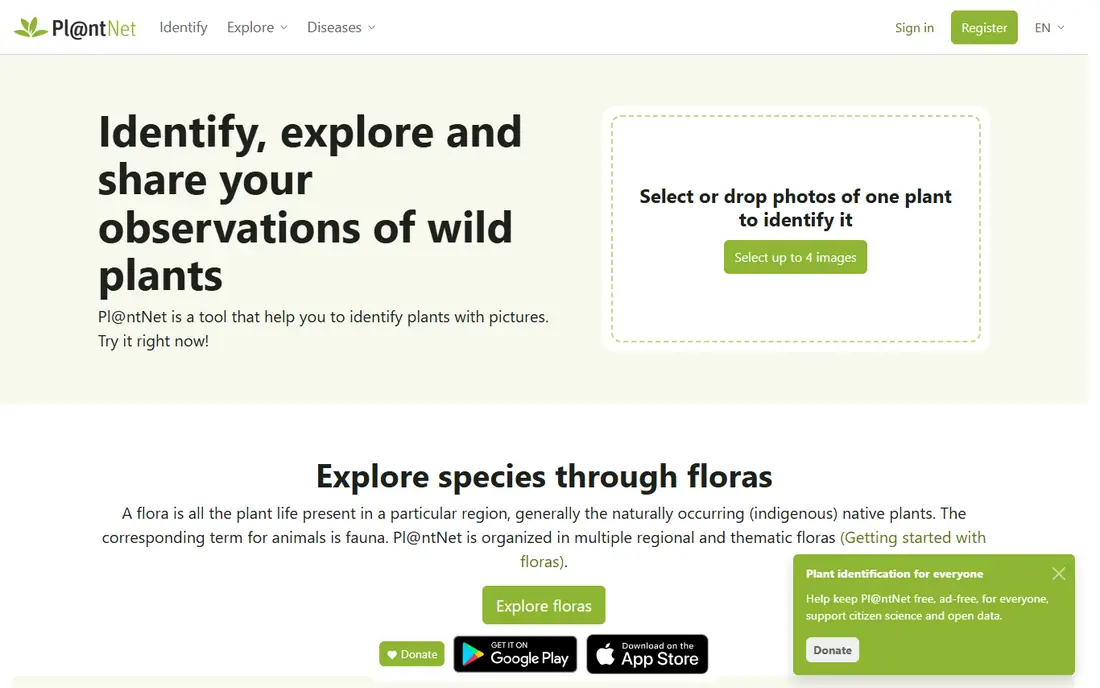
PlantNet is our first pick for foraging learners because it is free, focused on wild plants and built with research partners. Photograph a flower, leaf, fruit or bark, and the app returns likely matches with photos to compare. The community side also shows where others have recorded the same species, which helps you learn local plants over time.
The catch is photo quality. A single blurry leaf photo can mislead any app, so take several shots, including the whole plant, leaves, flowers and habitat. Use PlantNet as a learning tool and a shortlist maker, then confirm any uncertain plant with a field guide or local expert before you handle or eat it.
- Free with no subscription needed
- Strong for wild plants
- Community observations add context
- Best results need clear photos of several parts
- Garden cultivars can be harder
- Needs data for full results
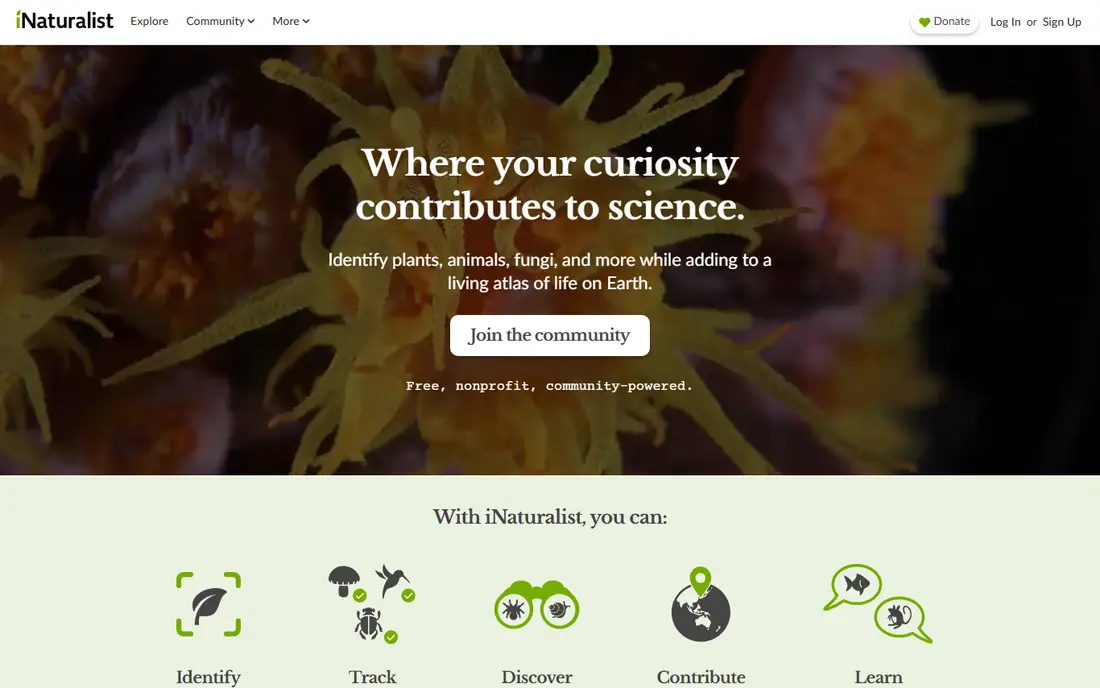
iNaturalist suits walkers who want a second human opinion, not only an algorithm guess. Upload photos and the community, including experienced naturalists, can suggest or confirm an identification. That social check is valuable for foraging learners, because lookalike species are common and a single photo can hide key details.
The trade-off is speed. Community confirmation may take hours or days, so iNaturalist is not a tool for a snap decision on the trail. Use it to build a verified record of what you saw, learn from corrections and ask questions when a match is uncertain.
- Free
- Community members can confirm or correct IDs
- Observations support nature research
- Confirmation can take time
- Interface is busier than a simple ID app
- Not built for instant eating decisions
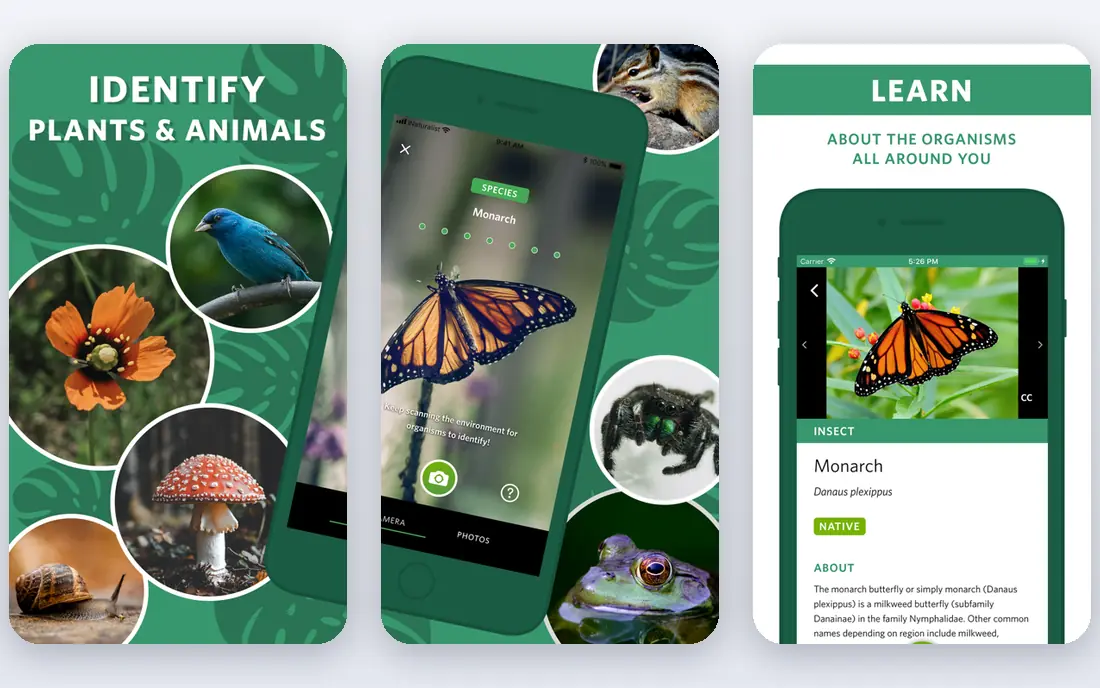
Seek is the lighter companion to iNaturalist, built for learning while you walk. Point the camera at a plant, animal or fungus and Seek suggests a match, tracks species you have found and sets challenges. Families and beginners often prefer it because it feels like a nature game rather than a database.
Seek is best for education, not for foraging decisions. Its suggestions should be treated as a starting point, and any plant you might eat needs expert confirmation in person. Pair Seek with PlantNet or iNaturalist when you want a stronger check on an interesting find.
- Free
- No account needed to start
- Challenges make learning fun for families
- Less detailed than iNaturalist itself
- IDs are suggestions, not expert confirmation
- Limited for rare species
Google Lens is useful because it is already on most Android phones and inside the Google app on iPhone. Point it at a plant and it returns visual matches and web results, which can give a quick name for a common garden or roadside plant. It is a handy first check when you do not want to open a specialist app.
Its limits are clear for foraging. Lens is a general search tool, so it does not rank species or explain why one match beats another. Use it only as a quick pointer, then confirm with PlantNet, iNaturalist or a field guide. Never treat a Lens result as safe enough to eat from.
- Free and already on many phones
- Fast visual search
- Useful for common plants and signs
- General visual search, not a plant specialist
- Results are web pages, not ranked species
- Confidence is hard to judge
Flora Incognita is a research app from German universities and institutes, and it is free with no ads, no premium tier and no subscription. It guides you to photograph flower, leaf, bark or fruit in turn, which improves accuracy compared with a single snapshot. Fact sheets include protection status and toxicity notes, which are useful context for learners.
Coverage is strongest for European wild plants, so users elsewhere may find fewer accurate matches. Processing also needs a connection, even though you can capture photos offline. For European foragers and students, it is one of the strongest free tools available, but the same eating rule applies: an app result is never enough on its own.
- Completely free with no ads or premium tier
- Guided multi-photo process
- Fact sheets include toxicity and protection status
- Strongest in Europe
- Needs an internet connection for processing
- Slower than single-photo apps
LeafSnap focuses on leaf, flower and fruit photos and returns a list of possible matches to compare. That list format is helpful, because it shows close lookalikes side by side instead of forcing one answer. For trees and common flowers, it can be a quick way to narrow a plant down to a small set of candidates.
The free tier includes ads, and premium mainly removes ads and adds extra features. As with every app here, a match list is not a safety verdict. Check leaf shape, bark, fruit, habitat and season against a field guide, and ask an expert before any eating decision.
- Free tier for identification
- Shows several possible matches
- Useful for trees and flowers
- Free tier includes ads
- Premium removes ads and adds features
- Accuracy drops with poor photos
PlantSnap suits users who want a simple workflow: take one photo, get a match, save the plant. The database covers a large number of species, and the app is easy for beginners who do not want a research-style process. Saved plants can build a personal collection over time.
The free tier is more limited than PlantNet or Flora Incognita, and some features sit behind a paid plan. Wild and rare plants can also be harder than common garden plants. Use PlantSnap for learning and garden notes, and confirm any foraging candidate with a specialist source.
- Free tier for photo identification
- Large species database
- Simple one-photo workflow
- Free tier is limited compared with paid plans
- Care features push toward subscription
- Wild plant depth varies
PictureThis is included only for its free tier, and that limit should be clear. The free version can identify common garden plants quickly, and profiles include care and toxicity notes that help learners. For houseplants and garden plants, it is one of the fastest tools in this guide.
For foraging, its limits matter more. The free tier restricts scans, and paid prompts appear often, which can rush a user into a quick answer. Use PictureThis as a garden learning aid, not as a foraging safety tool, and never eat a wild plant because this app, or any app, named it.
- Fast identification for common garden plants
- Disease and care notes
- Toxic plant warnings in plant profiles
- Free tier is limited
- Subscription prompts are frequent
- Full features need a paid plan
How we picked these
We compared official feature pages, pricing pages and app store listings, and we kept only tools with a genuinely free tier for core plant identification in October 2026. We favoured free community and research apps, because they focus on identification rather than selling care plans. We excluded paid-only apps and tools that required a subscription for basic identification, and we stated the free-tier limits plainly where they exist.
Foraging safety rules that matter more than any app
Take several photos: whole plant, leaves top and underside, flowers or fruit, bark or stem, and the habitat around it. Note the date, place and smell only if you already know the plant is safe to handle, and never taste to test. Learn the dangerous lookalikes in your area before you go, carry a regional field guide, and join a local foraging walk or expert group for hands-on learning. If a plant could be poisonous, leave it alone and enjoy the identification as learning.
When to stop and ask an expert
Stop if two apps disagree, if the match is only at genus level, if the plant lacks flowers or fruit for a key feature, or if you plan to eat it. An expert who can see and handle the plant in person is the only safe check for eating. Keep a record of photos and location for that expert, and do not rely on a confidence score, because a high score can still be wrong for a regional lookalike.
Frequently asked questions
Can an app tell me if a wild plant is safe to eat?
No. No app guarantees safe identification, and you should never eat a wild mushroom or plant based on an app alone. Apps can suggest a name and help you learn, but eating decisions need confirmation from an expert who can examine the plant in person.
Which free plant identification app is best for foraging learners?
PlantNet is a strong first pick for wild plants, with iNaturalist adding community confirmation. Flora Incognita is excellent in Europe, while Seek is best for family learning. Use two tools together when a plant matters, and confirm uncertain finds with a field guide or expert.
Is PictureThis really free?
PictureThis has a free tier, but it is limited, and full features need a paid plan. It is useful for common garden plants, but free community apps such as PlantNet and iNaturalist give unlimited core identification without a subscription push.
Why do apps disagree about the same plant?
Apps use different databases, photo models and regions, and a single photo may hide the feature that separates two lookalikes. Photograph several parts of the plant, compare matches in two apps and check habitat, season and range in a field guide.
Do these apps work offline?
Most need a connection for full identification, though some let you capture photos offline and process them later. Flora Incognita, for example, can capture offline but processes when connected. Download field guides and save notes before a walk in an area with poor signal.
Can these apps identify mushrooms too?
Some, including iNaturalist, Seek and Flora Incognita for fungi, can suggest mushroom and fungus matches, but the eating rule is even stricter for fungi. Many edible mushrooms have deadly lookalikes, so never eat a wild mushroom based on an app result alone.
Sources
See where you really rank - block by block
ProMapRanker scans Google Maps across a grid of your service area. Simple monthly plans from $19, white-label on every plan.
Start freeKeep reading
 zyte alternatives
Best Zyte Alternatives in 2026
These zyte alternatives cover managed scraping APIs, proxy networks and no code tools for lawful collection from your own or consented sources only in 2026.
Read → zerto alternatives
Best Zerto Alternatives in 2026
Compare the best zerto alternatives for disaster recovery and replication, with recovery targets, cloud options and honest trade-offs for teams in 2026.
Read → zerofox alternatives
Best ZeroFox Alternatives in 2026
We compared 9 zerofox alternatives for brand protection, phishing takedowns, dark web monitoring, and social impersonation, with clear coverage notes.
Read →