 ProMapRanker
Best Food Traceability Software Compared


Enterprise traceability and compliance · Pricing starts at: quote only
Key takeaways
- Traceability software links lots, ingredients, suppliers, and finished goods so a recall can start from one lot code instead of a paper search.
- All eight tools in this guide use quote-only pricing, so expect a sales conversation and a demo before you see a number.
- Small producers need simple lot tracking and supplier records, while larger processors need plant level controls, specifications, and audit trails.
- FSMA 204 record keeping, lot level recall, and supplier approval are the features to compare first, before add-on modules.
- Ask each vendor for a written scope, onboarding time, data import help, and contract terms before you sign.
Quick comparison
| Pick | Great for | Pricing starts at | Free tier | |
|---|---|---|---|---|
| Trustwell | Enterprise traceability and compliance | quote only | No | Visit |
 TraceGains | Supplier compliance and specifications | quote only | No | Visit |
 SafetyChain | Plant compliance and quality checks | quote only | No | Visit |
 iFoodDS | FSMA 204 traceability records | quote only | No | Visit |
 Wherefour | Food manufacturing and inventory | quote only | No | Visit |
 Icicle Technologies | Food safety and lot traceability | quote only | No | Visit |
 FoodDocs | Food safety plans and HACCP records | quote only | No | Visit |
 FlexiBake | Bakery production and lot tracking | quote only | No | Visit |
The best food traceability software
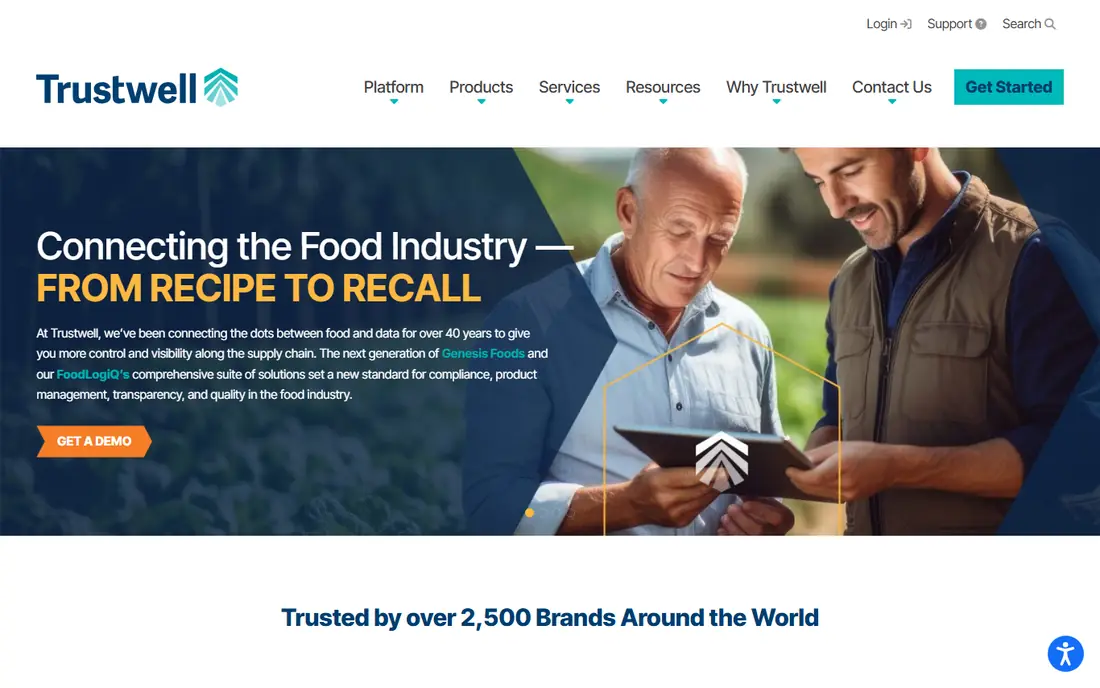
Trustwell brings together traceability, supply chain compliance, and product information for food companies that manage many suppliers, ingredients, and finished products. The platform traces lots from receipt through production to shipment, which helps a team find affected product fast when a supplier issue or customer complaint points to one ingredient. It also holds supplier documents and product specifications in one place, so quality and procurement teams work from the same records instead of separate spreadsheets and email folders.
A company that sells through retail or foodservice buyers often needs this level of record keeping to answer buyer questions and to pass audits. Trustwell fits that use case, because it links supplier approval, ingredient data, and lot movement in a connected record. The trade off is scope and cost. Pricing is available on request, and a buyer should ask for a written quote that names the modules, the number of users, and the supplier count included, plus the onboarding support that comes with the first year.
- Covers traceability, compliance, and product data in one platform
- Built for large food brands with complex supply chains
- Pricing is available on request only, with no public price list
- Onboarding and setup can take time for a large supplier network
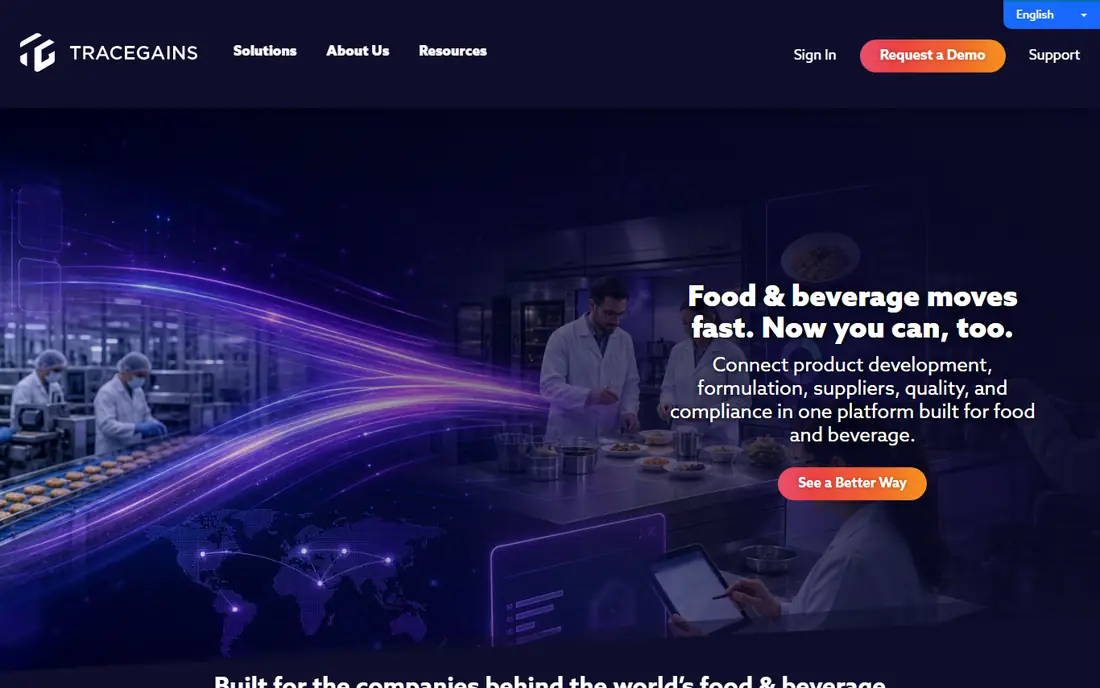
TraceGains focuses on the supplier side of traceability, with tools for specifications, supplier documents, formulas, and compliance records. A food manufacturer can use it to collect certificates of analysis, allergen statements, and specification sheets from suppliers, then link those records to the ingredients that arrive at the plant. That link matters during a recall, when the team must show which supplier lots went into which finished batches, and which customers received them.
The platform also supports new product development work, because formulas and specifications sit beside supplier data instead of in separate files. For a mid-size processor with many suppliers, that central record can cut the time spent chasing documents by email. The limit to note is price transparency. Pricing is available on request, so a buyer should ask which modules are included, how supplier seats are counted, and what support is included for supplier onboarding.
- Strong supplier document and specification management
- Network approach helps collect records from many suppliers
- Pricing is available on request only, with no public price list
- Smaller teams may find the full network scope more than they need
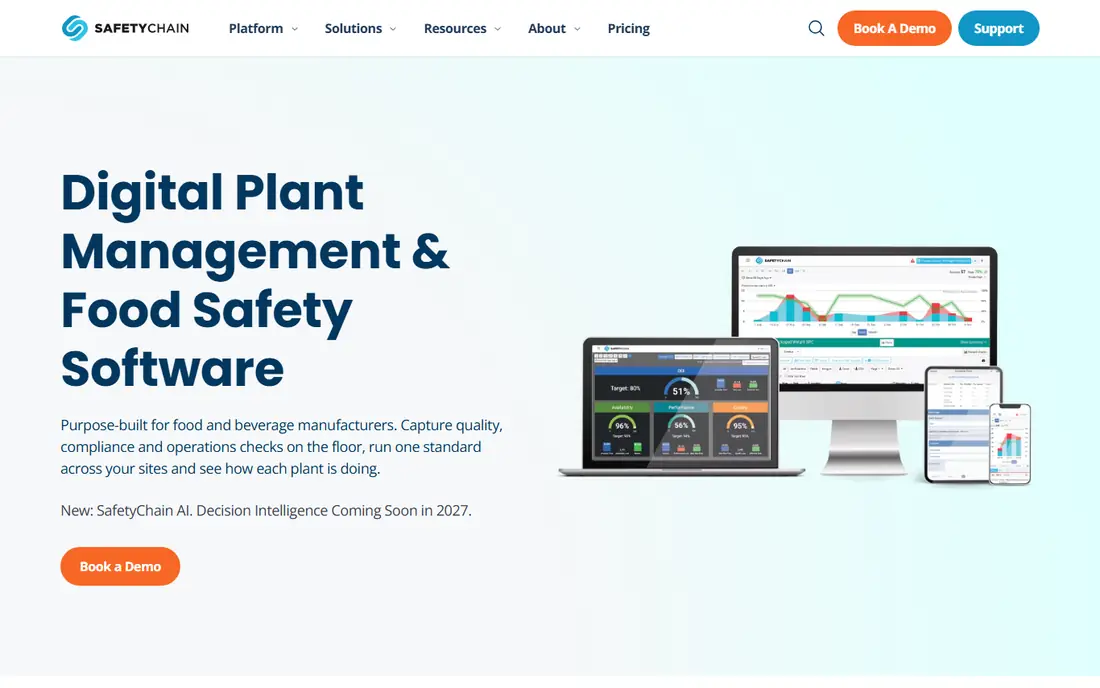
SafetyChain is built for food plants that run daily quality checks, audits, and corrective actions, and need those records tied to lots and production runs. Staff can record checks on the floor, flag a failed result, and start a corrective action from the same record. That link between a check, a lot, and a run helps a plant prove that a batch met its checks, and it helps the team isolate product fast when a check fails after shipment.
The platform suits processors that already run formal quality programs and need digital records instead of paper forms. It works best when the plant maps its checks and approval steps before rollout, because the value comes from consistent use on every shift. Pricing is available on request, so ask the vendor for a quote that names the number of plants, users, and check templates included, and ask how training and support are handled in the first months.
- Plant level checks, audits, and corrective actions in one system
- Links quality records to lots and production runs
- Pricing is available on request only, with no public price list
- Setup needs clear plant workflows before the system adds value
iFoodDS focuses on food traceability, with record keeping designed around traceability events such as receiving, shipping, and transformation. The system helps a company capture the key data elements that FSMA 204 asks for, and link them across suppliers, lots, and customers. When a traceability request arrives, the team can pull the chain for one lot instead of rebuilding it from invoices, bills of lading, and paper logs.
That focus makes iFoodDS a clear fit for companies that must meet FSMA 204 or buyer traceability rules, including fresh produce and other foods on the traceability list. The platform also supports supplier and product data, so records stay linked as product moves. Pricing is available on request, so a buyer should ask what is included for traceability reporting, supplier onboarding, and data import, and confirm the contract term and renewal terms in writing.
- Built around traceability and FSMA 204 record needs
- Connects supplier, shipment, and lot data for traceability events
- Pricing is available on request only, with no public price list
- Scope is traceability first, so check which plant tools are included
Wherefour is an enterprise resource planning system for food manufacturers, with traceability built into inventory, production, purchasing, and sales. Lots are tracked from receiving through production to shipment, so a team can trace a finished product back to its ingredient lots and forward to the customers who received it. Inventory, recipes, and production scheduling sit in the same system, which helps a small or mid-size manufacturer replace separate tools for stock, orders, and lot records.
The system fits food makers that need more than a traceability add-on, and want one record for what came in, what was made, and what went out. It also supports costing and order management, which can help a growing business plan production with real stock levels. Pricing is available on request, so ask for a quote that names the modules, user count, and implementation help included, and ask how data moves from a current system.
- Combines traceability with inventory, production, and orders
- Lot tracking runs through receiving, production, and shipping
- Pricing is available on request only, with no public price list
- Food manufacturers with simple needs may use only part of the system
Icicle Technologies, known as Icicle, combines food safety management with lot traceability for food processors. The system holds hazard plans, standard operating procedures, quality checks, and traceability records in one place, so a lot record can point back to the checks and procedures that applied to it. That link helps during audits, when a team must show that a batch followed the written plan and that checks were recorded at each step.
Icicle suits processors that need both safety plans and traceability, and want those records to stay connected instead of living in separate binders and files. It supports supplier records, production records, and shipping records, which helps a team answer a recall question with a clear lot history. Pricing is available on request, so ask the vendor to confirm the modules, user count, and training included, and ask how long a typical setup takes for a plant of your size.
- Links food safety plans, checks, and traceability records
- Built for food processors that need audit ready records
- Pricing is available on request only, with no public price list
- Implementation needs time to set up plans, checks, and user roles
FoodDocs provides a food safety management system with tools for HACCP plans, monitoring checks, and traceability records. A food business can build its safety plan in the system, set up monitoring tasks, and record results in a form that an auditor can follow. Traceability records link lots to those safety checks, so a team can show the history of a product and the checks that applied to it in one record set.
The platform fits small and mid-size food businesses that need a clear safety system without building one from blank templates. Its guided setup helps a team create plans, assign tasks, and track completion, which can cut the time spent on paper records. Pricing is available on request, so ask for a quote that names the plan builder, monitoring tools, user count, and support included, and confirm how traceability reports are produced for a recall.
- Guided food safety system setup with HACCP plan tools
- Traceability links to safety records and monitoring checks
- Pricing is available on request only, with no public price list
- Larger plants may need to check limits on users and sites
FlexiBake is an enterprise resource planning system built for bakeries, with lot tracking that follows ingredients from receiving through mixing, baking, and shipping. A bakery can trace a finished product back to the flour, egg, or flavor lots used in that batch, and forward to the stores or customers that received it. That record helps a bakery respond to a supplier recall or a customer complaint with a clear list of affected batches.
The system also covers recipes, production scheduling, inventory, and orders, so a bakery can plan batches with real stock and lot data. That fit makes it a strong choice for wholesale and retail bakeries that need production and traceability in one system. Pricing is available on request, so ask the vendor for a quote that names the modules, user count, and training included, and ask how the system handles multi site bakeries and outside deliveries.
- Built for bakeries, with recipes, production, and lot tracking
- Links ingredient lots to finished bakery products
- Pricing is available on request only, with no public price list
- Scope is bakery focused, so check fit for non bakery foods
How we chose
We compared vendor pricing pages, product pages, and documentation for each tool in this guide. We checked the core traceability features first: lot tracking from receiving to shipping, supplier records, recall support, and record keeping for audits. We also checked the scope of each system, including food safety plans, quality checks, inventory, and production tools, so the guide shows which tools fit a small producer and which fit a large processor.
We did not claim hands-on testing, and we did not use ratings, awards, or customer counts. Every price in this guide comes from the vendor pricing page or the vendor homepage where the price is hidden, and each tool is listed as quote only because no public price was shown. We compared the stated scope of each product, the business size it serves, and the traceability records it produces, then ranked the list by fit for food producers that need a clear lot history.
What to check before you buy
Start with your traceability scope. List the products, ingredients, and suppliers you must track, and confirm that the system records lots at each step, from receiving to shipping. Ask how a recall report is built, how long it takes, and what data it includes. Ask how supplier documents are collected, and how the system links a supplier lot to a finished batch. Check FSMA 204 support if it applies to your products, and ask which record fields the system captures for each traceability event.
Next, check the rollout. Ask how long setup takes, what data import help is included, and who trains your team. Ask how the system handles multiple sites, shifts, and outside warehouses. Confirm the contract term, renewal terms, user limits, and support hours in writing, and ask for a demo that uses your own product and lot examples instead of a generic script. A short pilot with real lots will show more than a slide deck.
| Business size | Traceability scope | Budget band | | Small producer, 1 to 20 staff | Lot tracking, supplier records, basic recall reports | Lower band, quote on request, one site | | Mid-size processor, 21 to 200 staff | Lot tracking, supplier compliance, quality checks, FSMA 204 records | Mid band, quote on request, one or two sites | | Enterprise, more than 200 staff | Full chain traceability, specifications, multi site audits, buyer reporting | Upper band, quote on request, multi site |
Frequently asked questions
What is food traceability software?
Food traceability software records the movement of ingredients, lots, and finished products through a food business. It links supplier lots to production batches and shipments, so a team can find affected product fast during a recall. It also holds supplier documents, specifications, and quality checks in one record set for audits and buyer requests.
Which tool fits a small food producer?
A small producer should start with simple lot tracking, supplier records, and basic recall reports. FoodDocs and Wherefour fit many small teams, because they link lots to safety or production records without a large enterprise setup. Ask each vendor for a quote that names one site, the user count, and the onboarding help included.
How does traceability software help during a recall?
Traceability software lets a team start from one lot code and pull the full chain: which supplier lots went in, which batches were made, and which customers received them. That list limits the recall to affected product only, instead of pulling all stock. It also gives auditors a clear record of the lots, checks, and shipments involved.
Do I need FSMA 204 records in my system?
You need FSMA 204 records if your products are on the Food Traceability List or your buyers ask for them. The rule asks for key data elements at defined traceability events, such as receiving, shipping, and transformation. Ask the vendor which fields it captures, how reports are built, and how records are stored for the required period.
Why is pricing listed as quote only?
Pricing is listed as quote only because these vendors do not publish a public price list. The price depends on the number of users, sites, suppliers, and modules, plus onboarding and support. Ask each vendor for a written quote that names the scope, term, and support, and compare quotes on the same scope before you choose.
Can traceability software replace my spreadsheets?
Traceability software can replace spreadsheets for lot records, supplier documents, and recall reports, because it links those records in one system. It works best when the team records lots, checks, and shipments in the system on every shift. A short pilot with real products will show if the workflow fits your plant.
Sources
See where you really rank - block by block
ProMapRanker scans Google Maps across a grid of your service area. Simple monthly plans from $19, white-label on every plan.
Start freeKeep reading
 best invoicing software for roofers
Best Invoicing Software for Roofers
The best invoicing software for roofers compared on price, card fees, and job billing, so a roofing company can send invoices fast and collect money sooner.
Read → best invoicing software for auto repair shops
Best Invoicing Software for Auto Repair Shops
Compare the best invoicing software for auto repair shops, with real starting prices, repair-ready templates, and payment links that get invoices settled fast.
Read → best insulation contractor software
Best Insulation Contractor Software 2026
Compare the best insulation contractor software for spray foam, fiberglass and cellulose crews in 2026. See prices, trials and the right fit for your team size.
Read →