 ProMapRanker
Best Food Delivery App for Lowest Prices in 2026

Key takeaways
- No app is cheapest everywhere: prices and fees vary by area, restaurant, order size and current offers, so the lowest total changes from order to order.
- ChowNow often gives lower totals at independent restaurants, because it charges no restaurant commission and adds a small support fee instead.
- DoorDash, Uber Eats and Grubhub offer the widest choice, but delivery fees, service fees and small-order fees can outweigh a lower menu price.
- A subscription at $9.99 per month can pay for itself with frequent orders, but only if you order often from restaurants covered by that plan.
Quick comparison
| Pick | Great for | Pricing starts at | Free tier | |
|---|---|---|---|---|
 DoorDash | Widest restaurant choice | Free | Yes | Visit |
 Uber Eats | City coverage and offers | Free | Yes | Visit |
 Grubhub | Northeast and corporate orders | Free | Yes | Visit |
 ChowNow | Lower totals at local restaurants | Free | Yes | Visit |
 Slice | Pizza and local pizzerias | Free | Yes | Visit |
 goPuff | Groceries and convenience items | Free | Yes | Visit |
 Delivery.com | Comparing local menus in one place | Free | Yes | Visit |
 Favor Delivery | Texas delivery with local favourites | Free | Yes | Visit |
The best food delivery apps for lowest prices
Prices and fees vary by area and restaurant, and no app is cheapest everywhere. The cheapest option depends on location, fees and current offers, so this guide compares how each app charges, where it is strongest, and how to check the real total before you pay.
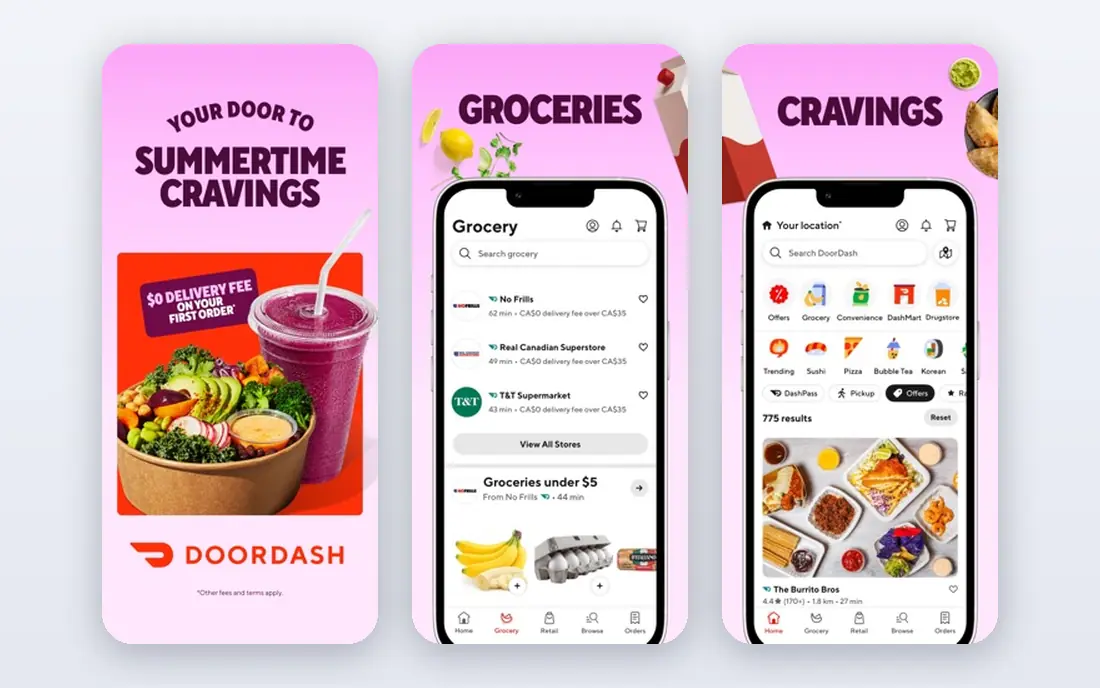
DoorDash is the app most people open first, because it covers the most restaurants and stores in the US. That breadth helps when you want a specific cuisine or a convenience order late at night. DashPass costs $9.99 per month and removes delivery fees on eligible orders, which can lower the total for frequent orders.
The catch is the fee stack. Delivery fees, service fees and a small-order fee on orders under $12 can push a small order well above the menu total. Check the full checkout total, including tax and tip, before assuming DoorDash is cheapest for that order.
- Largest restaurant and store coverage in the US
- DashPass removes delivery fees on eligible orders
- Frequent promos
- Service and small-order fees add up
- Menu prices can be higher than in-store prices at some restaurants
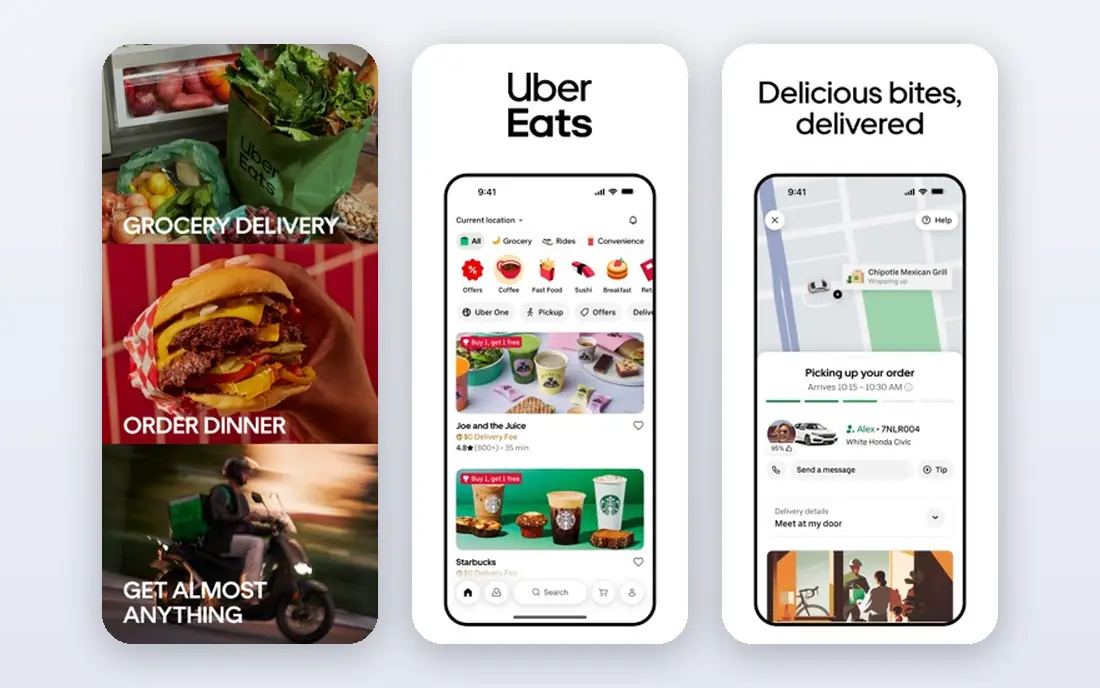
Uber Eats suits city diners who already use Uber, because Uber One bundles delivery perks with ride benefits for $9.99 per month. Its restaurant range is strong in major metros, and member offers often cut delivery fees on eligible orders. That bundle value matters if you use both rides and food delivery.
Fees still vary by store, distance and time of day, and a low order can attract a small-order fee. Menu prices at some restaurants are also marked up compared with in-store prices. Compare the checkout total with DoorDash for the same restaurant, because the winner often flips by order.
- Strong city coverage
- Uber One at $9.99 per month covers rides and delivery perks
- Regular member offers
- Fees vary by restaurant and distance
- Small-order fees can apply on low totals
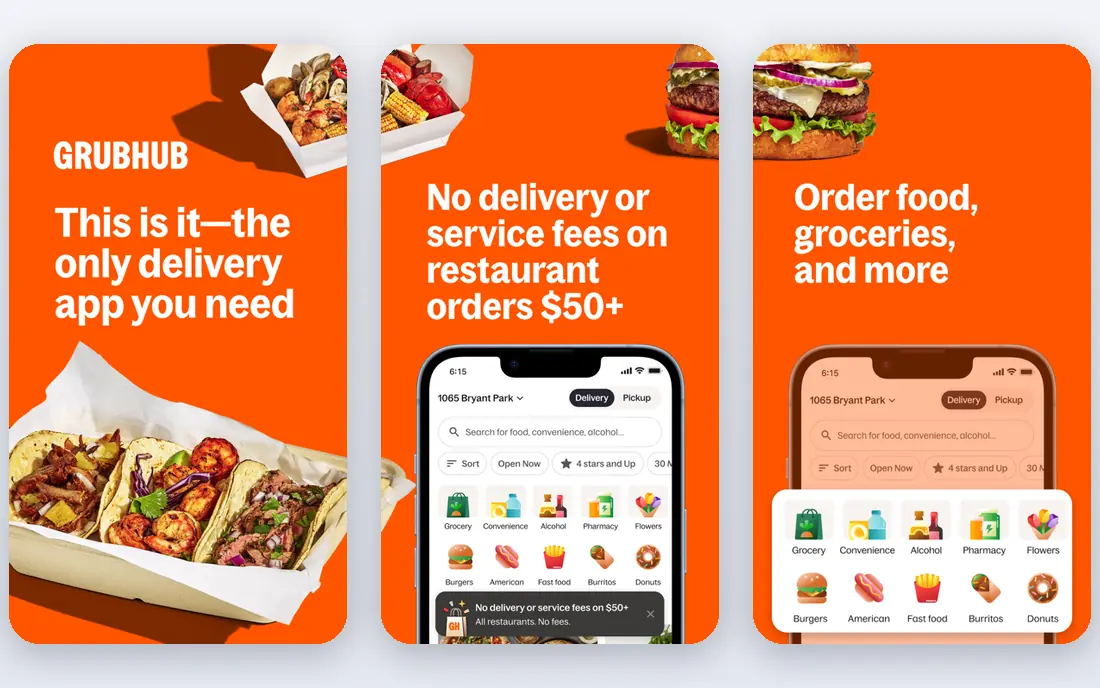
Grubhub can win on fees, because it often avoids the small-order surcharge that other apps add, and its delivery fees are competitive in many markets. Grubhub Plus costs $9.99 per month and removes delivery fees on eligible orders. It also retains strength in Northeast cities where it started, and in corporate ordering.
Coverage is the limit. In many suburbs and smaller markets, Grubhub lists fewer restaurants than DoorDash, so the cheapest app may not have the restaurant you want. When it does list your restaurant, though, its total deserves a close look, especially for smaller orders.
- No small-order fee in many cases
- Grubhub Plus at $9.99 per month
- Strong in older Northeast markets
- Smaller coverage than DoorDash in many suburbs
- Some areas have fewer restaurant choices
ChowNow takes a different path: it charges restaurants no commission, and customers pay a 99-cent support fee on each order. Because restaurants keep more of the order, they can keep menu prices closer to in-store prices. In published tests, the same local order cost notably less on ChowNow than on a major marketplace.
The trade-off is scope and delivery. ChowNow focuses on independent restaurants, so you will not find national chains there, and delivery is handled by the restaurant or a partner driver. If your favourite local spot is on ChowNow, check it first, because it often gives the lowest total for that restaurant.
- No restaurant commission, which can keep menu prices lower
- Small 99-cent support fee on orders
- Focused on independent restaurants
- Delivery is handled by restaurants or partners, so reliability varies
- No national chains on the app
Slice is a specialist, not a general marketplace, and that focus helps pizza lovers save. It works with independent pizzerias, which can keep prices and fees lower than a large marketplace that adds broader service charges. Ordering, customisation and tracking are built around pizza, so the flow is quick.
Coverage is local by nature. If your area has few independent pizzerias on Slice, the app will feel thin. Where it is strong, though, it is worth checking before a general app, because a pizza order is one of the most common delivery orders and the savings repeat.
- Built for independent pizzerias
- Often lower fees than large marketplaces
- Easy pizza ordering and tracking
- Limited to pizza and nearby Italian spots
- Coverage depends on local pizzerias joining
goPuff suits a different kind of low-price order: snacks, groceries, household goods and late-night essentials, rather than a restaurant meal. It stocks items in local fulfilment centres, so delivery can be fast, and prices are set by goPuff rather than marked up by a restaurant. That model can beat a restaurant app for a small convenience order.
It is not a replacement for restaurant delivery, and delivery fees, minimums and membership terms vary by area. Check the total for your basket, including any delivery fee, before comparing it with a grocery or convenience order on DoorDash. For pantry and snack runs, goPuff often wins on speed and simplicity.
- Fast delivery from local fulfilment centres
- Wide convenience, grocery and household range
- FAM membership for delivery perks
- Not a restaurant marketplace
- Delivery fees and minimums vary by area and order
Delivery.com helps price-conscious diners by putting menus, fees and delivery estimates side by side in one search. That comparison view makes it easier to spot a restaurant with a lower delivery fee or a better deal, without opening three apps. It also covers groceries and other local orders in the areas it serves.
The limit is coverage. Delivery.com serves certain cities and neighbourhoods, and choice can be thin outside those areas. Where it operates, use it as a comparison step: find a restaurant and fee you like, then check the same order on a major app to confirm the total.
- Lets you compare menus, fees and delivery times in one search
- Covers restaurants, groceries and more in listed areas
- Coverage is limited to certain cities
- Restaurant choice varies sharply by neighbourhood
Favor Delivery is a Texas-focused service, and that local focus is its strength for Texans. It lists local favourites alongside larger restaurants, and its delivery fees are shown clearly at checkout. For a Texas diner, Favor can match or beat a national app on a local order, especially when a promo applies.
Outside Texas, Favor is not a useful choice, so its value depends entirely on where you live. Texans should add it to their comparison routine, alongside DoorDash and Uber Eats, and check the same restaurant on each app. A few minutes of comparison can save more than any single loyalty perk.
- Strong Texas coverage
- Local restaurant focus
- Clear delivery fees at checkout
- Available mainly in Texas
- Smaller national choice than DoorDash or Uber Eats
How we picked these
We compared official app and pricing pages, published fee comparisons and coverage notes for US food delivery apps in October 2026. We kept apps that are free to download and that show fees at checkout, and we favoured apps that can lower the total through lower fees, local pricing or subscriptions. We did not crown one app cheapest overall, because fees, menu prices and offers change by area and order.
How to actually pay less for delivery
Start by comparing the same order on two or three apps, including tax, tip and all fees. Menu prices can differ by app for the same restaurant, so a lower delivery fee does not always mean a lower total. That single check, done before you pay, saves more than chasing coupons alone.
Use subscriptions only if you order often
A $9.99 per month plan such as DashPass, Uber One or Grubhub Plus removes delivery fees on eligible orders, but it only pays for itself if you order often enough to cover the fee. Count your orders from the last month, check which restaurants are eligible, and cancel if the maths no longer works. A subscription that sits unused is a cost, not a saving.
Order pickup when delivery fees spike
Pickup removes delivery and often service fees, and many apps show pickup as a clear option at checkout. If a restaurant is close, pickup can turn a pricey delivery order into a fair one. Direct ordering from a restaurant website can also beat marketplace prices, because the restaurant avoids marketplace commission.
Watch minimums, markups and promos
Small-order fees, delivery minimums and menu markups all raise the total in ways that are easy to miss. A promo that cuts a delivery fee may still leave a marked-up menu price, while a direct order with no promo can cost less overall. Read the checkout breakdown, not only the headline discount, before you confirm.
Frequently asked questions
Which food delivery app is cheapest overall?
No single app is cheapest overall, because prices and fees vary by area, restaurant, order size and current offers. DoorDash, Uber Eats and Grubhub trade places by order, while ChowNow often wins at independent restaurants. Compare the same order on two or three apps to find the lowest total for that meal.
Is DashPass or Uber One worth it for saving money?
It can be, if you order several times a month from eligible restaurants. Both cost $9.99 per month and remove delivery fees on eligible orders. If you order only once or twice a month, the subscription may cost more than it saves, so check your order count first.
Why are menu prices higher on delivery apps than in store?
Some restaurants mark up menu prices on marketplaces to cover commission and packaging costs. That markup is set by the restaurant, not only by the app, and it varies by restaurant. Direct ordering or pickup can avoid some of that markup, and ChowNow-style direct apps can keep prices closer to in-store levels.
Do delivery apps charge a small-order fee?
Yes, some do. DoorDash adds a small-order fee on orders under $12, and Uber Eats can add a fee on low totals depending on the restaurant. Grubhub often avoids a small-order fee, which can make it cheaper for a single-item order. Always check the checkout breakdown for a small-order line.
How can I get the lowest price on a regular order?
Compare the same restaurant on two apps, check for a subscription benefit, and look at pickup or direct ordering as well. Keep an eye on promos, but judge them by the final total, not the headline. Over time, the app that wins most often for your usual restaurants is the one to keep first in your routine.
Sources
See where you really rank - block by block
ProMapRanker scans Google Maps across a grid of your service area. Simple monthly plans from $19, white-label on every plan.
Start freeKeep reading
 zyte alternatives
Best Zyte Alternatives in 2026
These zyte alternatives cover managed scraping APIs, proxy networks and no code tools for lawful collection from your own or consented sources only in 2026.
Read → zerto alternatives
Best Zerto Alternatives in 2026
Compare the best zerto alternatives for disaster recovery and replication, with recovery targets, cloud options and honest trade-offs for teams in 2026.
Read → zerofox alternatives
Best ZeroFox Alternatives in 2026
We compared 9 zerofox alternatives for brand protection, phishing takedowns, dark web monitoring, and social impersonation, with clear coverage notes.
Read →