 ProMapRanker
Best Food Delivery App in 2026


Widest restaurant choice · Pricing starts at: $9.99 per month for DashPass
Key takeaways
- DoorDash has the broadest restaurant coverage in the United States, while Uber Eats is the strongest choice if you already use Uber for rides.
- Grubhub remains a solid option in larger cities, with frequent promotions and a subscription that can pay off for regular orders.
- Delivery fees, service fees, taxes and tips add up fast, so checking the final total across two apps before ordering often saves money.
- Instacart and goPuff cover a different need, groceries and convenience items, rather than restaurant meals alone.
- A subscription only makes sense if you order often enough for the waived delivery fees to cover the monthly cost.
Quick comparison
| Pick | Great for | Pricing starts at | Free tier | |
|---|---|---|---|---|
| DoorDash | Widest restaurant choice | $9.99 per month for DashPass | Yes | Visit |
 Uber Eats | People who already use Uber | $9.99 per month for Uber One | Yes | Visit |
 Grubhub | Deals and promotions in large cities | $9.99 per month for Grubhub+ | Yes | Visit |
 Instacart | Grocery and retail delivery | See website | Yes | Visit |
 Slice | Ordering from local pizza shops | See website | Yes | Visit |
 goPuff | Snacks, drinks and essentials at odd hours | See website | Yes | Visit |
 Favor Delivery | Texas cities and local favorites | See website | Yes | Visit |
 Walmart Grocery Delivery | Weekly grocery orders from Walmart | See website | No | Visit |
 Amazon Fresh Delivery | Prime members ordering groceries | See website | No | Visit |
The best food delivery apps
We compared the apps on coverage, fees, subscriptions, pickup options and how clear the final price is before checkout. The right pick depends on where you live and how often you order.
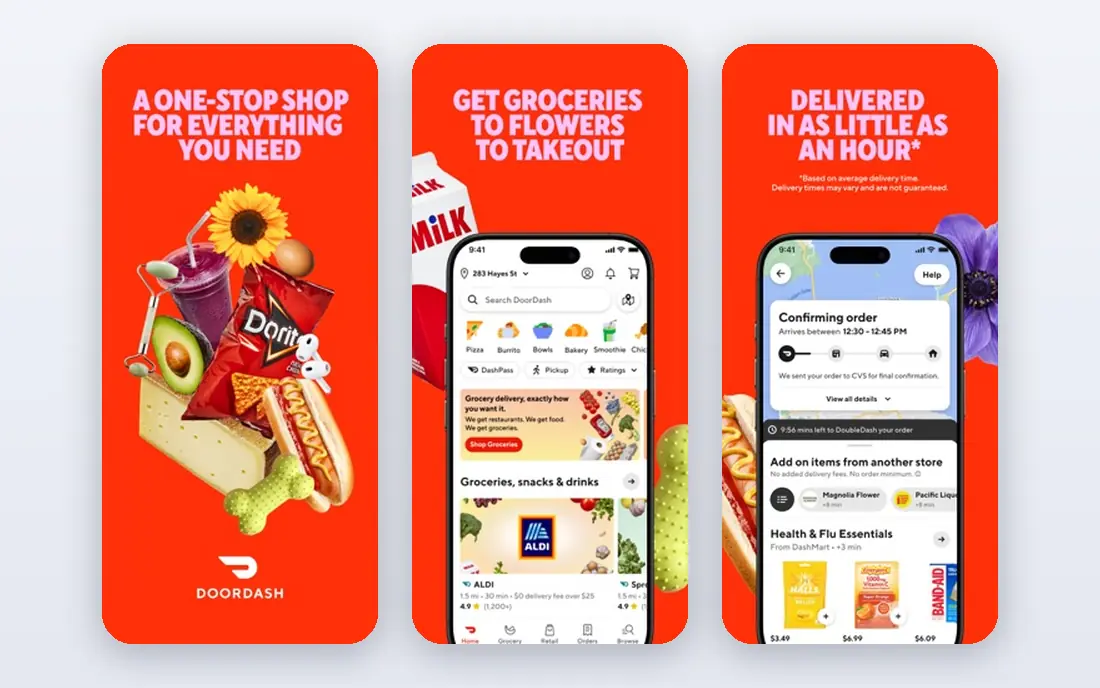
DoorDash is our pick for most people because it covers more restaurants and towns than its rivals in much of the United States. The app makes it simple to filter by cuisine, price, rating and delivery time, and pickup is a useful way to skip delivery fees when you can collect the order yourself. DashPass, at $9.99 per month, offers $0 delivery fees on eligible orders over a minimum amount, plus lower service fees on those orders.
The catch is the total at checkout. A delivery fee, a service fee, tax and a tip can turn a modest meal into a much larger bill, and menu prices on the app are sometimes higher than the prices in the restaurant. If you order once in a while, pay as you go and compare the final total with another app. If you order several times a week, DashPass is worth pricing out against your usual monthly fees.
- Large restaurant selection
- Pickup option in many areas
- DashPass can reduce delivery fees on eligible orders
- Fees without DashPass can be high
- Prices at some restaurants are higher than in store
- Peak times can bring higher fees
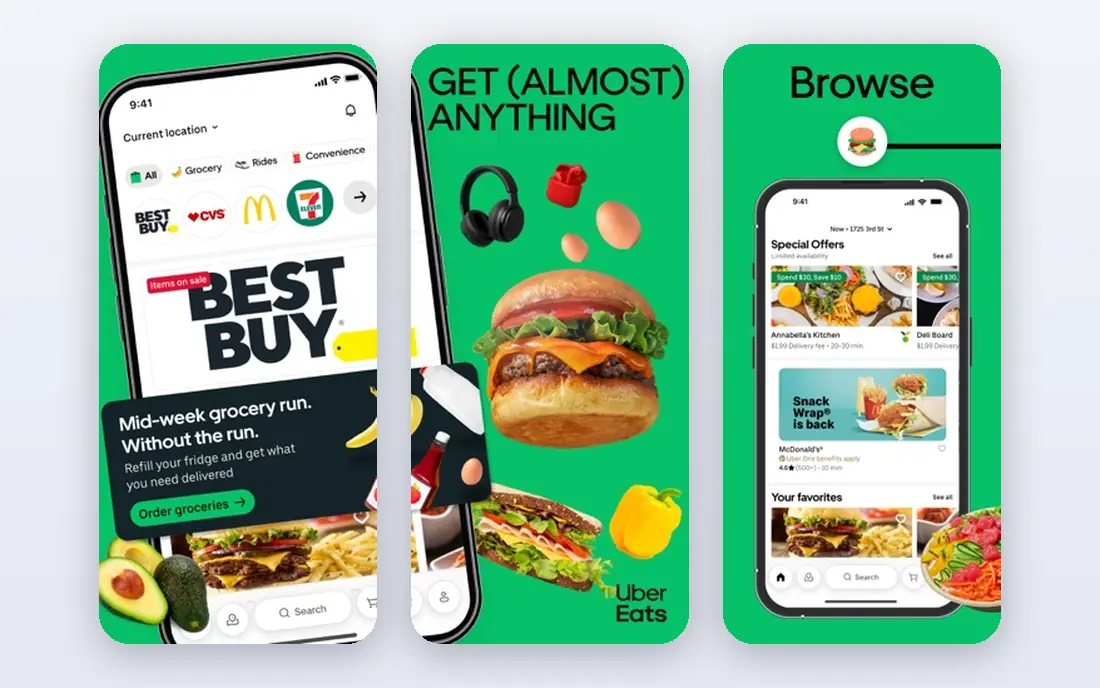
Uber Eats suits anyone who already has the Uber app on their phone, since one account covers rides, food and grocery orders in many markets. Tracking is clear, with a map view and status updates from preparation through handoff, and the app also lists grocery stores, pharmacies and convenience shops alongside restaurants. Uber One, at $9.99 per month, offers $0 delivery fees on eligible food and grocery orders over a minimum amount, plus discounts on some orders.
The downside is price variation. Two restaurants in the same area can carry very different fees, and busy periods can push costs up. Uber Eats is also less useful in smaller towns where fewer restaurants list on the platform. Check the final total, including any small order fee, before you confirm, and use pickup where it is offered to cut the bill.
- Works with an existing Uber account
- Grocery and convenience delivery in many areas
- Clear order tracking
- Fees vary a lot by restaurant and time
- Restaurant choice can be thinner outside large cities
- Uber One benefits apply only to eligible orders
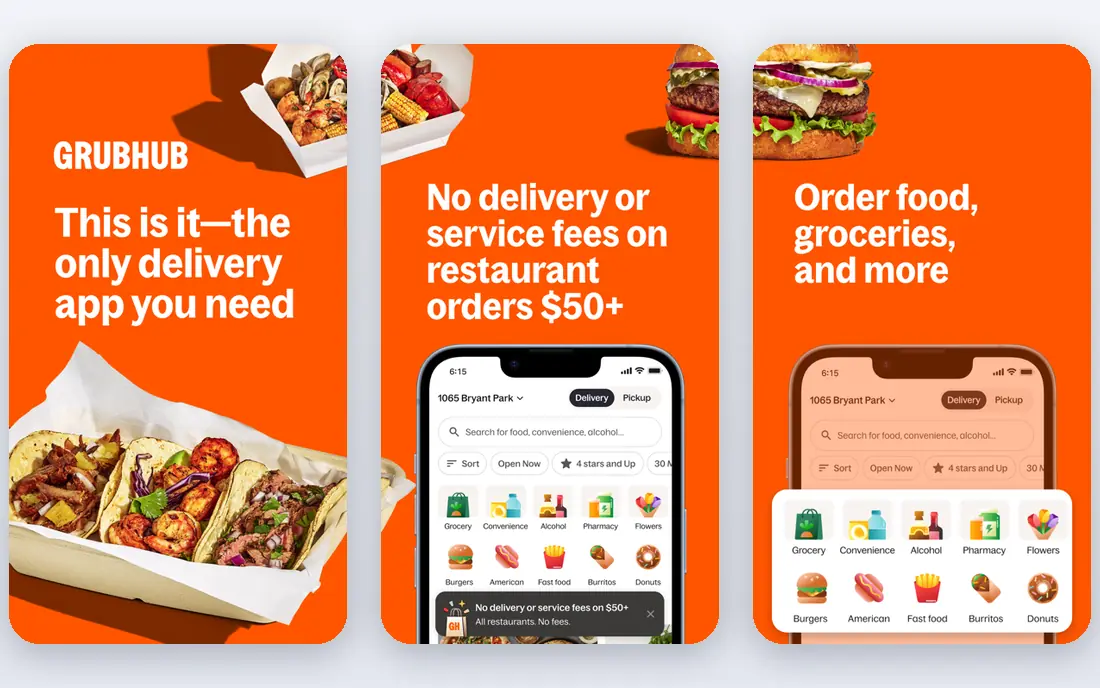
Grubhub has been around longer than most of its rivals, and that shows in its restaurant listings in larger cities, where local favorites sit next to national chains. Promotions are a real strength here, with regular percentage discounts, free delivery offers and restaurant-specific deals that can beat the headline fees. Grubhub+, at $9.99 per month, offers $0 delivery fees on eligible orders over a minimum amount, plus exclusive offers.
The trade-off is coverage and speed outside major metro areas. In smaller towns, the list of restaurants can be short, and delivery estimates can stretch longer than DoorDash or Uber Eats in the same area. Grubhub works best as a second app to check: when a promotion lines up with a restaurant you like, it can be the cheapest option that week, even if it is not your everyday default.
- Frequent promotions and coupons
- Strong coverage in many large cities
- Pickup option avoids delivery fees
- Coverage is thinner in smaller towns
- Delivery times can run longer than rivals in some areas
- Fees still apply without Grubhub+
Instacart is the pick when the order is groceries rather than a restaurant meal. You can shop full grocery lists from supermarkets, warehouse clubs, pharmacies and pet stores, choose a delivery window, and chat with the shopper about replacements if an item is out of stock. Some stores offer in-store prices through Instacart, which helps keep the total closer to what you would pay at the shelf.
It is not a direct substitute for DoorDash or Uber Eats, since hot restaurant meals are not its main job. Fees also reward larger, planned orders: a small top-up order can carry a delivery fee, a service fee and a tip that together feel steep for a handful of items. For a weekly shop, or a large order you cannot carry home yourself, it is hard to beat for choice.
- Wide range of grocery and retail stores
- Scheduled delivery windows
- In-store pricing at some stores
- Delivery and service fees add up on small orders
- Item substitutions need attention
- Restaurant meals are not its focus
Slice takes a narrower approach, and that focus is its strength. Instead of listing every kind of restaurant, it concentrates on local and independent pizza shops, many of which do not appear on the larger platforms or charge less through Slice. You can order delivery or pickup, save favorite shops, and earn rewards on repeat orders, which suits families with a regular pizza night.
The limit is obvious: if you want sushi, tacos or Thai food, Slice will not help. Coverage also varies, so a town with several independent pizzerias will get far more from it than a town with only chains. For pizza lovers who want to support a local shop and avoid the fees of a general app, it is worth having on the phone next to a broader option.
- Focus on independent pizza shops
- Ordering and rewards in one place
- Pickup and delivery options
- Limited to pizza and related items
- Coverage varies by city
- Fewer national chains than general apps
goPuff fills the gap between a restaurant app and a grocery app: the late night snack run, the missing ingredient, the household item you need within the hour. It stocks its own fulfillment centers rather than sending a shopper into a store, which keeps delivery times short in the cities it serves. The range covers snacks, drinks, ice cream, cleaning products, over-the-counter pharmacy items and more.
It will not replace a full grocery shop, and it will not deliver a hot restaurant dinner. The catalog is closer to a convenience store than a supermarket, and prices can be higher than a large store for the same item. For small, urgent orders, though, the speed and simplicity are the point, and a subscription option can reduce delivery fees if you use it often.
- Fast delivery from its own micro-fulfillment centers
- Snacks, drinks, household and pharmacy items in one order
- Late night availability in many cities
- No restaurant meals
- Product range is smaller than a supermarket
- Coverage is limited to served cities
Favor Delivery is a Texas-based service that has built a loyal following in cities such as Austin, Houston, Dallas and San Antonio. It delivers restaurant meals alongside groceries, alcohol where allowed, and other everyday items, and its runners can handle requests that go beyond a standard menu order, such as picking up items from more than one place. Local restaurants that do not list on national apps often appear here.
The obvious limit is geography. Outside its Texas service areas, Favor is not an option, so it works as a local favorite rather than a national default. Fees and minimums vary by order, so the final total still deserves a check. If you live in a Favor city, it is worth comparing against DoorDash for local restaurants, since selection and service can differ street by street.
- Strong in Texas markets
- Delivers restaurant meals, groceries and more
- Runners can handle custom requests
- Available only in served Texas cities
- Smaller national footprint than DoorDash
- Fees vary by order
Walmart grocery delivery suits households that already shop at Walmart and want the weekly shop brought to the door. Prices on staples and household goods are often lower than specialty grocery apps, and the range stretches well beyond food into cleaning products, personal care and general merchandise. Same-day delivery windows are available in many areas, with express options where offered.
Delivery is not free by default: it is tied to a Walmart+ membership or a per-delivery fee, so occasional users should compare that cost against Instacart for the same basket. Fresh item selection also depends on the shopper, so it helps to note substitutions and preferences in the order. For a large, routine grocery order, the savings on the basket itself often outweigh the delivery cost.
- Low grocery prices on many staples
- Large product range including household goods
- Same-day delivery in many areas
- Delivery requires a membership or a per-order fee
- Fresh produce quality depends on the picker
- Restaurant meals are not offered
Amazon Fresh is the grocery arm of Amazon, offering fresh produce, meat, pantry goods and household items for delivery in the areas it serves. For Prime members, it fits neatly into an existing habit: one account, familiar payment options, and delivery benefits that can lower or remove fees on qualifying orders. The range is broad, and same-day windows are offered in many served cities.
The limits match other grocery services. Coverage is not nationwide, delivery fees and order minimums can apply depending on membership and order size, and it does not cover restaurant meals. If you already pay for Prime and live in a served area, Amazon Fresh is a sensible second grocery option to compare against Walmart and Instacart on price per basket. If you do not have Prime, the fee structure deserves a careful look before you commit.
- Grocery range alongside Amazon products
- Delivery windows in served areas
- Prime benefits can reduce fees
- Limited to served areas
- Delivery fees or minimums may apply
- Less useful for restaurant meals
How we picked these
We compared official app pages, pricing pages, app store listings and public help pages for coverage, fees, subscriptions and delivery options, and we checked that each service still operates in the United States in October 2026. We favored services with broad coverage or a clear local strength, and we left out services that had folded into a rival, stopped consumer delivery, or served only restaurants rather than customers. Prices shown are starting prices or subscription prices published by the vendor; where a price varied by area or could not be confirmed on the vendor site, we wrote See website rather than guess.
What to check before you order
Compare the final total, not the menu price
Menu prices, delivery fees, service fees, small order fees, taxes and tips all sit between the dish you want and the amount you pay. Two apps can list the same restaurant at different prices, so open both, build the same basket, and compare the checkout total. Pickup is often the cheapest option of all, since it removes delivery and service fees in many cases.
Match the app to the order
Restaurant meals, groceries, pizza and late night snacks are different jobs, and no single app wins all of them. Use DoorDash or Uber Eats for restaurant choice, Instacart or Walmart for a full grocery shop, Slice for local pizza, and goPuff for a small urgent order.
Decide on a subscription with simple math
Add up what you paid in delivery and service fees over the past month, then compare that total with the monthly subscription price. A subscription at $9.99 per month pays off only if it saves you more than that in waived fees and discounts. If you order once or twice a month, pay per order and use promotions instead.
Watch fees that change by time and place
Busy dinner hours, bad weather and long distances can raise fees, and some restaurants set their own delivery minimums. Ordering a little earlier, choosing a closer restaurant, or adding an item to pass a free delivery threshold can each lower the total.
Frequently asked questions
What is the best food delivery app for most people?
DoorDash is the best starting point for most people because of its wide restaurant coverage, followed closely by Uber Eats if you already use Uber. The best choice still depends on your town, since coverage and fees vary by area, so compare the final total on two apps for your usual order.
What are the best food delivery apps right now?
The strongest general options right now are DoorDash, Uber Eats and Grubhub, with Instacart for groceries, Slice for local pizza and goPuff for convenience items. Each leads in a different kind of order, so the best set for most households is one general app plus one grocery app.
What is the best delivery app for cheap orders?
Pickup is usually the cheapest route, since it avoids delivery fees. Among delivery options, look for a promotion, a $0 delivery offer, or a subscription you already pay for, and keep the basket above any small order threshold to avoid extra fees.
Is DashPass, Uber One or Grubhub+ worth it?
A subscription is worth it if you order often enough that the waived delivery fees and discounts exceed the monthly price, which is $9.99 per month for each of these three plans. Count your orders and fees from last month before subscribing, and cancel in a quiet month if you stop ordering.
Can I get food delivery without a subscription?
Yes. Every app in this list lets you order without a subscription and pay delivery and service fees per order. Subscriptions only reduce those fees on eligible orders; they are not required to use the app.
Which app is best for grocery delivery?
Instacart offers the widest choice of grocery stores, while Walmart grocery delivery often has lower prices on staples and Amazon Fresh suits Prime members in served areas. Compare the same basket across two of them, since delivery fees and item prices differ.
Sources
See where you really rank - block by block
ProMapRanker scans Google Maps across a grid of your service area. Simple monthly plans from $19, white-label on every plan.
Start freeKeep reading
 youtube alternatives
Best YouTube Alternatives in 2026
Looking for youtube alternatives in 2026? We compare Vimeo, Dailymotion, Twitch, Rumble, and more on price, audience, monetization, control and privacy.
Read → what's the best ai tool for photo editing
What Is the Best AI Tool for Photo Editing in 2026
What is the best AI tool for photo editing? We compare ten tools for 2026, from Photoshop and Lightroom to Luminar, Topaz, Canva and mobile editors today.
Read → twitter alternatives
Best Twitter Alternatives in 2026
Compare the best twitter alternatives for 2026, from Bluesky, Threads, and Mastodon to Reddit, Tumblr, and Micro.blog, with free plans and audience notes.
Read →