 ProMapRanker
Best Food Costing Software in 2026

Key takeaways
- meez suits recipe-first kitchens that want live costing, scaling and training in one place, while MarginEdge suits teams that want invoice automation and variance tracing.
- MarketMan and Restaurant365 suit multi-location operators that need purchasing, inventory and cost control across sites.
- WISK suits beverage-heavy operations, while Apicbase suits teams that need consistent recipes across batches and prep variants.
- Start with recipe accuracy and supplier prices, because costing software cannot fix a recipe or a price that is wrong at the source.
Quick comparison
| Pick | Great for | Pricing starts at | Free tier | |
|---|---|---|---|---|
 meez | Recipe-first culinary teams | $19 per month | Yes | Visit |
 MarginEdge | Invoice and cost automation | $350 per location per month | No | Visit |
 MarketMan | Purchasing-linked inventory | $199 per month | No | Visit |
 Restaurant365 | Multi-location back office | See website | No | Visit |
 WISK AI | Bar and food inventory | $249 per month | No | Visit |
 Apicbase | Consistent recipes across sites | See website | No | Visit |
 reciProfity | Low-cost recipe costing | $65 per month | No | Visit |
 xtraCHEF | Back-office costing and purchasing | See website | No | Visit |
The best food costing software
We compared recipe costing, inventory links, invoice handling, supplier pricing, variance reporting and multi-location support. Prices are starting points from vendor and guide pages, and enterprise tools are often quoted per location or per group.
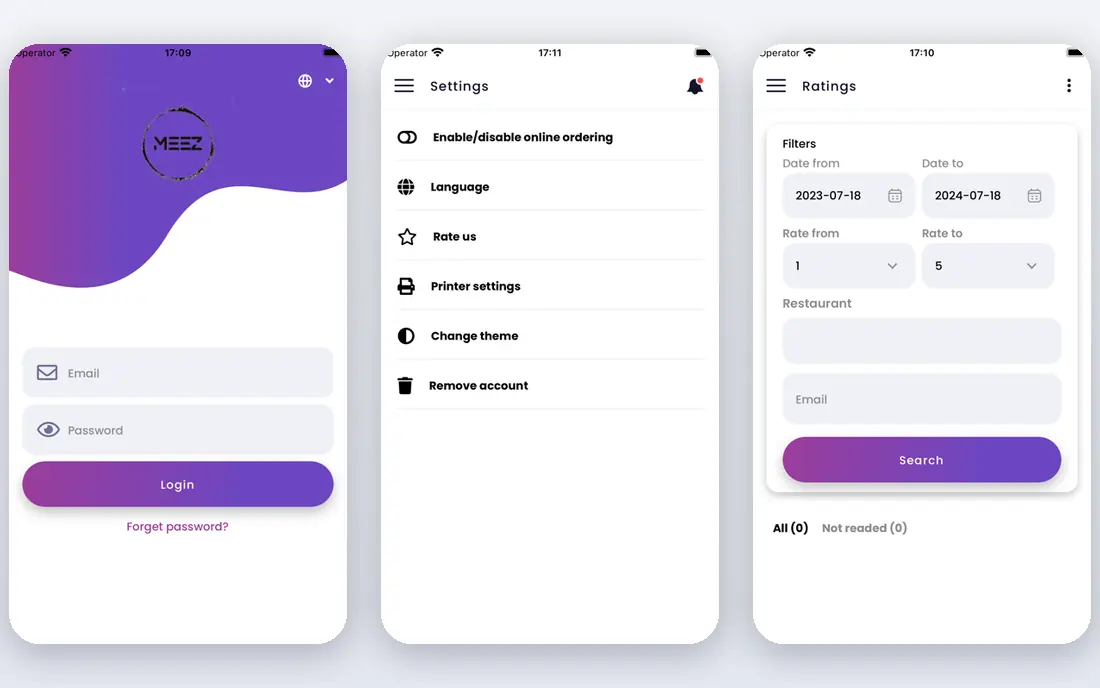
meez suits kitchens where the recipe is the source of truth. Build a structured recipe, and costs update as ingredient prices change, so menu margins stay visible without rebuilding spreadsheets. Scaling, prep workflows and training sit on the same recipe, which helps consistency across shifts and sites.
The limit is scope. meez is culinary-first, so a group that also needs full accounting, payroll and workforce tools will need another system beside it. For a kitchen-led team that wants costing, training and menu engineering in one place, meez is a strong, low-cost start, with a free tier available.
- Recipe management with live costing
- Scaling and training tools
- Allergen and nutrition data on recipes
- Finance depth is below full back-office platforms
- Larger groups may need a separate accounting link
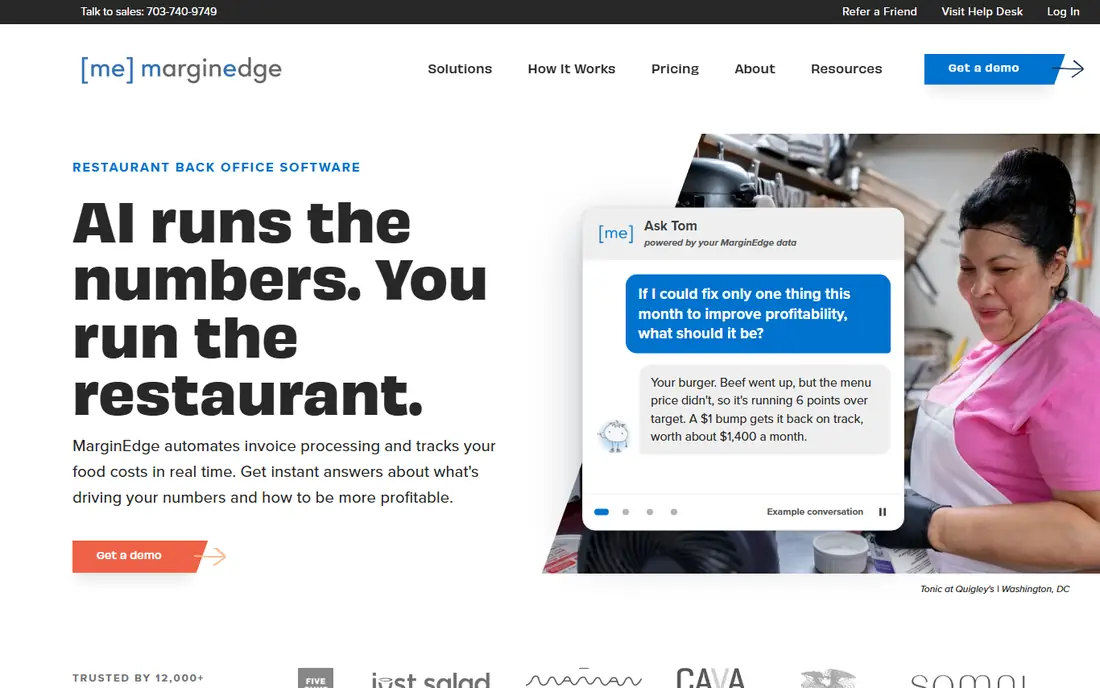
MarginEdge suits operators who lose time to invoices and want cost swings traced to ingredients. Invoices are processed automatically, sales and accounting data sync, and variance reports show which recipe components moved. That traceability helps a manager act on a cost rise instead of only noticing it at month end.
The per-location price, listed from $350 per month, makes it a bigger commitment for a single site. For multi-location teams, that cost can be justified by time saved and tighter variance control, but a single restaurant should compare it with meez or reciProfity first.
- Automated invoice processing
- POS and accounting sync
- Ingredient-level variance tracing
- Per-location price suits multi-site groups more than a single small cafe
- Setup needs clean supplier and POS data
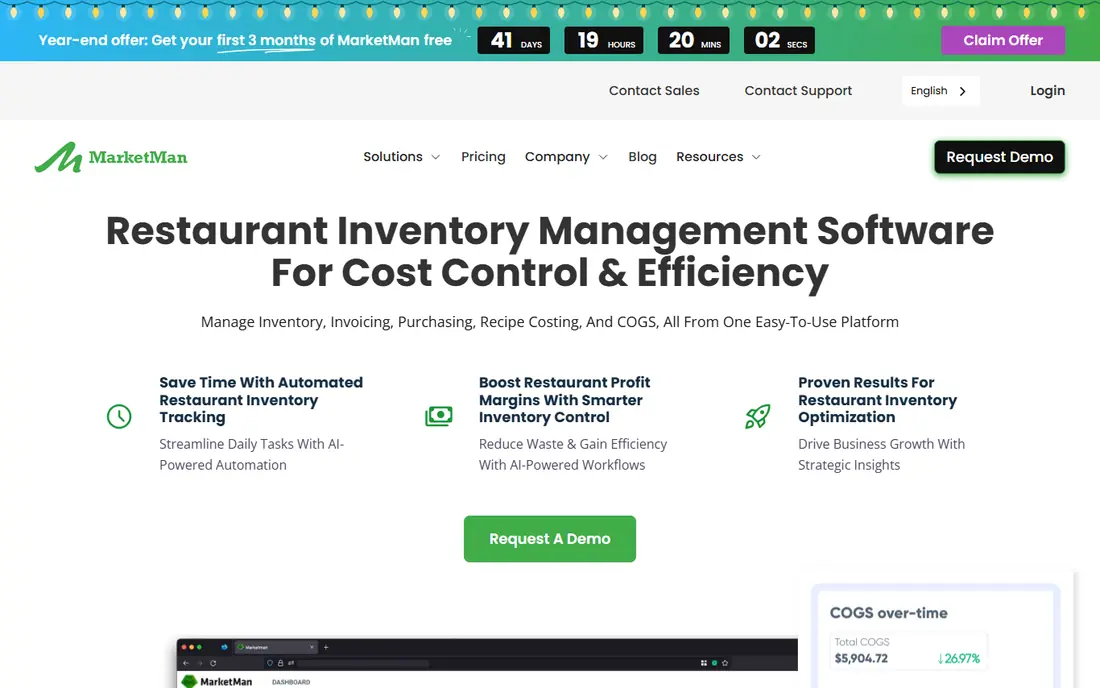
MarketMan suits operators who want purchasing and costing in one flow. Order from suppliers, receive stock, count inventory and cost recipes from the same data, so planned usage and actual spend can be compared. That link is the main reason to pick it over a recipe-only tool.
Setup is the work. Units of measure, supplier catalogues and recipe yields must be right, or the variance reports will mislead. With clean setup, MarketMan gives disciplined, multi-site cost control that a spreadsheet cannot match.
- Purchase orders, supplier ordering and COGS reporting
- Recipe costing linked to purchasing
- Multi-location support
- Setup takes care with suppliers, units and recipes
- Price rises with scale and features
Restaurant365 suits multi-unit operators who want back office, inventory, costing and workforce work in one system. Recipe-driven variance shows how each location performs against the same recipe, and accounting links cut month-end manual work. That breadth is why larger groups pick it over a single-purpose costing app.
The trade-off is implementation. A broad platform needs clean data, staff training and a phased rollout, and pricing is by quote. For a single restaurant, a smaller tool may be faster, but for a growing group, Restaurant365 gives a unified view that is hard to assemble from separate tools.
- Accounting, inventory and workforce in one platform
- Recipe-driven variance across locations
- Strong reporting
- Quote-based pricing
- Broad scope needs implementation time and training
WISK suits bars and restaurants where drink cost matters as much as food cost. Inventory, recipe costing and variance reporting cover both bar and kitchen, and frequent ingredient price updates help costing stay current. For a beverage-heavy operation, that focus is a clear advantage over a food-only tool.
A food-only cafe may not need the bar depth, and should compare WISK with meez or MarketMan on price and fit. For a bar, a restaurant with a large drinks programme, or a group with both, WISK is a strong, focused choice.
- Bar and food inventory with recipe costing
- Frequent price refreshes
- Variance and usage reporting
- Beverage strength may exceed a food-only kitchen need
- Price is per plan, so check scope
Apicbase suits operators who need the same recipe to mean the same thing everywhere. Ingredient costs refresh across vendors, batch and prep variants scale from one master recipe, and yield comparisons show where a site drifts from standard. That consistency is vital for groups, franchises and central kitchens.
Pricing is by quote, and the value depends on recipe discipline. If each site already uses different recipes, Apicbase will expose that gap, which is useful but needs management time to fix. For a group ready to standardise, it is a strong costing backbone.
- Standardised recipes with live ingredient pricing
- Batch and prep scaling
- Yield and usage comparisons
- Quote-based pricing
- Setup needs consistent recipe and supplier data across sites
reciProfity suits budget-conscious buyers who want real recipe costing without enterprise pricing. Build recipes, cost them from ingredient prices, track inventory and see menu margins, all from a $65 per month starting plan. That entry price makes it a practical first costing tool for a single restaurant or a small group.
The limit is automation depth. Invoice processing, advanced purchasing and multi-site reporting are less deep than MarginEdge, MarketMan or Restaurant365, so larger groups may outgrow it. For a first step from spreadsheets to live costing, reciProfity is a sensible, low-risk pick.
- Recipe costing and inventory at a low entry price
- Clear menu margin views
- Simpler setup than enterprise tools
- Depth below enterprise platforms for purchasing automation
- Multi-location features are more limited
xtraCHEF suits operators who want back-office costing tied to purchasing and batch production. Batch recipes carry yield and trim assumptions into ingredient cost rollups, and variance outputs show where actual use differs from plan. That modelling helps kitchens that cook in batches and need accurate theoretical cost.
Pricing and product scope should be confirmed with the vendor, because xtraCHEF now sits within a larger platform. For a team that needs batch-aware costing and purchasing in one back-office flow, it remains a credible option to shortlist beside MarketMan and Restaurant365.
- Batch recipe modelling with yield and trim handling
- Purchasing and invoice workflows
- Variance outputs
- Pricing is by quote
- Now part of a larger platform, so check current product and support scope
How we picked these
We compared vendor pages, pricing guides and foodservice comparisons, and we kept only tools that cost recipes from ingredient data and link costing to inventory or purchasing in October 2026. We favoured tools with clear recipe structures, unit conversion, variance reporting and supplier price handling, and we noted where pricing is by quote. Where a guide price differed from a vendor page, we used the starting figure as a guide and point you to confirm it before purchase.
How to choose food costing software
Start with your recipes, not the software demo. Pick five best-selling dishes, cost them by hand with current supplier prices, and check yields, trim and portion sizes. If those five recipes are wrong, no software will fix your food cost, and a demo that looks good on perfect data will mislead you.
Check supplier and POS links next. The best tool for your operation is the one that reads your invoices, matches your supplier catalogues and syncs your sales without daily manual entry. Ask how unit conversion works, how price changes flow into recipes, and how waste, comps and staff meals are handled, because those details decide whether variance reports are trustworthy.
Run a pilot on one site
Pilot on one site or one menu section for a month, with one manager owning recipes and counts. Compare theoretical cost from recipes with actual cost from inventory and sales, and investigate the top three variances each week. That pilot shows whether the tool fits your workflow and whether your data is clean enough to trust.
Train the kitchen, not only finance
Train chefs and prep staff on recipe standards, portioning and waste recording, because costing accuracy lives in the kitchen. If portions drift, if prep yields are guessed, or if waste is not recorded, variance reports will blame prices when the real cause is execution. A short weekly review of recipes, prices and variances keeps the whole team aligned.
Frequently asked questions
What is the best food costing software for a small restaurant?
meez and reciProfity suit small restaurants, because they offer recipe costing at a low entry price with a clear menu margin view. meez suits recipe-first kitchens, while reciProfity suits buyers who want costing plus basic inventory at $65 per month.
What is the best food cost software for multiple locations?
MarketMan, Restaurant365 and MarginEdge suit multi-location teams, because they link purchasing, inventory and variance across sites. Pick MarketMan for purchasing-led control, Restaurant365 for a full back office, and MarginEdge for invoice automation and variance tracing.
How does food costing software calculate recipe cost?
It multiplies each ingredient quantity by its current supplier price, adjusts for yield and trim, and sums the result to give a plate cost. It then compares that theoretical cost with actual usage from inventory and sales to show variance and menu margin.
What is the best food costing app for a bar?
WISK suits bars and beverage-heavy restaurants, because it covers bar inventory, drink recipes and cost variance in one tool. It also handles food costing, so a restaurant with a large drinks programme does not need two separate systems.
Do I need inventory software as well as recipe costing?
For accurate food cost, yes, in practice. Recipe costing alone gives theoretical cost, while inventory and purchasing data give actual cost, and the gap between them is where waste, portion drift and price changes show up. Tools in this list that link both give a fuller picture than a recipe-only spreadsheet.
Sources
See where you really rank - block by block
ProMapRanker scans Google Maps across a grid of your service area. Simple monthly plans from $19, white-label on every plan.
Start freeKeep reading
 zoro.to alternatives
Best Zoro.to Alternatives in 2026
We compare the best zoro.to alternatives in 2026, listing only legal licensed anime streaming services, from Crunchyroll to free options for fans today.
Read → zip alternatives
Best Zip Alternatives in 2026
We compare the best zip alternatives for buy now, pay later in 2026, covering pay-in-4 plans, fees, spending limits, and credit reporting options today.
Read → yesware alternatives
Best Yesware Alternatives in 2026
Compare the best yesware alternatives for sales email tracking, templates, and sequences, with current pricing and honest tradeoffs for small sales teams.
Read →