 ProMapRanker
Best Fleet Tracking Software Construction Sites in 2026


Large mixed fleets with safety cameras · Pricing starts at: See website
Key takeaways
- Construction fleets need asset tracking for powered and unpowered equipment, not just vehicle tracking, so check both device types.
- Geofences around job sites, yards and quarries turn raw location data into arrival, departure and utilisation reports.
- Most enterprise telematics pricing is quote based, so compare contract length, hardware cost and early exit terms alongside the monthly rate.
- Use tracking only with lawful, disclosed purposes, with driver notice and consent where required, and never for covert tracking of staff.
Quick comparison
| Pick | Great for | Pricing starts at | Free tier | |
|---|---|---|---|---|
| Samsara | Large mixed fleets with safety cameras | See website | No | Visit |
 Geotab | Open platform fleets with many integrations | See website | No | Visit |
 Motive | Trucking compliance and driver coaching | See website | No | Visit |
 Verizon Connect | Enterprise fleets on a large network | See website | No | Visit |
 Azuga | Simple rollout with driver rewards | See website | No | Visit |
 GPS Insight | Safety and reporting focused fleets | See website | No | Visit |
 Teletrac Navman | Large compliance heavy fleets | See website | No | Visit |
 Fleetio | Maintenance on top of existing telematics | See website | Free trial | Visit |
The best fleet tracking software construction sites
We compared vendor feature pages, pricing pages and public reviews for fleet tools live in October 2026. We focused on construction needs: live vehicle and equipment location, job site geofences, harsh environment hardware, maintenance, driver safety and offline coverage, rather than on long haul trucking alone.
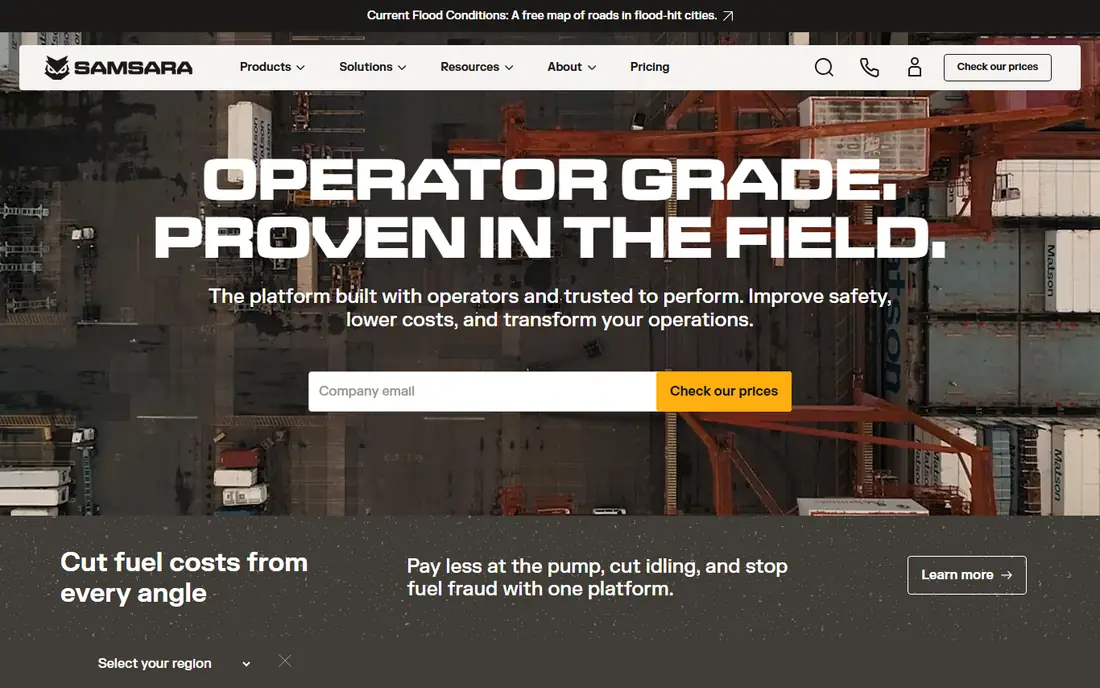
Samsara is the all in one choice for a construction fleet that wants vehicles, equipment, safety and maintenance in one dashboard. Live maps show trucks and powered assets, geofences mark job sites and yards, and AI dashcams add incident context and driver coaching that GPS alone cannot provide. Maintenance tools track service schedules and fault codes, so a site manager can spot a truck that should not leave the yard.
The cost and contract are the honest catch. Samsara quotes per fleet, hardware adds cost, and longer terms are typical, so a small contractor should get the full term cost in writing, including cameras and early exit terms. For a larger contractor that needs safety evidence, utilisation data and one platform for a mixed fleet, Samsara is the strongest overall system here.
- Live tracking plus AI dashcams in one platform
- Asset tracking for equipment
- Strong safety and maintenance tools
- Quote based pricing with longer terms typical
- Premium cost for camera bundles
- Hardware costs add to the subscription
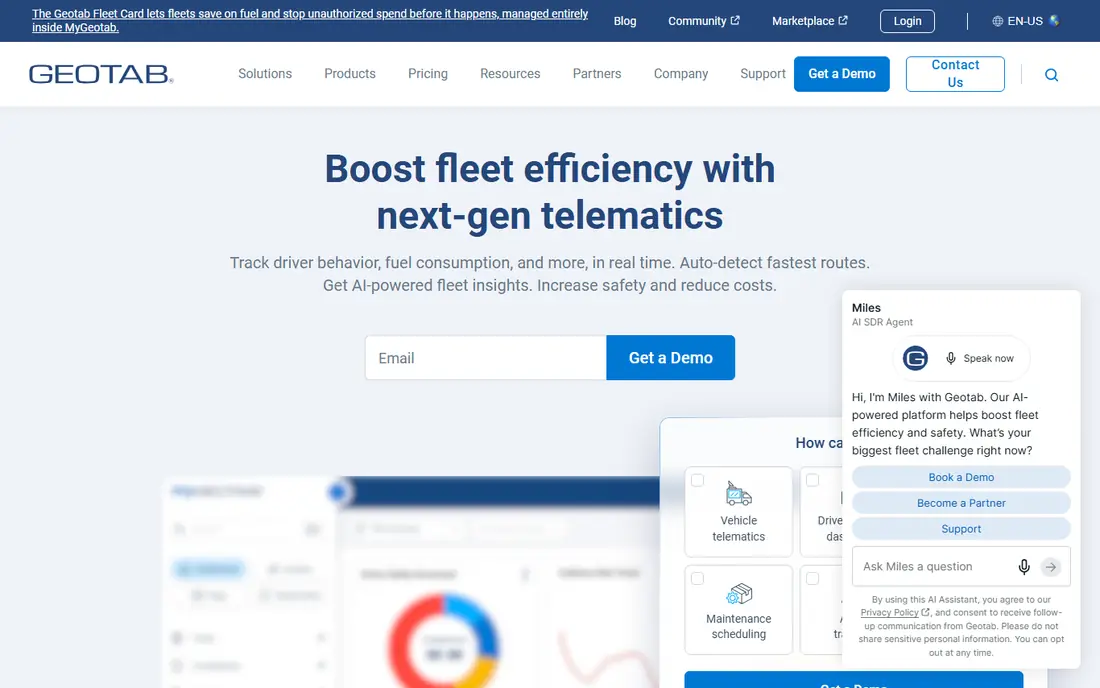
Geotab suits a construction fleet that wants data to flow into other systems, from maintenance software to project management and fuel tools. Its open platform and large integration marketplace let a fleet connect tracking, diagnostics and utilisation data to the tools it already uses, rather than replacing them. Diagnostic depth, including fault codes and engine data, helps maintenance teams catch problems before a breakdown on site.
Geotab sells through resellers, so support and pricing vary, and buyers should compare reseller terms, not just the platform. Camera capability usually comes through a partner, which adds a second vendor to manage. For a fleet with in house technical skill or a trusted reseller, Geotab offers the most flexible data platform in this list.
- Very wide integration marketplace
- Deep diagnostic and utilisation data
- Flexible terms through resellers
- Experience varies by reseller
- Camera features come through partners
- Setup depth can overwhelm a small team
Motive, formerly KeepTruckin, is strongest where a construction fleet also runs regulated trucking, with electronic logging, hours of service and driver vehicle inspections built in. Its driver app is clear for field staff, and AI dashcams support coaching and incident review. Dispatchers get live location, geofences and trip history, which helps answer customer questions about arrival times and site attendance.
Motive is quote based, and its strength in trucking compliance matters less for a fleet that only moves equipment short distances. Camera bundles also raise the monthly cost, so a buyer should price tracking alone against tracking plus cameras. For a contractor with dump trucks, mixers or haul trucks on public roads, Motive covers compliance and tracking in one system.
- Strong electronic logging and compliance tools
- AI dashcams and driver coaching
- Clear driver app for field teams
- Quote based pricing
- Compliance focus can outweigh pure asset tracking depth
- Camera bundles raise cost
Verizon Connect targets larger enterprise fleets that value network reliability, broad coverage and central reporting. It tracks vehicles and assets, supports geofences and alerts, and offers compliance and maintenance tools for fleets that span regions and job sites. For a contractor with sites in rural or remote areas, network coverage is a practical advantage, not a marketing point.
Verizon Connect pricing is quote based, and longer terms with early exit fees are common, so a buyer should ask for the full contract terms before signing. Smaller fleets may find the platform heavier than they need, and support can feel enterprise paced. For a large contractor that already runs on Verizon services, the integrated fleet platform is a natural fit.
- Large network coverage and reliability
- Enterprise reporting and compliance tools
- Asset and vehicle tracking together
- Quote based pricing with longer terms
- Early exit terms need careful reading
- Interface can feel enterprise heavy
Azuga suits a construction fleet that wants live tracking, safety scoring and maintenance reminders without a long enterprise rollout. Installation and setup are simpler than the largest platforms, and driver rewards give managers a positive way to encourage safe driving, rather than relying only on alerts and penalties. Geofences, trip history and maintenance reminders cover the daily dispatch and site questions.
Azuga is lighter on deep customisation and advanced integrations, so a fleet with complex reporting needs may outgrow it. Camera and advanced features also vary by plan, so the buyer should confirm the exact bundle. For a small to mid sized contractor that wants tracking live quickly and drivers engaged, Azuga is a practical middle ground.
- Simpler setup than enterprise platforms
- Driver rewards and safety scoring
- Month to month options in some plans
- Lighter on deep customisation
- Fewer advanced integrations than Geotab
- Camera features vary by plan
GPS Insight appeals to fleets that live in reports: utilisation by site, speeding and idling by driver, maintenance due dates and geofence activity. Its reporting tools let a manager build views for a specific job, crew or time period, rather than relying only on standard dashboards. Safety alerts and driver behaviour scoring help a safety manager focus coaching on the riskiest patterns first.
Pricing is quote based, so comparison requires a direct quote for the same fleet size and features. Teams that want a simple map and little else may find the reporting depth unnecessary. For a contractor that must prove site attendance, utilisation or safety improvement to a client or insurer, GPS Insight reporting is a genuine advantage.
- Strong custom reporting
- Safety alerts and driver behaviour tools
- No contract device rental options in some plans
- Quote based pricing
- Interface rewards a reporting focused user
- Camera bundles add cost
Teletrac Navman serves large, compliance heavy fleets with enterprise reporting, electronic logging and mixed asset tracking. It handles vehicles and equipment across many sites, with alerts, geofences and maintenance tools that suit a central fleet team. For a contractor with a large, distributed fleet and strict compliance needs, that enterprise depth is the point.
Smaller contractors will find the setup and contracting heavier than a simpler platform, and pricing is quote based. Buyers should also confirm current ownership and support arrangements during evaluation, since the telematics market has seen ownership changes. For a large construction group that needs central control across regions, Teletrac Navman earns a shortlist place.
- Enterprise reporting and compliance tools
- Mixed vehicle and asset tracking
- Strong for large distributed fleets
- Quote based pricing
- Enterprise setup and contracting
- Smaller fleets may find it heavy
Fleetio is different from the rest of this list, and that difference matters: it is maintenance software that sits on top of a telematics provider, rather than a tracker itself. It pulls live location and diagnostic data from Samsara, Geotab, Motive, Verizon Connect, Azuga and others, then adds inspections, work orders, service schedules and cost tracking. That makes it ideal for a contractor that already has trackers and wants better maintenance control.
Fleetio alone will not track a vehicle, so a buyer without telematics still needs a tracker from this list. It also adds a second subscription, though its maintenance pricing is published and clearer than telematics quotes. For a fleet whose real problem is missed service, inspection paperwork and repair costs, Fleetio plus an existing tracker is often cheaper than replacing the whole telematics stack.
- Clear maintenance, inspections and cost tracking
- Integrates with major telematics vendors
- Published pricing for maintenance plans
- Not a full GPS tracker on its own
- GPS data comes from a separate telematics provider
- Adds a second subscription
How we picked these
We compared vendor feature pages, pricing pages and public reviews for fleet tools live in October 2026. We required live vehicle tracking, geofences and maintenance or safety tools, and we favoured tools with construction relevant asset tracking. Telematics pricing is quote based for most vendors, so we used See website rather than repeating third party per vehicle estimates as vendor prices, and we flagged contract terms as a comparison point.
What to check before you buy fleet tracking for a site
Start with your assets, not just your trucks. List every vehicle, powered asset and unpowered trailer or attachment you need to track, and confirm which device each tool offers for each type, including battery life and harsh environment ratings. Test coverage at your actual sites, including yards, basements and rural jobs, because a tracker that works in a city can go quiet on a remote site.
Check the contract as carefully as the map. Ask for hardware cost, monthly cost, contract length, renewal terms and early exit fees in writing, and price cameras and ELD modules separately. Confirm driver notice, privacy and consent handling, and set a written policy for who sees location data and when, since tracking must be lawful and disclosed, never covert. Finally, trial the system with one crew for a month, measuring utilisation, idle time and maintenance compliance, before rolling it out fleet wide.
Frequently asked questions
What is the difference between vehicle tracking and asset tracking?
Vehicle tracking follows powered vehicles with engine data, location and driver behaviour, while asset tracking follows equipment, trailers and tools, often with battery powered devices. Construction fleets need both, because excavators, generators and trailers move between sites without a driver. Confirm device types for each asset class before buying.
Do we need dashcams as well as GPS tracking?
GPS tells you where a vehicle is and how it is driven, while dashcams show what happened in an incident. Fleets focused on insurance claims and liability usually add cameras, while fleets focused on dispatch and site attendance often do fine with tracking alone. Price cameras separately, since they raise hardware and monthly costs.
How much does fleet tracking cost per vehicle?
Full telematics platforms usually quote per vehicle per month, with price set by fleet size, features, cameras and contract length, and hardware on top. Published per vehicle ranges from third party sources vary widely, so get a direct quote for your fleet. Maintenance software such as Fleetio publishes clearer maintenance pricing, but it sits on top of a tracker.
Is fleet tracking legal for employees?
Tracking for lawful business purposes, such as dispatch, safety, maintenance and site attendance, is common, but rules on notice, consent and privacy vary by jurisdiction and employment terms. Tell drivers and affected staff what is tracked, why, who sees the data and how long it is kept, and never use tracking covertly. Get legal advice for your state and workforce before rollout.
Can fleet tracking work on a construction site with poor signal?
Coverage depends on the network and device, and remote sites, basements and metal structures can interrupt signals. Test devices at your real sites during a trial, and check how the system stores and uploads data when signal returns. Satellite or multi network options exist for the most remote work, but they cost more and should be quoted for the specific sites.
Sources
See where you really rank - block by block
ProMapRanker scans Google Maps across a grid of your service area. Simple monthly plans from $19, white-label on every plan.
Start freeKeep reading
 what’s the best risk software for enterprises
What Is the Best Risk Software for Enterprises in 2026
We compared what’s the best risk software for enterprises on risk registers, controls, third-party risk, and reporting, with pricing notes for large teams.
Read → what's the best pam software for enterprises
What is the Best PAM Software for Enterprises in 2026
Find what's the best pam software for enterprises, with vaulting, session recording, just in time access and pricing compared for large enterprise IT teams.
Read → what’s the best grc software
What Is the Best GRC Software in 2026
We compared what’s the best grc software on risk, compliance, audit and vendor risk, so teams can pick a platform that fits their frameworks and budget.
Read →