 ProMapRanker
Best Fleet Management Software for Small Business in 2026

Key takeaways
- Published prices are rare in this category, so Fleetio at $4 per vehicle per month and Azuga from $25 per vehicle per month stand out for budgeting.
- A small fleet should decide first if it needs live tracking, maintenance records, or both, because the cheapest tool is not always the right one.
- Long contracts are the hidden cost to check, with several leading platforms asking for terms of one to three years.
- Hardware, cameras and compliance add-ons can change the monthly total, so ask for the full quote in writing before signing.
Quick comparison
| Pick | Great for | Pricing starts at | Free tier | |
|---|---|---|---|---|
 Samsara | All-in-one tracking and safety | See website | No | Visit |
 Motive | Trucking and ELD compliance | See website | No | Visit |
 Geotab | Data depth and integrations | See website | No | Visit |
 Verizon Connect | Large service fleets | See website | No | Visit |
 Azuga | Published pricing and driver rewards | $25 per vehicle per month | No | Visit |
 Fleetio | Maintenance and inspections | $4 per vehicle per month | Free trial (14 days) | Visit |
 GPS Trackit | Simple tracking with included hardware | See website | No | Visit |
 Hapn | Low-cost GPS tracking | $8.95 per vehicle per month | No | Visit |
The best fleet management software for small business
Small fleets need clear answers to simple questions: where is each vehicle, who is driving it, and what service is due next. The tools below cover those jobs in different ways, and we compared official feature pages, published pricing and public reviews to sort them.
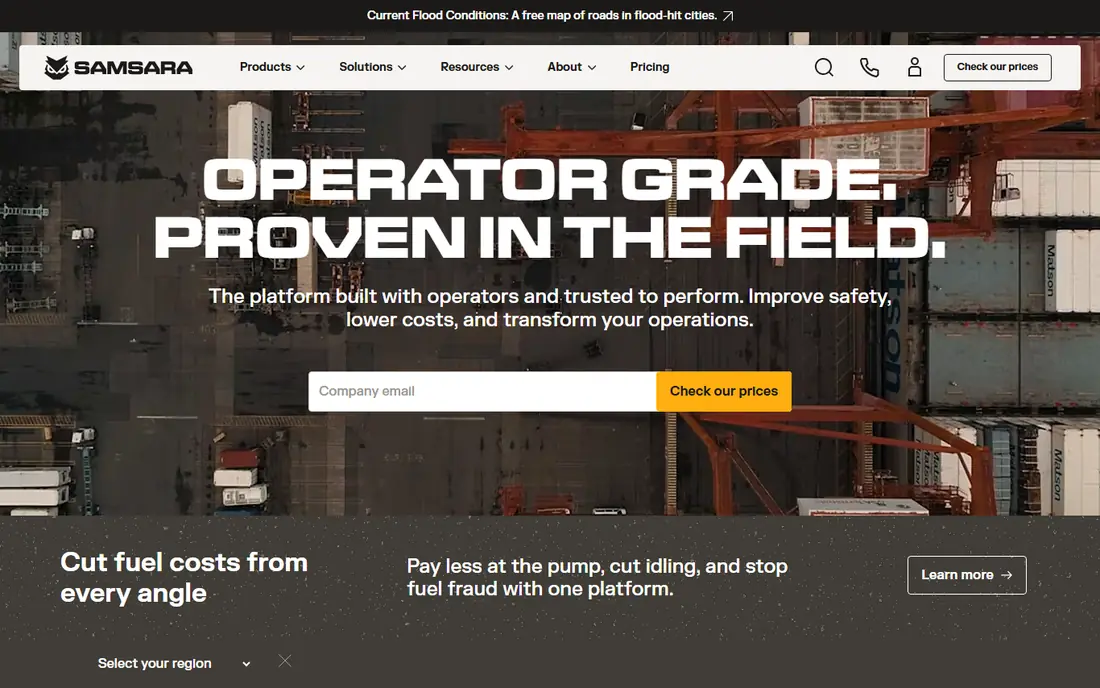
Samsara suits a small business that wants one platform for tracking, safety and compliance rather than several separate tools. Its live map, vehicle diagnostics and driver coaching sit together, which makes it easier for a manager to spot a problem and act on it in the same place. The platform also covers equipment and site operations, so a growing business does not need to start over when it adds assets beyond road vehicles.
The catch is cost and commitment. Samsara does not publish a price, and third-party reports in 2026 commonly put core telematics around $27 to $50 per vehicle per month, with hardware extra and a three-year minimum term widely reported. That structure can still make sense for a stable fleet that will use cameras and coaching every day. It is a harder sell for a very small fleet that only needs to know where its vans are.
- Wide feature range
- AI dashcams and coaching
- Clear live map and reports
- No published price
- Long minimum terms reported by reviewers
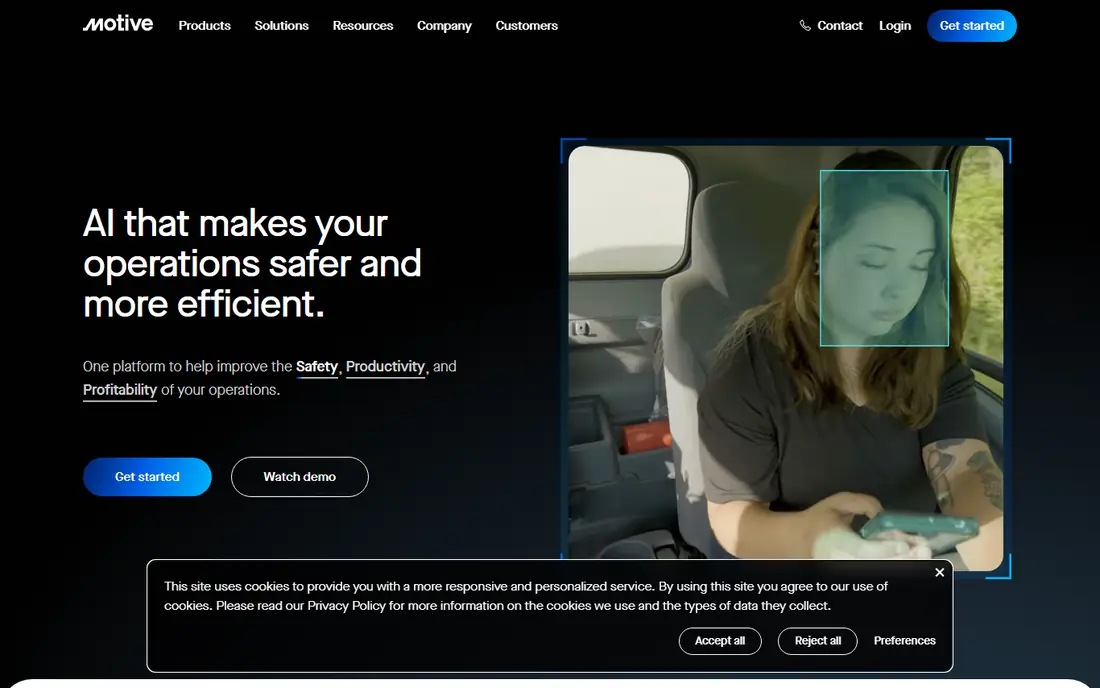
Motive grew out of electronic logging for trucking, and that history still shapes the product. For a small carrier, the appeal is a single place for hours-of-service logs, vehicle location, driver safety scores and fuel records. Dispatchers can see compliance status without chasing paper logs, and drivers get a mobile app built around the daily work of a trucking job.
Motive does not publish fixed prices, and 2026 buyer reports commonly place it around $20 to $45 per vehicle per month depending on plan, with hardware often bundled on longer terms. Shorter terms than some rivals are often reported, with 12-month minimums common, which helps a small carrier that is still growing. Ask what is included in the base plan, because cameras, fuel tools and compliance features can sit in different tiers.
- Strong ELD and hours-of-service tools
- AI dashcams
- Fuel card options
- No published price
- Hardware and contract terms vary by quote
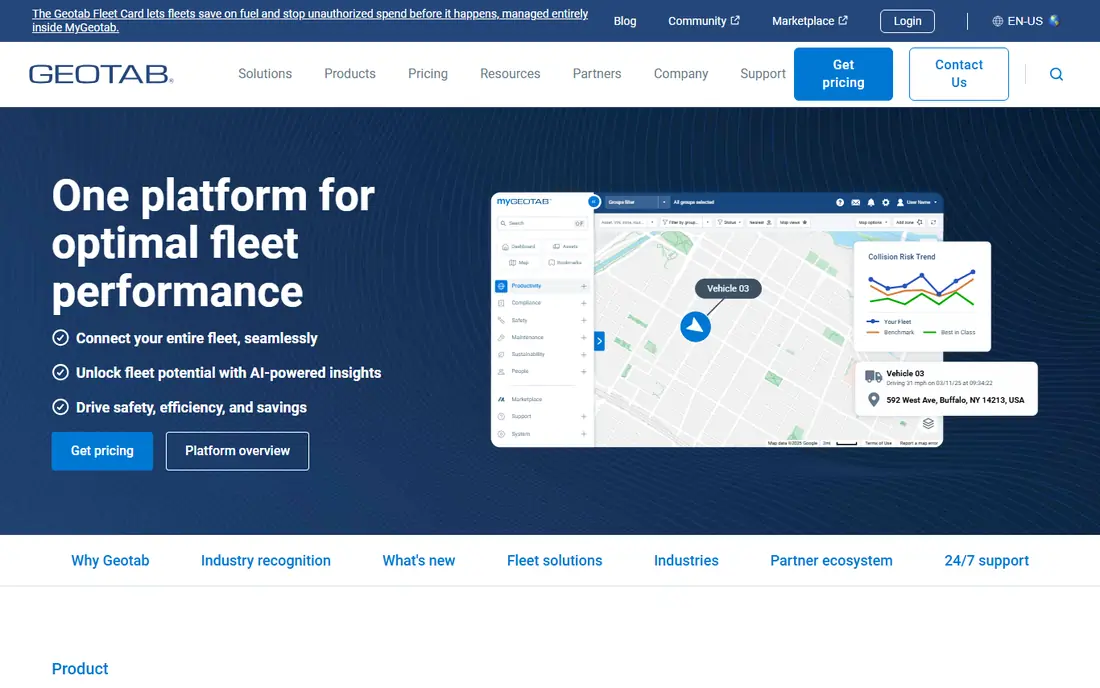
Geotab is a good fit for a small fleet that wants data it can actually use elsewhere. Its open API and large integration marketplace let a business connect tracking data to maintenance, fuel or business software instead of keeping fleet data in a separate silo. Electric vehicle tools, including suitability checks and charging reports, are a real strength for fleets planning a switch away from petrol and diesel vehicles.
The trade-off is that Geotab sells through resellers, so the price and the level of support depend on the partner you choose. Published estimates in 2026 put bundled software and rented hardware around $30 to $40 per vehicle per month, with device purchase costs separate in other deals. Get quotes from more than one reseller and ask who answers support calls, because that partner becomes part of the product in practice.
- Open platform with many integrations
- Strong EV and reporting tools
- Wide reseller network
- Pricing varies by reseller
- Service quality can differ by partner
Verizon Connect suits a service business that values steady tracking and detailed reporting over a flashy interface. Its Reveal platform covers live location, driver behaviour, maintenance alerts and job dispatch, which fits plumbing, electrical, delivery and field service fleets that live on schedules. The backing of a large carrier network is also reassuring for businesses operating across wide areas.
The downside is the same as with several enterprise platforms: pricing is quote-based, and a three-year initial term is widely reported, with early termination fees to check carefully. Small fleets should ask for the full term, the per-device cost and what happens at renewal before committing. If the business expects rapid change in fleet size, a shorter deal elsewhere may be worth more than extra reporting depth.
- Mature tracking and reporting
- Strong network backing
- Wide vehicle coverage
- No published price
- Long initial terms widely reported
Azuga is the easiest platform on this list to budget for, because its pricing page lists BasicFleet at $25, SafeFleet at $30 and CompleteFleet at $35 per vehicle per month. BasicFleet covers GPS tracking, alerts, geofences, driver scores and maintenance alerts, while higher tiers add faster location refresh, fuel tools, messaging and coaching. That clarity is a genuine advantage for a small business owner who wants a number before a sales call.
Driver rewards are Azuga's most distinctive feature, turning safe driving scores into recognition that drivers can see. The hardware plugs into the vehicle port, so installation is simpler than hardwired systems. The main limits are the lack of a free trial and a commonly reported 36-month term, plus extra cost for AI SafetyCams, so treat the headline plan price as the starting point, not the final bill.
- Clear published plans
- Driver scores and rewards
- Plug-and-play hardware
- No free trial
- Long terms are common
Fleetio answers a different question from most tools here: not where is the vehicle, but what condition is it in and what work is due. It manages vehicle records, digital inspections, work orders, fuel and parts, and it pulls location and odometer data from telematics partners such as Samsara and Geotab. For a small fleet drowning in spreadsheets and paper inspection forms, that structure alone can save hours each week.
Pricing is refreshingly clear at $4 per vehicle per month for Essential, $7 for Professional and $10 for Premium when billed annually, with a 14-day free trial and a five-vehicle minimum. The limit is that Fleetio does not supply its own live GPS trackers, so a business that needs real-time location will need a second product or an integration. Used as the maintenance layer, though, it is one of the best-value tools a small fleet can buy.
- Transparent low pricing
- Strong inspections and work orders
- Unlimited users on plans
- No live GPS tracking of its own
- Five-vehicle minimum
GPS Trackit fits a small fleet that wants straightforward tracking without a complicated setup. Its Fleet Manager covers live maps, vehicle status, driver scorecards, maintenance reminders and fuel reporting, with field service tools for dispatch and scheduling as an option. Hardware is included in plans, and the company promotes unlimited training and round-the-clock support, which matters when a small team has no IT department.
Pricing has become less transparent over time. Older published figures put fleet tracking from $24.99 per vehicle per month on longer terms, but the vendor now asks buyers to request a custom quote, so we list the price as See website rather than repeating an old number as current. Add-ons for video telematics, driver ID and ELD compliance cost extra, so a buyer who needs those features should price the full package, not the base tracker alone.
- Hardware included in plans
- 24/7 support reported
- Flexible contract lengths
- Price now quote-based
- Dashcams and ELD cost extra
Hapn, formerly sold under the Spytec name, is the pick for a very small fleet that mainly needs to see its vehicles on a map. Annual OBD plans start at $8.95 per vehicle per month with free hardware, while month-to-month tracking is $14.95 per vehicle per month, and monthly plans can be cancelled at any time. That flexibility is rare in a category full of multi-year deals, and it suits a business with one to ten vehicles that wants to try tracking without a big commitment.
The trade-off is depth. Hapn covers live location, fuel use, idling and engine diagnostics well, but it is not a full maintenance, compliance or dispatch platform. Video tracking is available as a separate camera add-on rather than part of the base plan. For a landscaping, cleaning or delivery business with a handful of vans, that simpler scope is often enough, and the low price leaves room to add a maintenance tool later if needed.
- Low entry price
- Free hardware
- No long contract on monthly plans
- Lighter fleet management features
- Video is a separate add-on
How we picked these
We compared official feature pages, published pricing pages and public buyer reports for each product, and we favoured tools that are still sold and supported in October 2026. Where a vendor does not publish a price, we wrote See website instead of presenting a third-party estimate as a vendor price. We also weighed contract length, hardware costs and whether a tool covers tracking, maintenance, safety or compliance, because those factors decide the real cost for a small fleet.
What to check before you sign a fleet contract
Start with the problem that costs the most time or money today. If missed service and breakdowns are the issue, a maintenance tool such as Fleetio may help more than a camera system. If driver safety or insurance claims are the worry, cameras and coaching deserve the budget. If the main need is knowing where vehicles are for customers and dispatch, a simple tracker may be all that is needed.
Next, ask for the total cost in writing: subscription, hardware, installation, cameras, compliance modules and any early termination fee. Check the contract term, what happens when a vehicle is sold, and whether the price rises at renewal. Finally, run a short trial or demo with real drivers, because a system drivers refuse to use will not improve safety or service no matter how good the dashboard looks.
Frequently asked questions
What is the cheapest fleet management software for a small business?
Fleetio starts at $4 per vehicle per month billed annually for maintenance, and Hapn starts at $8.95 per vehicle per month billed annually for GPS tracking. The cheapest overall choice depends on the job, because Fleetio does not include its own live GPS trackers and Hapn does not include full maintenance management.
Do I need hardware for fleet tracking?
Most live tracking platforms need a device in each vehicle, either plugged into the diagnostic port or hardwired. Some vendors include hardware in the plan price, while others charge separately, so ask whether the device is rented, bought or included before comparing monthly prices.
How long are fleet software contracts?
Terms vary widely. Some tools offer month-to-month plans, others commonly ask for 12 months, and several leading platforms are reported to ask for 36 months. Shorter terms usually cost more per month but give a small business more freedom if fleet size changes.
Is fleet tracking legal for employee drivers?
In general, tracking company vehicles during work is allowed in the United States, but rules and expectations vary by state and by workplace policy. Tell drivers what is tracked, why it is tracked and how the data is used, and check local rules or legal advice if the policy covers personal use or off-duty time.
Can one tool handle tracking and maintenance?
Yes, several platforms combine live tracking with maintenance alerts, but depth varies. A dedicated maintenance tool often gives better inspection and work order features, while a telematics platform often gives better live location and safety data. Many fleets use both, connected by integration.
Sources
See where you really rank - block by block
ProMapRanker scans Google Maps across a grid of your service area. Simple monthly plans from $19, white-label on every plan.
Start freeKeep reading
 what’s the best risk software for enterprises
What Is the Best Risk Software for Enterprises in 2026
We compared what’s the best risk software for enterprises on risk registers, controls, third-party risk, and reporting, with pricing notes for large teams.
Read → what's the best pam software for enterprises
What is the Best PAM Software for Enterprises in 2026
Find what's the best pam software for enterprises, with vaulting, session recording, just in time access and pricing compared for large enterprise IT teams.
Read → what’s the best grc software
What Is the Best GRC Software in 2026
We compared what’s the best grc software on risk, compliance, audit and vendor risk, so teams can pick a platform that fits their frameworks and budget.
Read →