 ProMapRanker
Best Fintech Companies in 2026

Key takeaways
- Stripe and Plaid power the infrastructure behind many apps, while Revolut, Chime, Wise, and SoFi serve consumers directly.
- PayPal suits buyers and sellers who want wide acceptance, while Robinhood suits self-directed investors.
- Business users should separate payments, banking, and investing needs, because no single fintech does all three best.
- This is not financial advice, and investing, lending, and crypto products carry risk, so check fees, terms, and protections before you use them.
- Pricing and features vary by country and account type, so confirm availability in the United States before you rely on a feature.
Quick comparison
| Pick | Great for | Pricing starts at | Free tier | |
|---|---|---|---|---|
 Stripe | Online payments and business finance | See website | No | Visit |
 PayPal | Wide consumer and merchant payments | See website | Yes | Visit |
 Plaid | Connecting apps to bank accounts | See website | No | Visit |
 Revolut | Multi-currency banking and travel money | Free | Yes | Visit |
 Chime | Fee-friendly everyday banking in the US | Free | Yes | Visit |
 Wise | International transfers and multi-currency accounts | See website | Yes | Visit |
 Robinhood | Self-directed investing | Free | Yes | Visit |
 SoFi | Banking, lending, and investing in one app | Free | Yes | Visit |
The best fintech companies
Fintech covers payments, banking, lending, investing, and the infrastructure that connects them. The companies below are leaders in different parts of that system, so the best pick depends on your role: consumer, business, or developer building on top of financial tools.
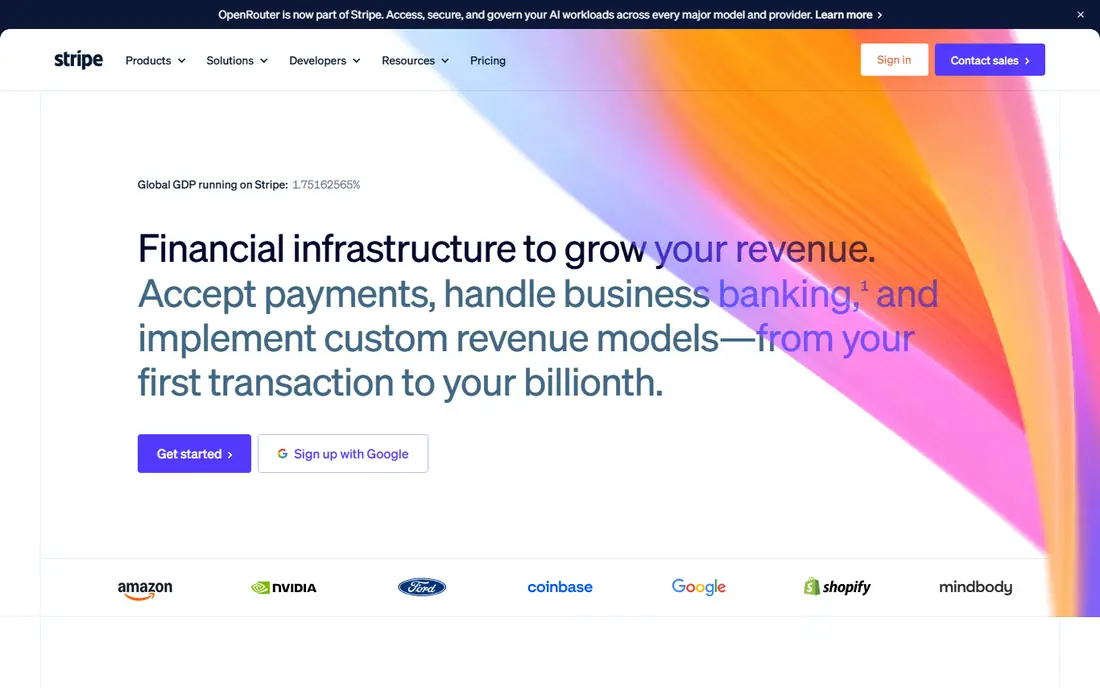
Stripe is the infrastructure pick for online businesses. It lets companies accept payments, manage subscriptions, send invoices, handle billing, and add fraud controls without building a payment system from scratch. Its documentation and developer tools are a major reason so many platforms build on Stripe.
The catch is complexity and cost structure. Fees vary by payment method, currency, and product, and tax, payout, and compliance settings need care. Stripe fits businesses that sell online and want a full payment stack, not consumers looking for a simple bank account.
- Broad payment, billing, and fraud tools
- Strong developer documentation
- Global payment options
- Pricing depends on payment methods and volume
- Smaller businesses may need help with setup and tax tools
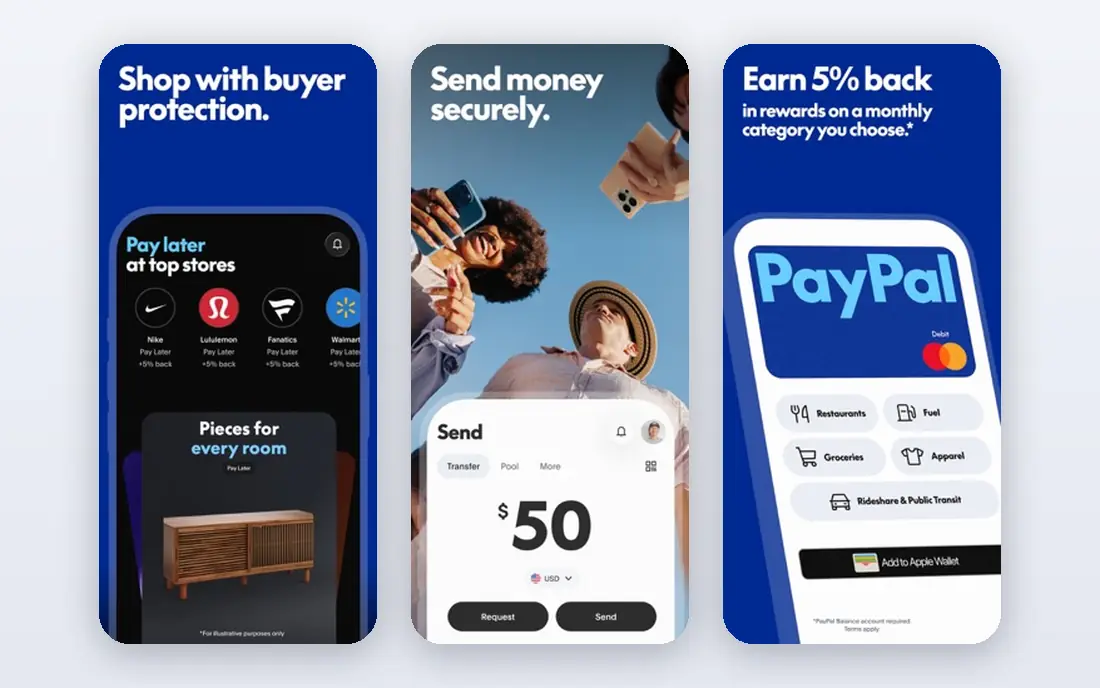
PayPal remains useful because so many buyers already have an account. Consumers can pay without sharing card details with every merchant, and merchants can accept payments from a large existing user base. That acceptance is hard to match, especially for small online sellers.
Fees are the main drawback. Personal transfers between friends may be free in some cases, but business payments, currency conversion, and some seller transactions carry fees. Check the fee page for your transaction type before you assume PayPal is the cheapest option.
- Very wide acceptance for buyers and sellers
- Buyer and seller protections on eligible transactions
- Simple checkout
- Fees apply to many business and currency transactions
- Account holds can affect sellers

Plaid is the hidden layer behind many fintech apps you already use. It lets budgeting, investing, and payment apps connect to bank accounts securely, verify identity, and move money with fewer manual steps. If you have linked a bank account to a finance app, there is a good chance Plaid handled that connection.
Consumers do not open a Plaid bank account, so it does not belong on a list of everyday banking apps. Its value is for businesses and developers that need reliable bank connectivity, and for users who want to know which infrastructure their apps rely on.
- Connects thousands of financial institutions to apps
- Identity and payment tools for developers
- Widely used by budgeting and investing apps
- Built for developers and businesses, not direct consumer banking
- Pricing is business-focused
Revolut suits travelers and people who hold or spend in several currencies. You can hold balances, exchange currency in the app, and spend with a card while tracking budgets and categories. Its all-in-one approach also adds investing and savings tools in many markets, which appeals to users who want fewer apps.
Country differences matter. A feature available in the UK or EU may not be available in the United States, and paid plans raise higher limits and extra tools. Check the US feature list and fee page before you choose Revolut as your main account.
- Multi-currency accounts and cards
- Travel and spending tools
- Investing and crypto features in supported markets
- Feature availability varies by country
- Some features need a paid plan
- US banking features differ from UK and EU versions
Chime is a strong US pick for everyday banking without branch visits. Its checking and savings accounts avoid monthly fees, and early direct deposit can make paydays arrive sooner for eligible users. The app focuses on clarity, with spending alerts, savings tools, and a simple card experience.
Chime is not a bank itself, so banking services come through partner banks, and deposits are subject to partner terms and FDIC pass-through rules. That model works well for digital-first users, but people who want in-person service should keep a traditional bank as well.
- No monthly fees on core accounts
- Early direct deposit where offered
- Simple app and card tools
- Banking services are provided through partner banks
- No physical branches
- Some features depend on direct deposit
Wise stands out for international money because it shows fees and exchange rates before you confirm a transfer. Freelancers paid from abroad, travelers, and small businesses with overseas clients can hold balances in several currencies and pay local account details where offered. That transparency helps you compare Wise with a bank transfer on total cost, not just on headline rate.
Wise is not always a full bank replacement, especially if you need local lending, cash deposits, or branch service. Use it for international payments and multi-currency holding, and keep a local account for everyday domestic banking.
- Transparent transfer fees shown before you send
- Multi-currency account details in several countries
- Useful for freelancers and travelers
- Not a full replacement for a local bank in every case
- Transfer speed depends on route and method
Robinhood suits investors who want a simple app and low-cost trades. You can buy stocks and ETFs, open retirement accounts, and track a portfolio without the complexity of a traditional broker platform. That simplicity has made it popular with new investors, though it also means you need to do your own research.
This is not financial advice. Investing involves risk, prices can fall, and crypto trading carries additional volatility and regulatory limits by state. Robinhood fits self-directed investors who understand those risks and want control, not investors who want advice or managed portfolios.
- Commission-free stock and ETF trades on many orders
- Simple app for investing and retirement accounts
- Crypto trading in supported states
- Investing carries risk and losses are possible
- Advanced research tools are thinner than full broker platforms
SoFi appeals to users who want banking, borrowing, and investing in one place. Its app combines checking and savings with investing, personal loans, and student loan refinancing, which can simplify money management for young professionals. Member benefits and rate discounts on some products add value if you use several SoFi services.
Lending is not guaranteed, and rates depend on credit, income, and loan terms, so a SoFi loan may not beat a local bank or credit union for every borrower. Compare loan terms, fees, and total cost, and treat investing features with the same risk caution as any brokerage.
- Banking, lending, and investing in one app
- Student loan refinancing and personal loans
- Member benefits on some products
- Lending approval and rates depend on credit and profile
- Investing still carries market risk
How we picked these
We compared official company pages and recent fintech guides for companies that were operating at scale in 2026 across payments, banking, investing, and infrastructure. We favored firms with a clear consumer or business product, a working official site, and a distinct role, rather than listing many similar apps. We excluded firms with no public US-facing product and firms whose main business is not financial technology.
How to choose a fintech company without taking on extra risk
Start with the job, not the brand. Payments need acceptance and fee clarity, everyday banking needs deposit protection and fee transparency, investing needs research and risk controls, and business finance needs payout timing and reconciliation. A company that excels at one job may be average at another, so use different tools for different jobs when needed.
Check the fine print that matters for your use. For banking, confirm which partner bank holds deposits and how FDIC insurance applies. For payments, confirm fees for your payment methods and currencies. For investing and lending, confirm risks, rates, and terms in writing. A short trial with small amounts is safer than moving all your money at once.
Separate hype from infrastructure
Many popular apps rely on infrastructure from Stripe or Plaid, and many digital banks rely on partner banks. Knowing that layer helps you judge reliability and support. If an app fails, your recourse may sit with the partner bank or payment provider, so save account details, transaction records, and support contacts outside the app.
Frequently asked questions
What are the best fintech companies?
Stripe, PayPal, Plaid, Revolut, Chime, Wise, Robinhood, and SoFi are among the best, but they serve different jobs. Stripe and Plaid suit businesses and developers, while Chime, Revolut, Wise, Robinhood, and SoFi suit consumers and investors.
What is the best fintech company for small businesses?
Stripe is a strong choice for online payments and billing, while Wise suits international payments and PayPal suits wide buyer acceptance. Many small businesses use two or three of these together rather than one tool for everything.
What are the top fintech software companies for developers?
Stripe and Plaid lead for developers, because they provide APIs, documentation, and tools for payments and bank connectivity. Their pricing and features are business-focused, so check their developer pages for current terms.
Is Chime a bank?
No, Chime is a financial technology company, and its banking services are provided through partner banks. Deposits are subject to partner terms, so check the current partner and insurance details on the official site.
Is fintech safe to use?
Reputable fintech companies use encryption, fraud controls, and regulated partners, but no service removes all risk. Check deposit protection, fees, and terms, use strong authentication, and keep records of important transactions.
What is the best financial technology company for international transfers?
Wise is our pick for international transfers, thanks to transparent fees and multi-currency accounts. Revolut also suits travelers who hold several currencies, while PayPal suits transfers to people who already use PayPal.
Sources
See where you really rank - block by block
ProMapRanker scans Google Maps across a grid of your service area. Simple monthly plans from $19, white-label on every plan.
Start freeKeep reading
 zoho inventory alternatives
6 Alternatives to Zoho Inventory, Compared on Price and Fit
Zoho Inventory alternatives: 6 tools compared on price, free plans and fit. Katana leads the list for manufacturers. Fit and flaws are laid out for each entry.
Read → zoho crm alternatives
Best Zoho CRM Alternatives (2026)
Need Zoho CRM alternatives? We compare 7 tools on cost, free access and who each suits. Every pick gets a straight assessment. Built for quick decisions.
Read → zelle alternatives
Best Zelle Alternatives in 2026
Compare the best Zelle alternatives for sending money to friends, paying sellers and moving funds abroad, with honest notes on fees, speed and safety in 2026.
Read →