 ProMapRanker
Best Financial Services Companies in 2026


Full service banking and investing · Pricing starts at: See website
Key takeaways
- JPMorgan Chase, Bank of America, Wells Fargo, and Citigroup suit buyers who want banking, cards, and investing under one large institution.
- Schwab, Fidelity, and Vanguard suit self directed investors who prioritize low cost funds, research tools, and retirement accounts.
- Morgan Stanley and Goldman Sachs suit wealth clients who want advice, planning, and access to private and institutional services.
- Fees, account minimums, and service levels vary by product, so compare the exact account or advisory program, not just the firm name.
- This is general information only, not financial advice, and investing carries risk, including possible loss of principal.
Quick comparison
| Pick | Great for | Pricing starts at | Free tier | |
|---|---|---|---|---|
| JPMorgan Chase | Full service banking and investing | See website | No | Visit |
 Bank of America | Banking plus Merrill investing | See website | No | Visit |
 Wells Fargo | Branch banking and wealth | See website | No | Visit |
 Citigroup | Global banking services | See website | No | Visit |
 Charles Schwab | Low cost self directed investing | See website | No | Visit |
 Fidelity Investments | Investing and retirement tools | See website | No | Visit |
 Vanguard | Low cost index investing | See website | No | Visit |
 Morgan Stanley | Wealth advice and planning | See website | No | Visit |
 Goldman Sachs | Private wealth and advisory | See website | No | Visit |
The best financial services companies
We compared company service pages and public descriptions of banking, brokerage, wealth, and retirement services, with a focus on everyday fit for US consumers and investors.
This is not financial advice. Fees, rates, and account terms change, and the right firm depends on your balances, investing style, need for advice, and comfort with digital tools. Compare written fee schedules and account terms before opening an account.
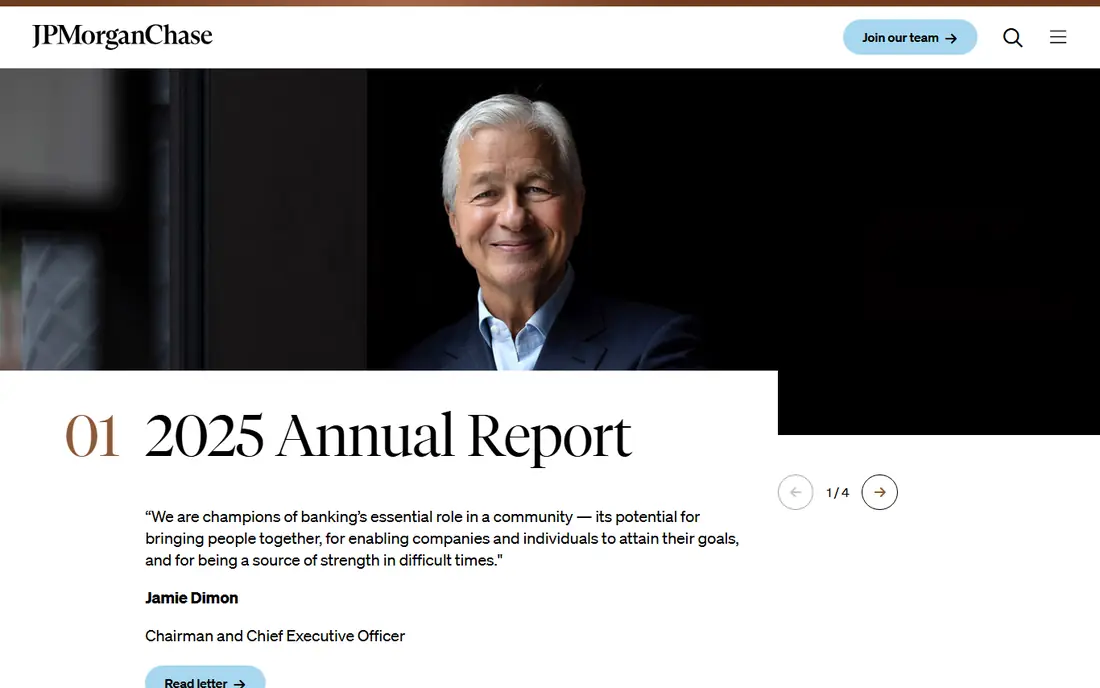
JPMorgan Chase combines Chase consumer banking with J.P. Morgan investment and wealth services, which suits households that want checking, savings, cards, mortgages, and investing in one relationship. Its digital app and large branch network give customers a choice between self service and in person help. Small businesses also find commercial banking, payments, and wealth services under the same group.
The trade off is complexity. Fee schedules, account tiers, and advisory programs differ widely, so a customer should compare the exact account they plan to open. A basic checking customer will not get the same service model as a private wealth client. JPMorgan Chase suits buyers who value scale, branch access, and a full product range in one firm.
- Very large branch and digital network
- Chase banking plus J.P. Morgan investing and wealth services
- Broad product range
- Fees and account terms vary by product
- Large firm service can feel less personal for small accounts
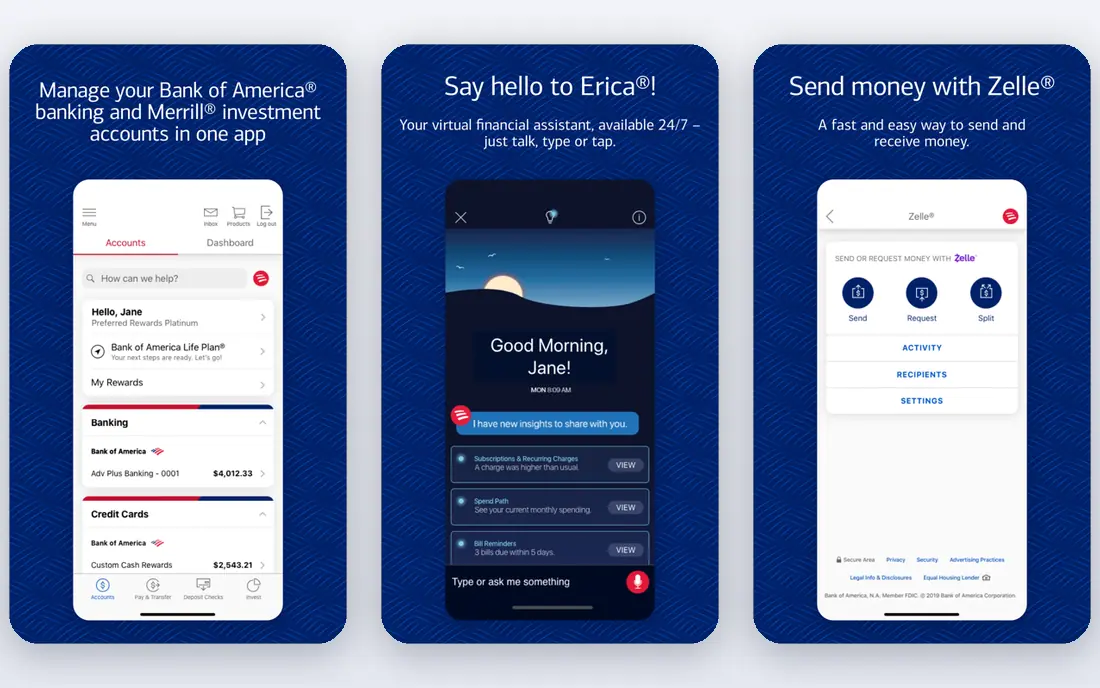
Bank of America pairs consumer banking with Merrill investing, which helps customers who want a bank account and a brokerage account that work together. Its Preferred Rewards program offers benefits for customers who keep qualifying combined balances across Bank of America and Merrill accounts. Branch access remains a strength for customers who prefer in person service for complex questions.
Benefits depend on balances, so a customer with a small balance may see fewer rewards or fee waivers. Advisory programs also carry fees that vary by service level. Bank of America suits customers who already bank with it, or who want banking and investing linked, with rewards tied to combined balances.
- Large branch network
- Merrill investing and wealth services
- Preferred Rewards program for qualifying balances
- Rewards and fee waivers depend on combined balances
- Advisory fees vary by program
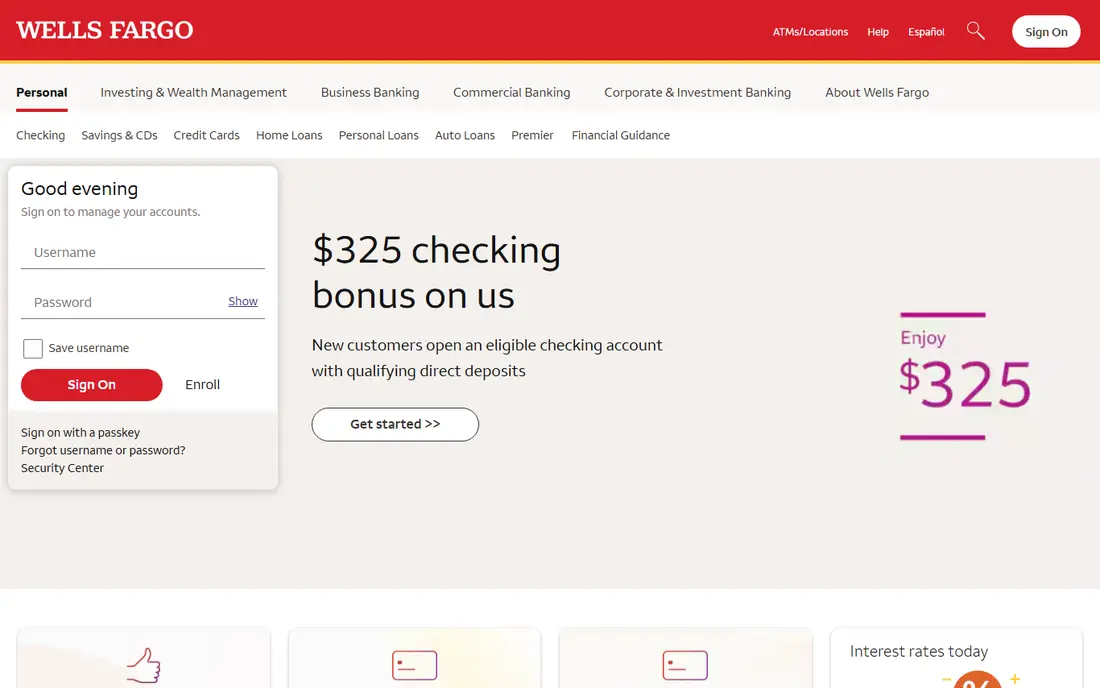
Wells Fargo offers consumer banking, mortgages, cards, and wealth services through a large branch network and digital channels. Customers who value in person service for mortgages, small business banking, or wealth planning will find many local options. Its digital app covers everyday banking, bill pay, and account management for customers who rarely visit a branch.
Fee schedules vary by account, and some customers still weigh its past regulatory history when choosing a bank. Compare current account terms, overdraft policies, and service reviews for your local branch. Wells Fargo suits customers who want a large national bank with strong branch access and a broad product menu.
- Large US branch network
- Broad banking, mortgage, and wealth services
- Digital tools for everyday banking
- Product fees and terms vary
- Past regulatory issues remain a concern for some customers
Citigroup, through Citibank, offers banking, cards, and wealth services with a global footprint that suits customers who travel, work abroad, or hold international accounts. Its credit card range and global banking tools help customers who need cross border payments and currency services. Wealth clients can also access advisory and private banking programs.
US retail presence has changed in recent years, so branch access may be thinner than at JPMorgan Chase, Bank of America, or Wells Fargo in some areas. Check local branch and ATM access before choosing Citi as a primary bank. Citigroup suits customers with international needs, or wealth clients who value its global services.
- Global banking reach
- Citi cards and wealth services
- Useful for customers with international needs
- US retail footprint is smaller than some rivals after recent changes
- Product fit varies by client type
Charles Schwab is a leading choice for self directed investors, with a broad range of stocks, ETFs, mutual funds, and retirement accounts. Its trading platform, research tools, and education content help investors who manage their own portfolios. Schwab Bank also lets customers link banking and investing, though its branch network is smaller than a large retail bank.
Managed advisory programs carry fees, and customers who want full service advice should compare Schwab Intelligent Portfolios and human advisor programs carefully. Schwab suits investors who want low cost investing, strong tools, and a large brokerage platform, with banking as a secondary benefit.
- Broad low cost ETFs and funds
- Research and trading tools
- Schwab Bank for linked banking
- Advisory fees apply to managed programs
- Branch access is thinner than large banks
Fidelity offers brokerage, retirement, and wealth services with a deep set of research tools, screeners, and planning calculators. Investors value its fund range, low cost index options, and education content for retirement planning. Its platform also supports active traders with advanced tools, while retirement savers can use guided portfolios and calculators.
Depth can overwhelm a beginner, since the platform offers many choices and settings. Advisory programs carry fees that depend on service level, so compare self directed, robo, and human advisor options. Fidelity suits investors who want a full featured platform for investing and retirement, with tools that grow as their knowledge grows.
- Very broad investing and retirement tools
- Research, screeners, and planning calculators
- Large fund range
- Platform depth can overwhelm beginners
- Advisory fees vary by program
Vanguard built its name on low cost index funds and ETFs, and it remains a strong choice for long term retirement investors who prefer simple, diversified portfolios. Its fund range covers US and international stocks, bonds, and target date funds, with tools for retirement planning and portfolio review. The firm describes itself as client owned, since its US funds own the management company, which it links to its low cost focus.
Active traders may prefer Schwab or Fidelity, since Vanguard trading tools and research are less extensive. Customer service experiences also vary, and the platform feels plain next to feature rich rivals. Vanguard suits long term index investors who prioritize low costs and simple portfolios over advanced trading features.
- Low cost index funds and ETFs
- Retirement focused tools
- Client owned structure described by the firm
- Trading and active trader tools are less extensive than Schwab or Fidelity
- Service can feel plain
Morgan Stanley combines wealth management advice with E*TRADE self directed investing, which gives customers a path from DIY investing to full advice. Its advisors cover retirement, tax aware planning, estate topics, and workplace stock plans, often in coordination with a client's tax and legal advisers. That breadth suits households with complex finances who want a single advisory relationship.
Advisory fees and minimums vary by program, and full service advice generally suits larger balances. Customers with small balances may find self directed tools or a robo program a better fit. Morgan Stanley suits investors who want advice and planning, with the option to keep a self directed account alongside it.
- Strong wealth management and advice
- E*TRADE for self directed investing
- Retirement and planning services
- Advisory fees and minimums vary by program
- Full service advice suits larger balances best
Goldman Sachs is best known for investment banking and private wealth management, with advisory services for high net worth clients, families, and institutions. Its private wealth teams cover investment planning, lending, philanthropy, and family office style services. Clients who need sophisticated planning and access to private market offerings will find a deep bench here.
Everyday banking and small account investing are not its main focus, and private wealth minimums and fees reflect that model. Marcus, its consumer digital banking brand, has changed over time, so check current consumer products separately. Goldman Sachs suits wealth clients who want private advisory depth, not a primary everyday bank for small balances.
- Strong private wealth and advisory services
- Sophisticated planning and investment access
- Global firm resources
- High minimums and fees for private wealth programs
- Less suited to small everyday banking needs
How we picked these
We compared company service pages and public descriptions for firms that offer banking, brokerage, wealth, or retirement services to US customers. We mixed large banks with brokerage and wealth firms so readers can compare full service banking against low cost investing and advice led wealth services. We did not invent fees, rates, minimums, or returns, since those vary by account and program. We used See website where terms are account specific, and we framed the guide as general information, not financial advice.
How to choose a financial services company
Start with your main need. Everyday banking calls for branch access, ATM coverage, fee terms, and digital tools. Self directed investing calls for low costs, fund range, and research tools. Advice calls for planner quality, fee transparency, and coordination with tax and estate planning. A firm that excels at one need may be average at another, so match the firm to the job.
Compare fees in writing. Look at account fees, trading commissions, fund expense ratios, advisory fees, and any charges for transfers, wires, or paper statements. Check minimums for the exact account or program, since a firm may offer a free brokerage account but charge for managed advice. Also check deposit insurance, SIPC coverage for brokerage accounts, and how customer service works when you need help.
Questions to ask before opening an account
Ask what happens if your balance drops below a threshold, how fees change with advisory levels, and how long transfers take. Ask whether an advisor is a fiduciary for your account type, and how they are paid. Ask about tax documents, beneficiary options, and joint account rules. Those details matter more than a brand name once you use the account daily.
Keep investing risk in view
Investing carries risk, including possible loss of principal, and past performance does not predict future results. Diversification, time horizon, and emergency savings matter more than picking a single fund or stock. If you are unsure about risk, fees, or tax effects, consider speaking with a qualified financial adviser who can review your full situation.
Frequently asked questions
What is the best financial services company for everyday banking?
JPMorgan Chase, Bank of America, and Wells Fargo offer large branch networks, digital tools, and broad product ranges for everyday banking. The best choice depends on local branch access, account fees, and digital features you use most. Compare fee schedules for the exact checking and savings accounts you plan to open.
What is the best financial services company for investing?
Schwab, Fidelity, and Vanguard suit many self directed investors, with low cost funds, research tools, and retirement accounts. Schwab and Fidelity offer broader trading tools, while Vanguard suits long term index investors. Compare fund costs, trading fees, and platform tools for your investing style.
Should I use a bank or a brokerage for investing?
A bank linked brokerage suits customers who want banking and investing together, while a standalone brokerage often offers broader investing tools and lower fund costs. Many investors use both: a bank for everyday money and a brokerage for long term investing. Check fees and transfer times for each setup.
How much does a financial adviser cost?
Adviser fees vary by program, balance, and service level, and firms usually disclose them in program documents. Some charge a percentage of assets, while others charge flat or hourly fees. Ask for the full fee schedule, including fund costs and any additional charges, before agreeing to an advisory program.
Is my money safe at a large financial services company?
Bank deposits are generally covered by FDIC insurance up to legal limits for eligible accounts, while brokerage accounts generally carry SIPC protection for missing securities up to legal limits, which does not protect against market loss. Check coverage for your account type and keep balances and account titles in view. Diversification and emergency savings remain important even at a large firm.
What is the difference between a bank, a brokerage, and a wealth manager?
A bank holds deposits and offers loans, cards, and payments. A brokerage holds investments and offers trading and retirement accounts. A wealth manager offers advice and planning, often using brokerage and banking products together. Large firms such as JPMorgan Chase, Bank of America, and Morgan Stanley offer more than one of these services, so compare the exact program you will use.
Sources
See where you really rank - block by block
ProMapRanker scans Google Maps across a grid of your service area. Simple monthly plans from $19, white-label on every plan.
Start freeKeep reading
 zoro.to alternatives
Best Zoro.to Alternatives in 2026
We compare the best zoro.to alternatives in 2026, listing only legal licensed anime streaming services, from Crunchyroll to free options for fans today.
Read → zip alternatives
Best Zip Alternatives in 2026
We compare the best zip alternatives for buy now, pay later in 2026, covering pay-in-4 plans, fees, spending limits, and credit reporting options today.
Read → yesware alternatives
Best Yesware Alternatives in 2026
Compare the best yesware alternatives for sales email tracking, templates, and sequences, with current pricing and honest tradeoffs for small sales teams.
Read →