 ProMapRanker
Best Financial Reconciliation Software in 2026

Key takeaways
- BlackLine and Trintech suit large, multi-entity teams, while FloQast and Numeric are easier starting points for mid-sized finance teams.
- Numeric publishes a Starter price of $30 per user per month, while most enterprise tools in this list quote on request.
- Transaction matching, auto-certification and a clear audit trail matter more than a long feature list when volumes grow.
- Small businesses with simple bank reconciliation may not need a dedicated close platform at all, and should check their accounting software first.
Quick comparison
| Pick | Great for | Pricing starts at | Free tier | |
|---|---|---|---|---|
 BlackLine | Large enterprise close teams | See website | No | Visit |
 FloQast | Mid-sized teams using Excel | See website | No | Visit |
 Numeric | Growing teams wanting transaction detail | $30 per user per month | No | Visit |
 Adra by Trintech | High-volume transaction matching | See website | No | Visit |
 AutoRek | Regulated firms with complex matching | See website | No | Visit |
 ReconArt | Banks and firms with many data sources | See website | No | Visit |
 SkyStem | Mid-sized teams wanting faster close | See website | No | Visit |
 SolveXia | Teams needing custom automation | See website | No | Visit |
 HighRadius | Large firms combining close and receivables | See website | No | Visit |
The best financial reconciliation software
These tools help finance teams match transactions, certify accounts and close the books with a record auditors can follow. This is not financial advice, and pricing and controls should be confirmed with each vendor before purchase.
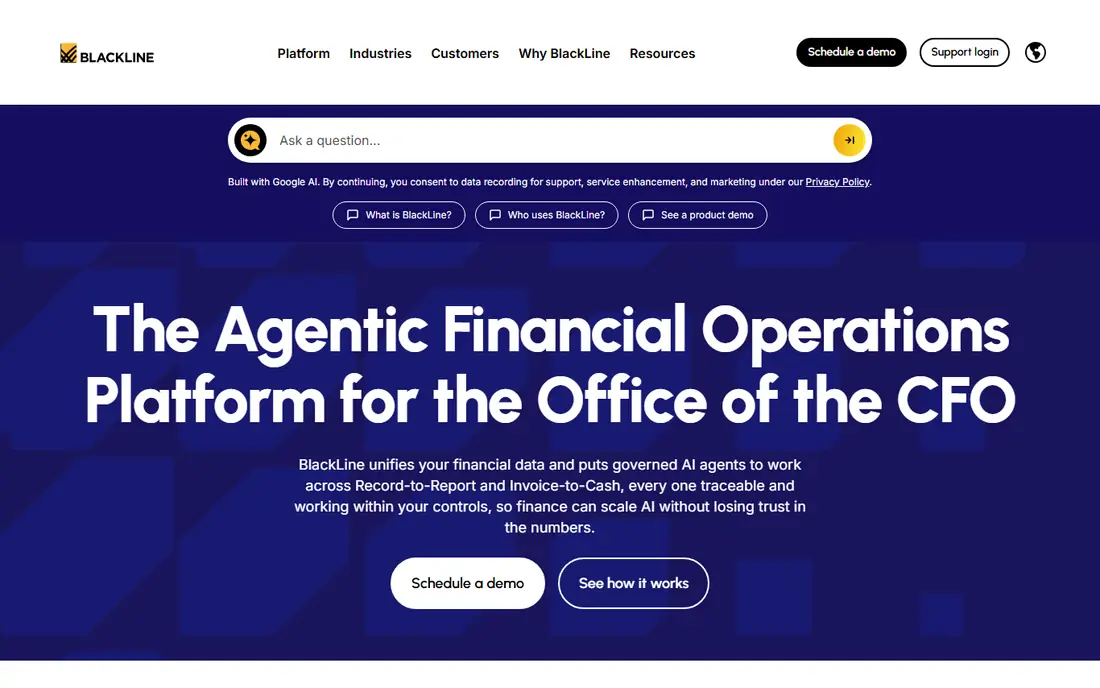
BlackLine covers account reconciliation, journal entries, close task management and intercompany work in one platform. That breadth is the reason large finance teams with many entities and strict control requirements often start here. It is built for volume, so teams handling thousands of reconciliations each month get more value from it than a small team with a handful of accounts.
The trade-off is effort and cost. BlackLine pricing is quote-based, and implementation for a complex setup can take months and needs internal ownership. Smaller teams may find the platform more than they need, and should weigh that overhead against a lighter tool. For a large, audit-heavy close, though, the control and history it keeps are hard to match.
- Broad close coverage
- Deep ERP links
- Strong audit trail
- Quote-only pricing
- Long implementation for complex setups
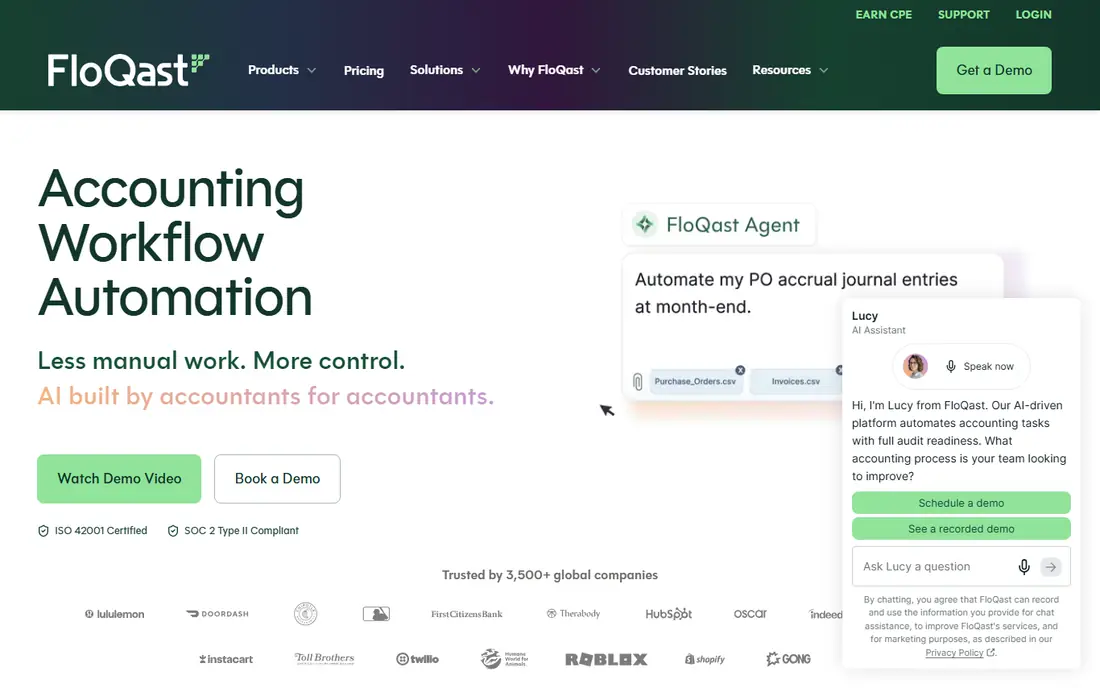
FloQast organizes the close around checklists, reconciliations and tasks, and it keeps Excel at the center of the work many accountants already do. That design helps teams adopt it without rebuilding every process from scratch. Managers can see what is done, what is late and who owns each item, which cuts the usual end-of-month chasing.
It is less suited to the largest, most complex closes, where BlackLine or Trintech may offer deeper automation and control. FloQast also prices by quote, so a team should get a written quote for its entity count and modules before judging value. For a growing mid-sized team, the balance of familiarity and visibility is its main appeal.
- Familiar Excel-based workflow
- Clear close visibility
- Faster adoption than enterprise suites
- Quote-only pricing
- Less depth for very large multi-entity closes

Numeric focuses on the close with transaction-level visibility into ERP data, so accountants can trace a balance back to its source transactions without exporting and rebuilding reports. Its Starter plan is listed at $30 per user per month, which makes entry pricing clearer than most rivals here. That transparency helps smaller finance teams budget with fewer surprises.
Growth and Enterprise tiers require a quote, so total cost rises with team size and needs. Numeric also aims at mid-sized to enterprise teams rather than solo bookkeepers, so very small firms may still prefer their accounting software. For teams tired of spreadsheet rebuilds each month, Numeric is a practical middle ground.
- Published Starter price
- Transaction-level ERP detail
- Fast implementation for its tier
- Higher tiers are quote-only
- May be light for the largest enterprise closes
Adra by Trintech is aimed at companies that need to match large numbers of transactions across banks, systems and internal records. Its matching rules handle cases that simple bank reconciliation tools cannot, including multi-way matches. That focus makes it a good fit for finance teams where matching, rather than general close task tracking, is the bottleneck.
Buyers should expect a quote-based sale and a longer implementation than a self-serve tool. Trintech also sells Cadency for larger enterprise close work, so teams should confirm which Trintech product fits their size before signing. When volume and matching complexity are the core problem, Adra earns its place on a shortlist.
- Strong multi-way matching
- Built for high volumes
- Part of a large close vendor
- Quote-only pricing
- Implementation can take months
AutoRek is used by financial firms that reconcile large, messy data sets across many sources, including banks, asset managers and insurers. Its matching engine and reporting are built for regulated work where errors carry real cost. Teams that need clear exception handling and a defensible record will find that focus useful.
It is not a quick, self-serve purchase. Pricing is by quote, and getting data sources mapped well takes time and internal effort. Firms with simple reconciliation needs will not need this depth. For regulated teams with complex, high-volume matching, AutoRek is a serious option.
- Handles complex financial data
- Strong controls for regulated work
- Flexible matching rules
- Quote-only pricing
- Setup needs careful data work
ReconArt covers bank, card, intercompany and other reconciliation types from one system, which suits firms that now juggle several tools or spreadsheets. It imports data from many sources and routes exceptions to the right person, so items do not sit unnoticed. That breadth helps operations teams standardize how reconciliations are done across units.
The platform is aimed at organizations with real reconciliation operations, not a single small business account. Pricing is by quote, and teams should plan for configuration work. If your firm runs several reconciliation types and needs one governed process, ReconArt is worth a demo.
- Connects many data sources
- Handles varied reconciliation types
- Clear exception workflows
- Quote-only pricing
- Best for teams with dedicated reconciliation staff
SkyStem, known for its ART product, focuses on account reconciliation and close management for mid-sized companies. It gives preparers and reviewers a clear certification path, with supporting documents tied to each reconciliation. That structure helps controllers see progress and evidence without chasing files across email and shared drives.
Its narrower scope is both a strength and a limit. Teams that want a full enterprise close suite with intercompany and journal automation may need more. Teams that mainly want cleaner reconciliations and a faster close may prefer that focus. Pricing is by quote, so request terms for your account count before deciding.
- Focused close and reconciliation workflow
- Clear certification process
- Simpler scope than enterprise suites
- Quote-only pricing
- Smaller vendor footprint than BlackLine or Trintech
SolveXia takes a different angle from the close suites above. It is a no-code automation platform that finance teams can shape around their own reconciliation and reporting workflows, rather than fitting one fixed template. That flexibility suits teams with unusual data, repeated manual steps or processes that span several systems.
Flexibility brings responsibility. Someone on the team must design, test and maintain the workflows, and pricing is by quote. Teams that want a ready-made close checklist may prefer FloQast or SkyStem. Teams with custom automation needs and staff to own them may get more from SolveXia.
- No-code automation for custom workflows
- Can handle varied finance processes
- Flexible reporting
- Quote-only pricing
- Custom builds need internal design time
HighRadius is best known for receivables and treasury automation, and its close and reconciliation capabilities sit inside that wider finance platform. For a large firm already automating cash application and collections, adding reconciliation in the same vendor system can reduce handoffs. It is built for scale, with controls and reporting suited to large finance operations.
That breadth is not ideal for a team that only needs reconciliation. Pricing is by quote and rollout can be long. Smaller teams should look at Numeric or FloQast first. Large firms consolidating several finance automation tools, however, should include HighRadius in the comparison.
- Broad finance automation beyond reconciliation
- Large enterprise customer base
- Strong receivables links
- Quote-only pricing
- Broad scope can mean longer rollout
How we picked these
We compared official product pages, pricing pages and public reviews for reconciliation and close software, and kept only tools that are live, sold for finance reconciliation work and fit a clear team size. We favored tools with published matching, certification and audit features, and we left out general accounting software unless its reconciliation role was central. Where a vendor does not publish a price, we wrote See website rather than repeating a third-party estimate as fact.
What to check before you buy reconciliation software
Start with your data. List every source you reconcile, from bank feeds and card processors to ERP ledgers and intercompany files, and ask each vendor to show a live match on your formats, not a slide. Check how exceptions are routed, who can approve a certification and what history an auditor can pull without help from the vendor.
Next, check the close calendar. A tool that only matches transactions will not fix missed deadlines, unclear ownership or late journals. Confirm task tracking, approvals and reporting are included in the quoted price, and ask what implementation, training and support cost in year one. Finally, run a pilot on one month of real data with a small team. The pilot will reveal data quality problems, rule gaps and training needs far better than a demo on clean sample data.
Frequently asked questions
What is financial reconciliation software?
It is software that matches transactions and balances across systems, flags differences for review and records who certified each account. It replaces spreadsheet matching with rules, exception queues and an audit trail.
How much does financial reconciliation software cost?
Prices vary widely. Numeric lists a Starter plan at $30 per user per month, while BlackLine, FloQast, Trintech and most enterprise tools quote based on entities, users and modules. Small teams should budget for implementation and training on top of the subscription.
Does reconciliation software replace my ERP?
No. These tools sit on top of your ERP and bank data. They pull balances and transactions in, match and certify them, and in some cases post journals back. Your ERP remains the system of record for the general ledger.
Can small businesses use these tools?
Some can, especially Numeric or a lighter close tool, but many small businesses only need bank reconciliation inside their accounting software. Buy a dedicated platform when volume, entities or audit demands make spreadsheets slow or risky.
What is the difference between reconciliation and close management?
Reconciliation matches and certifies individual accounts. Close management covers the wider month-end process, including tasks, journals, approvals and reporting. Several tools here do both, but their strength in each area differs, so check both before buying.
Sources
See where you really rank - block by block
ProMapRanker scans Google Maps across a grid of your service area. Simple monthly plans from $19, white-label on every plan.
Start freeKeep reading
 zscaler alternatives
Best Zscaler Alternatives in 2026
Looking for zscaler alternatives? We compare 9 SASE and zero trust platforms on architecture, data protection, pricing, and fit for your network and team.
Read → zapier alternatives free
Best Zapier Alternatives Free in 2026
Nine automation tools for zapier alternatives free in 2026, all with genuinely free tiers, plus free plan limits, starting prices and upgrade paths explained.
Read → which platform is best for online reputation
Which Platform Is Best for Online Reputation in 2026
Wondering which platform is best for online reputation? We compare 8 review, listing, and response tools for small and multi-location businesses and agencies.
Read →