 ProMapRanker
Best Financial Close Software in 2026

Key takeaways
- FloQast and Numeric give mid-size teams the fastest path off spreadsheet-based closes.
- BlackLine and Trintech Cadency suit enterprises with high volume, controls, and complex reconciliations.
- Workiva suits public companies that need close work tied to SEC reporting.
- Most enterprise pricing is quoted, so budget for implementation time as well as the annual subscription.
Quick comparison
| Pick | Great for | Pricing starts at | Free tier | |
|---|---|---|---|---|
 BlackLine | Enterprise close and controls | See website | No | Visit |
 FloQast | Mid-size close checklists | See website | No | Visit |
 Trintech Cadency | High-volume enterprise close | See website | No | Visit |
 Adra by Trintech | Mid-market transaction matching | See website | No | Visit |
 Workiva | Public company reporting | See website | No | Visit |
 Numeric | AI-assisted close management | $30 per user per month | Free trial | Visit |
 OneStream | Unified close and consolidation | See website | No | Visit |
 Planful | Close plus planning | See website | No | Visit |
 Cube | Close plus FP and A | See website | No | Visit |
The best financial close software
We compared close task management, reconciliation depth, ERP fit, and implementation effort. The best financial close tool is the one that shortens your close without forcing your team into a system that is heavier than your actual process. These tools support accounting controls, they do not replace your auditor or your ERP.
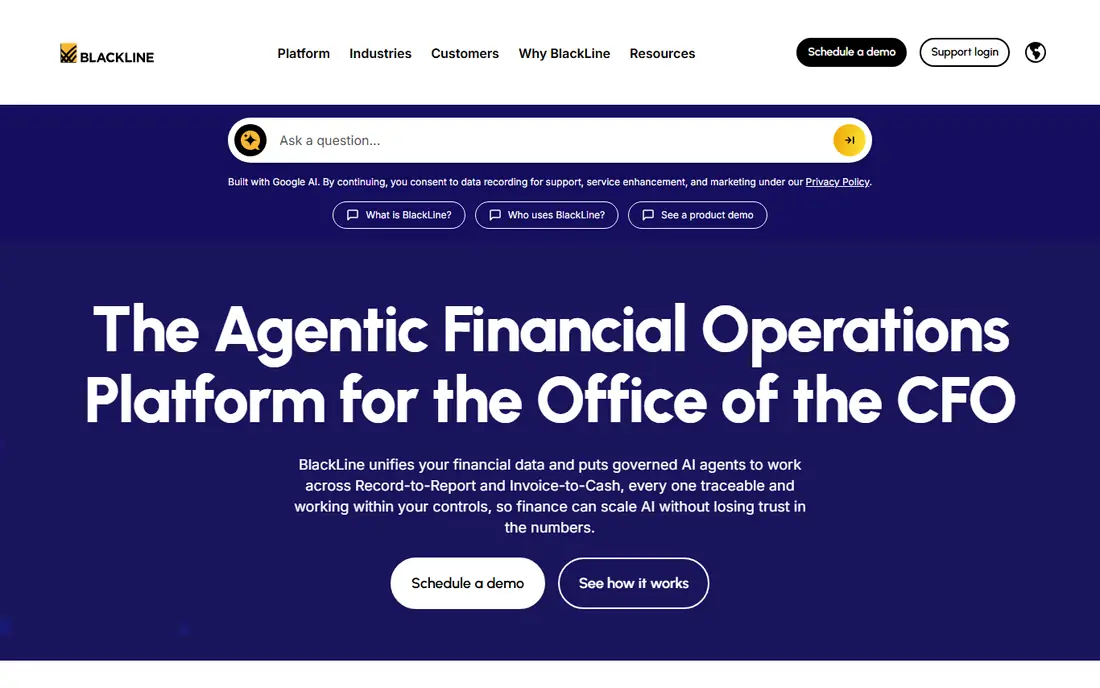
BlackLine is the enterprise standard for many large finance teams. It covers account reconciliations, transaction matching, journal entries, and close task management in one controlled system. Broad ERP coverage means SAP, Oracle, NetSuite, and other systems can feed the same close process.
The cost and setup reflect that scope. Pricing is quoted, and implementation often takes months with dedicated admin time. For a large team with high volumes and audit demands, that investment is often justified. For a small team, it is usually more than needed.
- Deep reconciliation and matching
- Strong controls
- Broad ERP coverage
- Pricing is quoted
- Implementation can take months
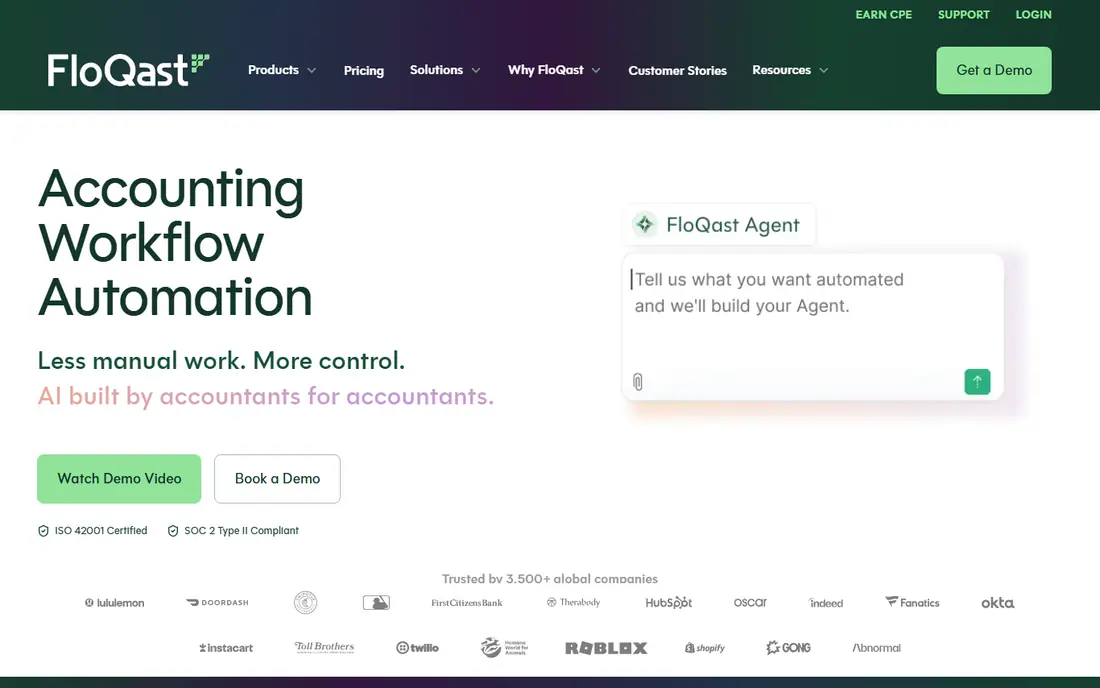
FloQast suits teams that want to move off spreadsheets without a long enterprise project. Its close checklist shows who owns each task, what is done, and what is late, which helps managers run month-end with less chasing. ERP connectors cover the major systems mid-size teams use.
Pricing is quoted, so budget needs a sales conversation, and very high-volume matching may still need a deeper tool. For a growing team that wants visibility fast, FloQast is a practical middle ground.
- Clear close checklist and visibility
- Broad ERP fit
- Faster setup than enterprise suites
- Pricing is quoted
- Reconciliation depth is lighter than BlackLine at very high volume

Trintech Cadency is built for enterprises with large transaction volumes and complex close requirements. It handles reconciliations, matching, journals, and close tasks with controls that suit regulated teams. That depth helps when bank, card, and intercompany volumes are high.
Like BlackLine, it is a major project, not a quick install. Pricing is quoted and setup takes time. Enterprises that need scale and control will value it, while smaller teams should look at lighter options first.
- Strong high-volume matching
- Close and compliance in one platform
- Broad ERP fit
- Pricing is quoted
- Implementation can take months
Adra by Trintech gives mid-size and larger teams strong matching without the full weight of Cadency. It covers transaction matching, balance sheet reconciliations, close tasks, and journals, which suits teams with high-volume bank or payment data. The product is also used by teams on Workday and other major ERPs.
Pricing is quoted, so early budgeting needs a demo and a quote. For a team whose main pain is matching volume, Adra is a focused fit.
- Strong transaction matching
- Balance sheet reconciliations
- Close task tools
- Pricing is quoted
- Some enterprise features need higher tiers
Workiva stands out when the close leads directly into external reporting. Its platform links data across financial statements, SEC filings, and other reports, so a late close change flows through without manual retyping. That linkage saves time during filing season.
Close task management on its own is less deep than BlackLine or FloQast, so teams with no filing duties may pay for reporting strength they do not use. For public or pre-IPO companies, the reporting link is often the deciding factor.
- Strong SEC and external reporting
- Linked data across reports
- Controls for filings
- Pricing is quoted
- Close management alone is less deep than dedicated close tools
Numeric is the most transparently priced option on this list, with a published entry tier. It offers close checklists, reconciliations, flux analysis, and transaction monitors, with AI features that flag unusual changes. Many teams report going live within weeks rather than months.
Higher tiers are quoted, and the deepest integration is with NetSuite, though other ERPs are supported at trial balance level. For a tech-forward mid-size team, Numeric is a strong starting point.
- Published entry price
- AI-assisted flux and transaction checks
- Fast setup for many teams
- Higher tiers are quoted
- Deepest ERP fit is with NetSuite
OneStream suits upper mid-market and enterprise groups that need close, consolidation, and planning together. Multi-entity teams benefit from a single system for intercompany work, currency translation, and consolidated reporting. That unity reduces reconciliation between separate tools.
The project is large, with implementation often running many months. Smaller teams will find it heavy, but groups with complex consolidation needs may save effort by unifying those processes.
- Close, consolidation, and planning in one platform
- Strong for multi-entity groups
- Pricing is quoted
- Implementation can take many months
Planful fits finance teams that want close work beside budgeting and forecasting. It covers reconciliations, close tasks, consolidation, and intercompany eliminations, with planning tools in the same platform. That pairing helps teams that review actuals and forecasts together.
Dedicated close suites go deeper on matching and controls, so very high-volume teams may need a specialist alongside Planful. For teams that value one finance platform, Planful is a sensible choice.
- Close tasks plus consolidation and planning
- Broad ERP fit
- Familiar finance workflows
- Pricing is quoted
- Close depth is lighter than dedicated close suites
Cube suits finance teams that live in spreadsheets but want governed close and planning. It connects close, consolidation, and budgeting, with workflows that feel familiar to Excel users. ERP coverage includes NetSuite, QuickBooks, Xero, and Sage Intacct.
Teams that need deep transaction matching may still need a dedicated close tool. For FP and A-led teams that want close visibility without leaving their planning workflow, Cube is a good fit.
- Close and consolidation beside budgeting
- Spreadsheet-friendly workflows
- Broad ERP fit
- Pricing is quoted
- Best fit is for FP and A-led teams
How we picked these
We compared official product pages, pricing pages, and public reviews, and we favored tools that still offer real close management in October 2026. We checked task management, reconciliation, journal support, ERP fit, and implementation effort. Where pricing was not published, we used See website rather than repeating third-party estimates as fact.
How to choose the right close tool
Start with your close calendar, not a feature list. List the tasks, owners, and bottlenecks from your last two closes, then match a tool to those gaps. A checklist tool helps a team that loses time chasing status, while a matching tool helps a team buried in transaction volume.
Next, confirm ERP fit in a trial with your real data. Connectors vary in depth, and a tool that syncs only trial balances will not give transaction-level checks. Test reconciliations with a messy month, not a clean demo set.
Finally, budget for implementation and admin time, not just the subscription. Enterprise tools can take months to configure and need ongoing admin. A lighter tool that goes live in weeks often beats a deeper tool that sits half-configured at quarter-end.
A useful trial step is to run one real close in parallel with your current process. Use the same tasks, the same data, and the same deadlines, then compare where time was saved and where work doubled. A parallel close reveals integration gaps that a demo never shows.
Also agree on who owns the system after go-live. Close tools need an admin for users, permissions, and workflow changes, and that role is often forgotten in the purchase. Naming an owner early keeps the tool current as your team and ERP change.
Frequently asked questions
What is the best financial close tool for a mid-size team?
FloQast and Numeric are strong mid-size picks, with FloQast offering clear checklist visibility and Numeric offering published pricing and AI-assisted checks. Adra by Trintech suits mid-size teams with high matching volume. Trial all shortlisted tools with your real close data.
What are the top financial close software platforms for enterprises?
BlackLine, Trintech Cadency, OneStream, and Workiva lead for enterprises, depending on whether you need controls, volume, consolidation, or reporting. Each is quoted and needs implementation time. Choose by your biggest close pain, not by brand alone.
Does financial close software replace an ERP?
No, close software sits on top of your ERP and uses its data. It automates reconciliations, journals, and close tasks that ERPs and spreadsheets leave manual. Your ERP remains the system of record for transactions.
How long does it take to implement close software?
Lighter tools such as Numeric and FloQast can go live in weeks, while enterprise platforms such as BlackLine and OneStream often take several months. Implementation time depends on ERP complexity, volume, and controls. Ask for a written timeline before signing.
How much does financial close software cost?
Only Numeric publishes a clear entry price here, at $30 per user per month. Other vendors quote by company size, volume, and modules, with enterprise contracts often running into five or six figures annually. Get a full quote including implementation before budgeting.
Sources
See where you really rank - block by block
ProMapRanker scans Google Maps across a grid of your service area. Simple monthly plans from $19, white-label on every plan.
Start freeKeep reading
 zscaler alternatives
Best Zscaler Alternatives in 2026
Looking for zscaler alternatives? We compare 9 SASE and zero trust platforms on architecture, data protection, pricing, and fit for your network and team.
Read → zapier alternatives free
Best Zapier Alternatives Free in 2026
Nine automation tools for zapier alternatives free in 2026, all with genuinely free tiers, plus free plan limits, starting prices and upgrade paths explained.
Read → which platform is best for online reputation
Which Platform Is Best for Online Reputation in 2026
Wondering which platform is best for online reputation? We compare 8 review, listing, and response tools for small and multi-location businesses and agencies.
Read →