 ProMapRanker
Best Expense Reporting Software in 2026


Teams keeping their existing cards · Pricing starts at: $5 per month
Key takeaways
- Card-first tools such as Ramp and Brex can cost nothing at entry level, but they usually require using their own corporate card.
- Expensify and Zoho Expense suit teams that want to keep existing cards while still automating receipts and reports.
- SAP Concur and Fyle fit larger or more structured finance teams that need strict policy controls and deeper accounting links.
- Check accounting integration, approval routing, and mileage handling before price, because switching later is the costly part.
Quick comparison
| Pick | Great for | Pricing starts at | Free tier | |
|---|---|---|---|---|
| Expensify | Teams keeping their existing cards | $5 per month | Free trial | Visit |
 Ramp | Free card-based spend control | Free | Yes | Visit |
 Brex | Startups using cards and budgets | Free | Yes | Visit |
 Navan | Travel plus expenses in one place | See website | Free trial | Visit |
 Zoho Expense | Low-cost reporting for small teams | See website | Yes | Visit |
 SAP Concur | Large firms with complex policies | See website | No | Visit |
 Fyle | Card feeds without changing banks | See website | Free trial | Visit |
 Rydoo | International teams and per diems | See website | Free trial | Visit |
The best expense reporting software
Expense reporting should remove manual data entry, not move it into a nicer form. We compared official feature pages, pricing pages, and accounting integrations, and we favoured tools that capture receipts cleanly, route approvals clearly, and post to the ledger without retyping.
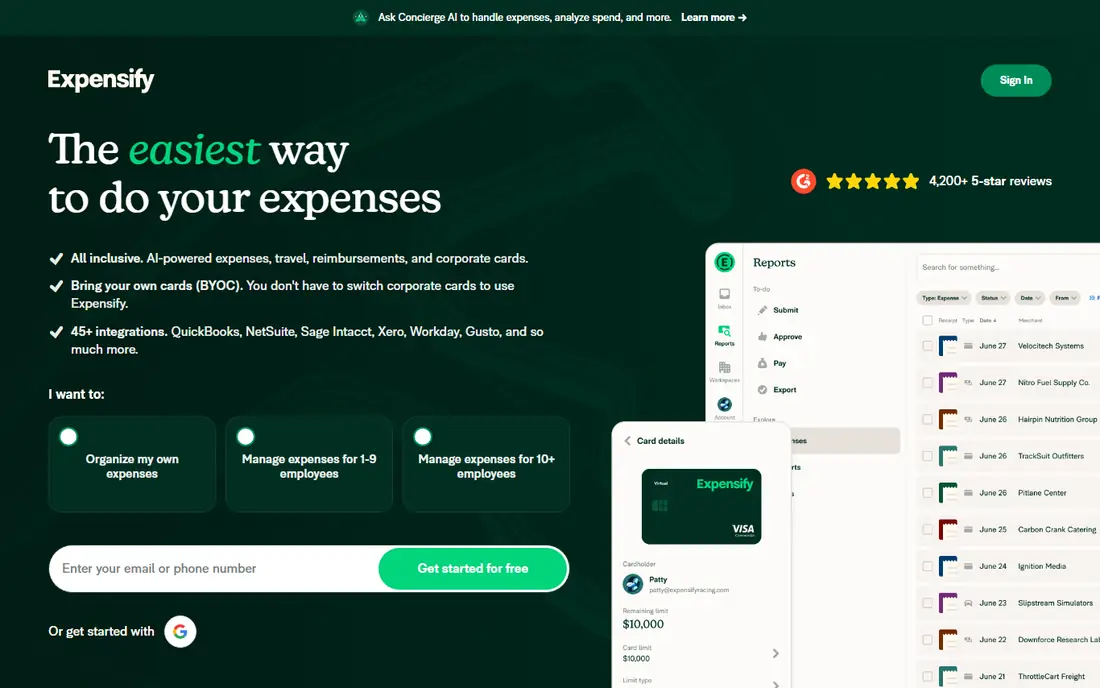
Expensify fits teams that do not want to change banks or card providers just to fix expense reports. Its SmartScan feature reads receipt details, matches them to card transactions, and builds reports that employees can submit from a phone. That card-neutral approach is the main reason it still appeals to small and mid-sized firms.
The trade-off is cost discipline. Entry pricing looks modest, but larger teams and tighter controls push the bill higher. It is still a sensible first choice when the goal is cleaner reports, faster reimbursements, and fewer manual entries, rather than a full change of spend infrastructure.
- Strong receipt scanning
- Works with many cards
- Clear mileage and reimbursement tools
- Paid plans add up for larger teams
- Some advanced controls sit on higher tiers
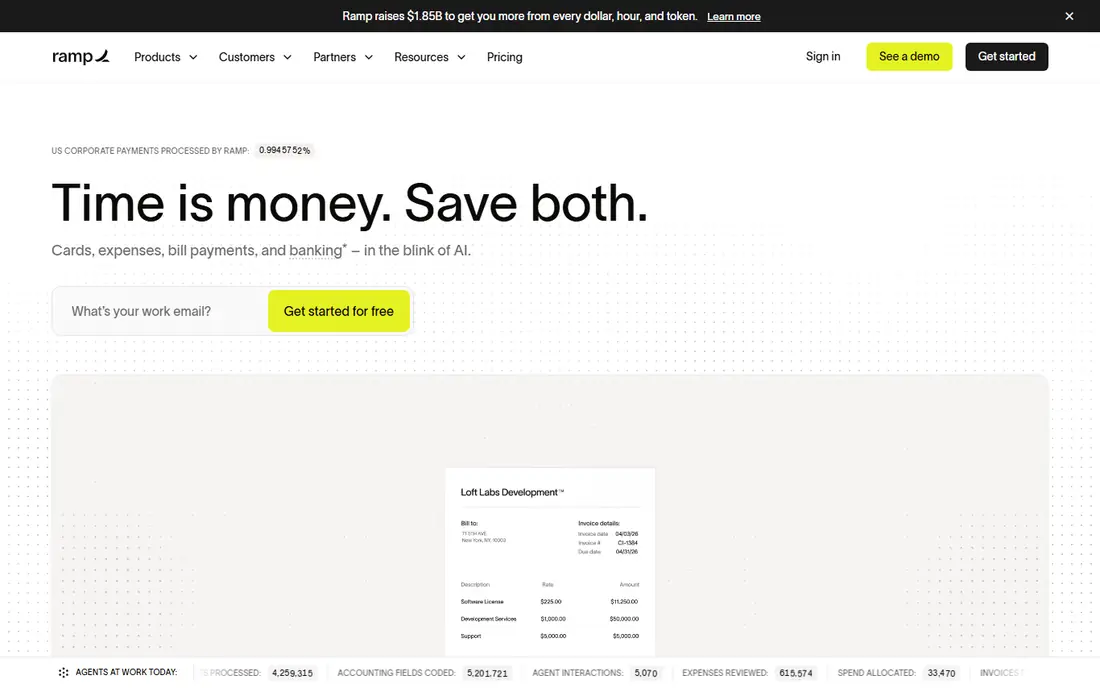
Ramp pairs corporate cards with expense management, so transactions, receipts, and policy checks arrive in the same place. Managers can set limits, block categories, and see spend as it happens, which helps finance teams catch problems before month-end close. Integrations with common accounting tools reduce the manual posting work.
The catch is commitment to the Ramp card program. Teams that cannot or will not switch cards will get less value here. For eligible US startups and growing firms that accept that trade, the free core offer is hard to beat on price alone.
- Free core platform
- Real-time card controls
- Strong accounting integrations
- Requires Ramp cards for the full benefit
- Approval for cards depends on eligibility
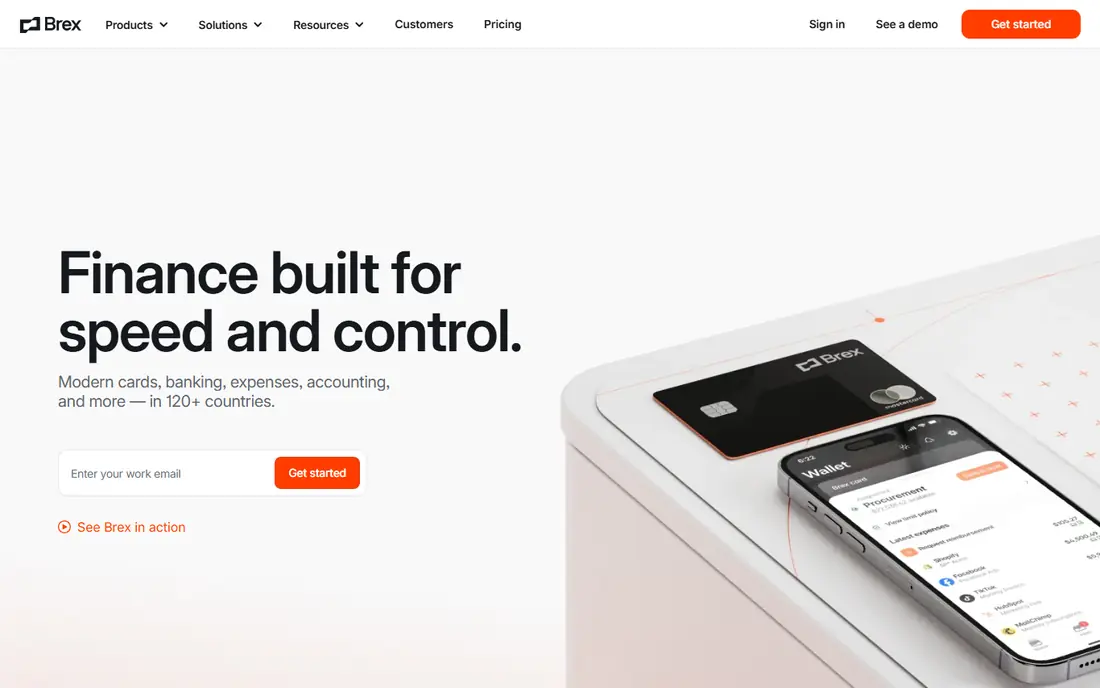
Brex combines cards, expense tracking, and budgeting in one finance workspace. Employees submit receipts through the app, managers approve in context, and finance teams can track budgets by team or project. The platform is built for fast-moving firms that want spend visibility without a long implementation project.
Brex is less appealing if your firm wants to keep a long-standing bank card program untouched. Its value rises sharply once the team uses Brex cards and budgets together. Check eligibility and international needs before shortlisting it, especially for teams with staff outside the United States.
- Free entry tier
- Live budgets
- Global spend features
- Card eligibility rules apply
- Premium features cost extra
Navan suits firms where travel is a large share of expenses. Booking, trip details, and receipts stay linked, so a hotel charge is easier to match to a trip and a policy. That linkage cuts the back-and-forth that often slows reimbursement for travelling staff.
Smaller teams with little travel may find a simpler reporting tool cheaper and faster to run. Navan earns its place when travel policy, booking, and expense reporting need one consistent record, and when finance wants travel spend visible alongside other costs.
- Travel booking and expenses together
- Clear policy controls
- Good mobile capture
- Pricing varies by plan and company size
- Travel focus may be more than some teams need
Zoho Expense is a practical pick for small teams that want proper reports without enterprise pricing. Receipt scanning, approval flows, per diem support, and accounting links cover the core job well. It also handles multiple currencies, which matters for teams that buy abroad or reimburse staff in more than one currency.
The main limit is depth at scale. Larger firms with complex hierarchies or strict audit needs may outgrow it. For a small business, a charity, or a team already using Zoho Books, it offers a calm, low-cost route to cleaner expense handling.
- Free plan for small teams
- Receipt scanning
- Multi-currency support
- Advanced features sit on paid plans
- Best value inside the Zoho product family
SAP Concur is built for organisations where expense policy is not a suggestion. It supports detailed approval chains, audit checks, travel booking, and reporting across entities and countries. For a large firm, that structure is the point, and it is why Concur remains common in enterprise finance teams.
Smaller firms should look elsewhere. Pricing is quoted, setup takes time, and the admin effort is higher than with a small-team tool. Choose Concur when compliance, scale, and consistent policy across many locations matter more than a quick start.
- Deep policy and audit controls
- Broad travel and expense coverage
- Many integrations
- Quote-based pricing
- Implementation can be lengthy
Fyle appeals to finance teams that like their current cards but hate manual expense work. It pulls card feeds, matches receipts, and routes reports for approval, so staff spend less time chasing paper. Integrations with accounting systems help close the books faster and with fewer errors.
Fyle is not a budget-first tool, and teams should confirm plan limits before signing up. Its strength is the middle path: keep your bank relationships, but still get automated capture, policy checks, and a clear audit trail for every report.
- Works with existing cards
- Strong receipt matching
- Accounting integrations
- Pricing is not the cheapest entry point
- Some features need a higher plan
Rydoo fits teams spread across countries, where per diems, mileage, and local rules complicate simple reporting. Employees can capture receipts on mobile, claim per diems, and submit in their own language, while finance keeps one approval flow. That combination is useful for consulting firms, field teams, and international nonprofits.
The platform is less of a fit for a single-office team with simple receipts. Its value shows when travel patterns, currencies, and per diem rates vary by location. Confirm pricing for your headcount, because Rydoo plans are shaped around team size and modules.
- Per diem and mileage tools
- Multi-language support
- Accounting integrations
- Pricing varies by team size
- Interface depth takes time to learn
How we picked these
We compared official pricing pages, feature documentation, and accounting integrations for tools that are live and actively sold in October 2026. We favoured products that handle the full reporting cycle, from receipt capture to approval to accounting posting, and we kept both card-first platforms and card-neutral tools so different finance setups are covered. Where pricing was unclear or varied by company size, we wrote See website rather than guessing a figure.
What to check before you buy
Start with your card setup. If you will not switch cards, rule out card-first platforms at once, no matter how attractive the free tier looks. If you are willing to switch, compare card limits, eligibility, and how quickly new cards can be issued for staff and contractors.
Next, test the approval flow with a real example. Submit a receipt, a mileage claim, and a multi-currency expense, then watch how each one moves through approval and into your accounting tool. A clean demo is not enough, because messy receipts and split costs are where weak tools fail.
Accounting and policy fit
Confirm the integration with your ledger, including how tax codes, departments, and projects map. Ask how policy violations are flagged, whether managers can approve from mobile, and how audit history is stored. These details decide whether month-end feels orderly or frantic.
Total cost, not headline price
Free tiers often depend on card use, seat counts, or plan limits. Add up paid seats, add-ons, and any implementation help, then compare that total across two or three finalists. A slightly higher monthly price can be cheaper than hours of manual correction each month.
Frequently asked questions
What is the best expense reporting software for small businesses?
For most small teams, Expensify or Zoho Expense are strong starting points because they work with existing cards and keep setup simple. Ramp or Brex can be cheaper if the team is willing to use their cards. Pick based on card setup first, then on accounting integration.
What are the top expense reporting software options for large companies?
SAP Concur suits large firms with complex policies, multiple entities, and strict audit needs. Fyle and Navan also suit larger teams, especially when travel or existing card programs matter. Large firms should run a pilot with finance, travel, and IT before committing.
What are the best expense reporting tools for receipt scanning?
Expensify, Zoho Expense, Fyle, and Rydoo all offer mobile receipt capture with matching to card transactions. The best choice depends on accuracy for your receipt types, such as handwritten totals, foreign currencies, or long hotel bills. Test with your own receipts during a trial.
Do I need a corporate card to use expense reporting software?
No. Card-neutral tools such as Expensify, Zoho Expense, and Fyle work with cards you already hold. Card-first tools such as Ramp and Brex deliver more value when you use their cards, so treat card switching as a separate decision from software choice.
How much does expense reporting software cost?
Entry costs range from free card-based tiers to a few dollars per user per month for small-team plans, while enterprise tools are quoted. Confirm seat counts, plan limits, and add-ons on the vendor pricing page, because headline prices rarely tell the full story.
Can expense software handle mileage and per diems?
Yes, most tools on this list handle mileage, and Rydoo and Zoho Expense offer per diem features suited to travel-heavy teams. Check the mileage rate settings, per diem tables, and approval rules for your locations before you buy.
Sources
See where you really rank - block by block
ProMapRanker scans Google Maps across a grid of your service area. Simple monthly plans from $19, white-label on every plan.
Start freeKeep reading
 zscaler alternatives
Best Zscaler Alternatives in 2026
Looking for zscaler alternatives? We compare 9 SASE and zero trust platforms on architecture, data protection, pricing, and fit for your network and team.
Read → zapier alternatives free
Best Zapier Alternatives Free in 2026
Nine automation tools for zapier alternatives free in 2026, all with genuinely free tiers, plus free plan limits, starting prices and upgrade paths explained.
Read → which platform is best for online reputation
Which Platform Is Best for Online Reputation in 2026
Wondering which platform is best for online reputation? We compare 8 review, listing, and response tools for small and multi-location businesses and agencies.
Read →