 ProMapRanker
Best Expense Management Software for Startups in 2026

Key takeaways
- For startups, the cheapest expense tool is often a card-first platform such as Ramp, Brex, or BILL, because the core software is free when you use its corporate cards.
- If you want to keep your existing bank cards, Expensify, Zoho Expense, and Fyle are better fits, because they automate receipts without forcing a new card program.
- Navan is the natural pick when travel booking and expenses should live in one flow, while Airbase suits startups that also need procurement controls.
- Free tiers usually require card use, approval, or a user limit, so check eligibility and any platform fees before assuming the software costs nothing.
- This is not financial advice, and card eligibility, credit limits, and rewards depend on your startup's finances and the provider's review.
Quick comparison
| Pick | Great for | Pricing starts at | Free tier | |
|---|---|---|---|---|
 Ramp | Automation-first cards and expenses | Free | Yes | Visit |
 Brex | Funded startups and global teams | Free | Yes | Visit |
 Expensify | Keeping your existing cards | See website | Free trial | Visit |
 Navan | Travel plus expenses in one flow | See website | Yes | Visit |
 Zoho Expense | Budget expense automation | See website | Yes | Visit |
 BILL Spend & Expense | Free cards with budget controls | Free | Yes | Visit |
 Fyle | Real-time control on existing cards | See website | Free trial | Visit |
 Spendesk | European startups and VAT handling | See website | No | Visit |
 Airbase | Procurement-led spend control | See website | No | Visit |
The best expense management software for startups
Startups need expense software that saves finance time without adding a heavy monthly bill or a painful setup. The tools below split into two models: card-first platforms that give you corporate cards plus free expense software, and classic expense tools that work with cards you already have. Pick the model first, then compare tools inside it, because switching models later is harder than switching tools.
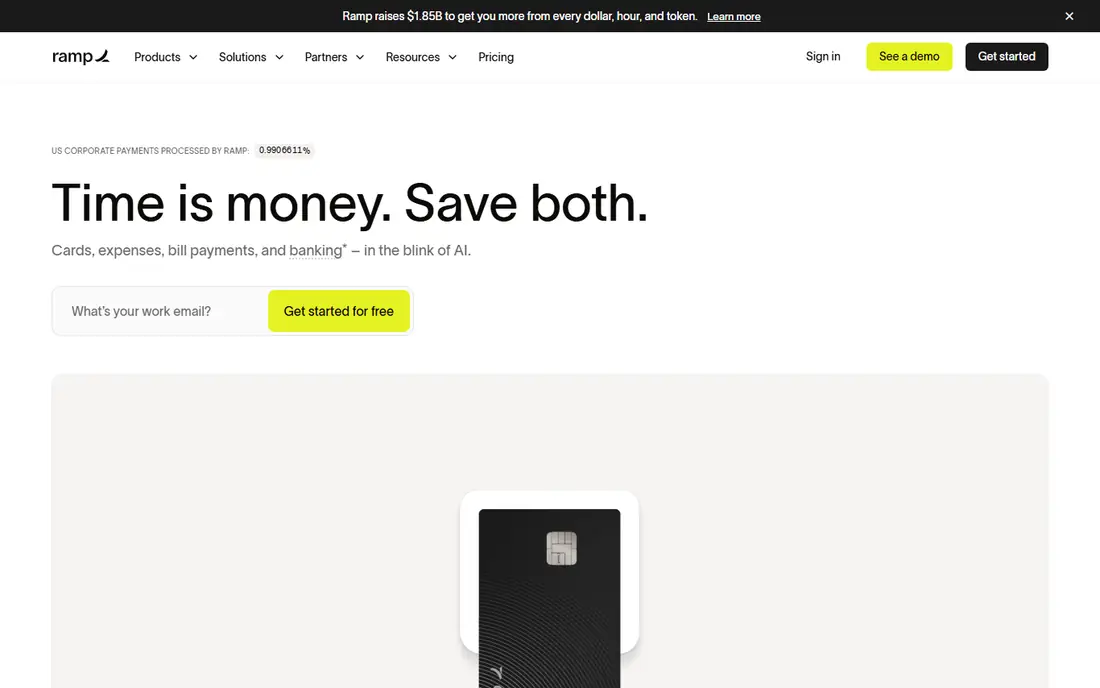
Ramp leads this list for startups that want automation and are willing to use Ramp corporate cards. The core platform is free, with expense capture, receipt matching, policy controls, and approvals built around card transactions, plus bill pay and accounting integrations for growing finance teams. A paid Plus tier adds deeper controls and features for larger or more complex startups, at a per-user price plus a platform fee.
The model is the catch to understand. Free means free when you use Ramp cards and qualify, not free as a standalone tool for any bank card, and card limits depend on Ramp's review of your company. If your team already relies on another bank's cards and cannot switch, a classic tool fits better. If you are starting fresh or can move card spend to Ramp, its automation and free core make it the first platform to trial.
- Free core platform with Ramp cards
- Strong receipt automation and policy controls
- Bill pay and accounting integrations included in the broader platform
- Requires Ramp cards for the free model
- Plus tier adds a per-user cost plus a platform fee
- Card eligibility depends on company review
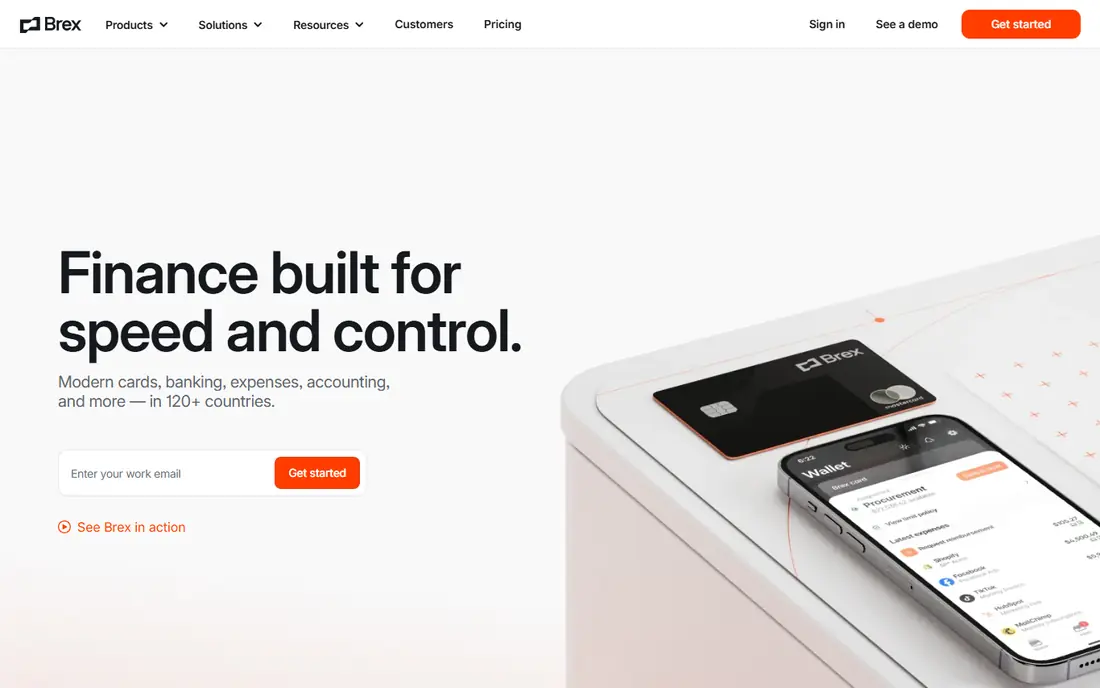
Brex suits funded startups and global teams that want cards, banking-style features, and expense management in one stack. Its free Essentials tier covers core spend management with Brex cards, including AI-assisted expense reviews, live budgets, and approval workflows, while a Premium tier adds deeper controls at a per-user price. Global reimbursement and multi-currency features help startups with contractors and staff outside the United States.
As with Ramp, the free model depends on using Brex cards and passing Brex's company review, so it is not a standalone expense tool for existing bank cards. Brex also changed ownership in 2026, so confirm current plan terms and support details on its site before committing. If your startup is funded, global, or planning to scale card spend quickly, Brex is a strong counterpart to Ramp on any shortlist.
- Free Essentials tier with Brex cards
- AI-assisted expense reviews and live budgets
- Global reimbursements and multi-currency support
- Requires Brex cards for the core model
- Premium tier adds a per-user cost
- Eligibility and limits depend on company review
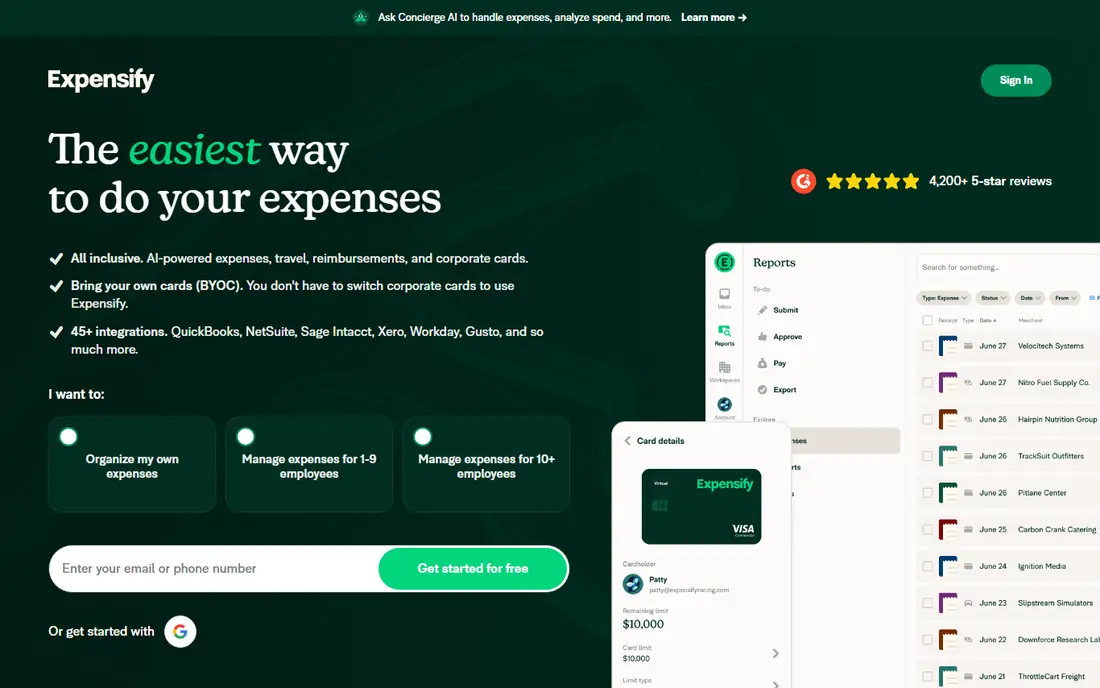
Expensify remains the most flexible classic expense tool for startups that want to keep their existing corporate cards. You can connect cards from many banks, scan receipts with SmartScan, submit reports, and reimburse staff, without moving your card program to a new provider. That flexibility matters for startups with a bank relationship they value, or with a mix of cards across founders and staff.
Flexibility costs a subscription. Paid plans start per member per month, with a higher tier for deeper controls, and the exact starting price has varied across 2026 sources, so confirm the current Collect and Control pricing on the Expensify site. A free tier for individuals exists in some forms, but team use is paid. If keeping your cards matters more than getting free card-first software, Expensify is the natural first trial.
- Works with cards from many banks
- SmartScan receipt capture
- Flexible reports and reimbursements
- Long track record with small teams
- Paid plans start per member per month
- Card program is optional, so automation varies by setup
- Some advanced controls sit on higher tiers
Navan, formerly TripActions, combines business travel booking with expense management, which suits startups where trips generate a large share of expenses. Staff book flights and hotels inside policy, expenses flow from bookings and card transactions, and finance gets a single view of travel spend instead of reconciling bookings, cards, and receipts separately. For smaller companies, the first few monthly expensing users are often free, which makes it easy to trial.
The free allowance has limits: after those users, expense pricing applies per user per month, and the platform's depth is most valuable if your team actually travels. A startup with almost no travel may find a simpler expense tool cheaper and faster to adopt. If travel is a regular cost, Navan's combined flow can save more finance time than a standalone expense app, and it deserves a trial with a real trip end to end.
- Travel booking and expense capture in one platform
- First expensing users free for smaller companies in many cases
- Strong policy controls for trips
- Full expense pricing applies after the free user allowance
- Travel focus may be more than a non-travel startup needs
- Setup takes time for policy rules
Zoho Expense is the budget pick for startups that want classic expense automation without a card switch. A free version covers up to three users in many cases, and paid plans add more users, advanced approvals, and integrations, with per-active-user pricing that only charges for staff who actually submit expenses in a period. Receipt scanning, mileage, and per diem features cover the core needs of a small team, and Zoho Books users get a natural accounting fit.
Pricing details have varied across sources, with annual and monthly rates differing, so confirm the current Standard and Premium prices on the Zoho site for your user count. The interface is functional rather than flashy, and some advanced controls require higher tiers. If your startup is small, budget-conscious, and already uses Zoho software, Zoho Expense offers the lowest-risk paid path.
- Free version for up to three users in many cases
- Receipt scanning and per diem automation
- Strong fit if you already use Zoho Books
- Paid pricing varies by billing period
- Advanced features sit on higher tiers
- Interface feels less modern than Ramp or Brex for some users
BILL Spend & Expense, formerly Divvy, gives small teams free spend management when they use BILL corporate cards, with smart cards, budget controls, virtual cards for subscriptions, and AI-assisted categorization. It suits startups that want employee cards with built-in limits, without paying per-user software fees, and it connects naturally to BILL's bill pay tools for firms that already use BILL for payables. For a lean team, the combination of free software and controlled cards is compelling.
The same card-first condition applies as with Ramp and Brex: the free model depends on BILL cards and company review, and it is not a standalone tool for existing bank cards. Firms that need expense software independent of a card program should look at Expensify or Zoho Expense instead. If you can adopt BILL cards, compare BILL directly with Ramp and Brex on card limits, approval workflows, and accounting integrations before choosing.
- Free plan with BILL corporate cards
- Smart cards with budget controls
- AI categorization and virtual cards
- Integrates with BILL bill pay
- Requires BILL cards for the free model
- Card eligibility depends on review
- Expense features are tied to the BILL ecosystem
Fyle, now part of the Sage expense family in recent years, gives startups real-time expense control without forcing a card switch. It tracks card transactions as they happen, captures receipts from email and messaging tools, and syncs with accounting systems, which reduces the month-end scramble for receipts. That real-time model suits finance leads who want to see spend as it occurs, not weeks later in a report batch.
Pricing is tiered, with growth plans carrying per-user costs and minimum user counts in some cases, so confirm the current terms for a small team before assuming it fits a tiny startup budget. Its brand is also less familiar than Ramp or Expensify, though its accounting integrations are a real strength. If keeping your cards and gaining real-time visibility matter most, Fyle is a strong specialist to trial.
- Real-time expense tracking on existing cards
- Strong Gmail and Outlook receipt capture
- Good fit for firms on Sage or similar accounting systems
- Pricing is tiered with user minimums on some plans
- Smaller brand profile than Ramp or Expensify
- Setup needs accounting integration planning
Spendesk is a spend management platform that combines corporate cards, expense claims, approvals, and bill handling, with particular strength for European startups that need VAT handling and multi-entity controls. Distributed teams benefit from virtual cards, approval workflows, and a clear view of spend by team and entity, which helps finance leads who manage staff across countries. It is a coherent platform rather than a single-feature expense app.
Pricing is quote-based and tiered by subscription plan, with no free plan, so small US startups may find a free card-first platform cheaper and simpler. Spendesk makes most sense for startups with European operations, VAT complexity, or multi-entity structures that justify a paid platform. Compare it with Pleo for European VAT needs, and with Ramp or Brex if your operations are mainly in the United States.
- Cards, expense, and approval workflows in one platform
- Strong VAT and multi-entity handling for European firms
- Good controls for distributed teams
- Quote-based pricing with no free plan
- US startups may find fewer local advantages
- Implementation takes planning for multi-entity setups
Airbase, now part of Paylocity's finance offerings, suits startups that are growing toward mid-market scale and need procurement controls alongside expenses. Staff request spend, managers approve, cards enforce budgets, and bills flow into accounting with a clear audit trail, which reduces the ad-hoc purchasing chaos that often hits fast-growing startups. That procure-to-pay depth is its main advantage over simple receipt apps.
It is heavier and pricier than a basic expense tool, with quote-based pricing and no free plan, so very early startups may find Ramp, Brex, or Zoho Expense enough for now. Airbase earns its place when purchase requests, vendor bills, and card spend all need one controlled flow. If your startup is already feeling procurement pain, trial Airbase with a real purchase workflow, not just a receipt scan, to judge its value.
- Procure-to-pay controls from request to payment
- Corporate cards with approvals
- Strong accounting integrations for mid-market growth
- Quote-based pricing with no free plan
- Heavier than a simple expense app
- Best value as startups grow toward mid-market scale
How we picked these
We compared expense tools on card model, pricing, receipt automation, approvals, accounting integrations, travel handling, and fit for small teams, using vendor pricing pages and current 2026 comparison guides. We favored tools with a clear startup path, whether free card-first software or low-cost classic expense automation, and we included travel, procurement, and European options for startups with those specific needs. Where pricing varied by source or was quote-based, we listed See website instead of repeating a figure that might not apply to your team size.
We did not claim hands-on testing we did not do. Card eligibility, limits, and accounting fit depend on your startup's finances and systems, so our judgment rests on documented models and published plan structures. Trial two platforms with a real month of expenses, including receipts, approvals, and accounting sync, before committing your whole team.
What to check before you choose
Decide card-first or card-independent first
Card-first platforms are often free but require their cards, while classic tools charge per user but work with your existing cards. That single choice narrows the list more than any feature comparison, so decide it with your bank and finance lead before trialing tools.
Test a full month, not just a receipt scan
A receipt scan demo hides approval delays, accounting sync errors, and reimbursement timing. Run a real month with several staff, mixed receipt types, and at least one reimbursement, and measure finance time saved, not just app speed.
Frequently asked questions
Which expense management app is best for startups?
Ramp and Brex are best for startups that can adopt their corporate cards, because core expense software is free in those models with strong automation. Expensify and Zoho Expense are best for startups that want to keep existing bank cards, while Navan is best when travel is a major expense. Choose the card model first, then trial two tools in that model with a real month of expenses.
What is the top expense management software for startups with no travel?
For startups with little travel, Ramp, Brex, BILL Spend & Expense, Expensify, and Zoho Expense all fit well, depending on the card model you prefer. Card-first platforms suit teams starting fresh with cards, while Expensify and Zoho Expense suit teams keeping existing cards. Avoid paying for travel features you will not use, and prioritize receipt automation and accounting sync instead.
Is there free expense management software for startups?
Yes, in the card-first model. Ramp, Brex, and BILL Spend & Expense offer free core expense software when you use their corporate cards and qualify, and Zoho Expense offers a free version for up to three users. Free does not mean unlimited: check card eligibility, user limits, and any platform or Plus-tier fees that apply as you grow.
How does expense management software save a startup time?
It captures receipts automatically, matches them to card transactions, routes approvals, enforces policy limits, and syncs coded expenses to accounting, which removes manual data entry and month-end chasing. The saving is largest when card transactions, receipts, and accounting sync work together, rather than when staff still email receipts to finance. Measure time saved across a full month, including approvals and reimbursements.
Sources
See where you really rank - block by block
ProMapRanker scans Google Maps across a grid of your service area. Simple monthly plans from $19, white-label on every plan.
Start freeKeep reading
 who has the best home internet service
Who Has the Best Home Internet Service in 2026
Who has the best home internet service in 2026? Compare fiber, cable, and 5G providers on speed, price, data caps, and availability at your address today.
Read → visio alternatives
Best Visio Alternatives in 2026
Compare 9 Visio alternatives for flowcharts, org charts, and network diagrams, with free plans, pricing, and the best pick for teams and solo users in 2026.
Read → top 10 logistics software
Top 10 Logistics Software in 2026
We compared the top 10 logistics software tools for transport, warehousing, visibility and shipping, for shippers, carriers and 3PL teams in 2026 today.
Read →