 ProMapRanker
Best ESG Software in 2026

Key takeaways
- Workiva suits audit-grade reporting tied to finance, with source-linked numbers and review workflows.
- Persefoni offers a free Pro plan for carbon accounting, which makes it the easiest entry point here.
- Watershed leads on enterprise climate depth, with Scope 1 to 3 measurement and disclosure drafting.
- Novisto covers ESG, carbon, and risk in one platform, with strong investor-request workflows.
- Almost every vendor here prices by quote, so budget for a sales conversation, not a checkout page.
Quick comparison
| Pick | Great for | Pricing starts at | Free tier | |
|---|---|---|---|---|
 Workiva | Audit-grade reporting | See website | No | Visit |
 Persefoni | Free carbon accounting start | Free | Yes | Visit |
 Watershed | Enterprise climate programs | See website | No | Visit |
 Novisto | End-to-end ESG and risk | See website | No | Visit |
 Sphera | Industrial EHS plus ESG | See website | No | Visit |
 Enablon | EHS and sustainability at scale | See website | No | Visit |
 Benchmark Gensuite | EHS and ESG operations | See website | No | Visit |
 APLANET | Smaller companies in Europe | 649 EUR per month | No | Visit |
The best esg software
ESG software helps companies collect environmental, social, and governance data, calculate emissions, and publish disclosures that investors and regulators can trust. Carbon accounting tools measure a footprint, while reporting platforms draft the disclosure itself, and many companies need both. We compared platforms on framework coverage, audit controls, and fit for company size.
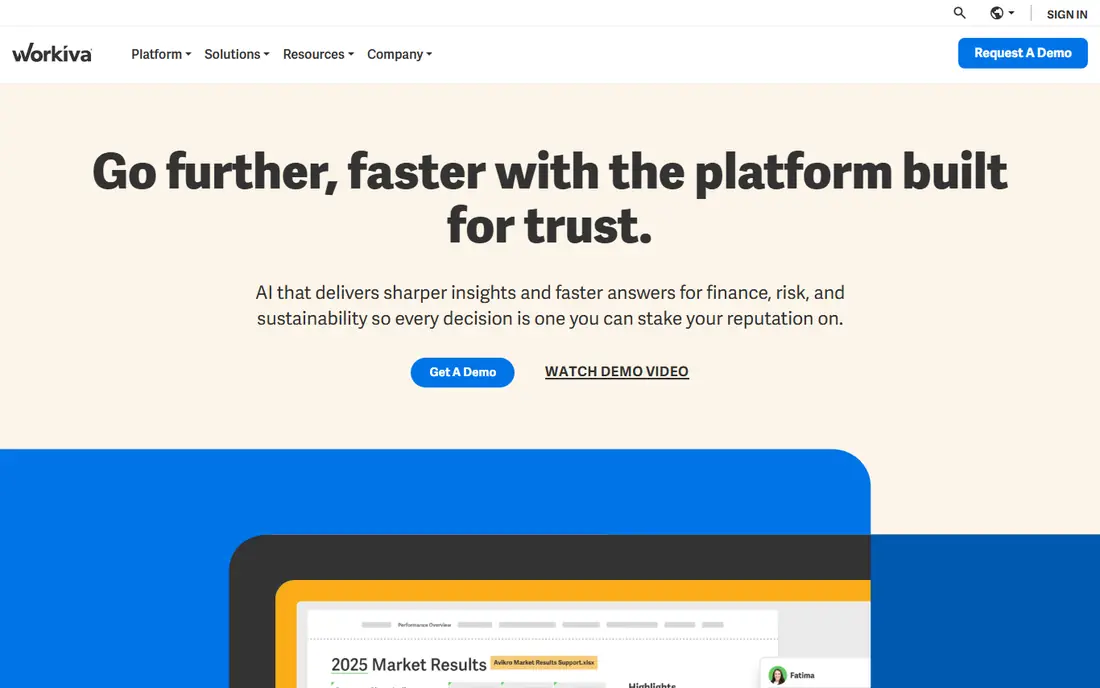
Workiva is built for reporting that an auditor will scrutinise. Numbers in a disclosure link back to source spreadsheets, documents, and systems, so a reviewer can trace a figure to its origin, and controlled review workflows keep version history clean. That heritage in financial reporting carries over to sustainability reporting, which suits companies that publish ESG data alongside financial results.
Pricing is quote-based, with a demo and scoping conversation before a number appears. A small sustainability team may find the full platform more than it needs, since Workiva covers finance, risk, and compliance as well as ESG. For a listed company facing assurance on its disclosure, that breadth and control are the reason to shortlist it first.
- Numbers link back to source data
- Strong review and version control
- Finance reporting heritage
- Quote-based pricing
- More platform than a small team needs
- Implementation takes time
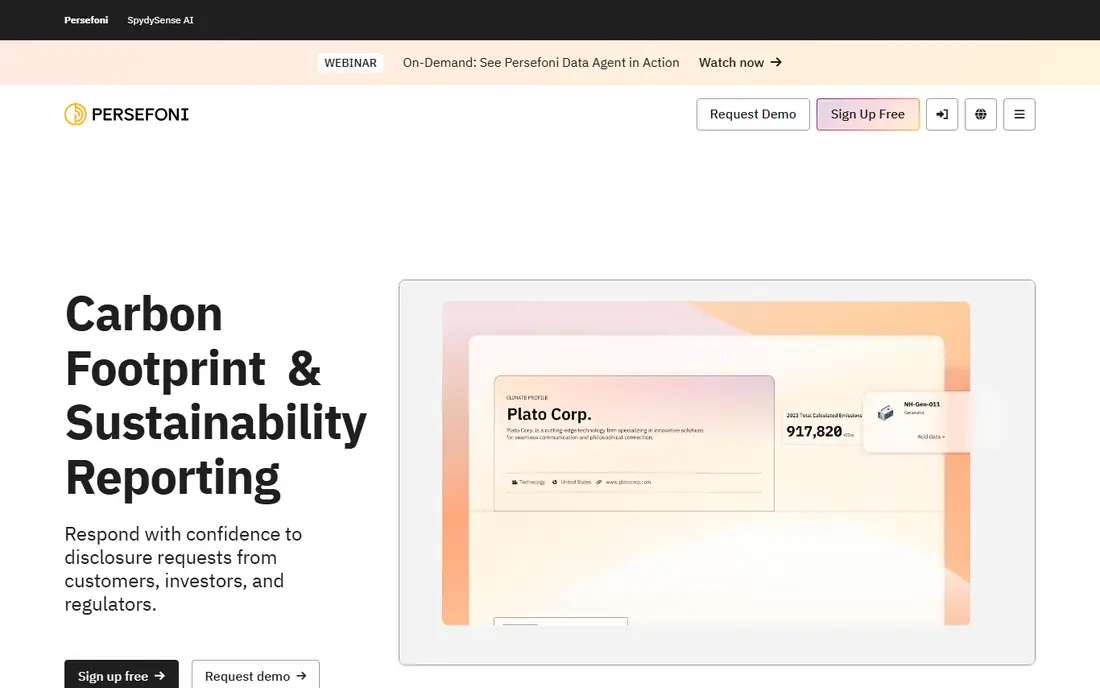
Persefoni is the exception in a quote-only category, because its Pro plan is free with no time limit for single users, covering Scope 1 to 3 emissions. That makes it the easiest way to start carbon accounting without a procurement cycle, and it suits companies that need a credible footprint before they commit to a larger platform. Persefoni also covers financed emissions for investors and lenders.
The free plan has limits. Advanced plans and add-ons, such as certain GHG metrics reports and California SB 253 and SB 261 reporting services listed from $25,000, are quoted through sales. A company that needs assured disclosure or multi-user workflows will move to a paid plan. For a first footprint, though, the free Pro plan is a strong starting point.
- Pro plan is free for single users
- Scope 1 to 3 coverage
- Strong financed emissions
- Advanced reports and add-ons are quoted
- Enterprise features need a paid plan
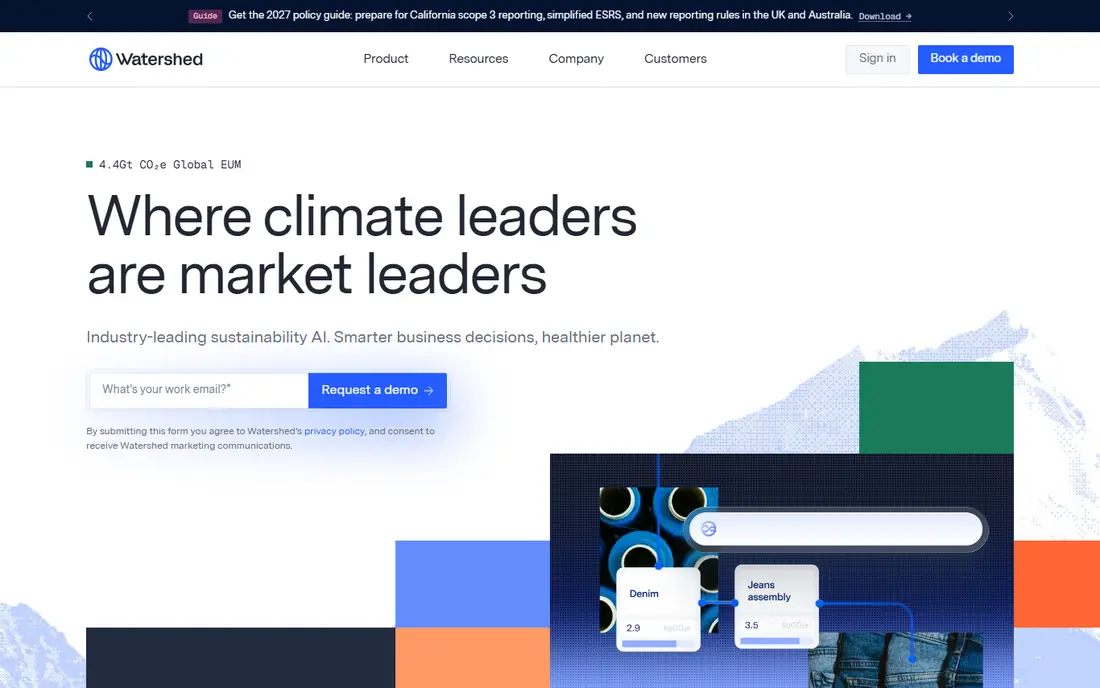
Watershed covers measure, report, and act in one enterprise climate platform. It measures a full carbon footprint across Scope 1, Scope 2, and all Scope 3 categories, maps data to frameworks such as CDP, TCFD, and ISSB, and drafts reports with automated checks. Product footprints and reduction planning sit in the same platform, which suits large companies with a serious climate programme.
Pricing is not published, and third-party estimates put enterprise deals in a wide range, so treat any external figure as an estimate, not a quote. The climate-first focus also means social and governance reporting may need services or other tools. For a large enterprise where climate depth is the priority, Watershed is the benchmark in this list.
- Deep Scope 1 to 3 measurement
- Automated framework mapping
- Decarbonisation planning
- No public pricing
- Climate-first focus
- Enterprise-only positioning
Novisto covers ESG data collection, carbon accounting, and risk in one platform, which suits companies that want a single system from data gathering to disclosure. Investor-request workflows help teams answer bespoke questionnaires from investors without rebuilding the data each time, and framework support covers the major disclosure standards. That breadth makes it a strong pick for mid-market and large companies with a full ESG programme.
As with most vendors here, pricing is quoted after a scoping call, so budget for an enterprise conversation. Novisto also needs clear data owners inside the company, since no platform can fix missing supplier or HR data on its own. For a team that wants one platform for the whole ESG job, Novisto deserves a demo.
- ESG, carbon, and risk in one platform
- Investor-request workflows
- Broad framework support
- Quote-based pricing
- Implementation needs data owners in place
Sphera comes closest in this list to covering EHS, operational risk, and ESG in one system, which matters for industrial companies where safety, environmental, and sustainability data overlap. A plant that already tracks incidents, permits, and emissions can bring ESG reporting into the same data model, rather than running a separate reporting tool on top.
That breadth brings complexity. Non-industrial companies may find Sphera more than they need, and pricing is quoted after scoping. Implementation is a project, not a signup, and it needs operations involvement from the start. For industrial teams, though, the combined EHS and ESG view is a real advantage.
- Combines EHS, operational risk, and ESG
- Strong for industrial companies
- Broad data model
- Quote-based pricing
- Complex for non-industrial teams
- Implementation is a project
Enablon is a mature EHS and sustainability platform used by large companies to manage environmental, health, safety, and sustainability data at scale. Its governance controls, audit trails, and reporting modules suit companies with many sites, many users, and strict internal controls. Sustainability reporting sits alongside operational EHS data, which helps teams that report both.
Pricing is quoted, and the enterprise focus means smaller companies will find it heavy and costly. A company with a handful of sites and a simple disclosure need should look at APLANET or Persefoni first. For a large, multi-site company that needs EHS and ESG in one governed system, Enablon is a serious contender.
- Mature EHS platform
- Sustainability modules for large companies
- Strong governance
- Quote-based pricing
- Enterprise focus
- Smaller companies may find it heavy
Benchmark Gensuite, formerly Gensuite, covers operational EHS and ESG data for multi-site companies, with configurable workflows for incidents, audits, permits, and sustainability metrics. That operational focus suits teams that collect data on the ground, at plants and sites, and need it to flow into reporting without manual re-entry.
Pricing is quoted after scoping, and the interface reflects its operational roots rather than a slick reporting studio. Internal data owners are still needed, since a platform cannot collect supplier or site data that nobody owns. For a multi-site company that wants EHS operations and ESG reporting in one place, Benchmark Gensuite is worth a demo.
- Operational EHS plus ESG data
- Configurable workflows
- Strong for multi-site teams
- Quote-based pricing
- Interface reflects its operational roots
- Needs internal owners
APLANET stands out here because it publishes a price: 649 EUR per month for SMEs under 250 employees. That transparency is rare in this category, and it makes budgeting possible without a sales cycle. The platform offers CSRD-aligned modules, customisable dashboards, and automated data collection, with EU data hosting and daily backups for GDPR compliance.
The trade-offs are scale and recognition. APLANET is a smaller vendor than Workiva or Sphera, with less analyst coverage, and there is no published free trial, so evaluation requires a sales conversation. For a European SME facing CSRD or supplier questionnaires, though, the published price and focused modules make it the most accessible full reporting platform here.
- Published SME price
- CSRD-aligned modules
- EU data hosting with GDPR controls
- Smaller vendor than enterprise incumbents
- No published free trial
- SME focus limits scale
How we picked these
We compared vendor feature pages, framework coverage, and pricing transparency, and we favoured platforms with a clear reporting or carbon accounting job, active development, and a distinct fit by company size or sector. We noted where FigBytes is now part of Quentic and Greenomy is now part of Position Green, so buyers check the current product lineup. Where pricing is quoted, we say so, and we treat third-party price estimates as estimates, not vendor prices.
How to choose the best esg platform
Start with the disclosure you must publish, not with the platform. A European company facing CSRD should shortlist CSRD-ready tools such as APLANET, Workiva, and Novisto. A US company leaning on SASB or ISSB-style disclosure fits Workiva or Novisto. A company whose urgent problem is a carbon footprint should shortlist Persefoni or Watershed first, then add a reporting tool if needed.
Separate carbon accounting from reporting
Carbon tools measure emissions, especially Scope 3, and plan reductions. Reporting tools manage disclosures across frameworks with audit trails and review workflows. Buying a carbon tool and learning at filing time that the disclosure needs another module is the most common mistake in this category. Ask each vendor which frameworks and reports are included, and which are paid add-ons.
Get the quote in writing for next year
Almost every vendor here prices by quote, based on entities, users, modules, and data volume. Ask what the quote scales with, and get prices for the regulations you expect to add next year written into the first quote. A platform that looks affordable for one framework can cost far more when a second framework or a new entity is added.
Assign data owners before you buy
Supplier data, HR data, and site energy data are the work that delays a first baseline, not the software. Name an owner for each data set, agree on a collection cadence, and ask the vendor to show how that data enters the platform. A demo with your own sample data tells you more than a polished sales presentation.
Frequently asked questions
What is the best esg software for a small company?
Persefoni Pro is free for single users and covers Scope 1 to 3, which makes it the easiest start for carbon accounting. APLANET at 649 EUR per month suits European SMEs that need CSRD-aligned reporting. Most full ESG platforms are built for mid-market and large companies, so a small company should start with a carbon tool or an SME reporting tool, not an enterprise platform.
What is the difference between ESG reporting software and carbon accounting software?
ESG reporting software manages disclosures across environmental, social, and governance frameworks with audit trails and review workflows. Carbon accounting software measures greenhouse gas emissions, especially Scope 3, and plans reductions. Many companies need both, since reporting tools rarely calculate carbon deeply, and carbon tools rarely cover social and governance data.
How much does ESG software cost?
Almost every vendor prices by quote, based on company size, entities, users, and modules. Published prices here are Persefoni Pro at no cost for single users and APLANET at 649 EUR per month for SMEs. Enterprise platforms usually cost five to six figures per year, plus implementation services, so budget for a scoping conversation.
Which framework should drive my choice?
Match the tool to your regulator and your investors. European companies facing CSRD and ESRS should shortlist APLANET, Workiva, and Novisto. US companies leaning on SASB or ISSB-style disclosure fit Workiva or Novisto. If investors send bespoke questionnaires, Novisto investor-request workflows matter more than a generic framework list.
Do I need ESG software if I am under 250 employees?
Probably not a full platform at first. Most SMEs start with spreadsheets plus a carbon calculator, and move to software when reporting becomes recurring or assured. If CSRD pulls you in scope as a supplier, APLANET and Persefoni are the SME-shaped options here. Move to a full platform when data collection and disclosure become a recurring job.
Sources
See where you really rank - block by block
ProMapRanker scans Google Maps across a grid of your service area. Simple monthly plans from $19, white-label on every plan.
Start freeKeep reading
 outreach alternatives
Outreach Alternatives in 2026
Compare outreach alternatives for 2026, from Salesloft and Apollo to HubSpot and Lemlist, with pricing, channels, features, limits, and honest trade-offs.
Read → best web conference tools
Best Web Conference Tools in 2026
Compare the best web conference tools for meetings, webinars and team calls, with current pricing, free plans and honest limits for each option here today.
Read → best voice cloning tools
Best Voice Cloning Tools in 2026
Compare the best voice cloning tools in 2026, from ElevenLabs and Descript to Resemble and Cartesia, with consent rules, pricing, licenses, and limits.
Read →