 ProMapRanker
Best ERP Software for Wholesale Distributors in 2026


Multi-entity and scaling distributors · Pricing starts at: See website
Key takeaways
- NetSuite suits multi-entity distributors that need scale, while Acumatica suits growing distributors that want to avoid per-user pricing pressure.
- Epicor Prophet 21 and Infor CloudSuite Distribution offer the deepest distribution-first workflows for industrial and complex operations.
- Microsoft Dynamics 365 Business Central is the natural pick for teams already running Microsoft tools, with extensions for warehouse depth.
- Most enterprise ERP prices are quoted, so judge total cost on implementation, EDI, warehouse, and support, not on a headline licence fee alone.
Quick comparison
| Pick | Great for | Pricing starts at | Free tier | |
|---|---|---|---|---|
| Oracle NetSuite | Multi-entity and scaling distributors | See website | No | Visit |
 Acumatica | Growing distributors avoiding per-seat pricing | See website | No | Visit |
 Epicor Prophet 21 | Industrial and specialised distribution | See website | No | Visit |
 Microsoft Dynamics 365 Business Central | Microsoft-centred teams | See website | Free trial | Visit |
 SAP Business One | Mid-sized SAP-oriented businesses | See website | No | Visit |
 Sage X3 | Global and multi-entity distributors | See website | No | Visit |
 Infor CloudSuite Distribution | Complex distribution operations | See website | No | Visit |
 Odoo | Flexible modular ERP on a budget | See website | Yes | Visit |
 Cin7 | Inventory-led multichannel wholesalers | See website | Free trial | Visit |
The best erp software for wholesale distributors
Wholesale distribution ERP is judged on inventory accuracy, warehouse throughput, order fill rates, and EDI handling, not on generic accounting alone. These nine systems cover that work in different ways, from cloud suites for growing firms to deep platforms for large industrial distributors. We compared official product pages, distribution features, deployment options, and pricing models.
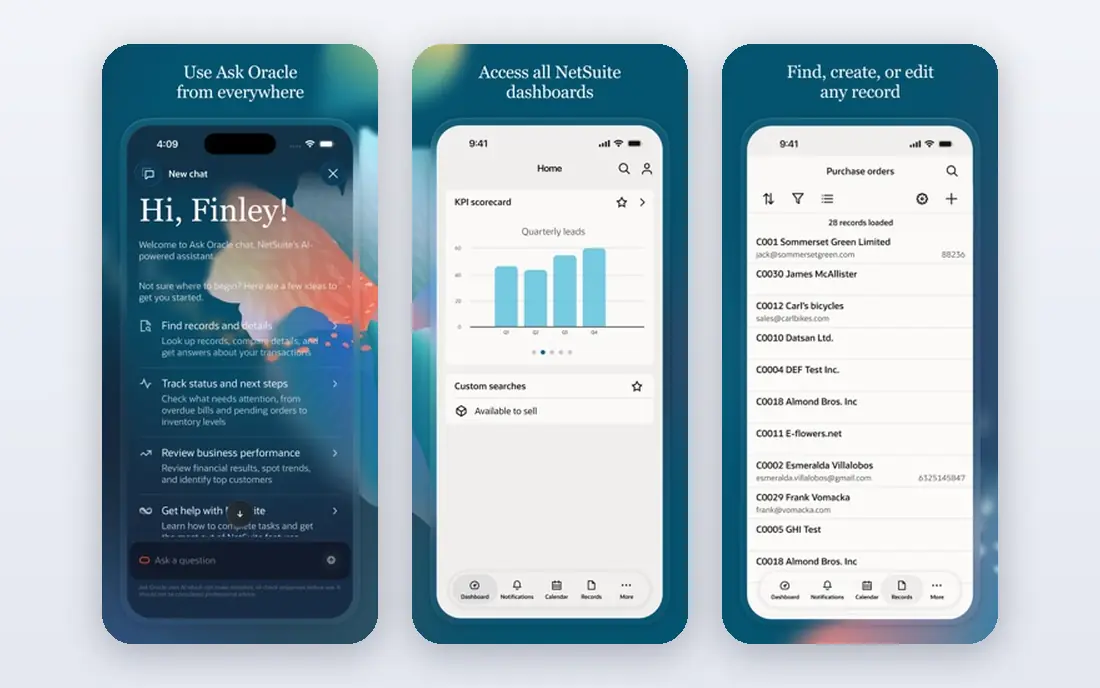
NetSuite is the most widely selected cloud platform for mid-market and larger distributors, in part because it holds financials, inventory, warehouse, order management, and ecommerce in one system. A distributor adding entities, currencies, or sales channels can manage them under one platform rather than stitching separate tools together, which helps reporting stay consistent as the business grows.
The drawback is cost and scope. Pricing is quoted, and the total depends on modules, users, and implementation work, so a buyer should request a full five-year cost model, including EDI connectors and warehouse add-ons. For a distributor that plans to scale across entities or countries, NetSuite gives a strong, well-supported foundation, provided the implementation partner is experienced in distribution.
- Strong multi-entity and multi-currency support
- Integrated inventory and warehouse tools
- Large partner ecosystem
- Quote-based pricing
- Implementation scope needs careful control
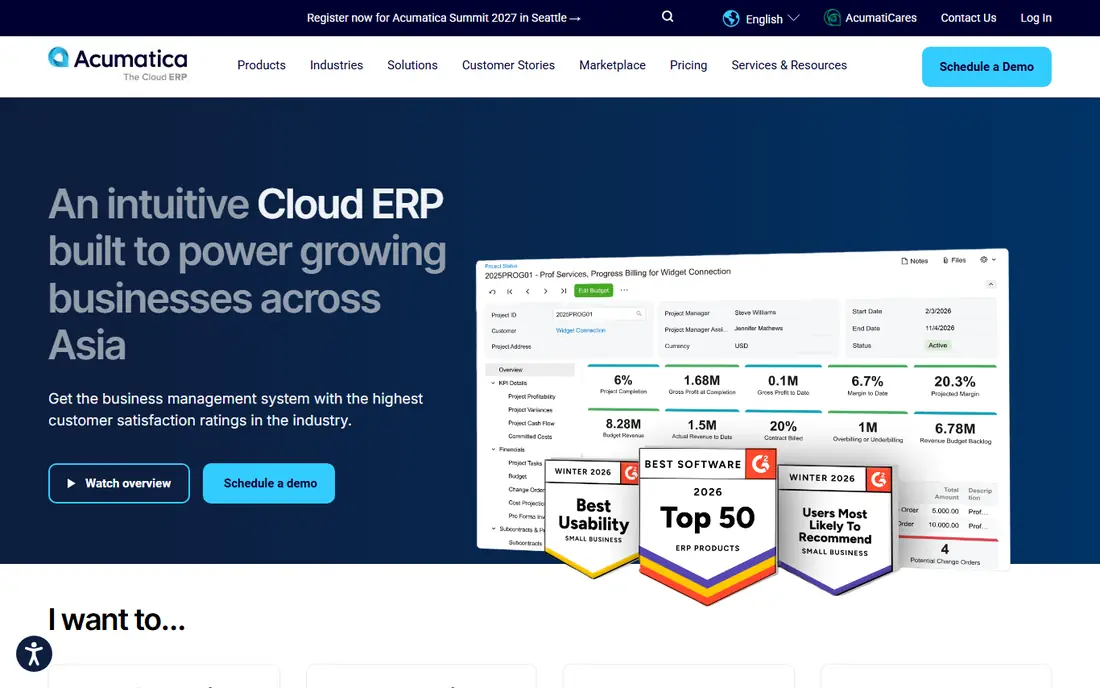
Acumatica appeals to growing distributors because it prices by resource consumption rather than by user seat, which can keep costs steadier as warehouse staff, sales reps, and managers all need access. The distribution edition covers inventory, order management, purchasing, and warehouse basics, with barcode scanning for warehouse work. That combination suits firms in the small to mid-market range that have outgrown entry-level accounting plus spreadsheets.
Buyers should still confirm the edition, the partner, and the connectors for EDI and ecommerce, since those items shape the real total cost. Acumatica also relies on partners for implementation, so reference customers in your vertical matter more than a sales demo. For a growing distributor that wants cloud ERP without per-seat cost pressure, Acumatica is a strong shortlist pick.
- Prices by resource use rather than per seat
- Cloud deployment
- Strong distribution edition
- Quote-based pricing
- Some features need partner connectors

Epicor Prophet 21 is a distribution-first system, built around the workflows that industrial, electrical, plumbing, and similar distributors run daily. Counter sales, high-volume order entry, EDI trading partners, pricing matrices, and rebate handling sit close to the core product, rather than as afterthoughts added to a generic ERP. That depth shows in daily use, where staff spend less time working around the system.
The trade-off is scope and implementation effort. Prophet 21 projects need a partner who knows distribution, and smaller firms with simple needs may find the system heavier than necessary. For a specialised distributor with complex pricing, many branches, and heavy EDI volume, Prophet 21 gives workflow depth that general suites struggle to match.
- Built around wholesale distribution
- Strong EDI and counter sales tools
- Deep inventory controls
- Implementation can be lengthy
- Best fit is distribution, not general business
Microsoft Dynamics 365 Business Central
Great for: Microsoft-centred teams
Business Central suits distributors already running Microsoft 365, because staff can work in Outlook, Excel, and Teams alongside financials, inventory, and orders without learning a wholly new ecosystem. The core product covers small to mid-market distribution well, and the extension marketplace adds warehouse, EDI, and vertical features where the base product stops short.
Buyers should test warehouse depth and EDI handling against their real order and shipment volumes, since both often depend on extensions. That is not a flaw on its own, but it does mean the shortlist demo should use your data and your trading partners, not a generic script. For a Microsoft-centred distributor, Business Central gives a familiar, well-supported path to full ERP.
- Tight fit with Outlook, Excel, and Teams
- Familiar Microsoft interface
- Wide extension marketplace
- Warehouse depth varies by extension
- EDI often needs an add-on
SAP Business One gives small to mid-sized businesses an integrated system for financials, sales, purchasing, and inventory, with reporting that managers can use without exporting everything to spreadsheets. For firms that already use SAP tools, or plan to grow toward larger SAP platforms, Business One offers a consistent vendor path and a wide partner network.
Distribution depth often depends on add-ons and partner expertise, so a buyer should confirm how EDI, warehouse scanning, and advanced pricing will be handled before signing. Implementation quality also varies by partner, which makes reference checks essential. For a mid-sized distributor that values SAP reporting and a clear upgrade path, Business One deserves a place on the shortlist.
- Integrated financials and inventory
- Strong reporting
- SAP partner network
- Add-ons often needed for distribution depth
- Partner quality varies
Sage X3 suits mid-sized and international distributors that need multi-entity financials, localisation, and warehouse controls in one system. It has particular strength in compliance-sensitive distribution, such as food, beverage, pharma, and chemicals, where lot tracking, quality, and regulatory reporting matter. Deployment can be cloud or on-premise, which helps firms with specific hosting or data rules.
The implementation is partner-led, so scope, timeline, and total cost depend heavily on the partner and on how many localisations and warehouse features are included. Smaller distributors may find X3 more system than they need. For a global distributor with complex compliance and warehouse needs, Sage X3 gives depth that simpler cloud suites may lack.
- Strong multi-entity and localisation support
- Warehouse and compliance depth
- Cloud or on-premise deployment
- Partner-led implementation
- Pricing is quoted and can grow with scope
Infor CloudSuite Distribution is purpose-built for distribution, with warehouse management, order, and supply chain depth that general-purpose ERPs often reach only through add-ons. Large and complex distributors, including those with third-party logistics and high-volume warehouse work, benefit from that focus, since throughput and fill rates depend on warehouse execution as much as on accounting.
That depth comes with enterprise project scope, so Infor fits established distributors better than a small firm taking its first ERP step. Buyers should clarify product architecture, implementation scope, and the cost of warehouse and EDI components early. For a complex distributor that has outgrown a general suite, Infor gives a distribution-first platform worth serious evaluation.
- Purpose-built for distribution
- Strong warehouse management
- Deep supply chain tools
- Best suited to larger, established distributors
- Project scope needs care
Odoo takes a modular approach: a distributor can start with inventory, sales, and accounting, then add purchasing, warehouse, manufacturing, or ecommerce apps as needs grow. The community edition is open source, and paid plans add hosting, support, and fuller features. That flexibility appeals to smaller distributors that want ERP structure without an enterprise budget or a long implementation.
The risk is drift. Because Odoo is easy to customise, a team can build a system that is hard to maintain through upgrades unless custom work is kept disciplined. Buyers should pick a partner, limit custom code, and test inventory and order flows with real data. For a cost-conscious distributor with some technical capacity, Odoo offers a flexible, lower-cost route into ERP.
- Modular apps you can add as needed
- Open source community edition
- Lower entry cost
- Customisation needs control
- Support quality depends on partner or plan
Cin7 suits wholesalers whose main problem is inventory across channels, rather than full enterprise financial consolidation. It handles stock, orders, purchasing, and warehouse basics across ecommerce stores, marketplaces, and wholesale channels, and it connects to accounting tools for financials. Rollout is often faster than a full ERP project, which matters for a growing wholesaler that needs control now.
The limit is scope. A distributor that needs deep multi-entity financials, complex EDI, or advanced warehouse execution may still need a fuller ERP from this list. Cin7 buyers should decide honestly if inventory control is the core need, or if the business has outgrown an inventory-led tool. For inventory-led multichannel wholesale, Cin7 is a practical, focused choice.
- Strong inventory and multichannel order handling
- Connects to ecommerce and marketplaces
- Faster rollout than full ERP
- Not a full ERP for every firm
- Financial depth may need an accounting link
How we picked these
We compared official product pages and distribution guides for systems with inventory, warehouse, order, purchasing, and EDI capability, and we kept only systems still sold and supported in October 2026. We favoured distribution-first depth, cloud or flexible deployment, and a track record with wholesalers, and we listed prices as See website where vendors quote rather than publish a standard rate.
How to choose a distribution ERP
Start with your order and warehouse flow, not with a feature checklist. Map how an order arrives, how stock is picked, how shipments are confirmed, and how EDI documents move with each trading partner. Then test each shortlist system against that map with your own data, including a busy-day order volume, a stock transfer, and a returns case. A system that handles the map cleanly will save more time than one with a longer feature list.
Next, model five-year total cost. Include licences or subscriptions, implementation, EDI connectors, warehouse hardware, training, and support, plus the cost of any extensions that are essential rather than optional. Ask each vendor for reference customers in your vertical and of a similar size, and speak to at least two before signing. Implementation partner quality often decides the outcome more than the software brand alone.
Finally, plan the rollout in stages. Start with core inventory, orders, and financials, then add warehouse scanning, EDI partners, and advanced reporting in later phases. A staged rollout lets staff learn the system, lets you fix data issues early, and reduces the risk of a big-bang change during a busy season.
Frequently asked questions
What is the best ERP for wholesale distributors?
It depends on size and complexity. NetSuite suits scaling multi-entity firms, Acumatica suits growing firms avoiding per-seat pricing, and Epicor Prophet 21 suits specialised industrial distributors. Shortlist two or three systems and test them with your own order and warehouse data.
How much does wholesale distribution ERP cost?
Most enterprise systems in this list are quote-based, so costs vary with modules, users, implementation, and EDI needs. Inventory-led tools such as Cin7 and modular tools such as Odoo can start lower, but always request a five-year total cost model before comparing quotes.
Do I need EDI in my ERP?
If you sell to retailers, buying groups, or large customers that send orders electronically, EDI handling matters a great deal, since manual re-entry causes errors and retailer fines. Confirm if EDI is native, partner-built, or add-on based, and test it with a real trading partner.
Can a small wholesaler use ERP, or is QuickBooks enough?
A small wholesaler with simple stock and few channels may manage with accounting software plus inventory apps. Once stock accuracy, warehouse work, EDI, or multi-location control becomes a daily problem, a system such as Acumatica, Business Central, Odoo, or Cin7 usually pays for itself in fewer errors.
How long does ERP implementation take?
Timelines vary widely, from weeks for an inventory-led tool to many months for a full enterprise ERP with warehouse and EDI work. Scope, data quality, and partner experience matter more than the software brand, so ask for a phased plan with clear milestones.
Is cloud ERP better than on-premise for distributors?
Cloud ERP suits most growing distributors, since it removes server upkeep and eases multi-location access. On-premise or hosted options still suit firms with strict data, integration, or hosting rules, and several systems here, including Sage X3, offer that choice.
Sources
See where you really rank - block by block
ProMapRanker scans Google Maps across a grid of your service area. Simple monthly plans from $19, white-label on every plan.
Start freeKeep reading
 worlds best local seo company
8 Worlds Best Local SEO Companies for Map Pack Growth in 2026
Compare the worlds best local seo company options for Google Business Profile work, citations, reviews, and multi-location rankings and reporting in 2026.
Read → world's best web hosting company
World's Best Web Hosting Company in 2026
Searching for the world's best web hosting company? We compared 10 hosts on price, renewal rates, speed, and support to help you choose well today in 2026.
Read → who's got the best nanny tax services
Who's Got the Best Nanny Tax Services in 2026
We answer who's got the best nanny tax services, comparing full filing, back taxes, software, and pricing so families can handle nanny taxes correctly.
Read →