 ProMapRanker
Best Enterprise SaaS Companies in 2026


CRM for growing sales teams · Pricing starts at: $25 per user per month
Key takeaways
- Salesforce and Microsoft Dynamics 365 publish entry prices, while SAP, Oracle NetSuite, Workday, ServiceNow and Adobe mainly quote enterprise deals.
- Atlassian and HubSpot are the easiest to trial, since both offer free tiers for small teams before a paid plan is needed.
- The subscription is often not the largest cost, since implementation, data migration and training can match or exceed first year licence fees.
- Choose by the job first, whether that is sales, finance, HR, IT service or marketing, rather than by brand size alone.
Quick comparison
| Pick | Great for | Pricing starts at | Free tier | |
|---|---|---|---|---|
| Salesforce | CRM for growing sales teams | $25 per user per month | Free trial | Visit |
 Microsoft Dynamics 365 | Companies already using Microsoft 365 | $65 per user per month | Free trial | Visit |
 SAP | Manufacturers and complex supply chains | See website | No | Visit |
 Oracle NetSuite | Mid sized companies outgrowing basic accounting | See website | No | Visit |
 Workday | HR and finance for larger employers | See website | No | Visit |
 ServiceNow | IT and employee service workflows | See website | No | Visit |
 Adobe Experience Cloud | Large marketing and content teams | See website | No | Visit |
 HubSpot | Marketing led mid market companies | See website | Yes | Visit |
The best enterprise SaaS companies
We compared official product pages, pricing pages and public documentation for vendors that sell cloud software to large organisations, and we weighed breadth, integration options and the practical cost of adoption.
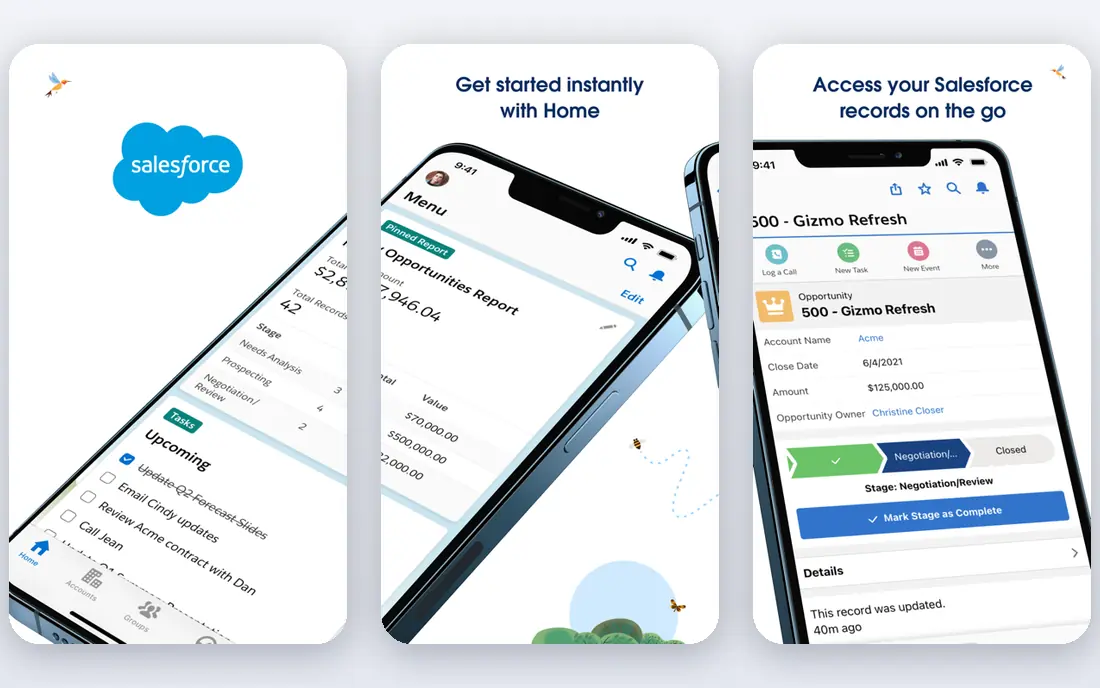
Salesforce remains the default CRM shortlist pick for many large companies because it covers the full customer journey in one platform. Sales teams track pipelines, service teams handle cases, and marketing teams run campaigns, all sharing the same customer record. Its AppExchange marketplace adds thousands of integrations, which helps when a company already uses specialist tools.
The catch is total cost and complexity. The $25 per user per month Starter Suite is a real entry point, but larger teams usually move to Professional or Enterprise editions and add products for service, marketing or analytics. Budget for implementation help, data cleanup and ongoing admin time, since a poorly configured Salesforce setup creates more work than it removes.
- Broad CRM, sales, service and marketing tools
- Huge partner and integration ecosystem
- Starter Suite gives small teams a clear entry price
- Costs rise quickly with editions and add ons
- Complex setups often need consultants
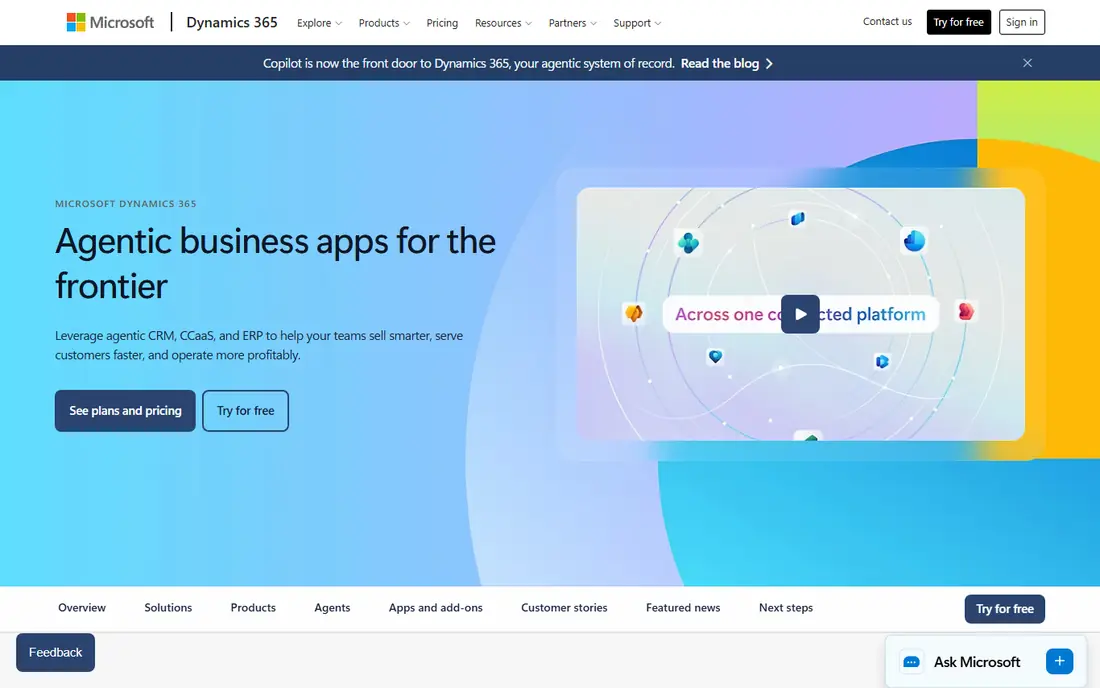
Microsoft Dynamics 365 suits organisations that already live in Microsoft tools. Staff sign in with existing accounts, data flows into Teams and Outlook, and IT teams can apply familiar security and compliance controls. Sales Professional is listed from $65 per user per month when paid yearly, which gives a useful anchor, though finance and supply chain modules are priced separately.
Complexity is the main drawback. Dynamics 365 is a family of apps, not one simple product, so scoping which licences each role needs takes care. Companies that plan the rollout by department, start with one module and clean their data first tend to get more value than those that try to switch everything on at once.
- Deep links to Outlook, Teams, Excel and Azure
- Sales, finance and supply chain modules
- Familiar sign in and security controls
- Module pricing can be hard to compare
- Full rollouts need planning and partner help
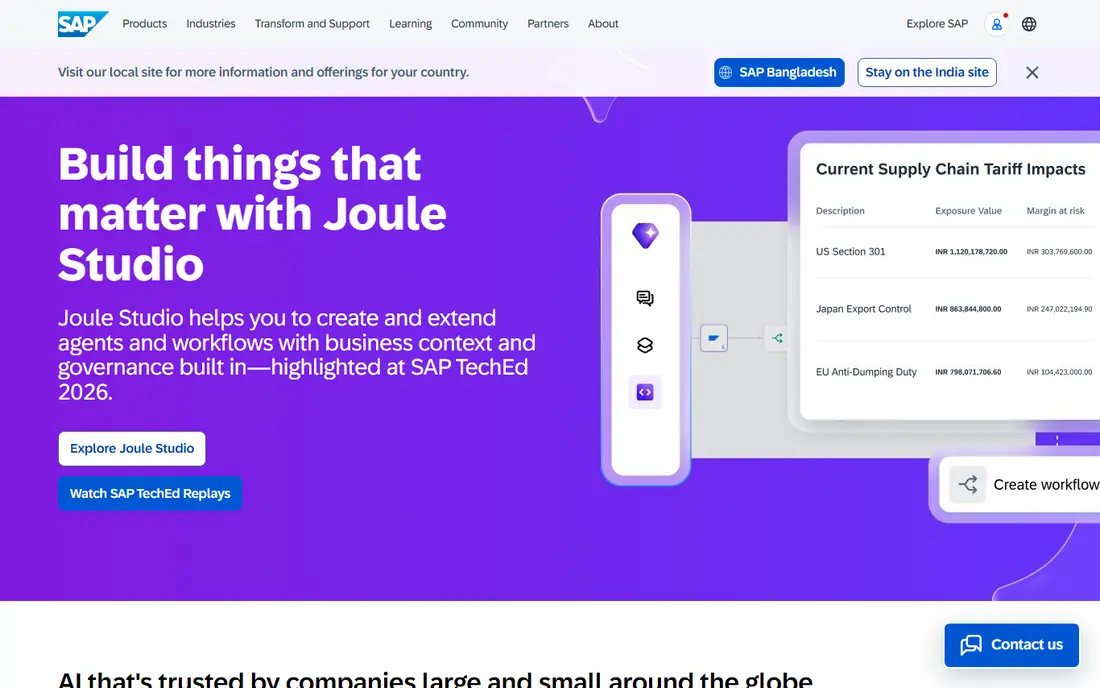
SAP is the heavyweight choice when a business runs complex manufacturing, warehousing and finance across many countries. Its ERP software handles production planning, inventory, procurement and financial consolidation in a tightly linked system. For a multinational manufacturer, that depth is hard to replace with a lighter tool.
That depth brings cost and time. SAP does not publish a simple entry price, and implementation projects often run for many months with partner support. Smaller companies usually find SAP too heavy, but large manufacturers with strict controls, batch traceability and global reporting needs will find the investment easier to justify.
- Deep ERP for finance, manufacturing and logistics
- Strong global and multi company support
- Long track record in complex industries
- Enterprise pricing is quote based
- Implementations are long and often need specialist partners
Oracle NetSuite appeals to companies that have outgrown entry level accounting and a patchwork of spreadsheets. Finance, inventory, order management and customer records sit in one system, which improves reporting and reduces manual reconciliation. Multi subsidiary and multi currency support makes it useful for companies expanding into new markets.
The main weakness is price transparency. NetSuite quotes by modules, users and company size, so two similar companies can receive different totals. Ask for licence, implementation and annual support costs separately, and confirm how pricing changes as user counts grow, since that growth is often the point of buying NetSuite.
- Unified ERP, CRM and ecommerce in one cloud system
- Strong financial controls
- Good fit for multi subsidiary companies
- Pricing is quote based
- Customisation and implementation add cost
Workday combines HR and finance in a single cloud system, which helps large employers keep headcount, pay, budgets and forecasts in step. Managers can see team costs, open roles and workforce plans without stitching together separate HR and finance reports. Its planning tools suit organisations that forecast headcount and spend across departments and regions.
Small companies will find Workday too large and too costly, and pricing is only available by quote. Implementation also needs dedicated internal owners. For employers with several hundred staff or more, especially those with complex pay, benefits and compliance needs, Workday is one of the strongest enterprise options on this list.
- Unified human capital and financial management
- Strong planning and analytics
- Built for large, complex workforces
- Pricing is quote based
- Best suited to larger employers, not small teams
ServiceNow turns internal requests into tracked workflows, which is why IT teams use it for incidents, changes and service catalogues. The same platform can handle HR requests, facilities tickets and employee onboarding tasks, giving staff one place to ask for help. Automation rules route work, set approvals and reduce manual chasing between teams.
The platform rewards skilled administration. Out of the box value is real, but companies that customise heavily without governance can create a system that is hard to maintain. Budget for admin training or a partner, and start with a small set of high volume workflows before expanding ServiceNow across the whole business.
- Strong IT service management and workflow automation
- Employee service portals
- Broad enterprise integrations
- Pricing is quote based
- Configuration needs skilled admins or partners
Adobe Experience Cloud suits large brands that produce a high volume of content and need to personalise web, email and app experiences. Analytics, content management and customer journey tools share data, so marketing teams can test messages and measure results without exporting data between disconnected systems. Links to Creative Cloud also help design teams move work into published channels faster.
Scope is the risk. Experience Cloud is a suite, not a single app, and pricing depends on which products and traffic levels a company needs. Smaller marketing teams often get better value from HubSpot or a focused tool. Large teams with dedicated marketing operations staff are the audience Adobe is built for.
- Strong content, analytics and personalisation tools
- Links to Creative Cloud work
- Enterprise scale for global brands
- Pricing is quote based and product scope is wide
- Smaller teams may overpay for features they never use
HubSpot is the most approachable enterprise SaaS company on this list for marketing led teams. A free CRM lets a company start with contacts, deals and basic email tools, then add Marketing, Sales and Service Hubs as needs grow. Because all hubs share one customer record, handoffs between marketing and sales tend to be cleaner than with separate tools.
Enterprise pricing still needs a quote, and costs grow with marketing contacts and hub choices, so large databases should be modelled carefully. HubSpot may also feel less deep than Salesforce for very complex sales processes. For mid market companies that want fast adoption and a single view of customers, it is often the practical pick.
- Free CRM and marketing starter tools
- Marketing, sales and service hubs share one record
- Easier to adopt than many enterprise rivals
- Enterprise costs rise with contacts and hubs
- Advanced reporting and customisation have limits
How we picked these
We compared official product and pricing pages, plus public documentation on modules, integrations and contract models. We kept only vendors with live, widely used cloud software for large organisations in October 2026, and we favoured breadth, ecosystem strength and clear entry paths. Where a vendor quotes every deal, we say so rather than repeating a third party estimate as a list price.
How to choose an enterprise SaaS vendor
Start with one business problem and one owner, not a company wide wish list. A CRM purchase should be judged on pipeline visibility and sales adoption, while an ERP purchase should be judged on month end close, inventory accuracy and audit readiness. Ask vendors to demo your data and your workflows, not a polished generic story, and talk to reference customers in your industry and size band.
Next, model three year total cost. Include licences, implementation, integrations, data migration, training and internal admin time, plus price rises when user counts or contact volumes grow. Check contract terms for renewal increases, data export, security certifications and support response times. A pilot with one team, with clear success measures, usually reveals adoption problems before a full rollout locks them in.
Frequently asked questions
What counts as an enterprise SaaS company?
It is a vendor that sells cloud software on subscription to large organisations, usually with admin controls, security certifications, integrations and support for many users. Examples include Salesforce for CRM, SAP for ERP and Workday for HR and finance. The key test is whether the product is built for scale, not just whether the vendor is large.
Why do so many enterprise vendors hide prices?
Enterprise pricing depends on users, modules, data volume, contract length and implementation scope, so a single list price would mislead many buyers. Salesforce and Microsoft publish entry prices for some products, while SAP, Workday and ServiceNow quote deals. Always ask for a full three year cost breakdown.
Is HubSpot really enterprise software?
HubSpot now sells Enterprise editions of its hubs with advanced permissions, reporting and support, and many mid market and larger companies use it as their main CRM. Very large companies with highly custom sales or service processes may still prefer Salesforce or ServiceNow, but HubSpot is a credible enterprise option for marketing led teams.
How long does enterprise SaaS implementation take?
It varies from weeks for a focused CRM pilot to many months for ERP or HR system replacements. Data quality, integration count and change management are the main drivers. A phased rollout with one department first usually reduces risk compared with a single big launch.
Can we trial enterprise SaaS before buying?
Some vendors offer free tiers or trials, including HubSpot and Atlassian style products, while others offer guided demos and paid proof of concept projects. Ask for a trial with your own data where possible, and set success measures before the trial starts so the decision is based on results.
Sources
See where you really rank - block by block
ProMapRanker scans Google Maps across a grid of your service area. Simple monthly plans from $19, white-label on every plan.
Start freeKeep reading
 worlds best local seo company
8 Worlds Best Local SEO Companies for Map Pack Growth in 2026
Compare the worlds best local seo company options for Google Business Profile work, citations, reviews, and multi-location rankings and reporting in 2026.
Read → world's best web hosting company
World's Best Web Hosting Company in 2026
Searching for the world's best web hosting company? We compared 10 hosts on price, renewal rates, speed, and support to help you choose well today in 2026.
Read → who's got the best nanny tax services
Who's Got the Best Nanny Tax Services in 2026
We answer who's got the best nanny tax services, comparing full filing, back taxes, software, and pricing so families can handle nanny taxes correctly.
Read →