 ProMapRanker
Best Enterprise Resource Planning Software in 2026


Large enterprises and manufacturing · Pricing starts at: See website
Key takeaways
- SAP S/4HANA and Oracle Fusion Cloud ERP fit large, global firms with complex manufacturing, finance, and compliance needs.
- Oracle NetSuite fits growing mid-market firms that want one cloud system for finance, inventory, and multi-subsidiary work.
- Microsoft Dynamics 365 Business Central fits Microsoft-first firms, with published per-user pricing that makes early budgeting easier.
- Odoo and ERPNext give smaller firms a low-cost entry, but implementation, data cleanup, and training still decide total cost.
Quick comparison
| Pick | Great for | Pricing starts at | Free tier | |
|---|---|---|---|---|
| SAP S/4HANA Cloud | Large enterprises and manufacturing | See website | Free trial | Visit |
 Oracle NetSuite | Growing mid-market firms | See website | No | Visit |
 Microsoft Dynamics 365 Business Central | Microsoft-first firms | $80 per user per month | Free trial | Visit |
 Odoo | Small firms wanting modular apps | $24.90 per user per month | Yes | Visit |
 Oracle Fusion Cloud ERP | Global enterprise finance | See website | No | Visit |
 Infor CloudSuite | Industry-specific manufacturing | See website | No | Visit |
 Epicor Kinetic | Discrete and process manufacturers | See website | No | Visit |
 Acumatica Cloud ERP | Firms wanting usage-based pricing | See website | No | Visit |
 ERPNext | Budget firms comfortable with open source | Free | Yes | Visit |
The best enterprise resource planning software
Enterprise resource planning software joins finance, procurement, inventory, manufacturing, human resources, and reporting in one system. The systems below differ in size fit, industry depth, and pricing transparency, so we compared official pricing pages, deployment options, and public ERP guides.
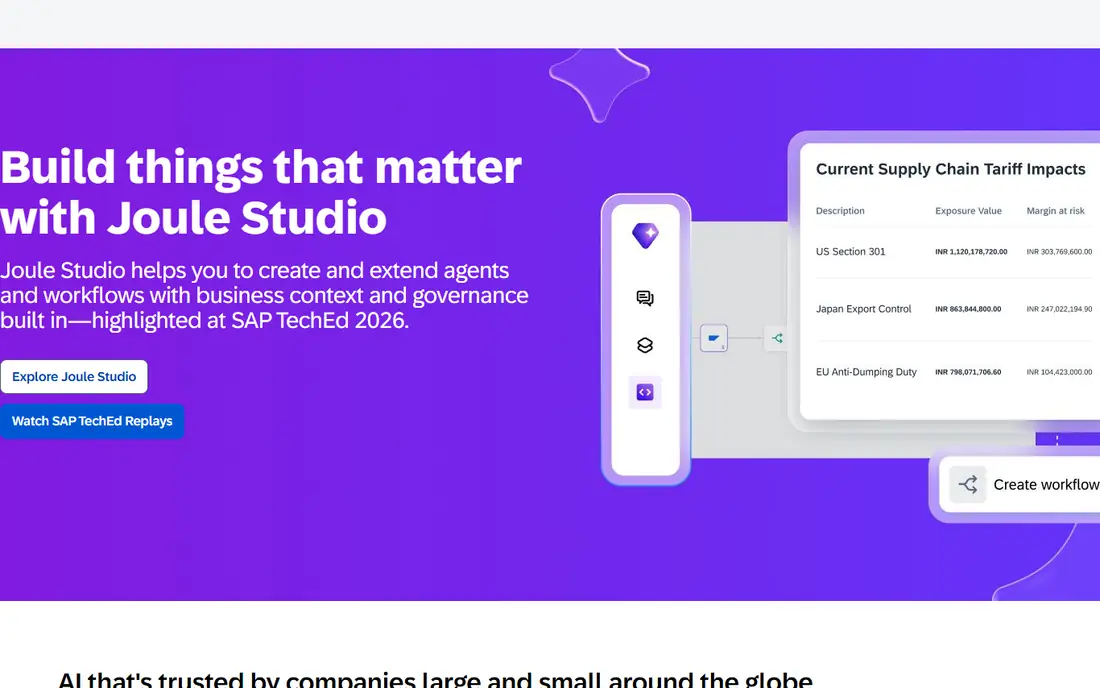
SAP S/4HANA Cloud is the enterprise standard for firms with complex manufacturing, global supply chains, and strict reporting needs. Its in-memory design supports real-time analytics across finance and operations, and its industry depth covers discrete and process manufacturing, life sciences, and other regulated sectors. For a large firm replacing several legacy systems, that breadth is hard to match.
The cost is not just the license, which SAP does not publish as a simple list price. Implementations commonly run 12 months or more, need a specialist partner, and demand a strong internal team for data cleanup and change management. Smaller firms should not buy SAP on brand alone. If your firm is large, global, and complex, SAP belongs at the top of the shortlist. If it is not, a mid-market system will likely deliver faster value.
- Deep manufacturing, logistics, and finance depth
- Global compliance and multi-entity support
- Large partner ecosystem
- No public list price
- Implementations often run many months
- Needs a dedicated internal team and partner
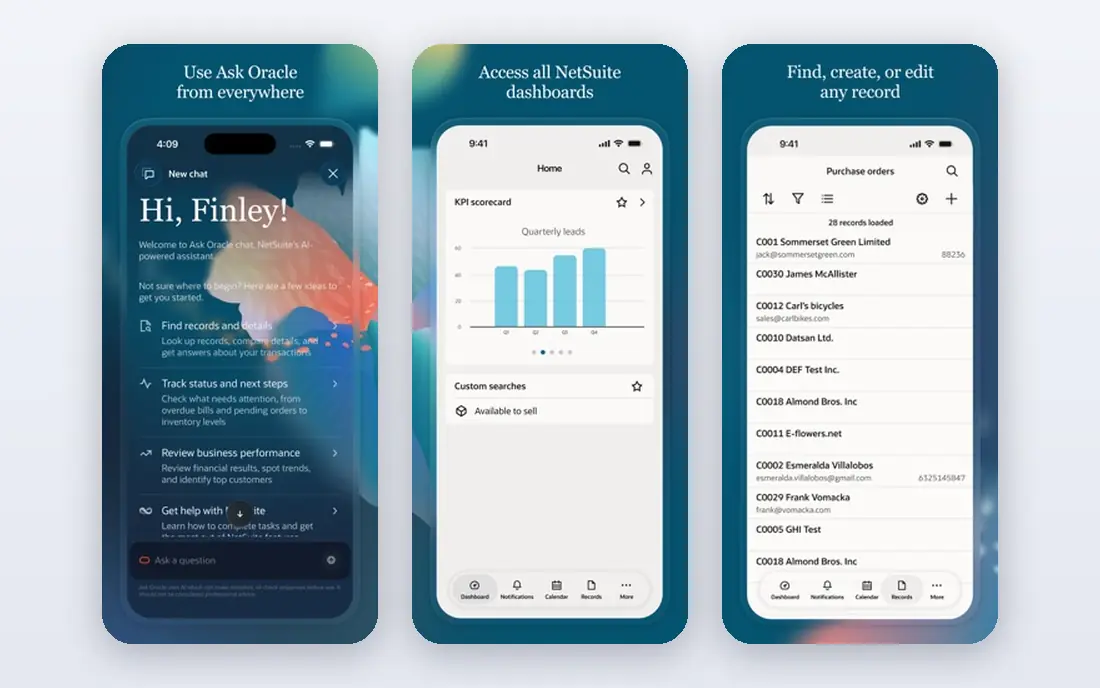
Oracle NetSuite is the most common cloud ERP for growing mid-market firms that have outgrown basic accounting software. It joins financials, inventory, order management, and CRM in one cloud system, with multi-subsidiary and multi-currency support for firms expanding across borders. SuiteSuccess editions offer preconfigured setups for common industries, which can shorten the early phase of a project.
NetSuite does not publish a public price list, and third-party estimates place base fees near $999 per month plus per-user fees, with implementation on top. That opacity means you must get a written quote for your user count, modules, and subsidiaries before comparing totals. For a scaling firm that wants one cloud system without running its own servers, NetSuite is a strong default shortlist pick.
- One cloud suite for finance, inventory, and CRM
- Multi-subsidiary and multi-currency support
- SuiteSuccess industry editions
- No public price list
- Implementation can be costly
- Manufacturing depth lags larger enterprise rivals for very complex plants
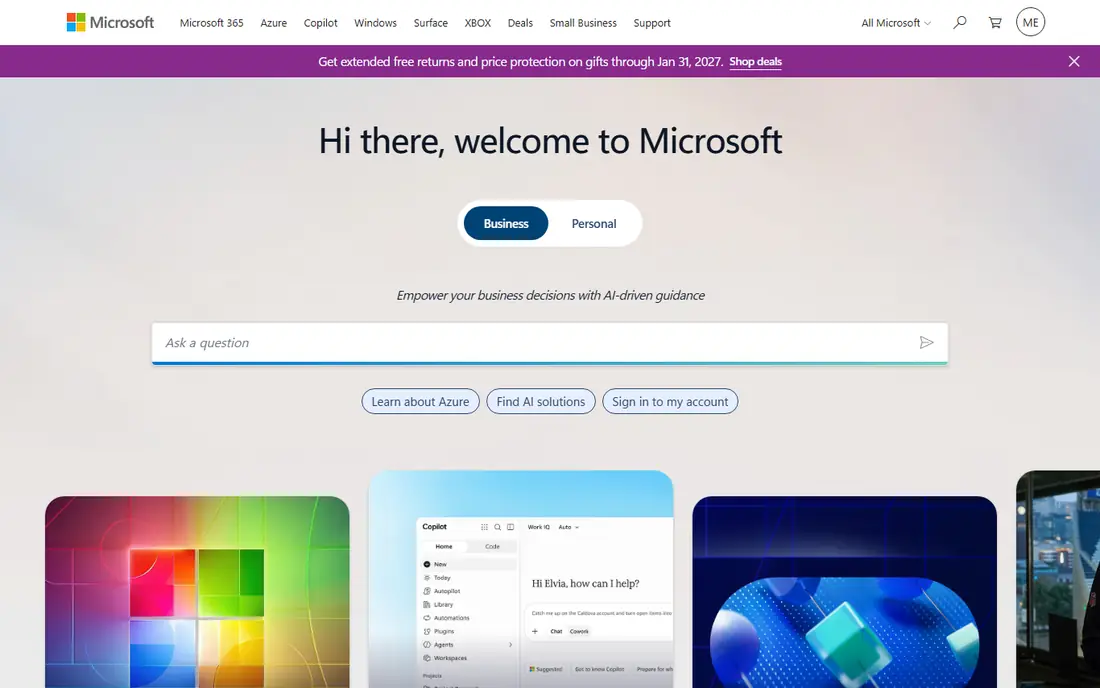
Business Central starts at $80 per user per month for Essentials and $110 for Premium on annual billing in current Microsoft listings, which makes early budgeting far easier than with quote-only rivals. Essentials covers finance, sales, purchasing, and inventory, while Premium adds manufacturing and service management. For a firm already on Microsoft 365, the links to Excel, Outlook, Teams, and Power BI feel natural and cut training time.
Per-user pricing is also the catch: costs rise with every new user, even light users, though a lower-cost Team Members plan exists for limited access. Implementation through a partner is still needed for most firms, and complex manufacturing may need add-ons or a different system. If your firm lives in Microsoft tools and needs a mid-market ERP, Business Central is often the easiest system to justify and adopt.
- Published per-user pricing
- Deep Office, Teams, and Power BI links
- Essentials and Premium editions for different needs
- Per-user fees grow with headcount
- Manufacturing depth is lighter than SAP or Epicor for complex plants
- Partner implementation still needed
Odoo is the budget-friendly ERP on this list without feeling like a toy. The Standard plan is listed at $24.90 per user per month on annual billing, covering all apps in one per-user price, and a free One App plan lets a very small firm start with a single module for unlimited users. You can add CRM, inventory, manufacturing, accounting, and human resources as modules, rather than buying a huge suite on day one.
The risk is customization. Odoo is easy to extend, and easy to over-extend, which can make upgrades harder later. Community add-ons also vary in quality and upkeep. For a small firm that wants a real ERP at a modest license price and is willing to keep customization disciplined, Odoo is excellent value. For a firm that needs deep, out-of-the-box industry compliance, a more specialized system may fit better.
- Low published per-user price
- Modular apps you add as you grow
- Free Community edition and free One App plan
- Customization debt can grow with heavy add-ons
- Community edition lacks some advanced features
- Partner quality varies
Oracle Fusion Cloud ERP is Oracle's enterprise cloud suite for large firms with complex global finance, procurement, and supply chain needs. It handles multi-entity consolidation, multi-currency reporting, and large transaction volumes, with analytics built for finance leaders who need a single view across subsidiaries. Firms already on Oracle databases or Oracle applications may also gain from a shared vendor stack.
Pricing is quote-based, with third-party guides placing hosted named-user figures in the hundreds per month and a minimum user count, so small firms should not shortlist it on price. Implementation is a major program, not a quick setup. For a global enterprise that needs finance depth at scale, Fusion Cloud ERP is a top contender alongside SAP. For a mid-market firm, NetSuite or Business Central will usually be faster and cheaper.
- Strong global financials and consolidation
- Deep analytics
- Built for large, multi-entity firms
- Quote-based pricing
- Implementation is large and partner-led
- Overkill for small and mid-size firms
Infor CloudSuite, including CloudSuite Industrial for discrete manufacturing, is built around industry processes rather than generic ERP modules. A manufacturer gets planning, scheduling, shop-floor, and supply chain tools shaped for its kind of production, which can cut customization compared with a generic suite. Distribution and other industry editions follow the same idea.
Pricing is custom, and picking the wrong industry edition can blunt that advantage, so the demo must use your real production flow, not a generic script. Implementation is partner-led and takes months for most firms. If you are a manufacturer with complex planning needs and you find an Infor edition that matches your industry closely, it can be a better fit than a generic ERP. If your needs are mainly finance and inventory, a simpler system may serve you sooner.
- Industry-specific editions for manufacturing and distribution
- Advanced planning and scheduling
- Strong supply chain tools
- Quote-based pricing
- Industry editions need careful matching
- Partner-led implementation
Epicor Kinetic is a manufacturing-first ERP, strong for engineer-to-order, make-to-order, and mixed-mode production. It covers bills of material, production scheduling, shop-floor control, quality, and job costing in one system, with a low-code layer for tailoring screens and workflows. For a manufacturer that lives or dies by job cost and delivery dates, that depth matters more than a generic finance module.
The trade is scope: service firms, retailers, and general professional services will find Kinetic heavier than they need, and pricing is custom. Implementation also needs a partner who understands manufacturing, not just software setup. If you make things to order and need tight control of jobs, materials, and shop capacity, Epicor belongs on the shortlist next to SAP and Infor. If you do not manufacture, skip it.
- Manufacturing depth for engineer-to-order and make-to-order work
- Shop-floor and quality tools
- Low-code customization layer
- Quote-based pricing
- Best fit is manufacturing, not general services
- Implementation needs manufacturing expertise
Acumatica takes a different pricing path: it charges by computing resources and transaction volume, not by user count, so adding light users does not raise the license bill in the same way as per-user systems. That model suits firms with many occasional users, such as warehouse staff, field staff, or seasonal workers, alongside a core office team. Distribution, manufacturing, and construction editions give it industry depth beyond generic finance.
The catch is that Acumatica does not publish a price, so you must get a quote tied to your expected usage tier and modules. Usage-based pricing also needs careful forecasting: a busy season that pushes you into a higher tier can raise costs. For a firm with many users and uneven transaction volume, Acumatica can be cheaper than per-user rivals. For a firm with few users and steady volume, compare the quoted total, not just the pricing model.
- Consumption-based pricing, not per-user fees
- Unlimited users on a plan
- Strong distribution and construction editions
- No public price
- Resource usage tiers can confuse budgeting
- Partner implementation still required
ERPNext is open-source ERP software from Frappe, covering accounting, inventory, manufacturing, selling, buying, projects, and human resources. Self-hosting carries no license fee, and hosted plans on Frappe Cloud start at low monthly figures for a site, priced by resources rather than by user. For a budget-conscious firm with technical staff, or a partner who knows the system, that model can cut license cost sharply.
Free software is not free ERP. You still pay for hosting, data migration, training, support, and ongoing upkeep, and the partner network is smaller than those of SAP, Oracle, or Microsoft. Firms without technical comfort may find the setup and upgrade path harder than a vendor-hosted cloud suite. If your firm values low license cost, open code, and no per-user fees, ERPNext is the most capable open option here. If you want a vendor to own hosting, support, and upgrades, pick a cloud suite instead.
- Free to self-host as open source
- No per-user license fee
- Covers finance, inventory, manufacturing, and HR in one system
- Hosting, support, and implementation are still paid
- Smaller partner network than SAP or Oracle
- Interface and docs assume technical comfort
How we picked these
We compared official pricing pages, deployment options, industry editions, and public ERP pricing guides for each system. We favored systems that are still sold and supported in October 2026, that cover core finance plus operations in one suite, and that fit a clear size or industry buyer. Where a vendor did not publish a price, we wrote See website rather than presenting a third-party estimate as a vendor price.
How to choose an ERP system
Start with size and industry fit, not with a feature count. A large manufacturer and a 20-person services firm need different systems, even if both ask for finance, inventory, and reporting. Shortlist two or three systems that match your size and industry, then run demos with your real data: a real sales order, a real purchase order, a real production job, and a real month-end close.
Next, budget the full first year, not just the license. Implementation, data cleanup, integrations, training, and change management often cost as much as, or more than, the first year of licenses. Ask each vendor and partner for a written first-year total, including implementation, and ask what happens to price in year two when discounts end.
Run a pilot with one site or one process
Do not roll out to every site at once if you can avoid it. Pilot with one site, one warehouse, or one process, and measure close time, order accuracy, and inventory accuracy before and after. A pilot exposes data problems, training gaps, and workflow mismatches while they are still cheap to fix. It also gives staff a success story to share with the next site.
Plan data cleanup before migration
ERP projects fail more often on bad data than on bad software. Clean customer records, item masters, supplier records, and open balances before migration, and decide who owns each data set after go-live. A system that goes live with duplicate items and stale prices will produce reports no one trusts, no matter how good the software is.
Frequently asked questions
What is the best enterprise resource planning software overall?
For large global firms, SAP S/4HANA and Oracle Fusion Cloud ERP lead on depth and scale. For growing mid-market firms, Oracle NetSuite and Microsoft Dynamics 365 Business Central are more practical. For small firms, Odoo and ERPNext offer lower license costs. The best system depends on size, industry, and how much implementation help you can staff.
What is the top enterprise resource planning software for manufacturing?
SAP S/4HANA, Infor CloudSuite, and Epicor Kinetic lead for manufacturing depth, with different industry strengths. SAP fits large global plants, Infor fits industry-specific production, and Epicor fits engineer-to-order and make-to-order shops. Run a demo with your real production flow before you choose.
What are the top 10 ERP software in the world by market presence?
The largest names by presence include SAP, Oracle (NetSuite and Fusion), Microsoft Dynamics 365, Infor, Epicor, Sage, Workday, Acumatica, Odoo, and IFS. Market presence alone does not mean fit for your firm, so shortlist by size and industry first, then by vendor scale.
Is there a free enterprise resource planning tool?
Yes, in the open-source sense. ERPNext is free to self-host, and Odoo Community is free as open source, with paid Enterprise plans for hosted and advanced features. Hosting, implementation, training, and support still cost money, so compare total cost, not just license cost.
How long does an ERP implementation take?
Small Odoo or ERPNext projects can take one to four months. Mid-market NetSuite or Business Central projects often take three to nine months. Large SAP or Oracle Fusion projects often take 12 months or more. Data quality, customization, and the number of sites are the main drivers of time.
How much does ERP software cost in total?
License cost is only part of the total. Add implementation, data migration, integrations, training, and annual support. Small firms may spend tens of thousands in year one. Mid-market firms often spend well into six figures. Large global firms can spend millions over several years, so get a written first-year and year-two total before signing.
Sources
See where you really rank - block by block
ProMapRanker scans Google Maps across a grid of your service area. Simple monthly plans from $19, white-label on every plan.
Start freeKeep reading
 zoho inventory alternatives
6 Alternatives to Zoho Inventory, Compared on Price and Fit
Zoho Inventory alternatives: 6 tools compared on price, free plans and fit. Katana leads the list for manufacturers. Fit and flaws are laid out for each entry.
Read → zoho crm alternatives
Best Zoho CRM Alternatives (2026)
Need Zoho CRM alternatives? We compare 7 tools on cost, free access and who each suits. Every pick gets a straight assessment. Built for quick decisions.
Read → zelle alternatives
Best Zelle Alternatives in 2026
Compare the best Zelle alternatives for sending money to friends, paying sellers and moving funds abroad, with honest notes on fees, speed and safety in 2026.
Read →