 ProMapRanker
Best Enterprise Marketing Platforms (2026)

Direct answer
Insider leads the list, best for AI-led customer experience. Look at Oracle Eloqua for B2B enterprise automation, and at Salesforce Marketing Cloud for CRM-native omnichannel. All 6 tools are compared below on price, free plan and limits.
Key takeaways
- The list opens with Insider, aimed at AI-led customer experience.
- HubSpot is the only tool of the 6 with a free plan.
- What to know about Insider first: less brand recognition in North America.
- No starting price is shown for any of the 6 tools, Insider and Braze included, so plan time for sales calls.
- Braze is the one to check for cross-channel engagement.
Quick comparison
| Pick | Great for | Pricing starts at | Free tier | |
|---|---|---|---|---|
 Insider | AI-led customer experience | See website | No | Visit |
 Oracle Eloqua | B2B enterprise automation | See website | No | Visit |
 Salesforce Marketing Cloud | CRM-native omnichannel | See website | No | Visit |
 Bloomreach | Commerce personalization | See website | No | Visit |
 HubSpot | Inbound plus CRM | See website | Yes | Visit |
 Braze | Cross-channel engagement | See website | No | Visit |
Every option for enterprise marketing platforms explained
Choosing enterprise marketing platforms usually comes down to price, fit and limits. This ProMapRanker guide sets 6 tools side by side on those three points, with the facts kept short and checkable.
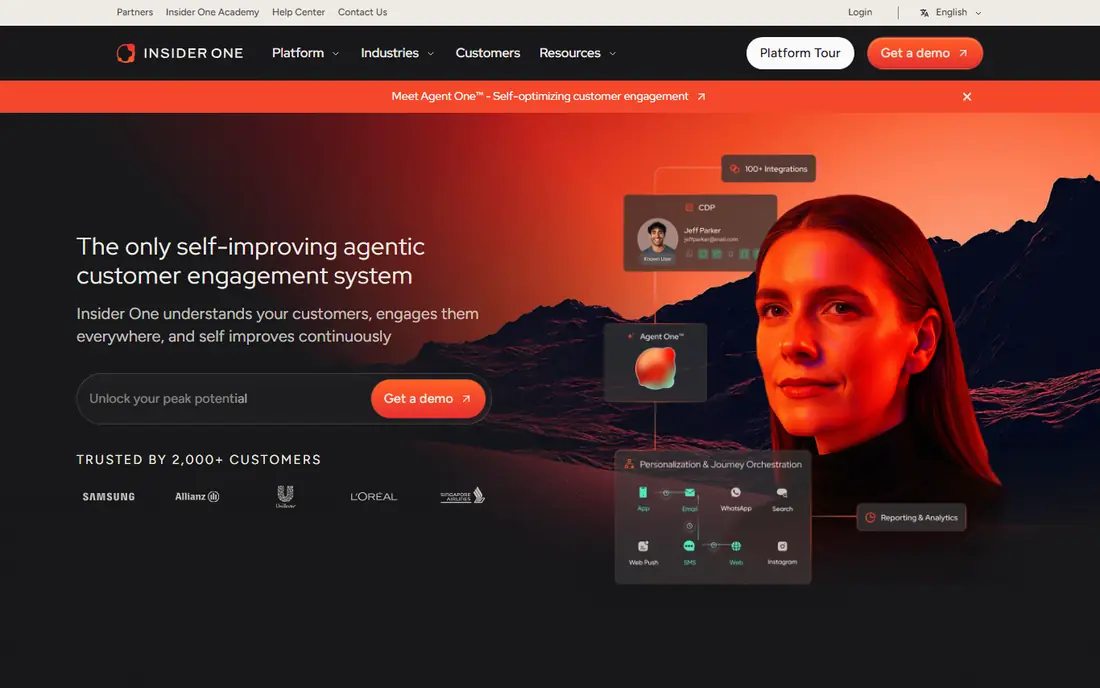
Where Insider fits: AI-led customer experience. Regional coverage varies.
Where it falls short: Less brand recognition in North America.
Beyond that, Insider provides individualized experiences: predictive segments, personalized content and cross-channel journeys powered by AI, with particular strength in retail, travel and finance across EMEA and APAC. This comparison lists no price for Insider; ask the vendor. No free plan comes with Insider.
Reasons to shortlist it: Capable in EMEA and APAC; email and messaging.
- AI-driven personalization across web, app
- Quick time to value
- Enterprise pricing is custom
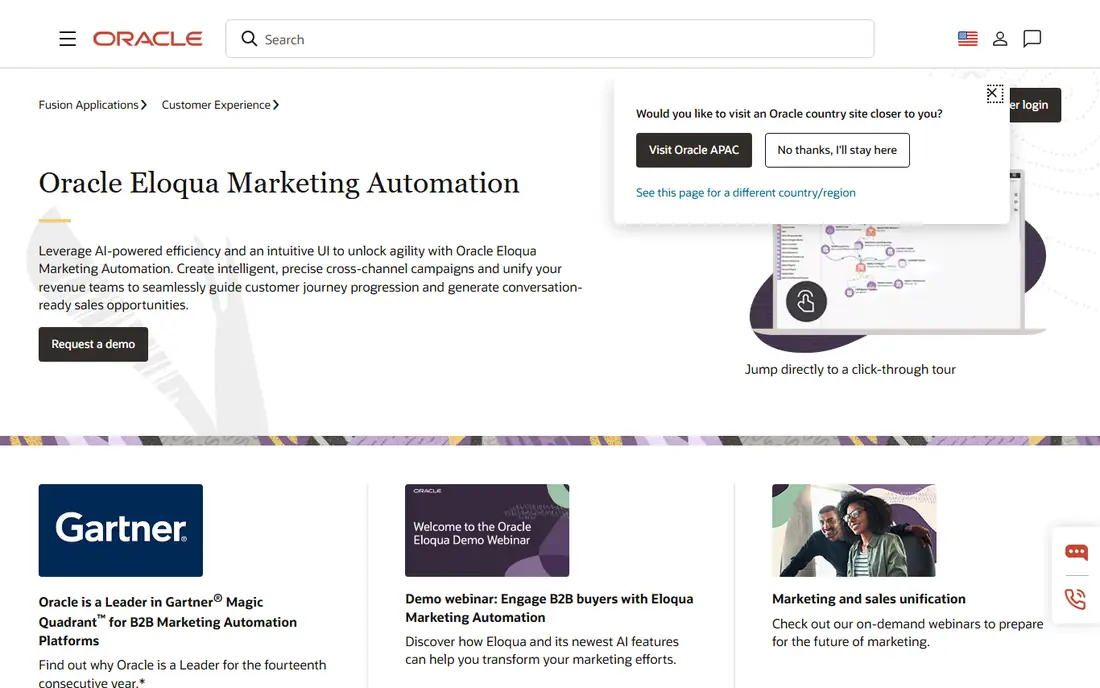
Oracle Eloqua works best for B2B enterprise automation. Eloqua deals with massive B2B databases with sophisticated nurture, scoring and account-based programs. Worth adding: Eloqua suits large B2B enterprises with long sales cycles and demanding data requirements.
The main drawbacks: Implementation effort is significant.
In practice, native Oracle CX integration links marketing to sales and service. It is aimed at complexity. Oracle Eloqua shows no starting price here, so confirm the cost on the vendor site. There is no free plan with Oracle Eloqua. Upsides: Enterprise security on Oracle Cloud; 13-time Gartner Leader.
- Deep B2B lead management and scoring
- 500-plus integrations
- Dated-feeling UI in places
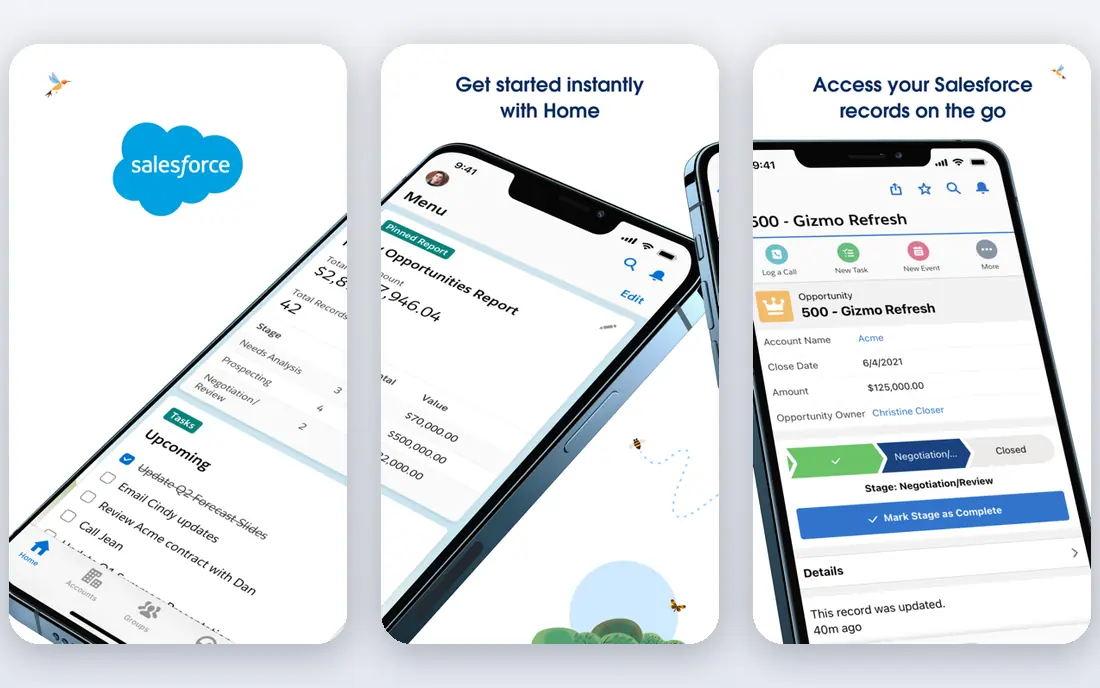
Salesforce Marketing Cloud works best for CRM-native omnichannel. Marketing Cloud personalizes every moment across the lifecycle: email, mobile, ads and web journeys built on Salesforce customer data, with AI agents now assisting planning and optimization.
It rewards existing Salesforce investment. No starting price is listed for Salesforce Marketing Cloud here; confirm pricing on the vendor site. Salesforce Marketing Cloud does not include a free plan.
Drawbacks to consider: Pricing is opaque and custom. Where Salesforce Marketing Cloud stands out: Journey Builder orchestration.
- Data Cloud brings together customer data
- Solid B2B and B2C coverage
- Consultant-heavy
Bloomreach targets commerce personalization. Bloomreach merges discovery (search and merchandising), content and engagement (CDP plus marketing automation) so retailers personalize every touchpoint. For everyday use, Bloomreach fits ecommerce and retail enterprises personalizing the full shopping journey.
The main drawbacks: Enterprise pricing; Less suited to pure B2B.
What works well: CMS and marketing; Loomi AI personalization.
B2B teams should look elsewhere. Over 850 brands run on it. Check the vendor site for Bloomreach pricing; none is listed in this comparison. There is no free plan with Bloomreach.
- Commerce Experience Cloud brings together search
- Solid retail and ecommerce base
- Commerce-centric
HubSpot targets inbound plus CRM. Enterprises standardizing on HubSpot get sales, service and marketing in one database.
Drawbacks to consider: Enterprise costs grow with contacts and seats.
From a buyer's view, contact-based pricing scales quick. HubSpot shows no starting price here, so confirm the cost on the vendor site. HubSpot has a free plan.
Upsides: Free level for CRM basics.
- Unified CRM with marketing automation
- Capable inbound tools
- Advanced B2B features trail Eloqua
Braze is a good fit for cross-channel engagement. Braze powers live customer engagement: streaming ingestion, dynamic segmentation and cross-channel journeys for apps and brands with millions of users.
It is aimed at consumer scale. Pricing for Braze is not stated here, so ask the vendor for current figures. Braze has no permanent free option.
Where it falls short: Implementation needs data engineering support.
- Live messaging across email, push
- Proven at consumer scale
- Enterprise pricing
How we chose
Pricing pages, product documentation and feature lists were the main sources, and every entry carries at least one honest drawback. Seat minimums, billing terms and add-ons can move the real cost, so the starting prices here are a guide and not a quote. The sequence is a judgement call: typical use case first, then pricing transparency, then free access. Use the profiles to check fit.
What to confirm before you sign up
- Request quotes from Insider, Braze and the others; the list shows no fixed prices.
- Look at the free plan from HubSpot closely: its caps decide whether it is usable for real work.
- Read the limits listed for Insider first: less brand recognition in North America.
- Before rolling out Braze, verify the integrations your workflow depends on.
- See whether HubSpot offers onboarding or training, and whether it is included in the price.
Frequently asked questions
Can I try these options before paying?
Often, yes. HubSpot has a free plan. Use your own data and a real task during the test, and check what the free tier or trial limits before you rely on it.
Do these tools publish their prices?
No. None of the tools, from Insider to Braze, shows a fixed starting price here, so budget time for quotes.
How long does implementation take?
Expect three to nine months for a full migration, based on data complexity and the number of integrations. Engagement-focused tools can deliver a first use case in weeks. Suite products replacing a legacy system take longer due to data migration and retraining.
Salesforce vs Adobe vs Oracle: which enterprise suite?
Salesforce fits CRM-native teams; Adobe fits experience-led brands on its stack; Oracle Eloqua fits complicated B2B. Match the suite to your existing systems.
How are the tools for enterprise marketing platforms ordered?
Insider sits first and Braze last because the order follows typical fit for enterprise marketing platforms, then price clarity and free access. It is a judgement call, so read each profile for fit and limits.
How long does implementation take?
Suite systems commonly take months with partners; engagement specialists can launch in weeks. Also, budget services alongside licenses.
Sources
See where you really rank - block by block
ProMapRanker scans Google Maps across a grid of your service area. Simple monthly plans from $19, white-label on every plan.
Start freeKeep reading
 zoho inventory alternatives
6 Alternatives to Zoho Inventory, Compared on Price and Fit
Zoho Inventory alternatives: 6 tools compared on price, free plans and fit. Katana leads the list for manufacturers. Fit and flaws are laid out for each entry.
Read → zoho crm alternatives
Best Zoho CRM Alternatives (2026)
Need Zoho CRM alternatives? We compare 7 tools on cost, free access and who each suits. Every pick gets a straight assessment. Built for quick decisions.
Read → zelle alternatives
Best Zelle Alternatives in 2026
Compare the best Zelle alternatives for sending money to friends, paying sellers and moving funds abroad, with honest notes on fees, speed and safety in 2026.
Read →