 ProMapRanker
Best Enterprise ETL Tools in 2026

Key takeaways
- Fivetran leads for hands off managed ELT, while Airbyte suits teams that want open source control and custom connectors.
- Informatica and Qlik Talend lead for governance and data quality in regulated enterprises, but they need longer implementations.
- ETL pricing is usage based in most cases, so compare cost at your real row, event, or workload volume, not at the entry tier.
- Real time needs and batch needs point to different tools, so decide on latency and change data capture before you shortlist.
Quick comparison
| Pick | Great for | Pricing starts at | Free tier | |
|---|---|---|---|---|
 Fivetran | Hands off managed ELT | Free | Yes | Visit |
 Airbyte | Open source flexibility | Free | Yes | Visit |
 Informatica Intelligent Data Management Cloud | Regulated enterprise governance | See website | No | Visit |
 Qlik Talend Cloud | Data quality plus integration | See website | No | Visit |
 Hevo Data | No code real time pipelines | $239 per month | Yes | Visit |
 Matillion | Warehouse native transformation | See website | Free trial | Visit |
 AWS Glue | AWS native serverless ETL | See website | No | Visit |
 Azure Data Factory | Microsoft and hybrid integration | See website | No | Visit |
 Stitch | Simple SaaS to warehouse loads | $100 per month | Free trial | Visit |
The best enterprise etl tools
These are the best enterprise ETL tools we found for moving data from SaaS apps, databases, and files into a warehouse or lakehouse at enterprise scale. We compared official product pages, pricing pages, and recent ETL comparisons, and we kept only tools with a live enterprise offer in October 2026. Note that many vendors now describe their work as ELT, where data is loaded first and transformed in the warehouse, but the buying questions are the same.
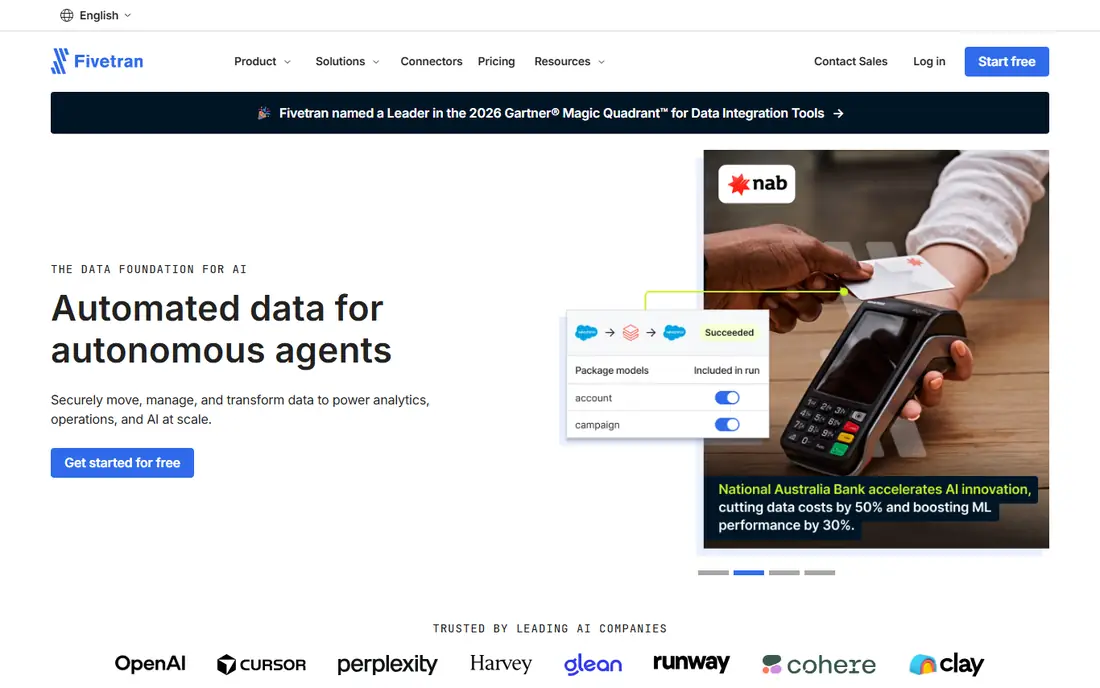
Fivetran is the default pick for teams that want pipelines to run with little upkeep. Connect a source, choose a destination, and Fivetran handles extraction, loading, and schema drift, so analysts spend time on models instead of pipeline maintenance. The free tier covers up to 500,000 monthly active rows in published pricing, which lets small teams test real pipelines before paying. The main cost risk is churn. Because pricing follows monthly active rows, a source that updates many rows often can cost more than a quiet source of the same size. Fivetran merged with dbt Labs in June 2026, according to public reporting, which makes transformation a closer part of the same story, but you should still confirm how dbt is licensed in your plan.
- Large managed connector library
- Automated schema changes
- Monthly active rows pricing with a free tier
- Costs can rise with high data churn
- Transformation now sits with dbt after the 2026 merger
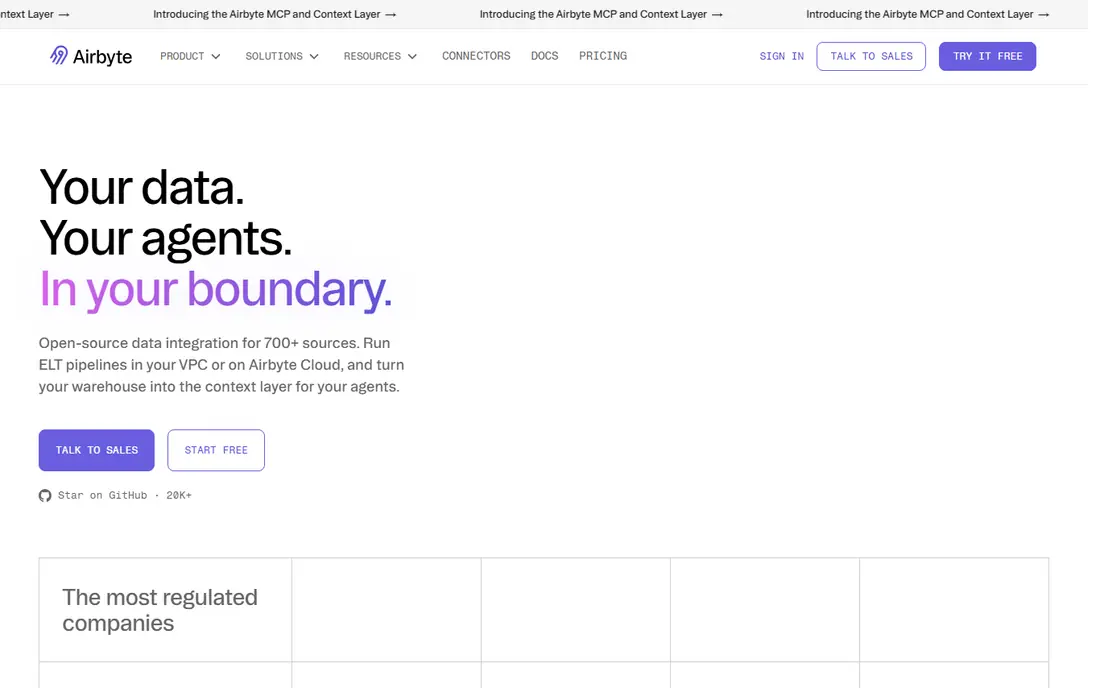
Airbyte suits data teams that want control over where pipelines run and how connectors are built. The open source core can be self hosted for free, apart from your own infrastructure costs, and the connector builder helps teams add a source without waiting for a vendor roadmap. Airbyte Cloud adds a managed option with usage based pricing, starting with a free Core plan in published comparisons and paid Standard plans from a low monthly base. The trade-off is ownership. Self hosting gives freedom but also on-call, upgrades, and scaling work. Teams that want a fully managed service with no operations burden will usually prefer Fivetran or Hevo, while teams with platform engineers will value Airbyte freedom.
- Open source self hosted option
- Large connector library
- No code connector builder
- Self hosting needs operations effort
- Cloud pricing is usage based and needs modelling
Informatica Intelligent Data Management Cloud
Great for: Regulated enterprise governance
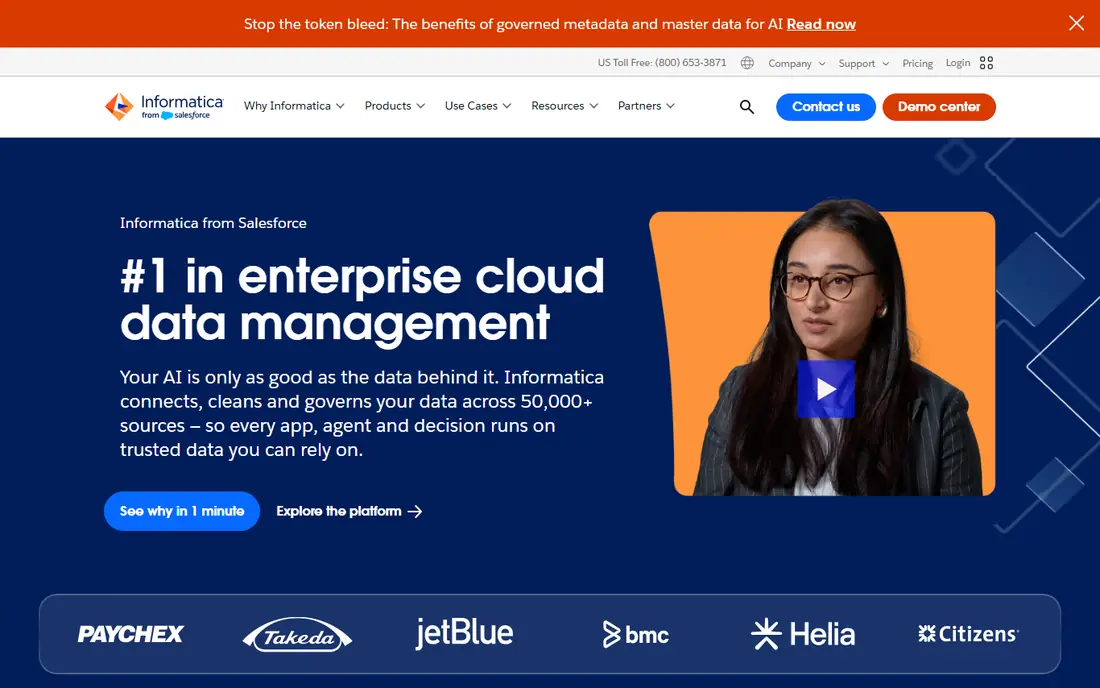
Informatica Intelligent Data Management Cloud, often shortened to IDMC, is the enterprise pick for regulated industries that need governance, data quality, and lineage alongside integration. It covers ingestion, transformation, catalog, and master data tools in one platform, which helps large organizations prove where data came from and who changed it. That breadth comes with cost and time. Pricing is consumption based and quote led, with published comparisons suggesting a high annual minimum, and full deployments need skilled staff and a phased rollout. Smaller teams will find it heavy. For a bank, insurer, or healthcare enterprise with strict controls, the governance depth is the reason to choose it.
- Deep governance and data quality
- Broad enterprise connectors
- End to end data management
- Quote based enterprise pricing
- Long implementation for full deployments
Qlik Talend Cloud, formerly Talend Data Fabric under Qlik ownership since 2023, combines data integration with built in data quality, profiling, and governance features. That pairing matters when source data is messy, because cleaning and standardizing can happen inside the pipeline rather than as a separate project. Deployment options include cloud, client managed, and hybrid, which suits enterprises with mixed estates. The drawbacks are commercial and human. Pricing is quote only, with third party reports suggesting an annual minimum near $12,000, and Studio based development needs training for teams used to no code tools. Choose it when data quality is a core requirement, not just a nice extra.
- Built in data quality and profiling
- Broad integration components
- Hybrid deployment options
- Quote only pricing
- Training investment for Studio based work
Hevo Data is a strong no code option for teams that want real time or near real time pipelines without writing integration code. Its visual builder, change data capture support, and transformation options cover common SaaS to warehouse flows, and a free tier with up to one million events per month in published pricing lets small teams test. The Starter plan near $239 per month on annual billing covers a larger event volume, but event based pricing needs careful counting, since updates and deletes count alongside inserts. Hevo is cloud only, so teams that must run pipelines fully on premises should look at Airbyte or Qlik Talend instead. For a cloud first team, it is one of the easiest enterprise ready options to run.
- No code pipeline builder
- Real time change data capture options
- Transparent event based pricing tiers
- Cloud only
- Event counts include inserts, updates, and deletes, so volume needs care
Matillion suits teams whose main work is transformation inside a cloud warehouse, rather than just loading data. Pipelines are built visually and pushed down to the warehouse engine, which keeps heavy work close to the data and avoids a separate processing cluster for many jobs. That warehouse native model fits Snowflake, Databricks, and BigQuery centred teams well. The commercial picture is less transparent. Pricing is credit based and quote led, with a free trial but no stable public entry price to compare, so you need a workload based estimate from Matillion. It also pairs best with a loader such as Fivetran or Airbyte when source connectors are the main gap, rather than replacing a loader outright.
- Runs transformation inside the warehouse
- Visual pipeline builder
- Strong Snowflake, Databricks, and BigQuery focus
- No public entry price
- Credit based pricing needs modelling
AWS Glue is the natural ETL choice inside an AWS estate. It is serverless, so you pay for data processing units used rather than running servers, and it integrates with S3, Redshift, Athena, and other AWS services without extra connectors. Visual jobs cover simple flows, while Spark based jobs handle large or custom transformations. The limit is portability. Glue is built for AWS, and a multi-cloud strategy will need a separate tool for Azure or Google Cloud workloads. It also rewards engineering skill. Teams without Python or Scala experience will move slower on custom jobs, while teams already fluent in AWS will find it fast and cost efficient at scale.
- Serverless and pay per use
- Deep AWS service integration
- Spark based jobs for scale
- AWS centred, so multi-cloud teams face lock-in
- Needs Python or Scala skills for custom jobs
Azure Data Factory suits organizations centred on Microsoft, including Azure, SQL Server, and Microsoft 365 data sources, plus hybrid sources through a self hosted integration runtime. Its visual orchestration helps data engineers schedule, monitor, and retry pipelines without building a scheduler from scratch, and consumption pricing means low use costs stay low. The trade-off mirrors AWS Glue in reverse. It is Azure centred, so a multi-cloud estate will still need another tool for non Microsoft sources, and consumption costs need monitoring as data volumes and pipeline frequency grow. For a Microsoft estate, though, it is often the lowest friction enterprise option, especially alongside Synapse or Microsoft Fabric.
- Consumption based pricing
- Strong Microsoft and hybrid connectors
- Visual pipeline orchestration
- Azure centred
- Pricing needs monitoring as pipeline runs grow
Stitch is the simplest tool in this list, and that is its appeal. It replicates data from SaaS apps and databases into a warehouse on a schedule, with row based tiers starting at $100 per month for a small volume in published pricing. Setup is quick, and teams that only need reliable loads for reporting can run it with little upkeep. The limit is scope. Stitch focuses on loading, not deep transformation or real time change data capture, so teams that need complex in pipeline logic or sub minute freshness should choose Hevo, Fivetran, or a streaming tool instead. For a small data team with straightforward reporting needs, Stitch remains a practical, low overhead choice.
- Simple setup for SaaS sources
- Clear row based tiers
- Reliable scheduled replication
- Limited transformation compared with full ETL platforms
- Not built for real time CDC at scale
How we picked these
We compared official product and pricing pages plus recent ETL comparisons, and we kept only tools with a live enterprise offer in October 2026. We favoured a mix of managed ELT, open source, governance led, warehouse native, and cloud native tools, so readers can match the tool to their cloud estate and team skills. We did not claim hands-on testing, and we used See website where pricing is quote led or credit based.
What to check before you buy
Start with latency and volume. Batch loads every hour suit most reporting, while operational analytics may need change data capture in minutes or seconds, and those needs point to different tools and prices. Next, count connectors honestly. List every source you need today and every source you expect next year, then check which are native, which are community built, and which need custom work. Then model cost at three volumes, current, double, and five times, because usage pricing punishes growth in ways a flat subscription does not. Finally, test failure handling. A good enterprise tool alerts, retries, and shows lineage when a pipeline breaks, not just when it succeeds.
Governance, security, and support
Ask about SOC 2, ISO 27001, HIPAA handling where relevant, encryption, role based access, and audit logs before a proof of concept, not after. Check support hours and response times for your region, and ask who owns connector fixes when a SaaS API changes. Those answers matter more in an enterprise contract than a feature checklist, because pipeline outages often come from source changes, not from your own code.
Frequently asked questions
What is the best enterprise ETL tool?
Fivetran is a strong default for managed ELT, Airbyte suits teams that want open source control, and Informatica suits regulated enterprises that need governance. The best choice depends on your cloud estate, latency needs, and whether your team can operate self hosted software.
What is the difference between ETL and ELT?
In ETL, data is transformed before it is loaded into the warehouse. In ELT, data is loaded first and transformed inside the warehouse, which suits cloud warehouses with strong processing power. Most tools in this list support ELT patterns today, even when they are still sold as ETL tools.
How much do enterprise ETL tools cost?
Most enterprise tools are usage based, priced by rows, events, credits, or processing units, so cost depends on your data volume and churn. Entry points range from free tiers for Fivetran and Airbyte to $100 per month for Stitch and $239 per month for Hevo Starter, while Informatica, Qlik Talend, and Matillion are quote led.
Do I need real time ETL?
Only if decisions or products depend on fresh data within minutes. Reporting, weekly planning, and monthly finance work fine on scheduled batch loads. Real time change data capture adds cost and operational care, so choose it for operational analytics, fraud, inventory, or customer facing features that need current data.
Can ETL tools handle data quality?
Yes, but depth varies. Qlik Talend and Informatica include strong profiling, cleansing, and governance features, while loaders such as Fivetran and Stitch focus on reliable movement and leave most transformation to dbt or warehouse models. Decide where cleaning should happen before you buy, or you may pay twice for the same work.
Is open source ETL safe for enterprise use?
Yes, when it is operated properly. Airbyte open source is widely used, with SOC 2 and ISO 27001 attestations for its managed offering in vendor documentation, but self hosting means your team owns patching, scaling, and support. Enterprises that cannot staff that work usually choose a managed cloud plan instead.
Sources
- https://fivetran.com/pricing
- https://airbyte.com/pricing
- https://www.informatica.com/products/cloud-data-integration.html
- https://www.qlik.com/us/products/talend
- https://hevodata.com/pricing
- https://www.matillion.com/pricing
- https://aws.amazon.com/glue/pricing/
- https://azure.microsoft.com/en-us/pricing/details/data-factory/
- https://www.stitchdata.com/pricing
See where you really rank - block by block
ProMapRanker scans Google Maps across a grid of your service area. Simple monthly plans from $19, white-label on every plan.
Start freeKeep reading
 zscaler alternatives
Best Zscaler Alternatives in 2026
Looking for zscaler alternatives? We compare 9 SASE and zero trust platforms on architecture, data protection, pricing, and fit for your network and team.
Read → zapier alternatives free
Best Zapier Alternatives Free in 2026
Nine automation tools for zapier alternatives free in 2026, all with genuinely free tiers, plus free plan limits, starting prices and upgrade paths explained.
Read → which platform is best for online reputation
Which Platform Is Best for Online Reputation in 2026
Wondering which platform is best for online reputation? We compare 8 review, listing, and response tools for small and multi-location businesses and agencies.
Read →